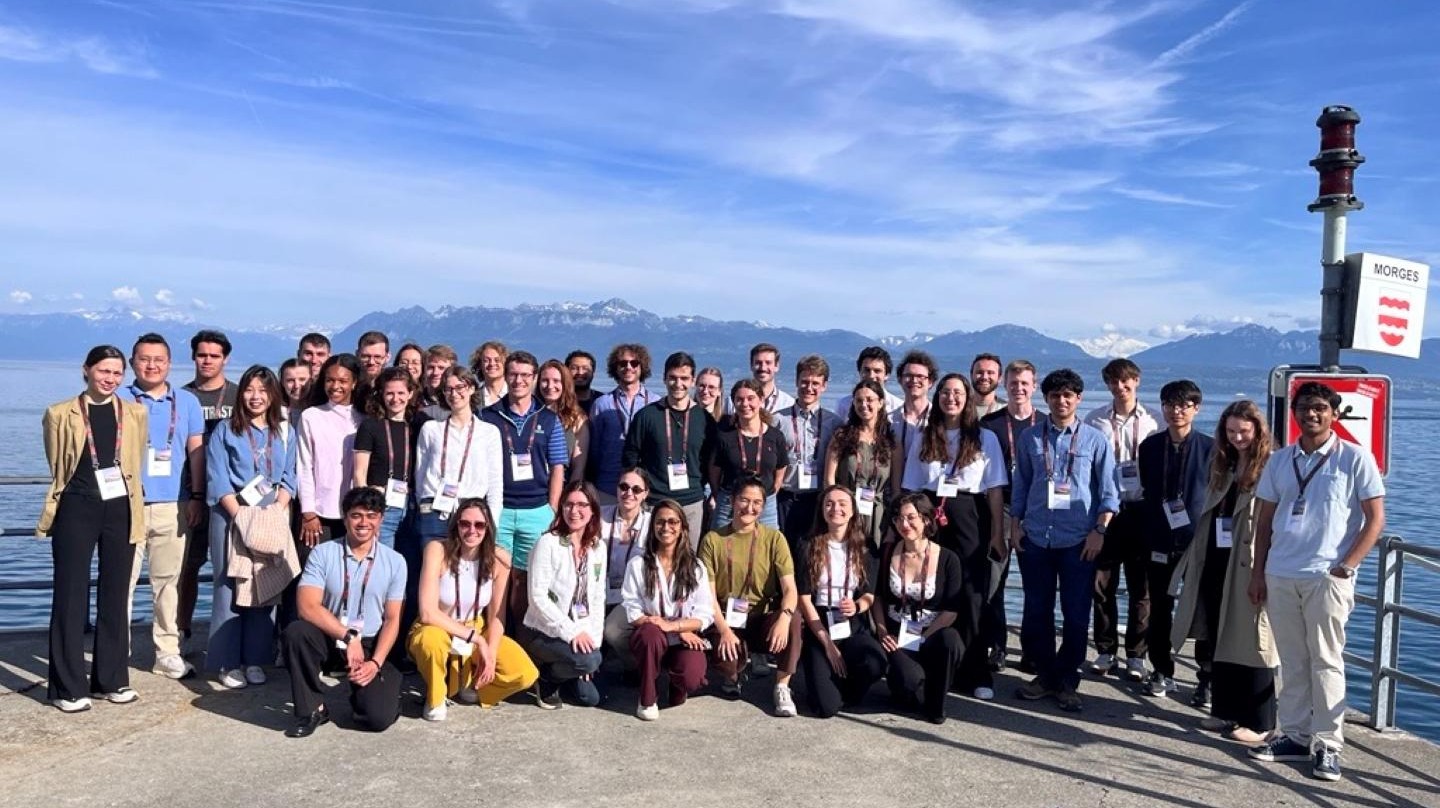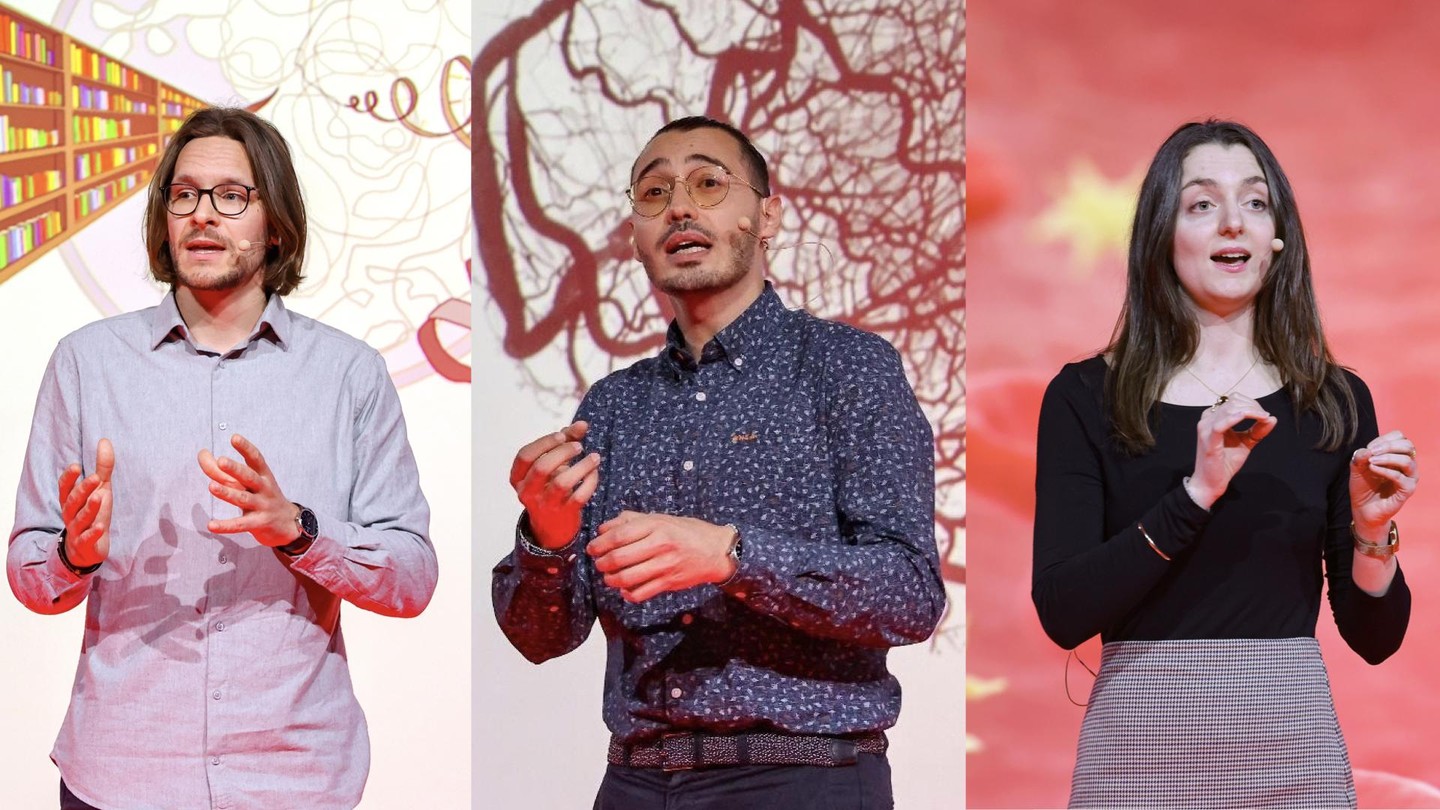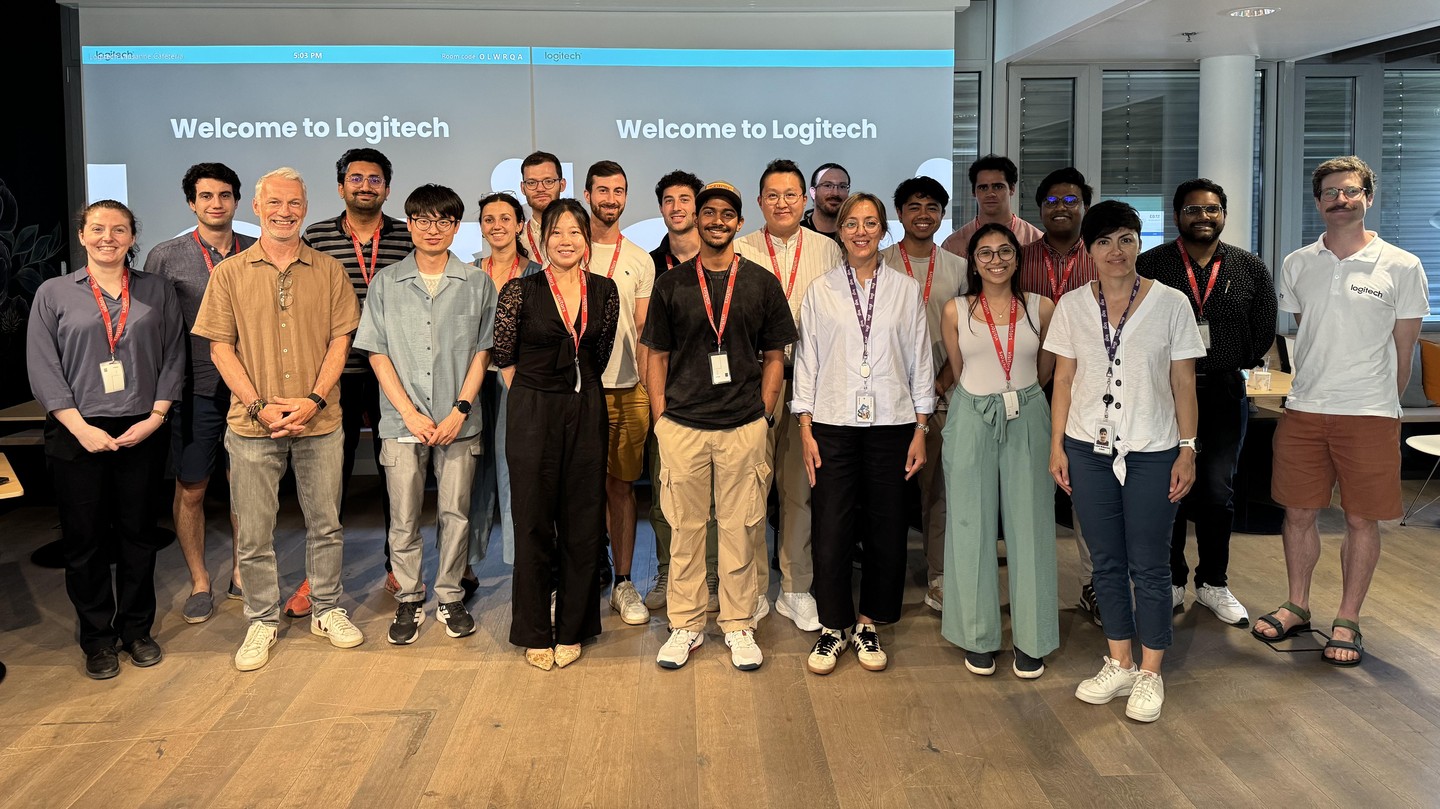
On 28 May 2026, eighteen fellows from the EPFL PhD Excellence Program had the opportunity to visit the Logitech Daniel Borel Innovation Center in Lausanne. The visit offered a unique glimpse into how cutting-edge research, engineering, and product development come together at one of Switzerland's leading technology companies.The afternoon began with a welcome coffee and an introduction to Logitech by Laleh Makarem, ML/Edge AI Engineering Manager and EPFL alumna. Laleh presented Logitech's human-centred and science-driven approach to innovation, highlighting the work of the Logi Ergo Lab, which focuses on creating technologies that improve well-being and comfort in the workplace. She also emphasized the company's commitment to inclusive design and collaboration with users throughout the product development process. Participants were particularly interested to learn that more than 100 EPFL alumni currently work at Logitech's Lausanne site.As part of the visit, four PhD Excellence Program fellows presented their research and discussed potential connections with industry.Ruijia Wang (EDEE) presented their work on neural biomarkers and adaptive neuromodulation strategies for patients with Parkinson's disease, highlighting potential links to human-machine interaction and wearable technologies. Markus Renoldner (EDMA) shared their research on advanced numerical methods for plasma-wave simulations in fusion reactors, demonstrating how mathematical modelling and high-performance computing contribute to solving complex engineering challenges. Vibhu Baibhav (EDEY) discussed their work on industrial decarbonization and energy-system integration, drawing parallels with Logitech's sustainability goals and ambitions. Yuri Asnis (EDPY) introduced their research on plasma-activated water and its interactions with bacteria, focusing on the fundamental mechanisms underlying its bactericidal effects. These presentations sparked discussions about how fundamental research can create value beyond academia and contribute to technological innovation.The highlight of the afternoon was a guided tour of Logitech's research laboratories providing deeper insight into the work of researchers and engineers across diverse technological fields and valuable opportunities for direct exchanges with them.The group explored Logitech's work in spatial computing and extended reality with Mario Gutierrez, Lead Software Engineer in XR and Human-Computer Interaction, who also completed their PhD at EPFL. Participants had the opportunity to test innovative tools such as the MX Ink digital stylus, designed to support immersive creative workflows in virtual environments.The fellows also met Hank Han, Head of Global Color, Materials and Finish Engineering, who explained how user requirements are translated into product design, manufacturing, and quality assurance across Logitech's global operations. François Morier, Principal Optical Engineer, presented the innovative testing methods used to evaluate the performance of mouse sensors.Another memorable stop was Logitech's anechoic chamber, presented by Frederic Fortin, Senior Manager RF. Designed to eliminate external radio-frequency interference, the chamber allows engineers to test and optimize wireless devices under highly controlled conditions.The visit concluded with presentations from Logitech professionals who shared their career paths and experiences transitioning from research to industry. Christophe Constantin, Innovation Leader; Soumaya Henchoz, Group Manager for Software Analytics & Insights; Jonathan Dan, AI Engineer and researcher affiliated with EPFL; and Damien Faux, Haptics Expert, offered valuable perspectives on innovation, interdisciplinary collaboration, and professional development.Several speakers were EPFL alumni, and their stories resonated strongly with the doctoral candidates. Discussions covered topics such as translating research into products, balancing scientific curiosity with business impact, and the opportunities offered by industrial research environments. The interactive question-and-answer session continued informally during the networking aperitif, allowing fellows to engage directly with Logitech researchers and engineers.The visit provided an inspiring opportunity for PhD Excellence Program fellows to discover how advanced research contributes to the development of products used by millions of people worldwide. It also highlighted the strong connections between EPFL and Logitech, demonstrating the diverse career paths available to doctoral graduates and the value of collaboration between academia and industry.We are sincerely grateful to Logitech for the warm welcome, the in-depth program, and their openness in engaging with our doctoral candidates. We are equally grateful to the donors of the PhD Excellence Program, whose support makes such opportunities possible.Introduction by Laleh Makarem - 2026 EPFL/ Aniko Borbely - CC-BY-SA 4.0PhD Candidate Yuri Asnis (EDPY) presenting his research - 2026 EPFL/ Aniko Borbely - CC-BY-SA 4.0PhD Candidate Ruijia Wang (EDEE) presenting his research - 2026 EPFL/ Aniko Borbely - CC-BY-SA 4.0Logitech building - 2026 EPFL/ Aniko Borbely - CC-BY-SA 4.0Markus Renoldner (EDMA) presenting his research - 2026 EPFL/ Aniko Borbely - CC-BY-SA 4.0Vibhu Baibhav (EDEY) presenting his researchNetworking aperitif - 2026 EPFL/ Aniko Borbely - CC-BY-SA 4.0Networking aperitif - 2026 EPFL/ Aniko Borbely - CC-BY-SA 4.0Networking aperitif -2026 EPFL/ Aniko Borbely - CC-BY-SA 4.0
PhD Excellence Program fellows explore R&D and Innovation at Logitech
On 28 May 2026, eighteen fellows from the EPFL PhD Excellence Program had the opportunity to visit the Logitech Daniel Borel Innovation Center in Lausanne. The visit offered a unique glimpse into how cutting-edge research, engineering, and product development come together at one of Switzerland's leading technology companies.
737 words~3 min read