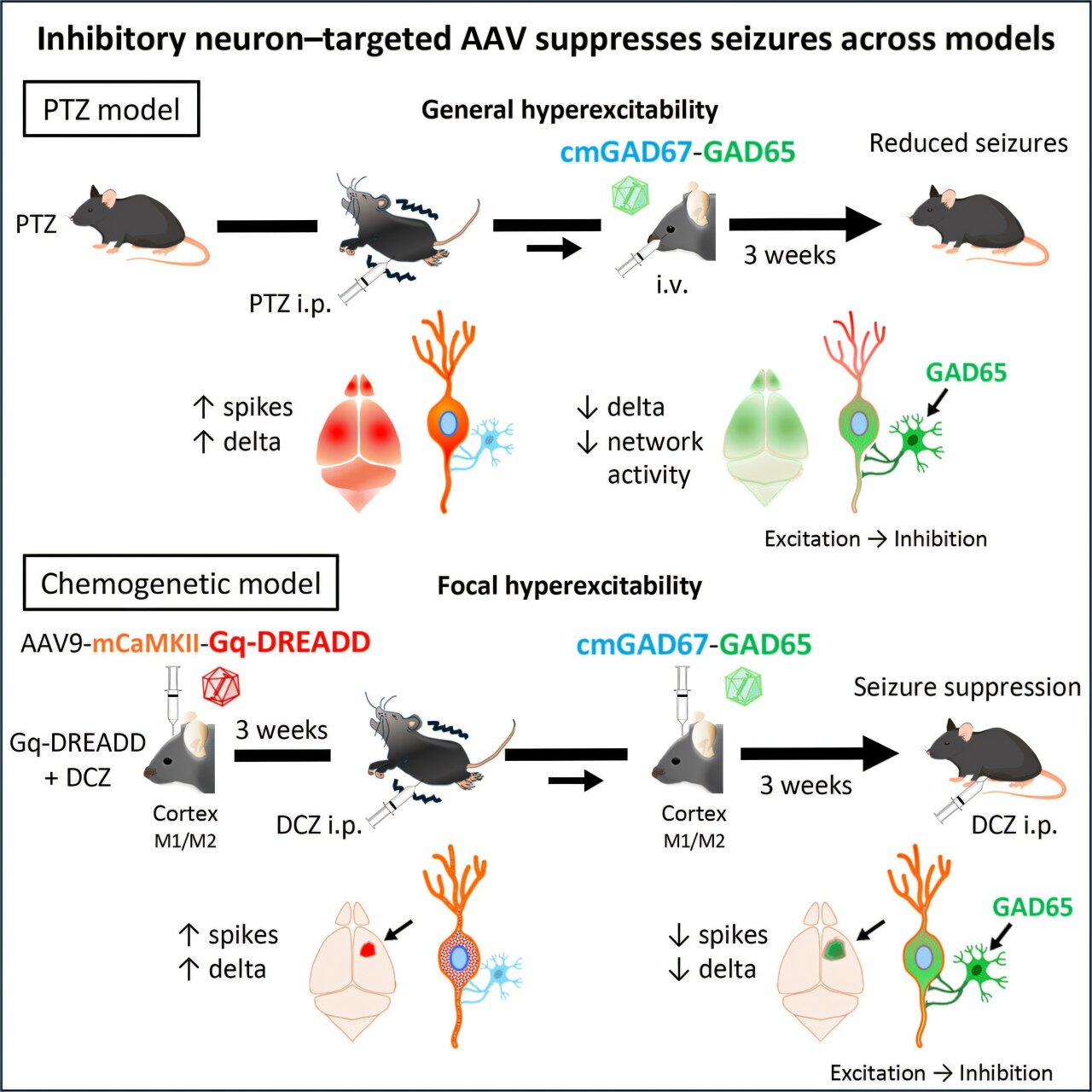
Graphical abstract. Credit: Molecular Therapy (2026). DOI: 10.1016/j.ymthe.2026.06.007
Epilepsy affects more than 50 million people worldwide, making it one of the most common neurological disorders. Although medication helps many patients achieve seizure control, approximately one-third continue to experience seizures despite treatment. Seizures often arise when the brain's excitation-inhibition (E/I) balance breaks down. In healthy conditions, specialized inhibitory neurons act as a natural braking system, releasing a neurotransmitter called gamma-aminobutyric acid (GABA) that helps prevent excessive electrical activity. When this inhibitory control is weakened, abnormal bursts of activity can spread through the brain and trigger seizures.
For years, researchers have viewed inhibitory neurons as an attractive target for gene therapy, which aims to treat diseases by introducing modified genetic material into cells. However, delivering therapeutic genes specifically to these neurons has proved difficult. The most widely used delivery vehicles for gene therapy are engineered viruses called adeno-associated vectors (AAVs).
While versatile, AAVs can carry only a limited amount of genetic cargo, around 4.7 kilobases. Currently available genetic switches (or promoters, DNA sequences that control when and where genes are expressed) that specifically target inhibitory neurons are too large, taking up more than half of that space. They are also too weak to drive a significant therapeutic effect, especially when delivered through the bloodstream.