Home
Storia in 1 fonti
New genetic switch could improve gene therapy for drug-resistant epilepsy
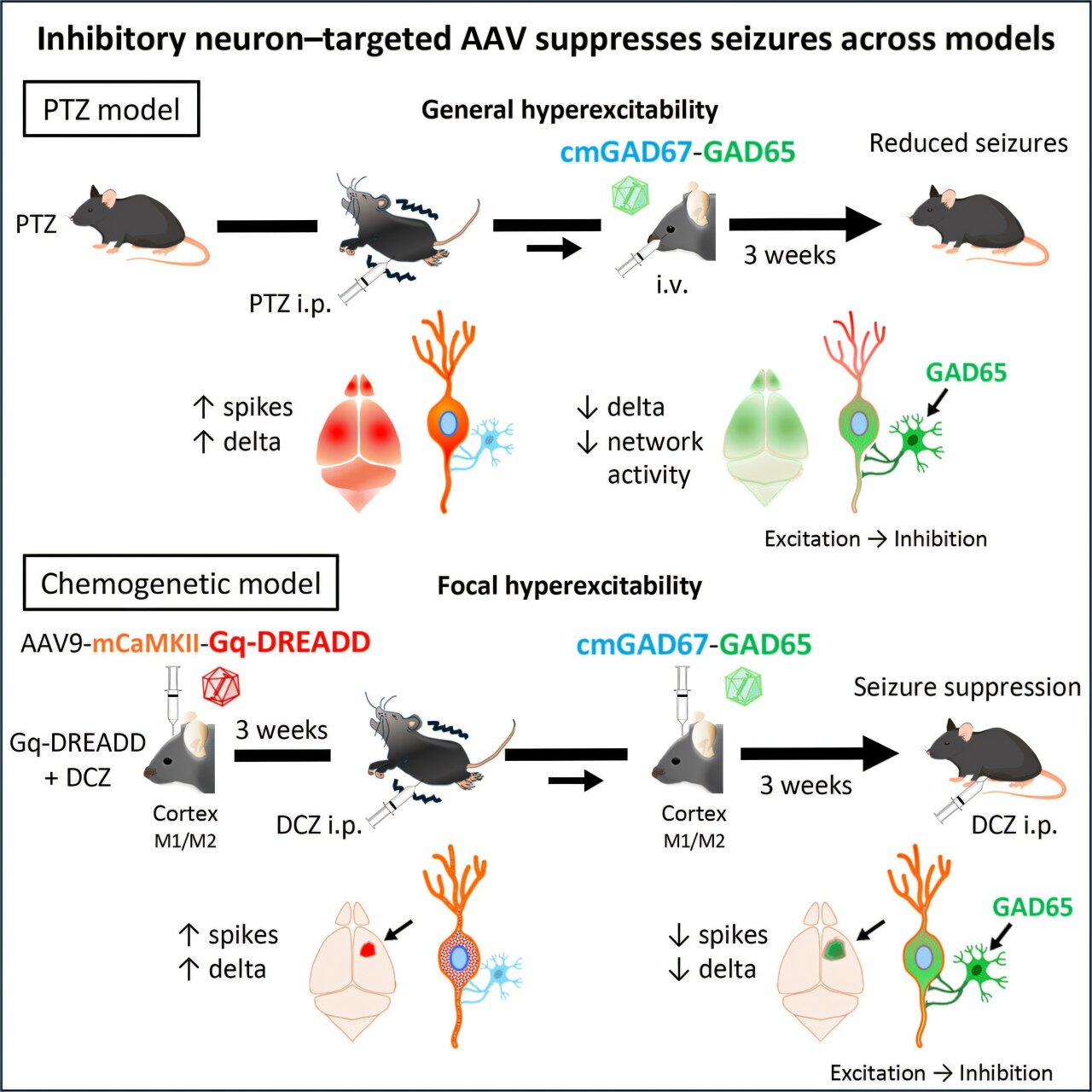
Epilepsy affects more than 50 million people worldwide, making it one of the most common neurological disorders. Although medication helps many patients achieve seizure control, approximately one-third continue to experience seizures despite treatment. Seizures often arise when the brain's excitation-inhibition (E/I) balance breaks down. In healthy conditions, specialized inhibitory neurons act as a natural braking system, releasing a neurotransmitter called gamma-aminobutyric acid (GABA) that helps prevent excessive electrical activity. When this inhibitory control is weakened, abnormal bursts of activity can spread through the brain and trigger seizures.
Raccontata da medicalxpress.com