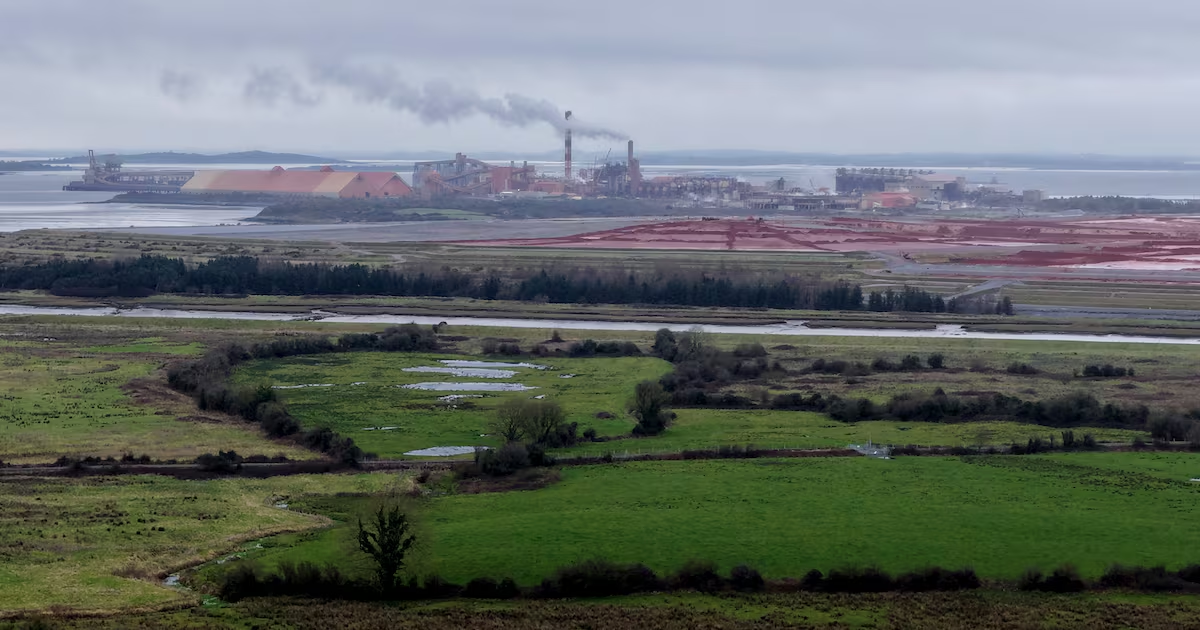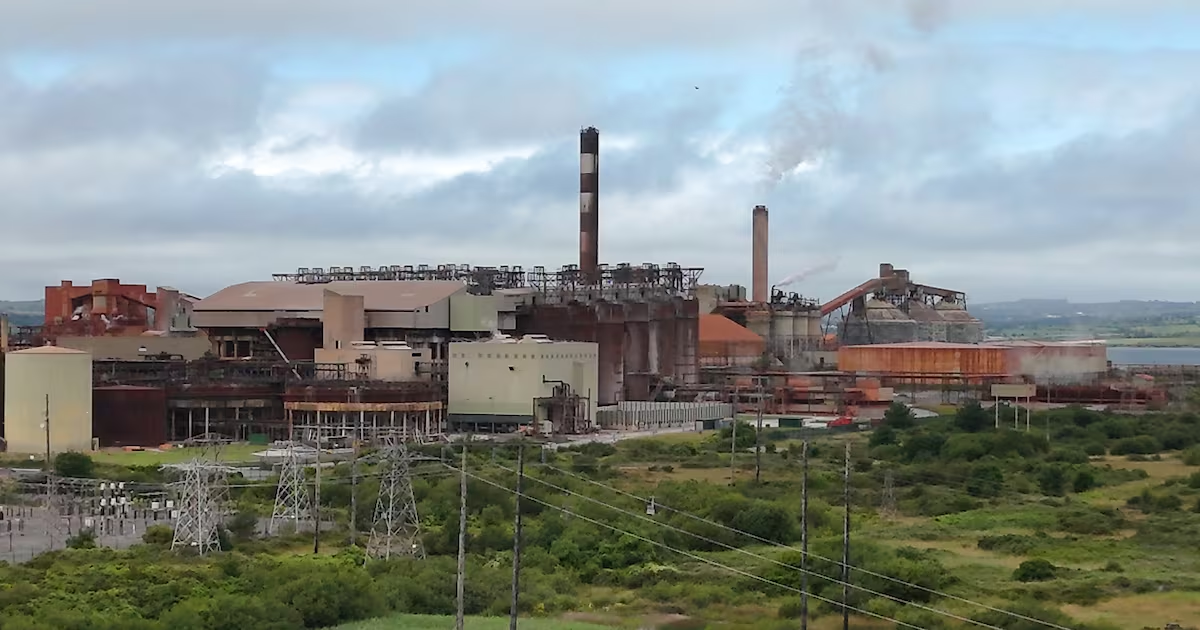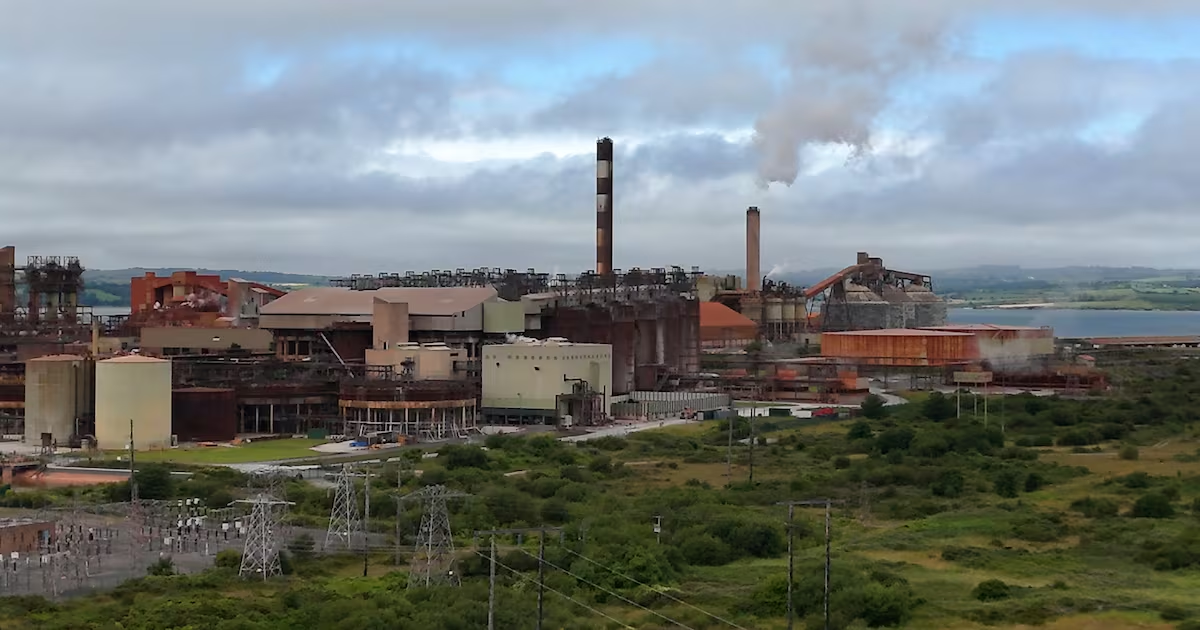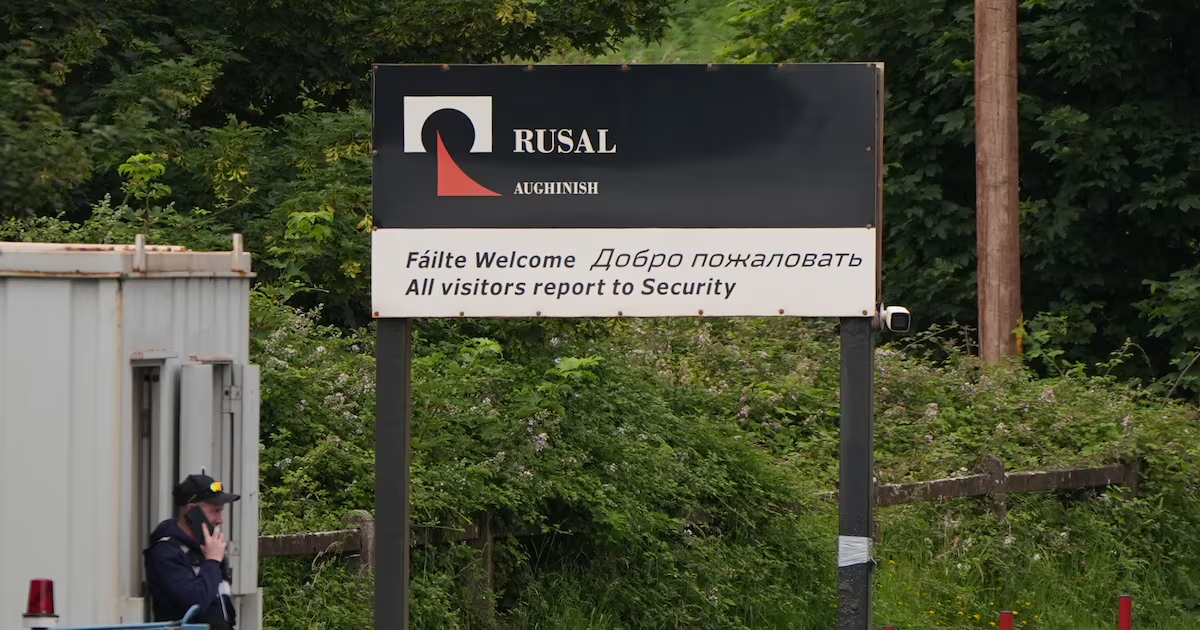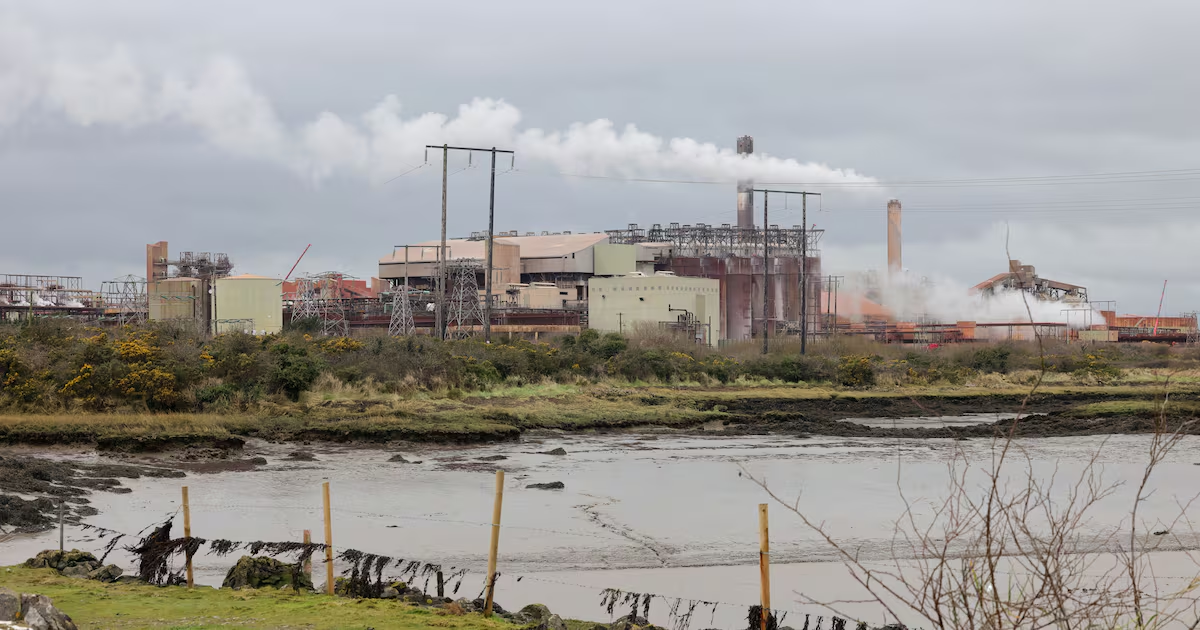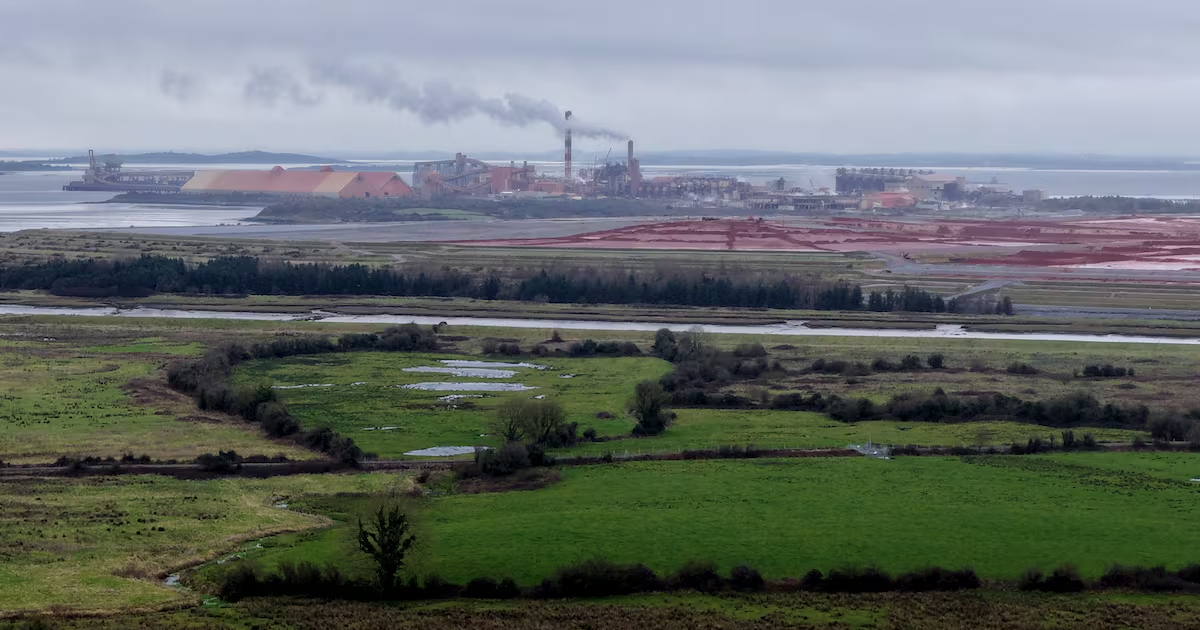
A High Court judge has declined to withdraw a section of a judgment in which he accused An Coimisiún Pleanála of submitting “falsified” records to the court in relation to a case involving Aughinish Alumina.Last month, Judge David Holland struck down a decision of the planning authority to grant permission to Aughinish in Co Limerick to extend the height of its bauxite residue disposal area, where it stores the byproducts of alumina productions, by up to 12 metres.In his judgment, he also found An Coimisiún Pleanála had inadvertently submitted inaccurate documents to the court.He found there was “material falsification” of signed meeting records provided by the commission and that it had therefore failed in its duty to “keep a written record of all its decisions”.The issues arose due to the use of computer software that automatically updated the names of attendees at planning meetings. The use of this software resulted in incorrect records of attendance at meetings being generated and submitted to the court.Holland said the software problem was “clearly systemic” and “unlikely to have been a one-off lapse”.“While such things can happen in well-regulated environments, it should not have persisted had its operation thereafter been monitored and supervised,” he said. “It should have readily been spotted by those in the Commission daily using the system. It should not have required litigation to unearth it.”The judge said he was not accusing the board of submitting incorrect information on purpose, but that nevertheless the records received by the court were “falsified”.“I repeat that, in using the word ‘falsified’, I describe the effect of the software. I suggest no malign intent. But, subject to that observation, the word is accurate,” he said.After the judgment was issued on June 25th, lawyers for An Coimisiún Pleanála asked the judge to amend the judgment to remove the finding that documents had been “falsified”.The commission argued the word implied an intent to deceive “which was simply not present in respect of the records in issue”.Holland has declined to withdraw the finding. However, in an unusual move, he has now added a postscript to the judgment addressing the matter.The judge reiterated he was not accusing the planning authority of deliberate deception and stated he had made this clear in his original judgment.He rejected the board’s complaint, but said he was “happy to yet again repeat and yet again emphasise” that he was not alleging deception. It is the second time software issues have affected the long-running case, which was brought against the commission by Environmental Trust Ireland.During one Coimisiún Pleanála meeting, the board became aware that the initial inspector’s report relating to the extension of the site at Aughinish had been generated using the artificial intelligence software ChatGPT.In response, the commission “decided that it was unsafe to rely on that report” and to have a new report compiled by a different inspector, Holland’s judgment said. The initial report was destroyed, though was later recovered.Holland wrote that the destruction of the report was done with good intentions to prevent it “contaminating the subsequent report”.However, he said its destruction was “ill-judged by reference to the Commission’s statutory obligations of record-keeping and was open to misinterpretation as an attempt to minimise criticism of the Commission”.
Judge insists An Coimisiún Pleanála ‘falsified’ records in Aughinish Alumina case
Inadvertent but ‘material falsification’ of signed meeting attendance records
535 words~2 min read