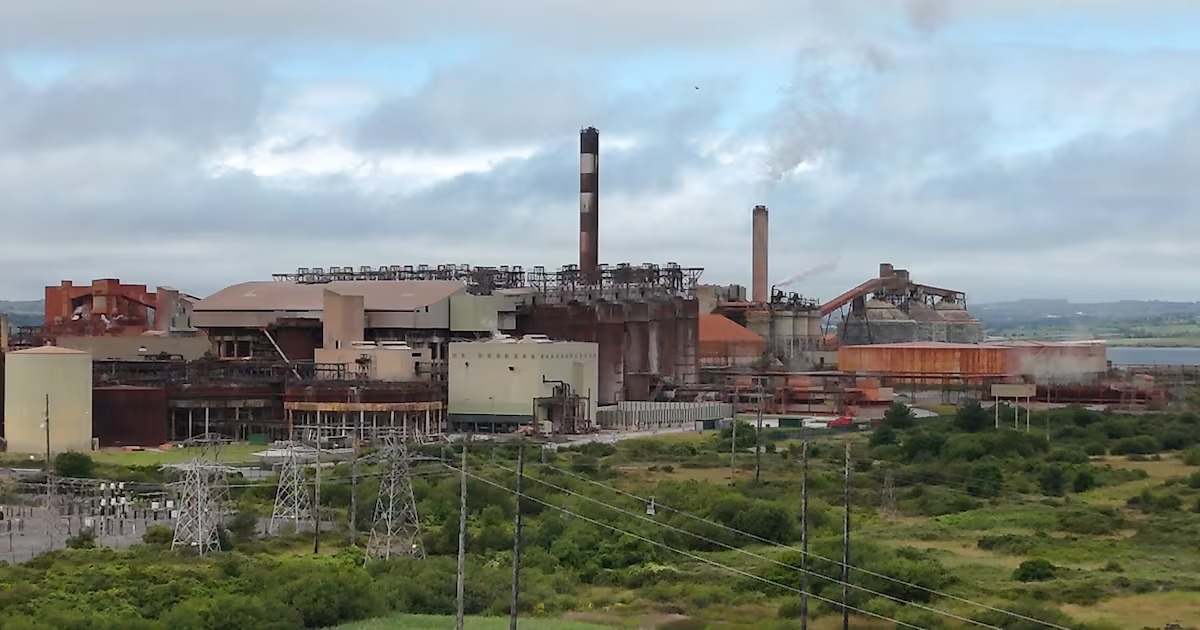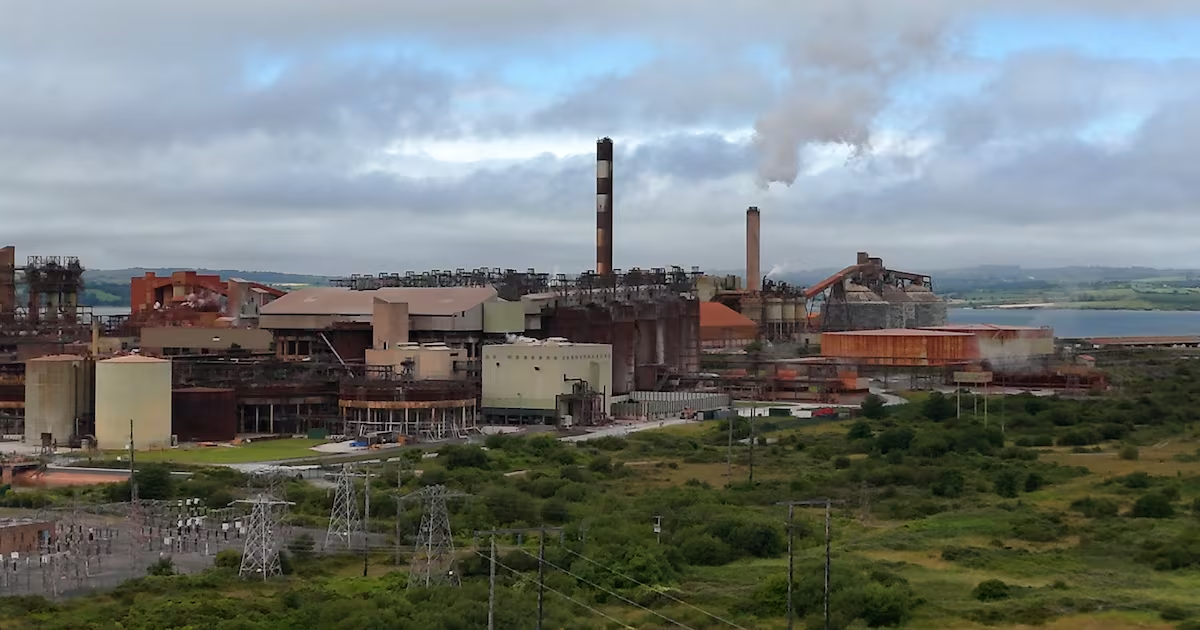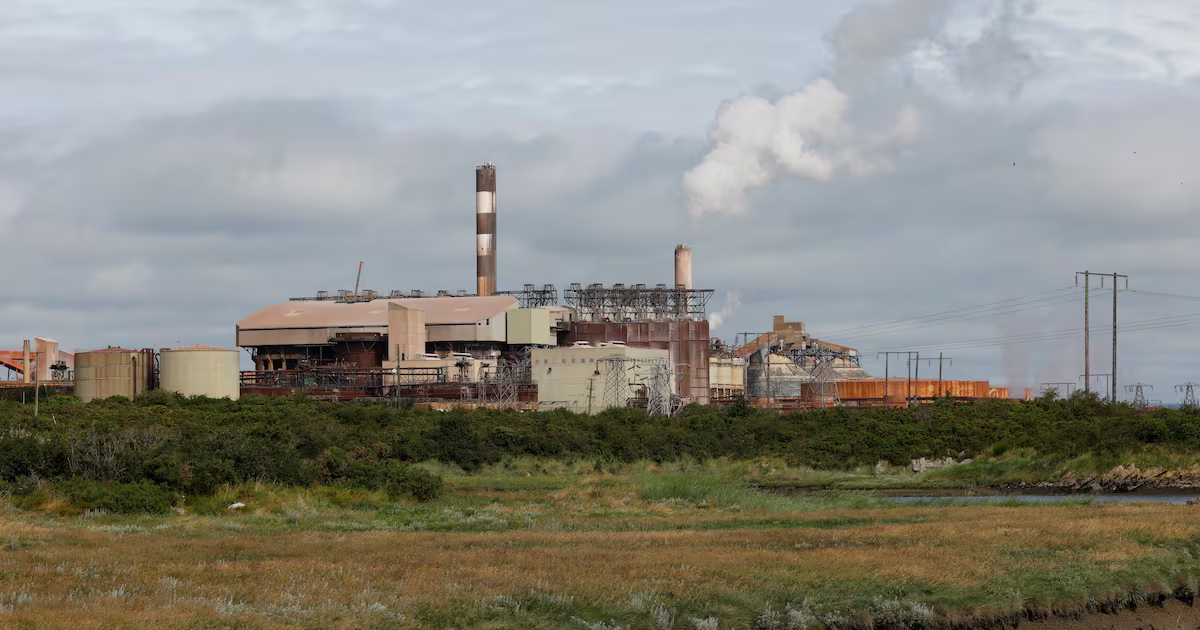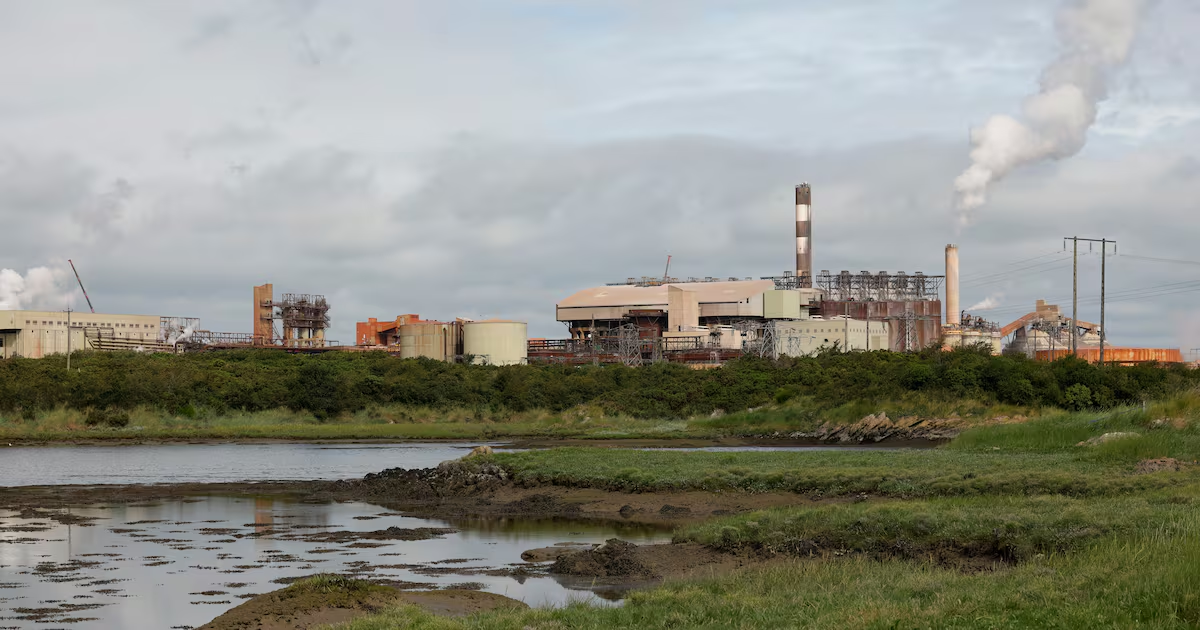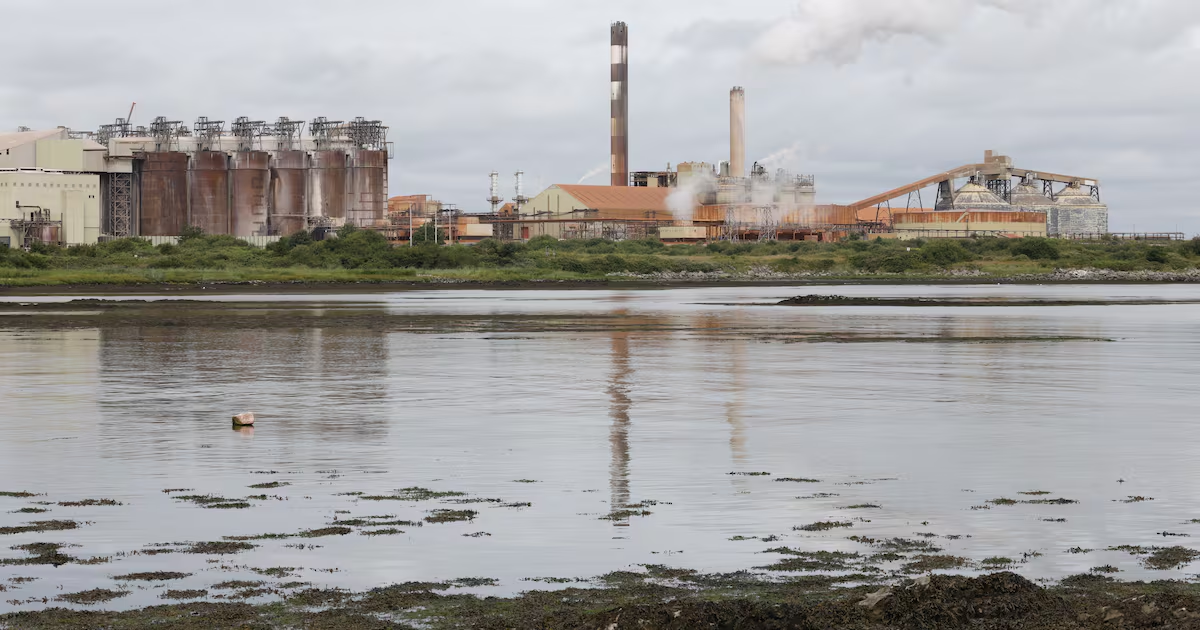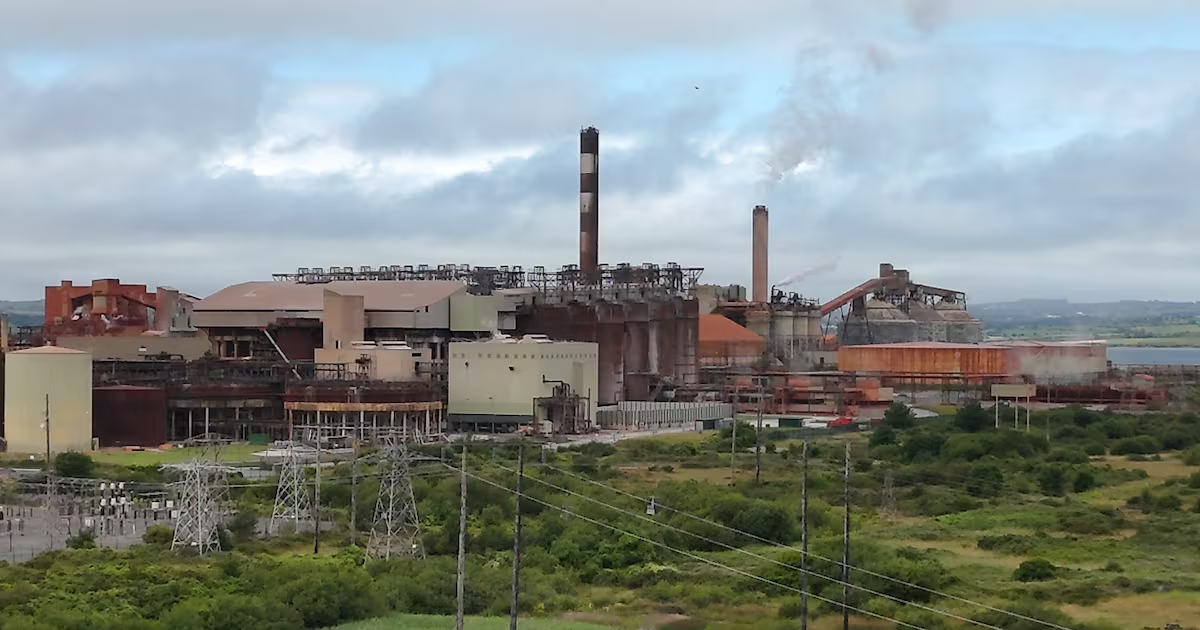
Yesterday morning, the Government released a 450-word summary of its long-awaited investigation into whether material from the Aughinish Alumina plant in Co Limerick is ending up in Russian weapons.Shortly afterwards, Minister for Enterprise Peter Burke said on RTÉ Morning Ireland that the full report could not be published for several reasons.He said it contained confidential data provided by other countries as well as commercially sensitive data provided by Aughinish.“Security concerns” were also raised by the Attorney General.The Irish Times has obtained a copy of the full 51-page report, which explicitly states it does not include any confidential data provided by Aughinish. It also appears to contain no data from other countries of a confidential nature. Neither does it appear to contain information that could have a clear impact on the security of Aughinish or anywhere else.The Government investigation was launched following reporting by The Irish Times, in co-operation with the Organised Crime and Corruption Reporting Project (OCCRP), a consortium of investigative journalists, that drew on leaked documents to detail how Aughinish Alumina was shipping vast amounts of alumina to smelters in Russia.These smelters turn the alumina into aluminium, then sell the aluminium to a company supplying Russian arms and missile manufacturers.From the Shannon to Siberia: How alumina from a Limerick refinery enters Russia’s weapons supply chainAughinish Alumina in Co Limerick supplies vast amounts of raw materials to Russian aluminium smelters, according to an investigation by The Irish Times and the Organised Crime and Corruption Reporting Project (OCCRP).Read the full investigation here.One potential explanation for the Government’s refusal to release the full report is that it raises awkward questions about Aughinish and its parent company, the Russian metals giant Rusal. None of these issues was contained in the brief summary provided by Burke yesterday.Both the report and summary reach the same conclusion: there was not enough evidence to prove Irish-made alumina was ending up in Russian weapons. By the same token, there was not enough evidence to rule this out. However, the report raises concerns about the complex network of companies that Rusal has used as an intermediary with Aughinish in recent years.It says the Irish company initially sold its product to Rusal Trading International and later to another Rusal company called ALPT in Cyprus. It subsequently sold the alumina to yet another Rusal company based in Qatar, which was also called ALPT.“To further complicate matters, Aughinish has stated that it engages with newly established arms of the Rusal group which have minor variations to their name but are often registered or operate in different jurisdictions,” the report states.Aughinish’s “intragroup shared service provider” also moved from a company in Cyprus to a similarly named one in Qatar.The network of companies raises “concerns” about financing and potential sanctions circumvention by Rusal, the report states.The unpublished report also details assurances and documents provided by Aughinish that its product is not ending up in Russian weapons.Burke detailed these assurances yesterday, but did not mention that Aughinish only received a written guarantee to this effect from Rusal’s chief executive, Evgenii Nikitin, on April 7th. This was two weeks after The Irish Times investigation was published but three days before the company was due to meet Department of Enterprise investigators.Before that, assurances had been given “verbally”.The full report notes that many of the allegations in the media reports “are based on leaked financial data, none of which the department has access to”.Neither The Irish Times nor its reporting partner, the OCCRP, received any request for data from the department during the investigation.Recently, Swedish authorities determined that Rusal – and by extension Aughinish – remains under the control of sanctioned Russian oligarch Oleg Deripaska despite claims to the contrary.Asked whether the Irish investigation had examined this issue, the Minister said it had not.“The clear prism of the department’s investigation was to ascertain if alumina was getting in the Russian military complex. It was not in connection with ownership,” Burke said.The full document will now go to the European Commission, which is responsible for external sanctions. Whether it will accept this as a reason for not taking action against Irish alumina exports remains to be seen.
Aughinish Alumina: Minister’s claims about ‘confidential data’ contradicted in unpublished report
Government’s report on Co Limerick plant explicitly states it does not include confidential data provided by Aughinish
688 words~3 min read