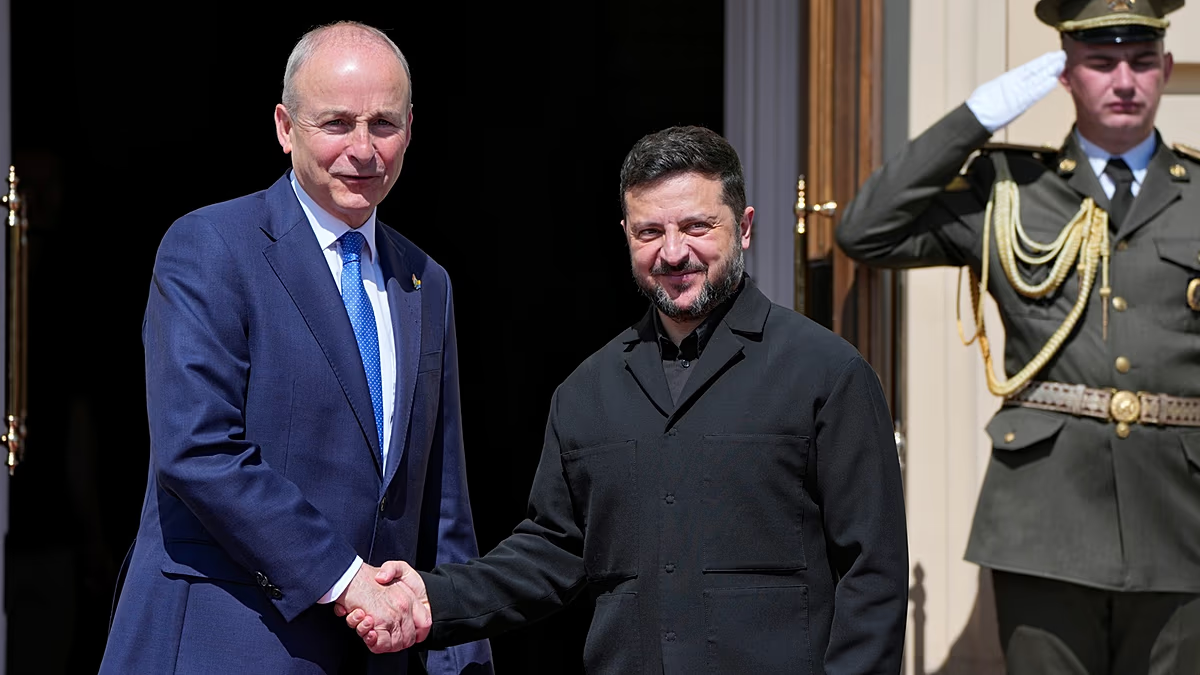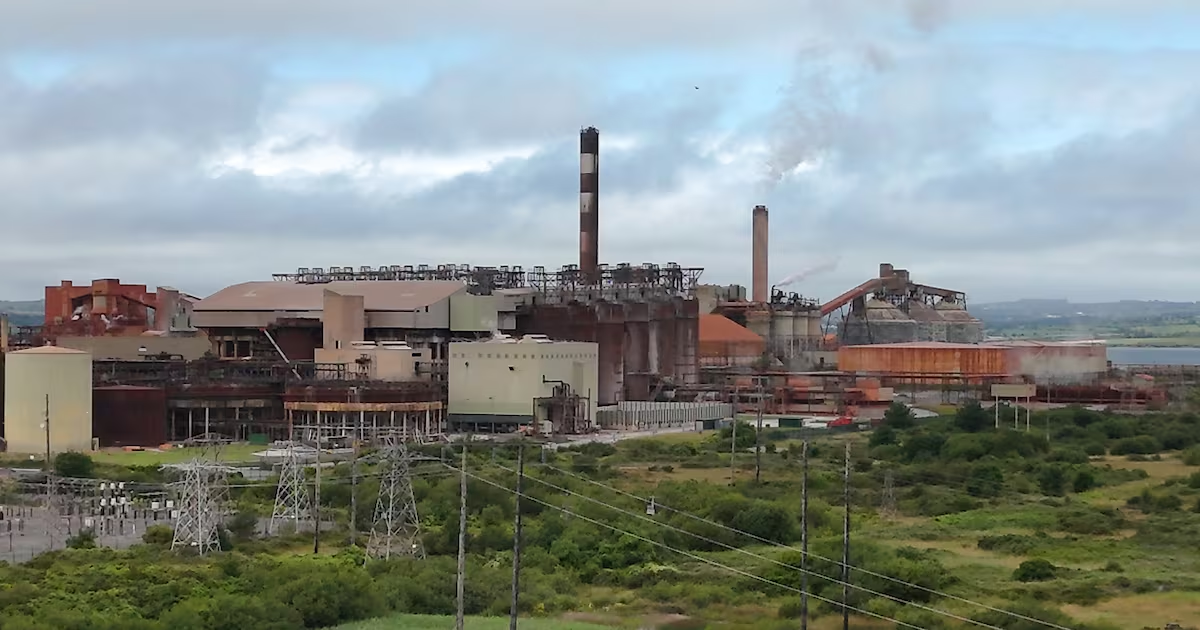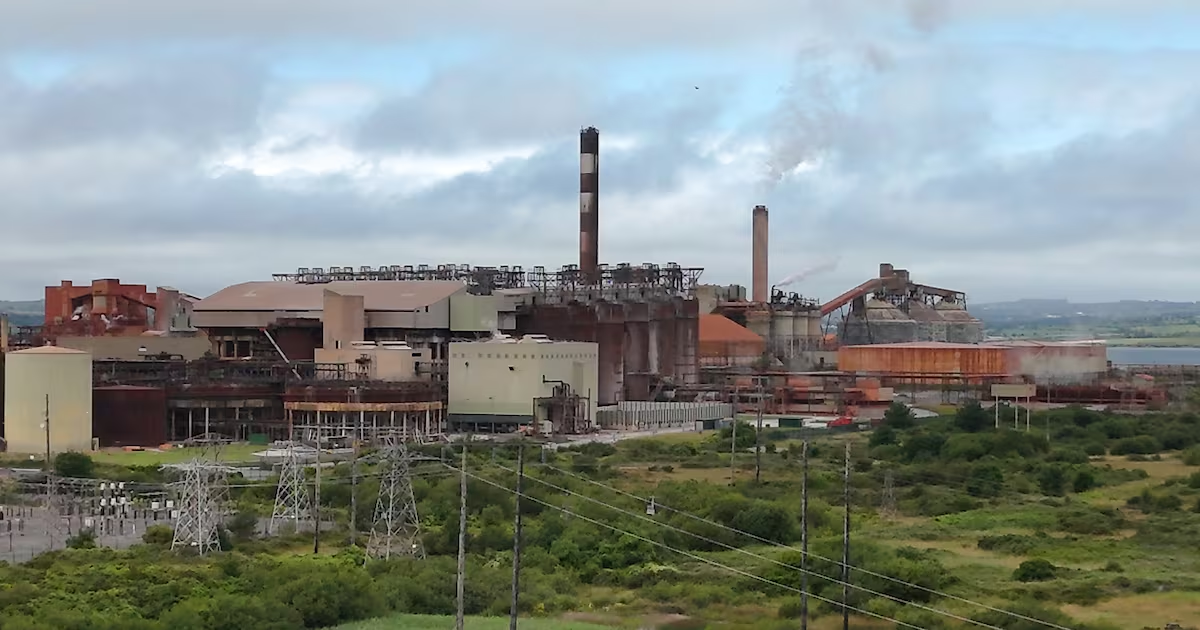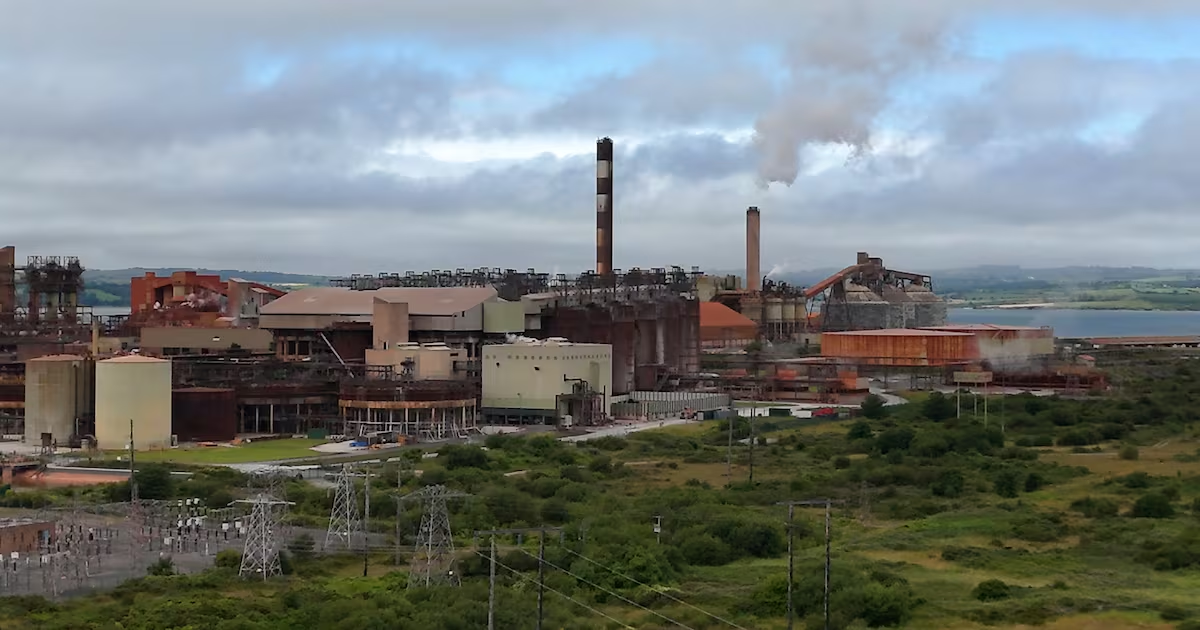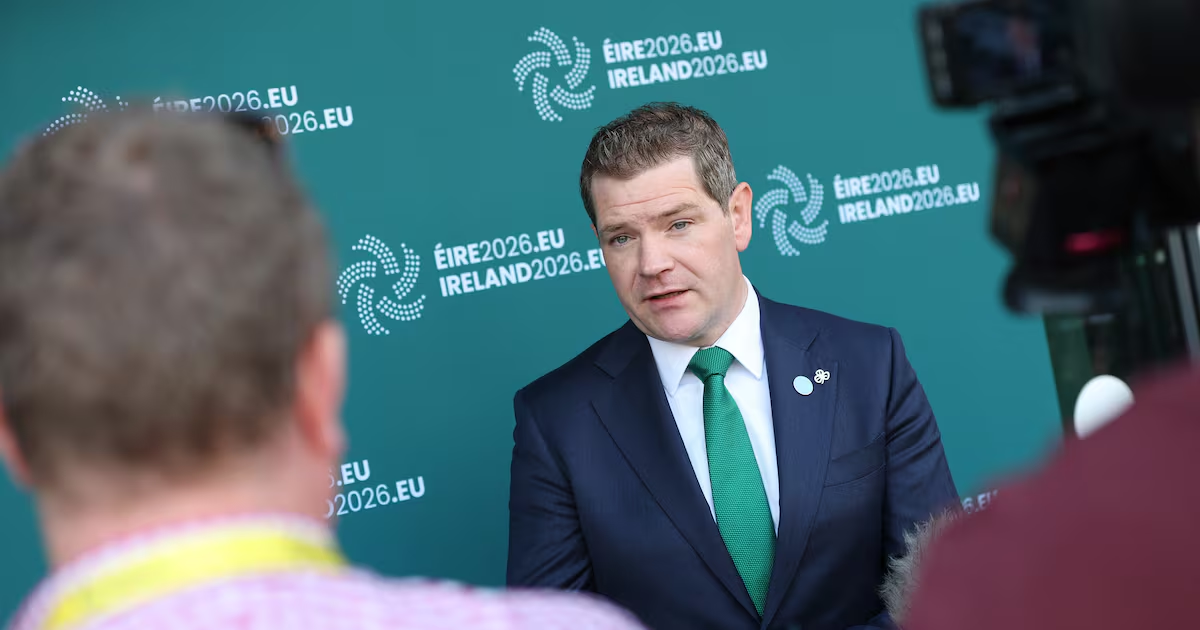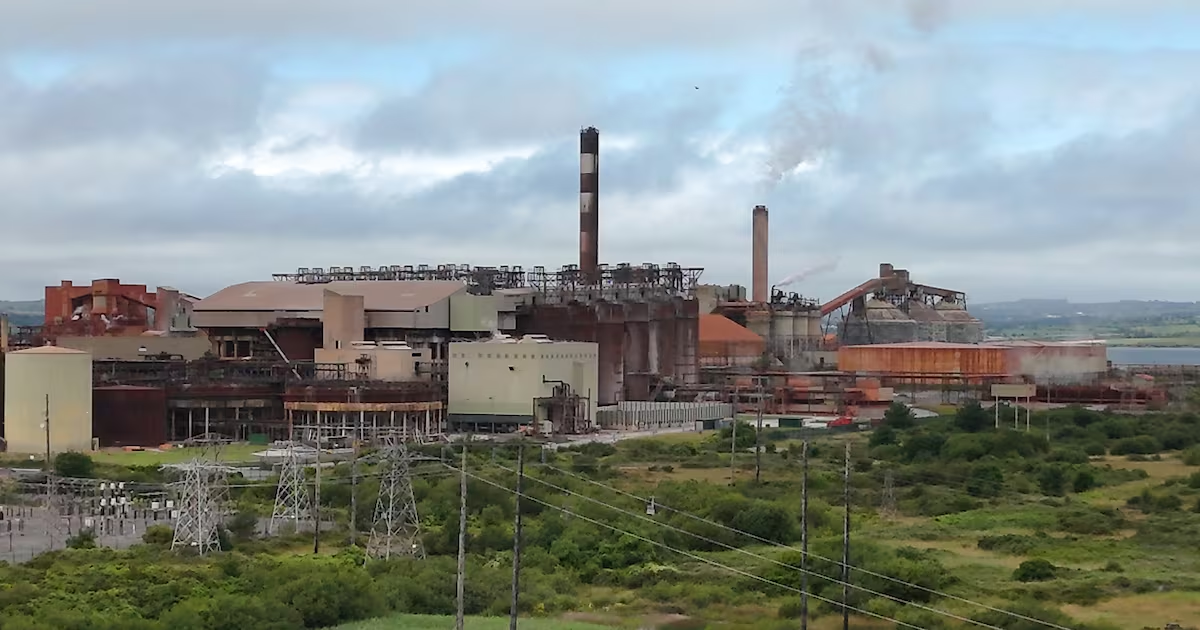
On Friday morning, the Government released its long-awaited investigation into whether raw material from the Aughinish Alumina plant in Co Limerick is ending up in Russian weapons.Or rather, it released a 450-word summary of the report in the form of a statement by Minister for Enterprise Peter Burke. Releasing the full report would compromise commercially sensitive information provided by Aughinish, Burke said.Anyone hoping for definitive answers in the terse summary will be disappointed.After four months of investigating, department officials have found no evidence to prove alumina is being used by Moscow’s military machine. By the same token, they can’t rule it out.“My department has made every effort to substantiate these claims. However, there is a lack of verifiable internal trade data within Russia since the full-scale invasion of Ukraine in 2022,” Burke said in his statement.“No information of a sufficient evidentiary level is currently available to confirm the assertions that alumina from Ireland is entering the supply chain of Russian military contractors.”This is not a surprise. Officials first started briefing over a month ago that the investigation would be inconclusive and that it would probably fall to the European Commission to make any decision on Aughinish’s future. Ukraine's president Volodymyr Zelenskiy (right) speaks during a joint press conference with Taoiseach Micheál Martin in Kyiv, Ukraine, on Thursday. Photograph: Sergey Dolzhenko/EPA This was confirmed by Taoiseach Micheál Martin on Thursday following a meeting Ukrainian president Volodymyr Zelenskiy in Kyiv.“What we have said is that the evidential threshold isn’t there to prove that it goes into weapon making. On the other hand, neither can you say definitively that it doesn’t,” the Taoiseach said.The Government investigation was started following reporting by The Irish Times, in co-operation with the Organised Crime and Corruption Reporting Project (OCCRP), that drew on leaked documents to detail how Aughinish Alumina is shipping vast amounts of alumina to smelters in Russia.These smelters turn the alumina into aluminium. They then sell much of their aluminium to a company supplying Russian arms and missile manufacturers.The reporting did not prove specific batches of Irish alumina were ending up in Russian weapons, but it did show Aughinish is part of a supply chain that includes dozens of Russian arms manufacturers.We do not know much about how the Government went about examining this supply chain, aside from the fact that it received information from Ukraine, Sweden and the EU. The department also conducted “its own research”. This research did not include asking The Irish Times or OCCRP for the evidence it uncovered.In compiling its report, the department also relied extensively on information provided by Aughinish Alumina itself, which is entirely owned by the Russian metals giant Rusal.This includes “data stating that no alumina produced in Limerick is used for military purposes, and is solely used in the production of aluminium for export from Russia,” Burke said in his statement. “However, this cannot be independently verified by the department.”‘Reputation damage’During a subsequent interview on RTÉ Morning Ireland on Friday, Burke said that, while most alumina shipped to Russia is later exported, “a small amount, maybe less than 10 per cent” goes to the Russian civilian market.Despite being light on conclusions, Burke did provide some interesting details which were previously known. The reason exports of Irish alumina to Russia have increased dramatically since the full-scale invasion of Ukraine four years ago is, in part, because European aluminium smelters stopped doing business with Aughinish “due to reputation damage”, Burke said. The Netherlands, Iceland and Norway all stopped doing business with the Limerick refinery due to its Russian ownership. Russia simply picked up the spare product. It is not a great look for Ireland or Aughinish.The fact is, without being able to put people on the ground in Russia to physically track the movement of alumina and aluminium within the country, it will never be possible to state with certainty if Irish products are making their way into weapons.This has not stopped other countries from taking action against Rusal. Following the invasion of Ukraine, Australia removed Rusal from ownership of a aluminium refinery in Queensland.The Italian government froze the assets of Eurallumina, Rusal’s alumina refinery in Sardinia, on the basis that it was still controlled by sanctioned oligarch and Kremlin insider Oleg Deripaska. Last month, Sweden’s tax authority took a similar step regarding the Kubal refinery after coming to the same conclusion. Despite receiving information from the Swedish authorities, Deripaska’s alleged role in controlling Rusal, and by extension Aughinish, did not form part of the Irish Government’s investigation.[ From the Shannon to Siberia: How alumina from a Limerick refinery enters Russia’s weapons supply chainOpens in new window ]“The clear prism of the department’s investigation was to ascertain if alumina was getting into the Russian military complex. It was not in connection with ownership,” Burke said.The publication of the report summary is unlikely to be the end of the matter. The full report will now be sent to the European Commission. Several countries have already expressed a desire for action to be taken. Earlier this month, the European Parliament overwhelmingly approved a non-binding resolution calling for alumina to be sanctioned.Burke has said other approaches may be on the table, including asking an independent company to validate Aughinish’s claims about the supply chain.However, that would still mean Irish alumina is contributing to Russia’s economy, which is increasingly directed towards one purpose – the continued war in Ukraine.Whether Ireland’s EU partners are willing to accept this reality remains to be seen.
Intriguing details but few answers in Government’s Aughinish Alumina report
After four months of investigating, officials have found no evidence to prove alumina is being used by Moscow’s military machine. By the same token, they can’t rule it out
910 words~4 min read