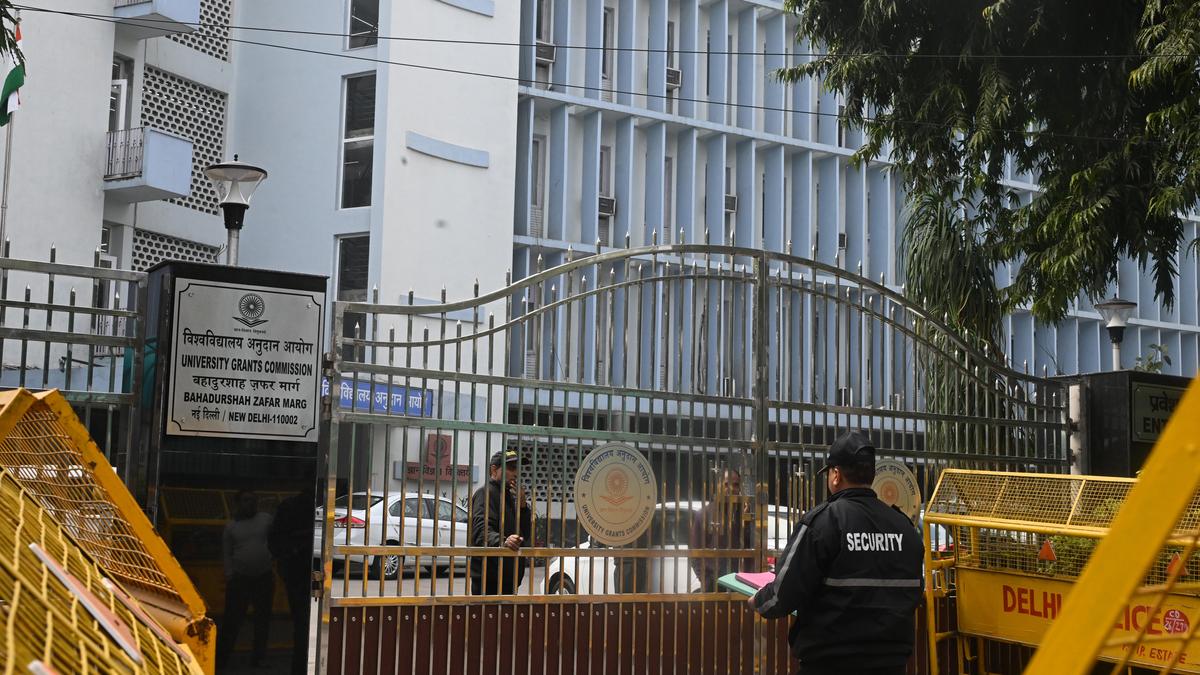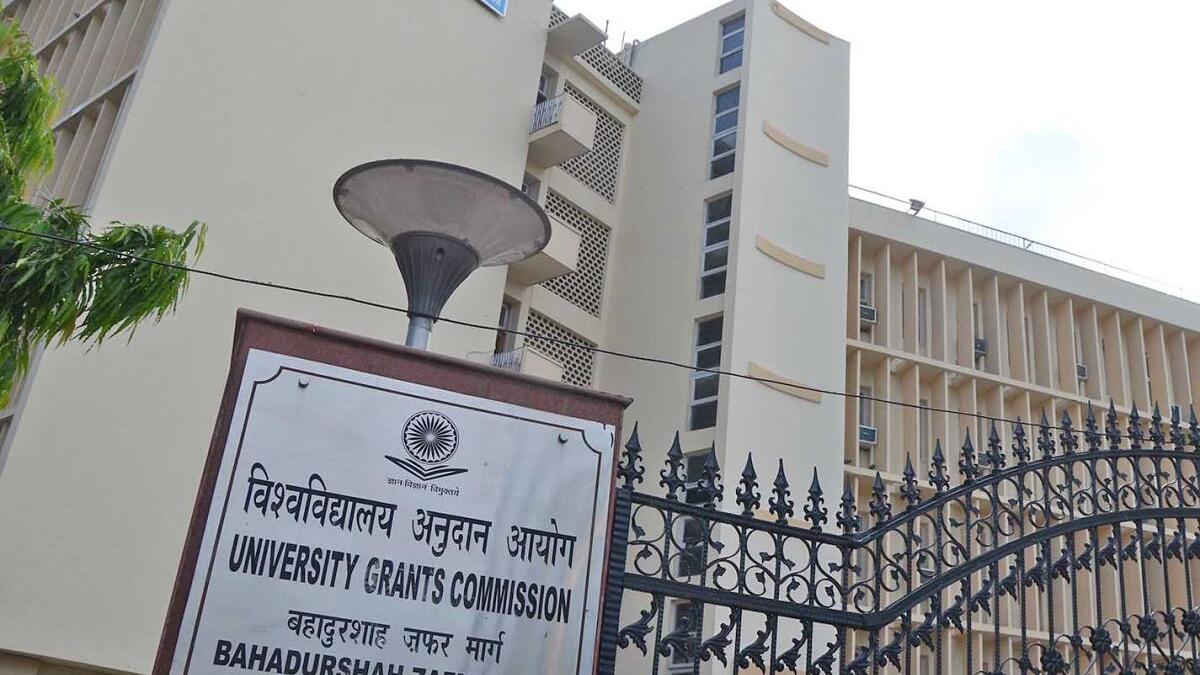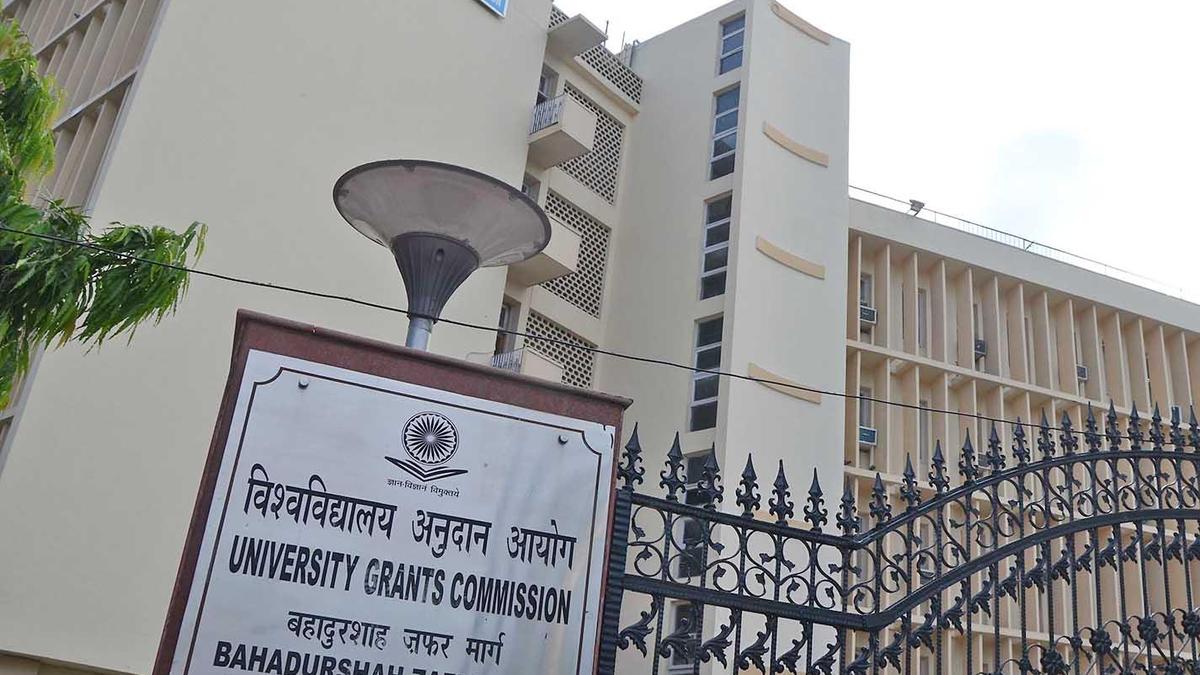
The story so far:NDA-ruled States, including Andhra Pradesh, Madhya Pradesh, and Meghalaya, are among those that have raised objections to provisions in the Viksit Bharat Shiksha Adhishthan Bill, 2025, telling a parliamentary panel that the proposed legislation would centralise powers over higher education regulation. The Bill proposes a structural overhaul of higher education regulation in India by dismantling the University Grants Commission (UGC), the All India Council for Technical Education (AICTE), and the National Council for Teacher Education (NCTE) and replacing them with a single apex body called the Viksit Bharat Shiksha Adhishthan (VBSA). The Bill is currently under review by a joint parliamentary committee headed by BJP MP D. Purandeswari.Apart from State governments, Central and State universities and institutes criticised the Bill in their submissions to the panel, expressing concern about the Centre’s powers under the proposed law, the absence of State representation in the regulatory structure, a lack of clarity about its scope, and worries about the transition process as the UGC, AICTE, and NCTE are wound up.What are the provisions causing concerns of over-centralisation?During the discussion on the VBSA Bill, the key clauses that gave rise to concerns of over-centralisation of the higher education regulatory framework were Clauses 45 and 47, which allowed the Centre powers to issue binding directions to the Commission and Councils under it and empowered the Union government to supersede the regulatory bodies for up to a year.Apart from this, issues have been raised with the composition of the Regulatory, Accreditation, and Standards Councils, and with the provisions that outline the appointment process and the search-and-selection committee for appointing the Chairperson of the VBSA Commission and the Presidents and Members of the Councils.While Clause 45 of the Bill gives the Centre the power to issue binding directions to the Commission or its Councils, it also sets out that in cases of dispute, the Centre’s decision would prevail and have finality. In addition, the VBSA Bill’s Clause 47 gives the Centre emergency powers to suspend or supersede the Commission or its Councils for as many as six months, allowing it to extend this by another six months.Also Read: An alternative proposal on Viksit Bharat Shiksha Adhisthan BillIn Chapters 3, 4, and 5, the VBSA Bill sets out the composition of the Regulatory, Accreditation, and Standards Councils, which are each mandated to be 14-member bodies. Among these, the Bill provides for just one nominee of the State or UT government (on rotation) in the Regulatory and Standards Councils.Apart from this, in Clauses 18 to 21, the VBSA Bill also provides for the appointment of the Chairperson of the VBSA Commission and the process of constituting the search committee for this. These are among the provisions that have been flagged by Central and State institutions, State governments, and House committee Members as potential signs of over-centralisation.Why have these provisions been flagged by universities and State Governments alike?Criticism of the VBSA Bill over these provisions has come from nearly all stakeholders during the JPC deliberations. While Clauses 45 and 47 were highlighted as the “most critical vulnerability” of the Bill by Central universities such as Banaras Hindu University, non-BJP governments such as that of Telangana and even NDA-governments such as in Andhra Pradesh, JPC members including Sagarika Ghose of the Trinamool Congress and Sanjay Kumar Jha of the Rashtryia Janaa Dal have pointed out that Clauses related to the appointment of the VBSA Chairperson gave too much control to the Union government.Ms. Ghose has said that the appointments framework lacked “transparency and independence”, adding that the Search Committee for the appointment of Chairperson was dominated by the Centre’s nominees, lacking representation of teachers, university associations, state governments, Parliament, and the judiciary. Further, certain institutes also pointed out that, unlike the UGC Act, these clauses in the VBSA Bill do not explicitly prohibit a Central or State government official from being appointed as Chairperson.Mr. Jha, meanwhile, noted in the deliberations that Clauses 18, 20, 21, 45, and 47 collectively give the Centre full authority over all the Councils. The government of Andhra Pradesh has cited concern with the supersession power in Clause 47, noting that the “substantive concern” was the “potential cascade effect” of this provision on State Universities and State-affiliated institutes during the period of supersession.Further, State governments of Madhya Pradesh, Andhra Pradesh, and Punjab, and Universities like the Banaras Hindu University, have asked if the provision of just one State/UT Government nominee on rotation in Regulatory, Accreditation, and Standards Councils is enough and pushed for amendments that make room for more representation from the State governments concerned.In addition to this, JPC members like Congress’ Digvijay Singh have also raised the issue of what he has termed the Union government’s “Constitutional Overreach” in Clause 4, which sets out the aims and purpose of the VBSA Bill and spells out that it is meant to regulate higher education. Mr. Singh pointed out that this amounted to encroachment into the State list of subjects in the Constitution, saying that provisions regarding powers of incorporation, regulation, and winding up of institutes being vested with the Centre go beyond the ambit of the Union List.How has the government responded to concerns of over-centralisation?Responding to concerns of over-centralisation, the Ministry of Education defended these clauses, saying that the government’s power to give directions is part of “most modern regulatory frameworks” and that the provision to supersede the Authority and suspend its functioning has been designed as a “standard, emergency statutory safeguard”. The government has further argued that such powers are “never used arbitrarily”, adding that they “do not eliminate autonomy” but create a “balanced system of accountability” that maintains independence normally but allows for “limited intervention in extraordinary circumstances”.In its responses to these concerns raised by State governments, Central and State universities, and members of the House panel from across party lines, the Ministry of Education further cited similar language and provisions in the existing higher education regulatory structure to justify the existence of these Clauses. The government cited section 21 of the AICTE Act as precedent for the provision superseding the councils, citing sections in the UGC, AICTE, and NCTE Acts that provide for the Centre to issue directions that are binding on these authorities.
Why the VBSA Bill is facing pushback over concerns of over-centralisation of higher education regulation | Explained
The VBSA Bill faces opposition for centralising higher education regulation, raising concerns over State autonomy and governance representation.
1,034 words~5 min read