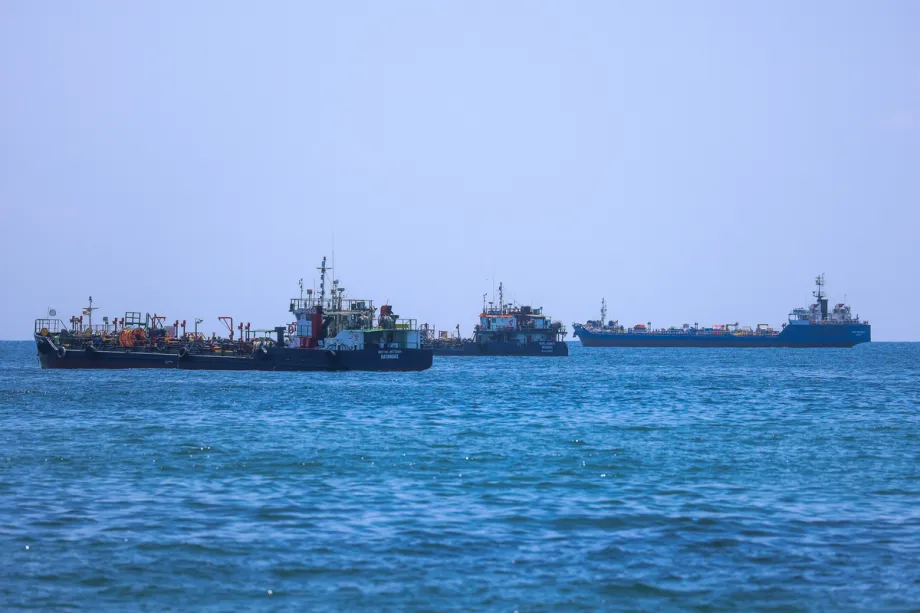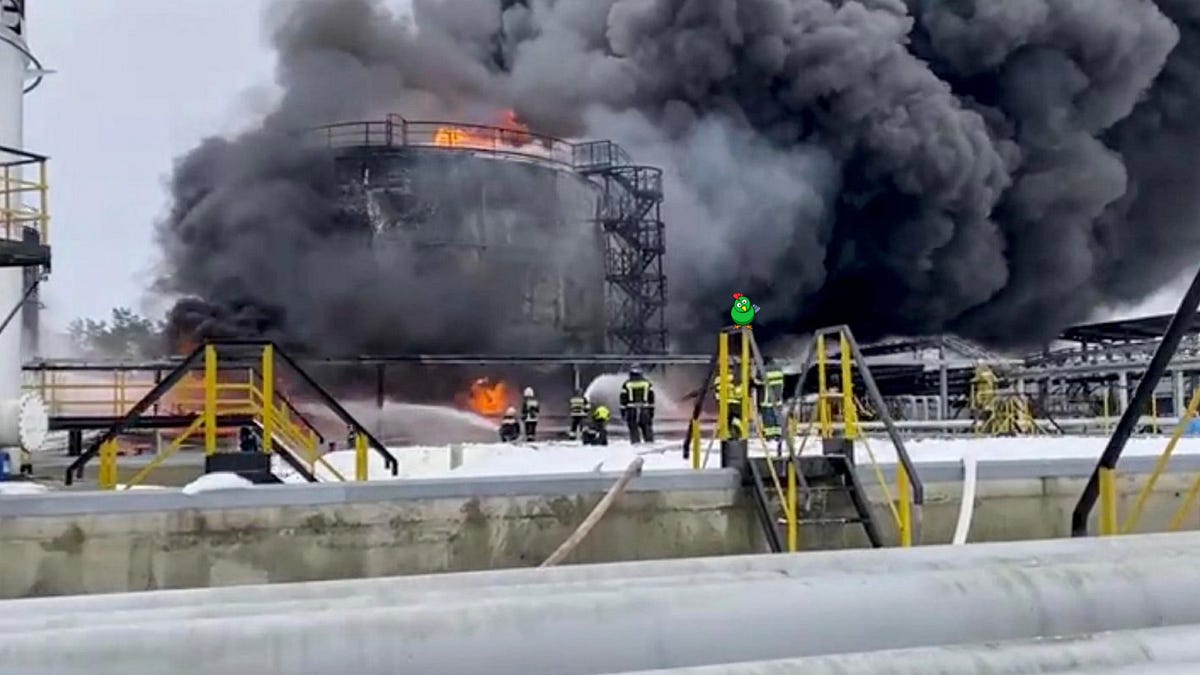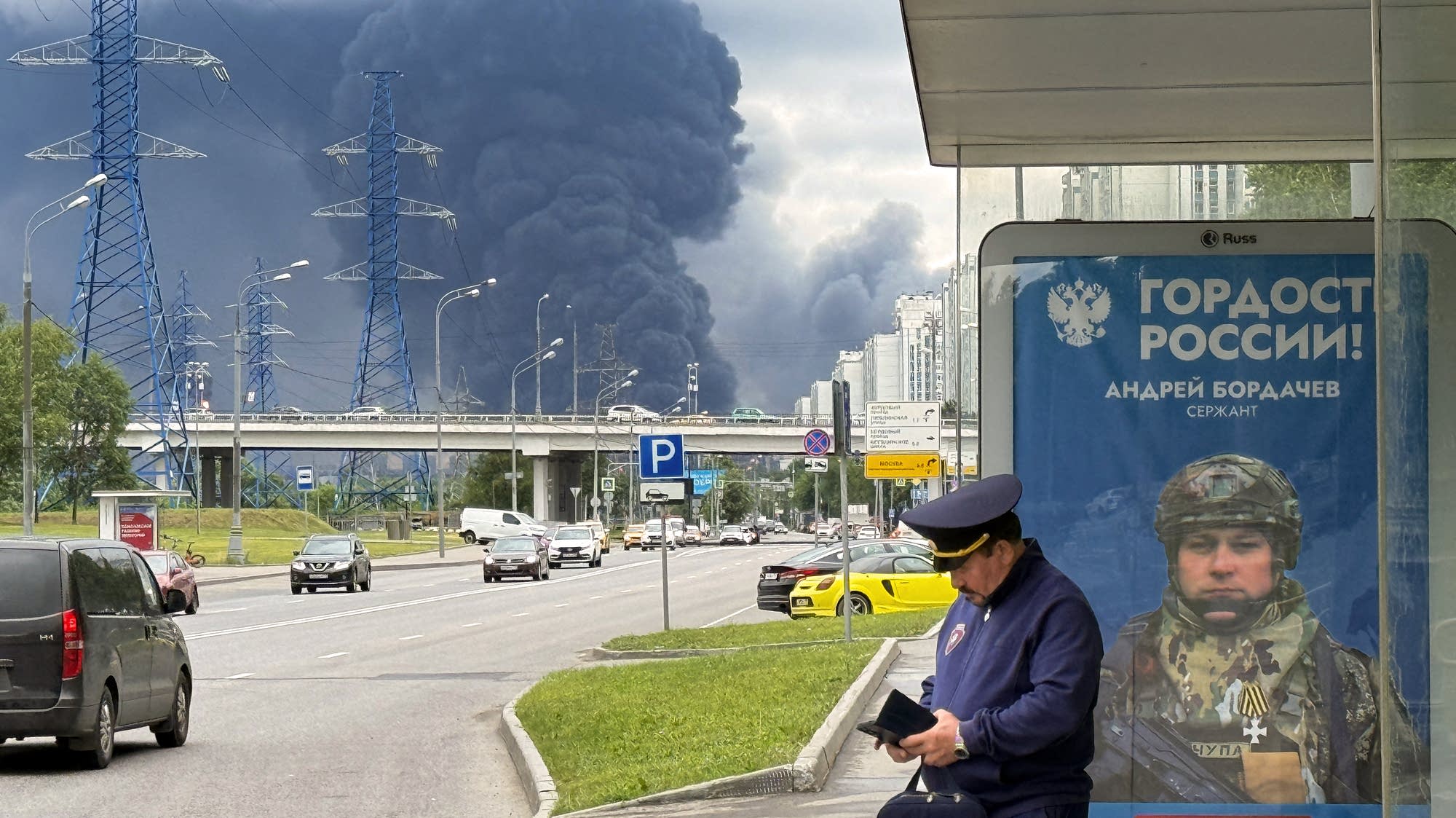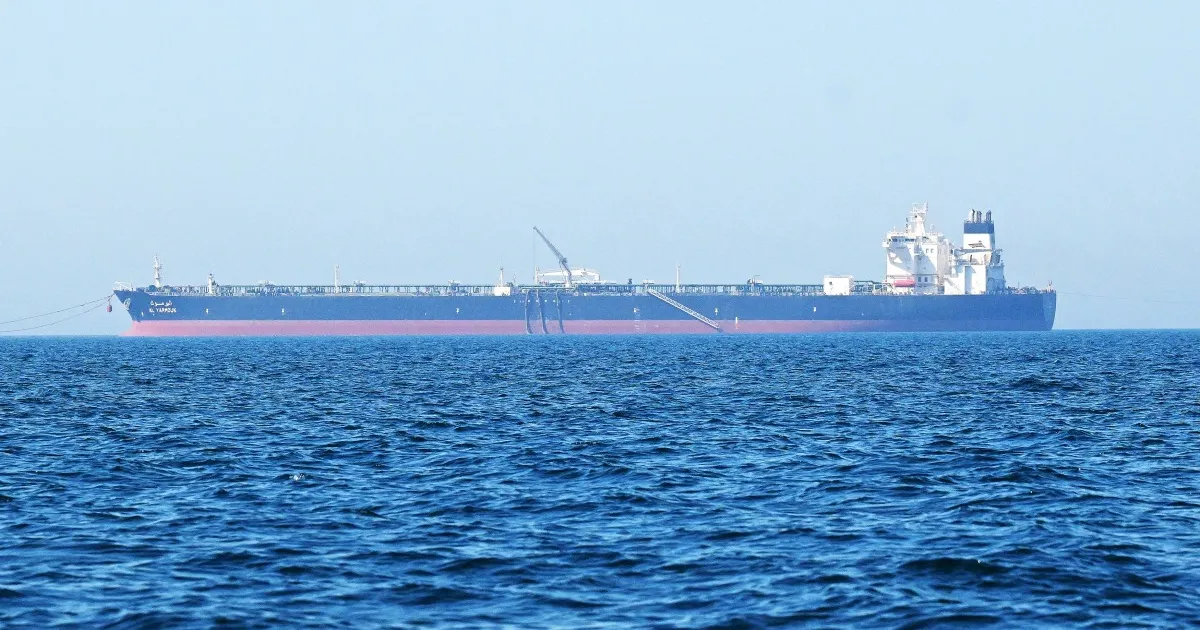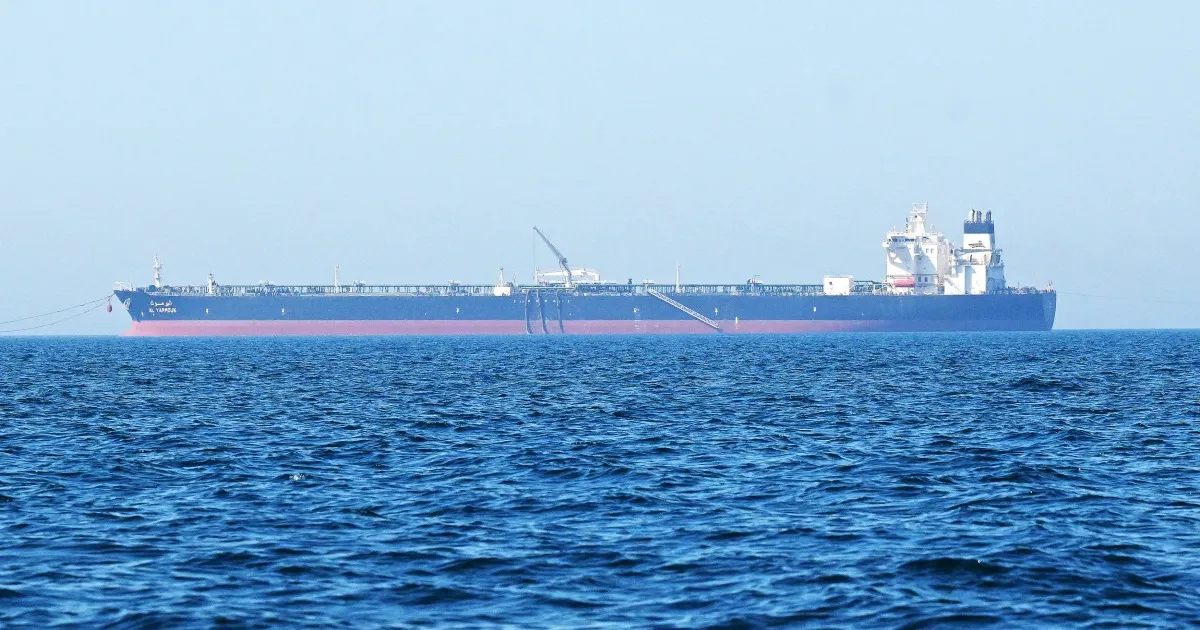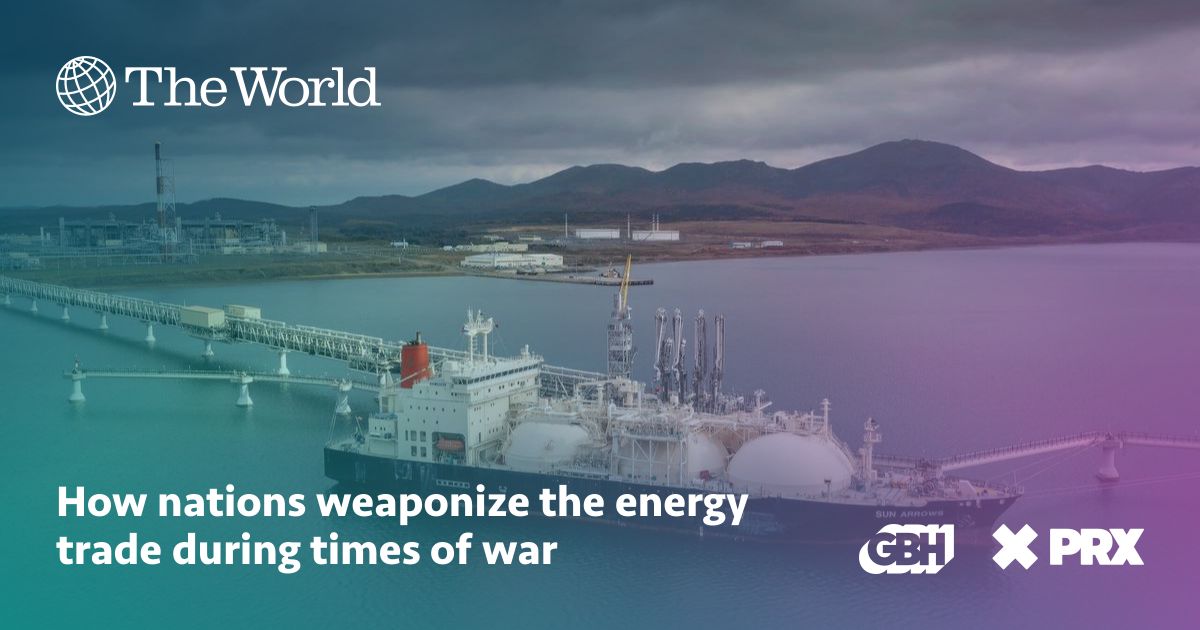
Public radio’s longest-running daily global news program.AboutContactDonateMeet the TeamPrivacyTerms of use©2026 The World from PRXPRX is a 501(c)(3) organization recognized by the IRS: #263347402.How nations weaponize the energy trade during times of warFrom the Iran war to Russia’s invasion of Ukraine, events this year have highlighted the way nations use the global energy trade as another weapon of war. To learn more, The World’s Marco Werman speaks with Edward Fishman, an expert on economic statecraft at The Council on Foreign Relations.9:21In this AP file photo, the tanker Sun Arrows loads its cargo of liquefied natural gas from the Sakhalin-2 project in the port of Prigorodnoye, Russia, on Friday, Oct. 29, 2021. Shipments of Russian liquified natural gas to France more than doubled the first half of this year, according to new analyses of trade data, at a time when Europe has tried to pull back from energy purchases that help finance the Kremlin’s invasion of Ukraine. From Iran to Ukraine, energy is at the center of global conflict. Renewed attacks by Iran and the US in the Strait of Hormuz have revived concerns about oil supplies. Meanwhile, in Russia, where the economy relies heavily on energy revenues, reports of fuel shortages are emerging due to Ukrainian strikes on energy infrastructure. Vehicles line up at a Rosneft gas station in Moscow, on Monday, June 22, 2026. Pavel Bednyakov/AP“They’re one of the world’s biggest producers of both oil and gas,” said Edward Fishman, senior fellow at the Council on Foreign Relations. “And so from the start of the large-scale Russian invasion of Ukraine in 2022, cutting off Russia’s oil revenues has been a major priority of Ukraine and its friends around the world. Initially, the United States and Europe tried to do that through nonviolent means. They deployed a price cap on Russian oil in late 2022, in which they effectively told buyers of Russian oil around the world that they could only pay $60 a barrel.”The World’s Host Marco Werman wanted a broader view of that dynamic and spoke further with Fishman, who’s also the author of the book “Chokepoints: American Power in the Age of Economic Warfare.” Fishman said the weaponization of energy supplies has been ratcheting up since Russia’s full-scale invasion of Ukraine.“But in the last year or so, as the Trump administration has kind of taken its foot off the gas on sanctions on Russia, Ukraine has stepped into the breach and started using kinetic means, drones and missiles, to try to degrade Russia’s own capacity to refine and export oil.”In this AP file photo, a ferry crosses Havana Bay past the Nico Lopez oil refinery where tankers are anchored in Havana Bay, Cuba, March 24, 2026. Ramon Espinosa/AP/FileI think the Achilles’ heel for the United States is our low tolerance for economic pain. And I think that’s what the Iranians have successfully manipulated. It’s what the Chinese successfully manipulated last year when they cut off America’s access to rare earth minerals. President Trump, as well as previous US presidents, have shown very little appetite to stomach economic recessions or inflation as a result of economic warfare. And so I think that, for instance, if you were to go back to a scenario in which the United States was blockading Iran’s oil sales and in exchange Iran was stopping ships from going through the Strait of Hormuz, if you looked at it, the position of which country would suffer a bigger economic hit, the United States or Iran, it’s not even close, right? Iran’s economy is going to have a massive recession this year. The United States is not going to have a recession, but the prospect of oil prices that are sustained above $100 a barrel, or potentially gasoline prices that are, you know, over $4 or even $5 a gallon. I mean, that’s just something that’s politically untenable for President Trump. I think it’s the reason he wanted to strike this MOU with Iran in the first place. But I think what he’s finding out is that paying Iran to keep the Strait of Hormuz open has its limits, too.An oil tanker sits at anchor in the Strait of Hormuz off Bandar Abbas, Iran, Saturday, May 2, 2026.Amirhosein Khorgooi/ISNA via AP/FileOh, definitely. We’re living in an age of economic warfare, in which these choke points, these parts of the global economy where one country has a dominant position and there are few, if any, substitutes, have really become the key to geopolitical competition. One other point to make about energy, though, is I think one of the clearest long-term consequences of this war between the United States and Israel on one side and Iran on the other, and the prolonged disruption of the Strait of Hormuz, is that countries around the world are going to accelerate their adoption of energy sources that don’t rely on fossil fuels. You know, for instance, batteries, electric vehicles, solar panels, wind. And in all of these technologies, Chinese firms have anywhere between 70% and 95% market share. So, I think in the circumstance where much of the world reduces its reliance on the Strait of Hormuz, they may actually, at the same time, increase their dependency on China.In this AP file photo, electric vehicle charging stations are seen in Beijing, on Oct. 11, 2024. AP/FileI don’t think it will because, as I mentioned right now, China completely dominates all of these renewable energy sources. I think if we got to a position where you had significant alternatives to buying batteries or solar panels from China, then yes, you know, that would provide a significant measure of energy security to countries around the world. But I worry that that’s really not the trajectory we’re on right now. In a lot of these industries, China has a massive lead over the rest of the world, including the United States. Now, this is a big reason why President Biden pushed forward the Inflation Reduction Act, which really was an effort to incentivize domestic production of some of these clean energy technologies. A lot of those incentives and subsidies have been pulled back by the Trump administration. And I think it’s very possible that the United States, because of the shale revolution and our bounty of oil and gas, can chug along just fine domestically using fossil fuels for a very long time. But it will significantly erode our geopolitical position if our allies in Europe and Asia become increasingly reliant on China for energy.Solar panels operate at the Dalad Banner Photovoltaic Top Runner Base in northern China’s Inner Mongolia province on Friday, June 12, 2026. Ng Han Guan/APParts of this interview have been lightly edited for length and clarity.
How nations weaponize the energy trade during times of war - The World from PRX
From the Iran war to Russia’s invasion of Ukraine, events this year have highlighted the way nations use the global energy trade as another weapon of war. To learn more, The World’s Marco Werman speaks with Edward Fishman, an expert on economic statecraft at The Council on Foreign Relations.
1,116 words~5 min read