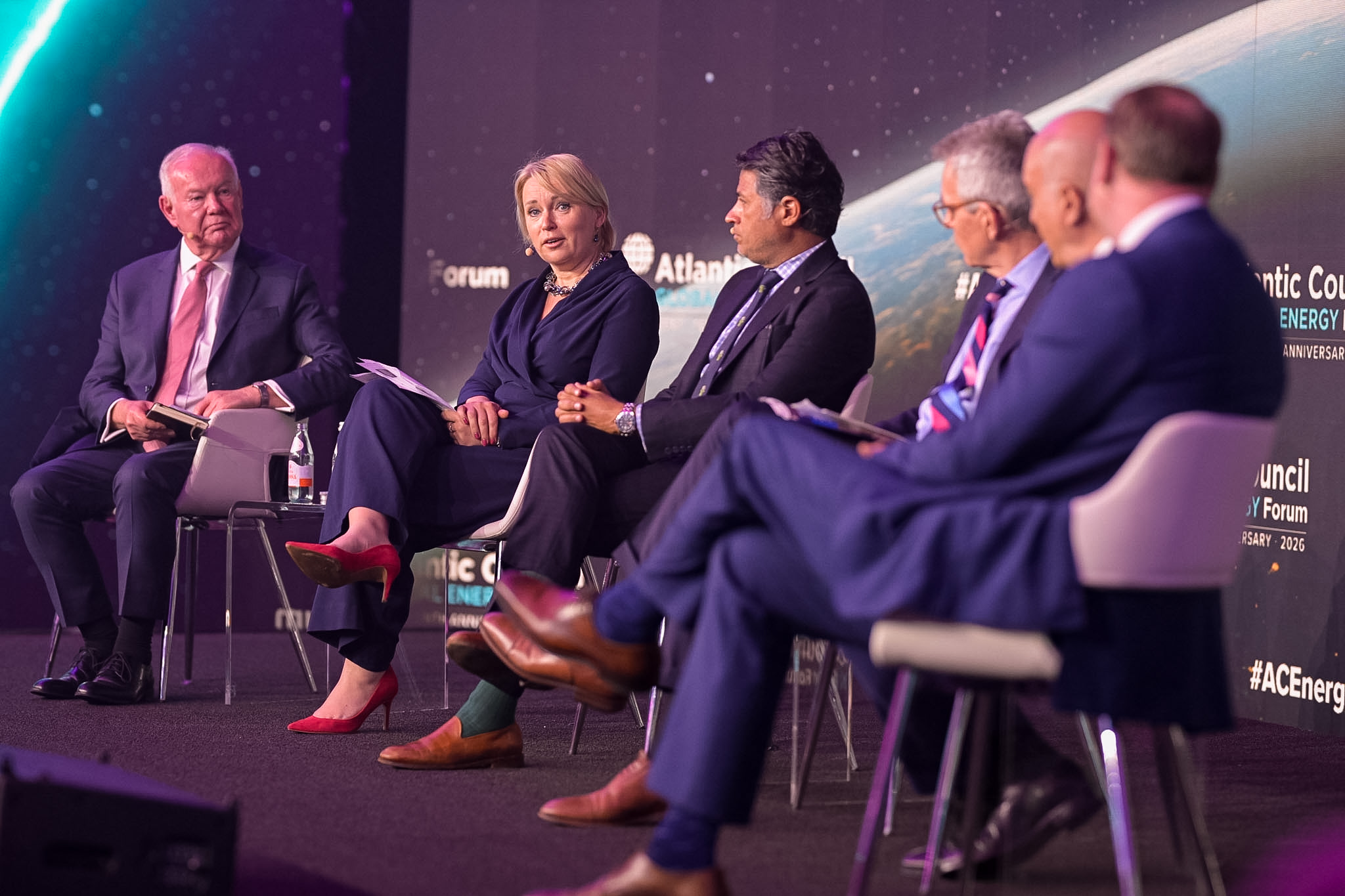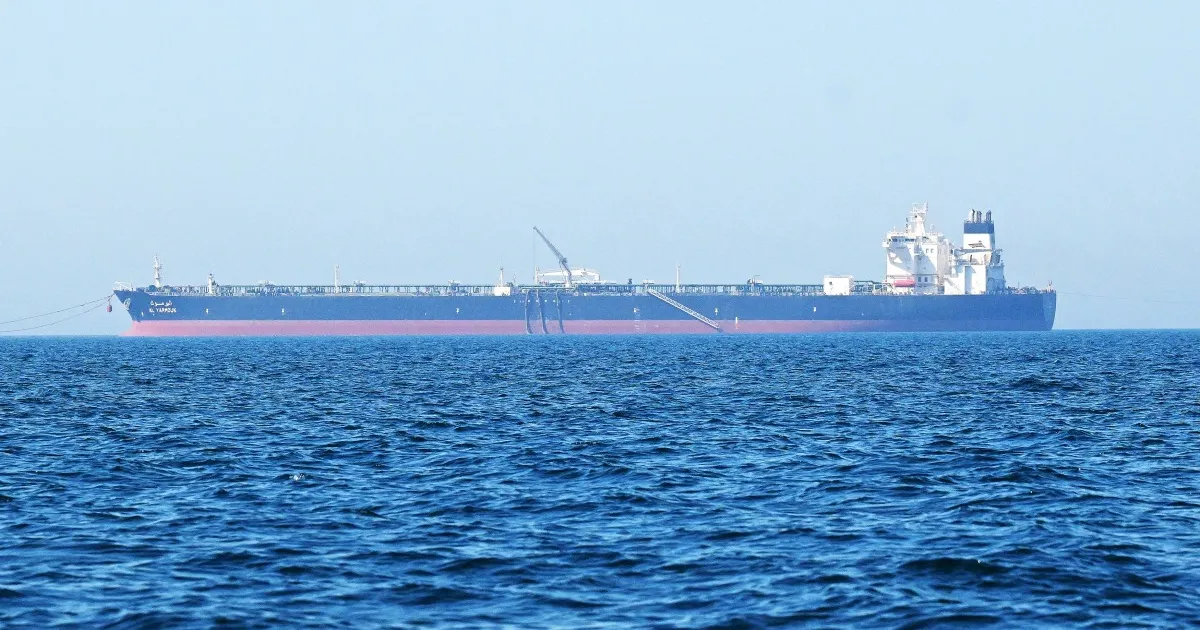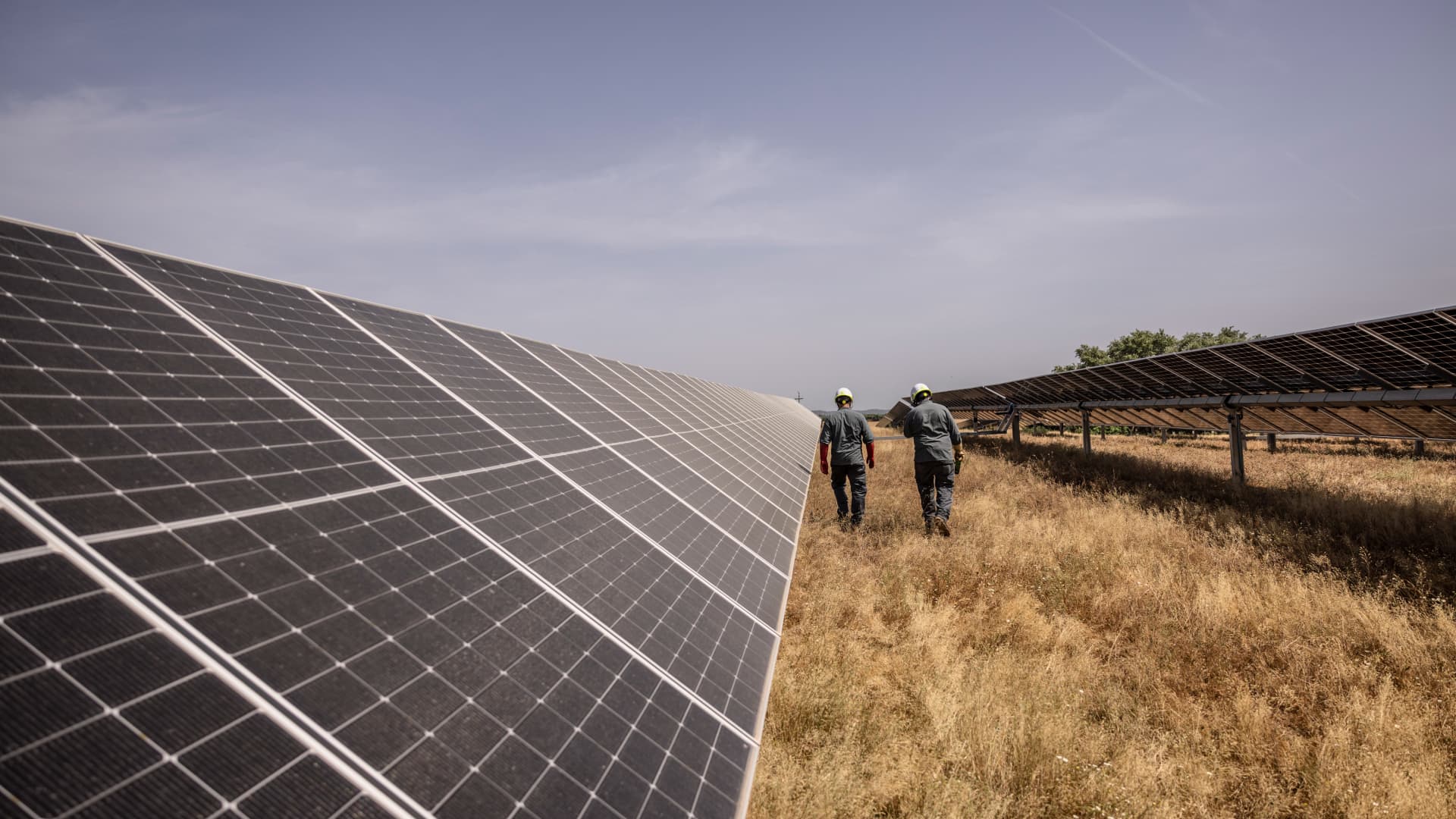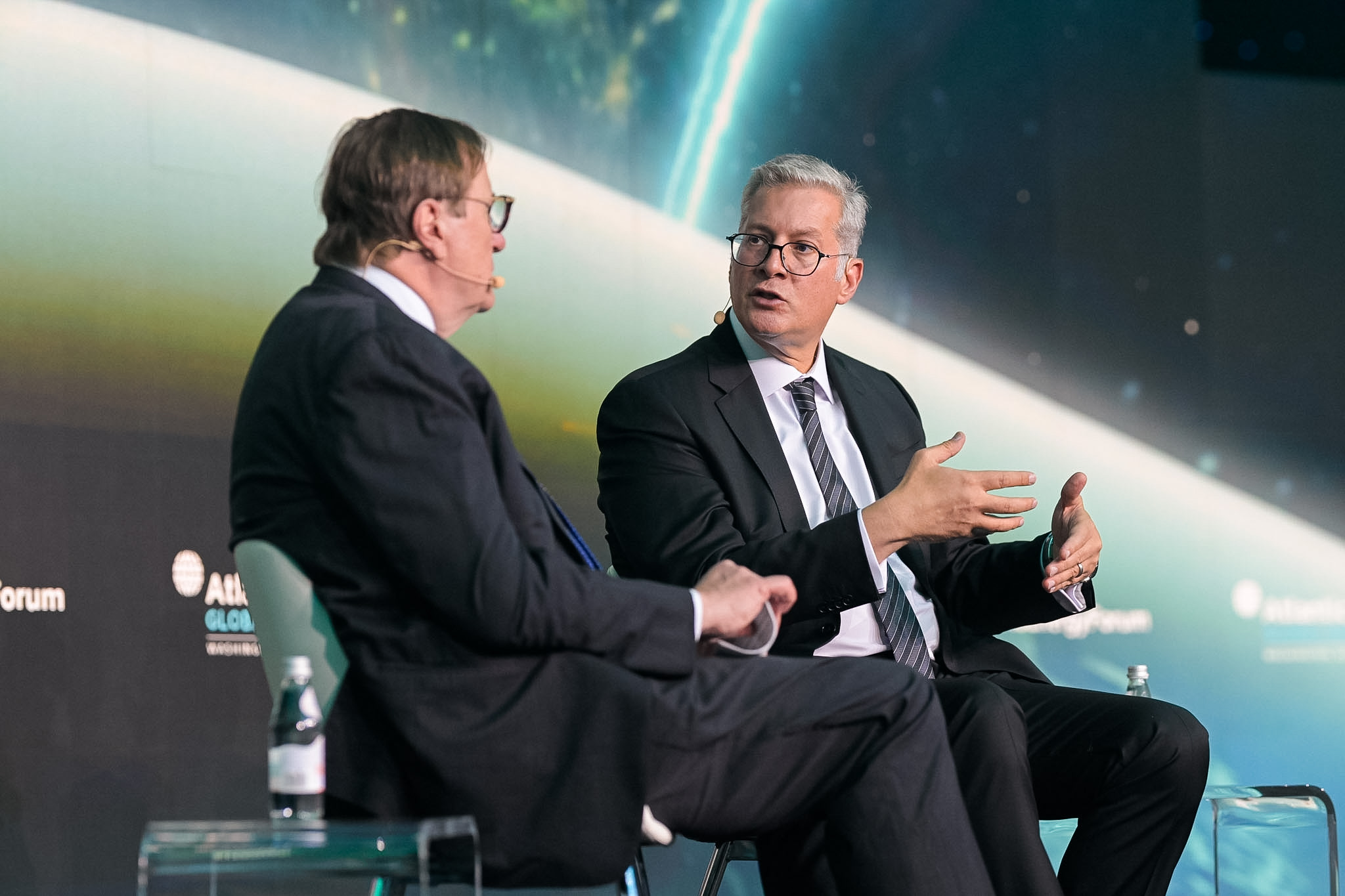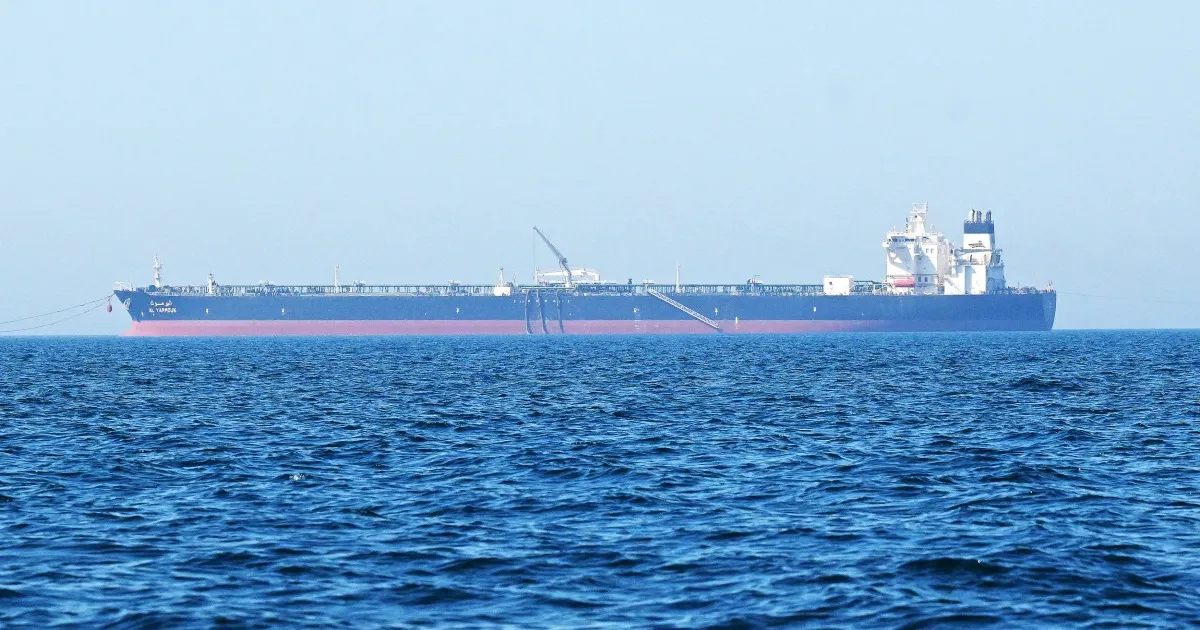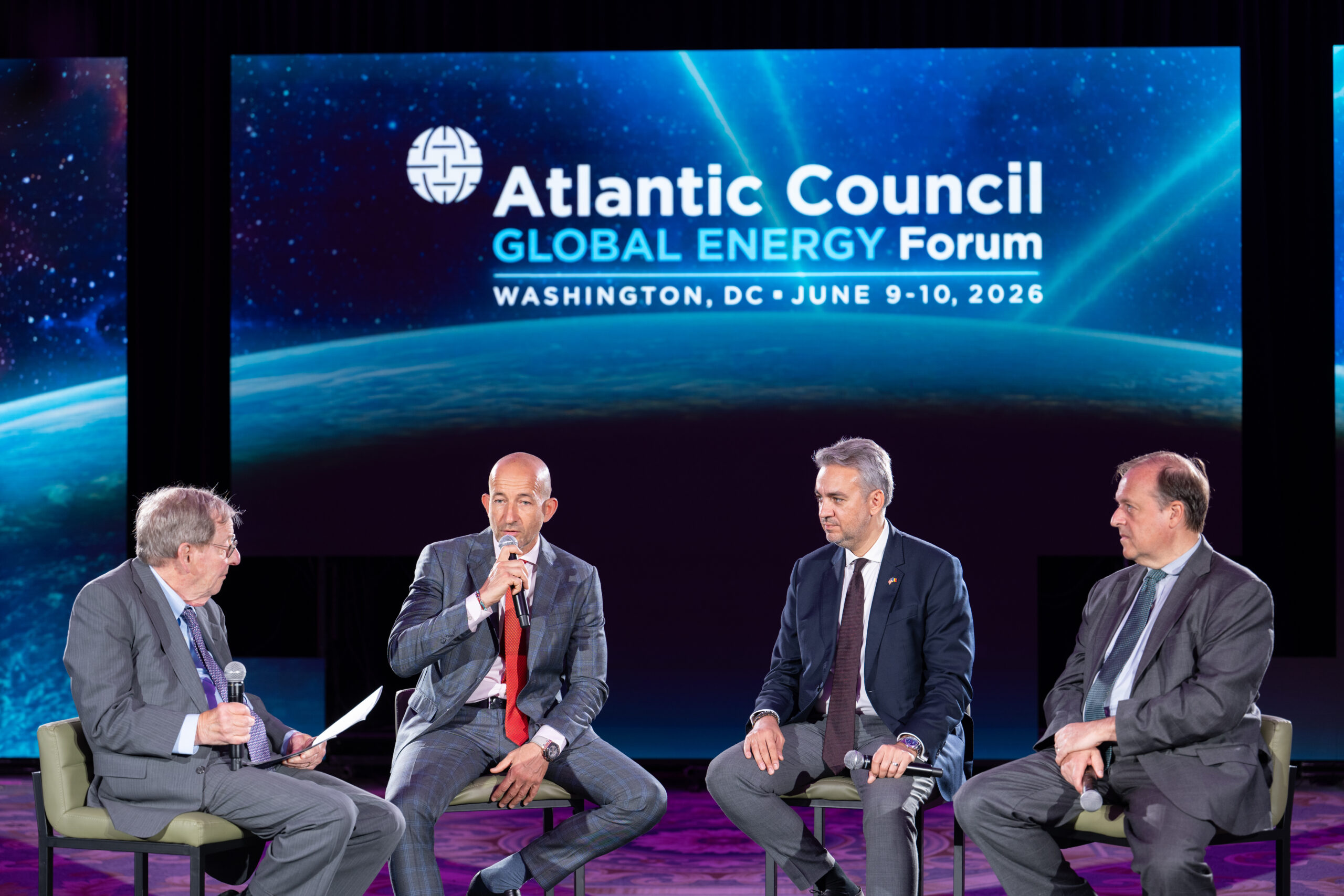
The wars in Ukraine and Iran are producing compounding effects on global energy systems, forcing countries to reshape their energy security strategies, while blind to how the Strait of Hormuz standoff will end. Speaking at this year’s Atlantic Council Global Energy Forum, energy leaders highlight solutions that have improved energy security, particularly in response to Russia’s weaponization of gas, and identify vulnerabilities yet to be addressed as oil and gas traffic through the Strait of Hormuz remains severely constricted.
Central and Eastern Europe is building for resilience with reversed pipelines and small reactors
In a discussion on European energy corridors, policymakers from Romania, Bulgaria, and the United States said that Central and Eastern Europe has made striking progress reconfiguring its energy system since Russia’s 2022 full-scale invasion of Ukraine, but warned that the infrastructure was still not built to withstand the next crisis.
Lessons from Ukraine
The war has rewritten the rules for how the region thinks about energy infrastructure. Karl Jensen, executive vice president of AECOM, said the central lesson was that survivability—not just efficiency—must be the organizing principle for energy systems. He pointed to Russia’s systematic targeting of Ukrainian power plants and grids as evidence that distance alone no longer shields countries from disruption.