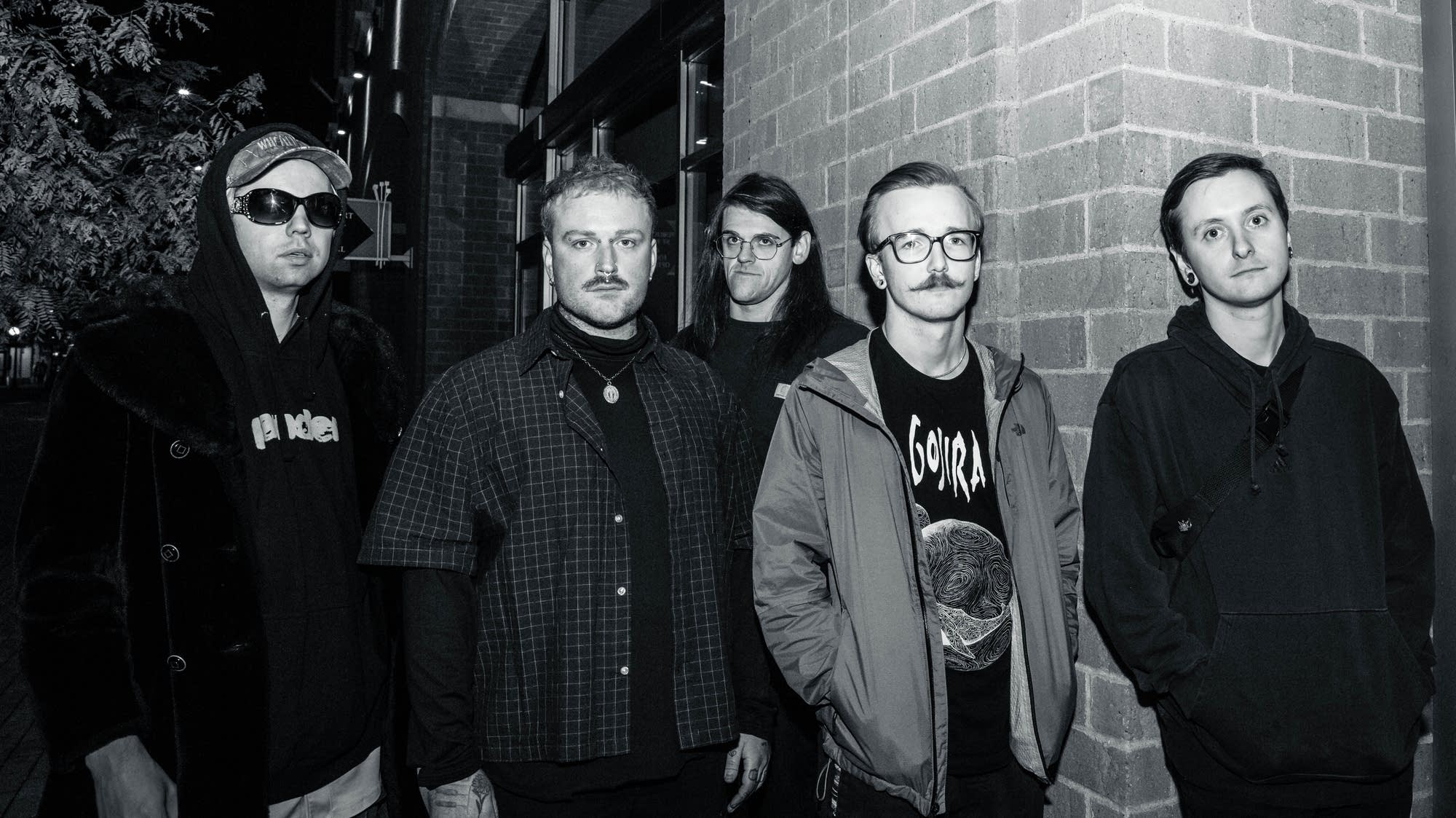
Touring has long been a way for musicians, big and small, to earn income. But these days? An increasing number of touring artists are walking away without a profit from playing live shows. And independent artists, who aren't on a record deal, often have to both plan and pay to make their own shows happen.So what does it take to put on an independent tour, and how are indie bands getting on? “Marketplace Morning Report” host Sabri Ben-Achour spoke with Gabe Reasoner, lead singer of the Minneapolis hardcore band Careful Gaze, to learn more. The following is an edited transcript of their conversation.Sabri Ben-Achour: Can you give us a sense of what goes into planning an independent tour?Gabe Reasoner: A lot of what I have done in my past is the booking side. You know, making sure there's bands for it, the routing side — like planning out what cities you're going to and having a backup plan. Figuring out lodging, figuring out merchandise, figuring pretty much every step of the show out, if there's not like a proper promoter attached to it.Ben-Achour: How much of that do you have to pay for upfront?Reasoner: I mean, you have to pay for your merch upfront. Hopefully, you have a vehicle that can handle it, and so that would be something that you would have invested in. A lot of bands rent like a U-Haul trailer when they go, if they don't have their own trailer, so you have to pay for that upfront as well. The shows themselves, most places are not — especially like a punk show or a bar or something — they're not going to require you to put like a deposit down to play there. If they do, I would probably not do it. If you have, like, a booking agent, though, too, that you're having book the tour for you or help you, that can also be an upfront cost, as well, where you might have to pay them. Sometimes you'll pay them upfront; sometimes you'll just pay them a percentage of what the show makes after it happens.Ben-Achour: That sounds so weird to me that you would have to pay the venue to play there. Isn't it supposed to be the other way around, like, don't they pay you?Reasoner: Yeah, like I said, most of the time you don't. But there are some places that they have maybe like a lot of overhead with their staff or something, so they don't want to just have any band come in and then be out the cost of having the show. So they sometimes — if you're reaching out to a place, they'll respond and say, “OK, well, it costs like $300 to have the show here.” We don't usually do those places, because we can't really like afford to just be like throwing that down.Ben-Achour: You have been touring with your band for several years now — as a solo artist, even longer. It used to be that musicians made most of their money by going on tour. Do you find that to still be the case?Reasoner: I think it varies depending on the artist. Some people, yes, because you are getting paid for the shows, you are selling a lot of merch. I think for us it's been … maybe not evenly half and half, but I think it's been a mix of both touring and playing shows, and playing home shows, and streaming revenue. And you know, sales like merch sales at home, online store, stuff like that. I wouldn't say that we make most of our money from touring, but I will definitely say that we make more money when we are going on tours that aren't financial failures.Ben-Achour: There were a few high-profile cancellations of tours this summer, and it has one wondering whether the economics of going on tour have changed this year, whether it's gas prices or consumer sentiment. What have you found?Reasoner: Yeah, I think that continues to be a factor. Just everything continues to get more expensive. I think it feels like, in some ways, too, getting people out to shows can be kind of continuously harder. I think there was like a time period after shows came back after COVID, where people were really excited about going to shows. And now that we're past that further, and things are more expensive, it's harder to get people to like justify wanting to come out, or maybe they have to travel like a half an hour to see you in the city, or like two hours to see you in the city you're playing in, if they don't live in like a major city or the city that you're playing in. I think that all affects those things and those decisions, for the people coming as well as the people playing the shows.Ben-Achour: You, I understand, have some festival dates planned for August. Are you doing anything or trying anything to cut costs in advance and to make sure that that's profitable for you?Reasoner: Yeah, 100%. We sold our trailer. So we typically travel with a van and a trailer, and we sold our trailer just because towing that behind is extra gas. And you know we're kind of trying to figure out the ways that we can downsize our live set-up a little bit. And sometimes that comes down to like really carefully planning with the people that put on the festival or the event. “Do you have a back line of gear we can use? So, do you have like shells of a drum kit we can use? Do you have cabinets that we can use for the guitars?” So that we don't have to bring everything, and that enables us to travel a little more lightly — significantly more lightly, actually — and helps us a little bit on the gas. And also not having the cost of either pulling a trailer or like renting a trailer, now that we've gotten rid of ours.
How the economics of touring have changed for indie bands
We’ve heard plenty about big musical acts canceling tours this summer, at least in part because of financial challenges. But how are indie bands faring in this economic moment?
1,008 words~5 min read