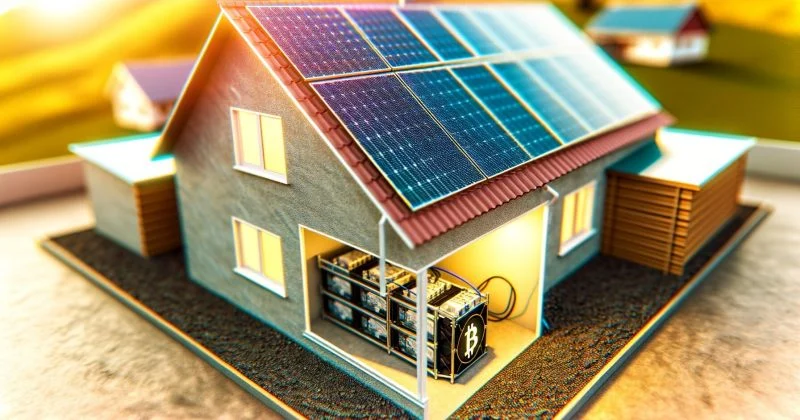
For years, Bitcoin mining’s biggest PR problem has been its energy footprint. Every few months, a new study compares the network’s electricity consumption to a small country, and critics sharpen their knives. But a new open-source project is flipping that script, turning the surplus energy from rooftop solar panels into a Bitcoin mining operation that never touches the grid.
Project Solar Mining, launched on March 1, 2026, by developer MalachiRevolts, is a software tool built for the Home Assistant ecosystem. It automates the process of running small-scale Bitcoin miners using only the excess solar energy a household generates, the power that would otherwise be sold back to the grid at whatever rate the utility company feels generous enough to offer.
How it actually works
The software plugs into Home Assistant, the popular open-source home automation platform, requiring version 2026.2.1 or later. It monitors a household’s solar production and energy consumption in real time, then decides whether there’s enough surplus power to fire up a Bitcoin miner.
Specifically, it can control up to three NerdQAxe++ miners through Zigbee smart plugs. These are low-power mining devices, not the industrial-grade ASIC rigs that fill warehouse-sized facilities.