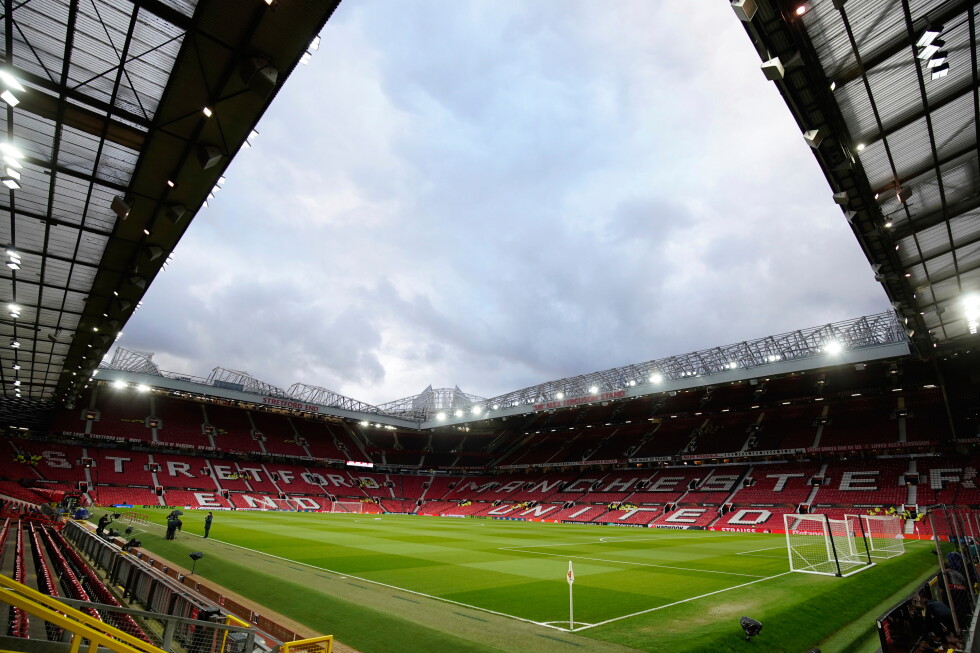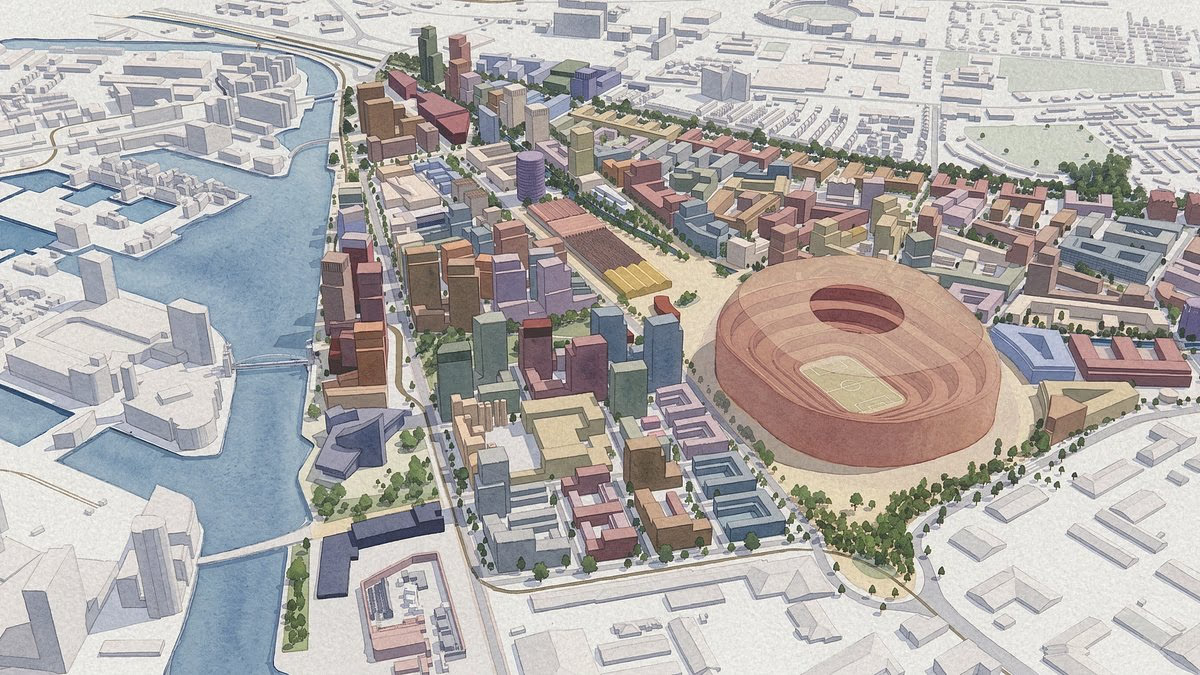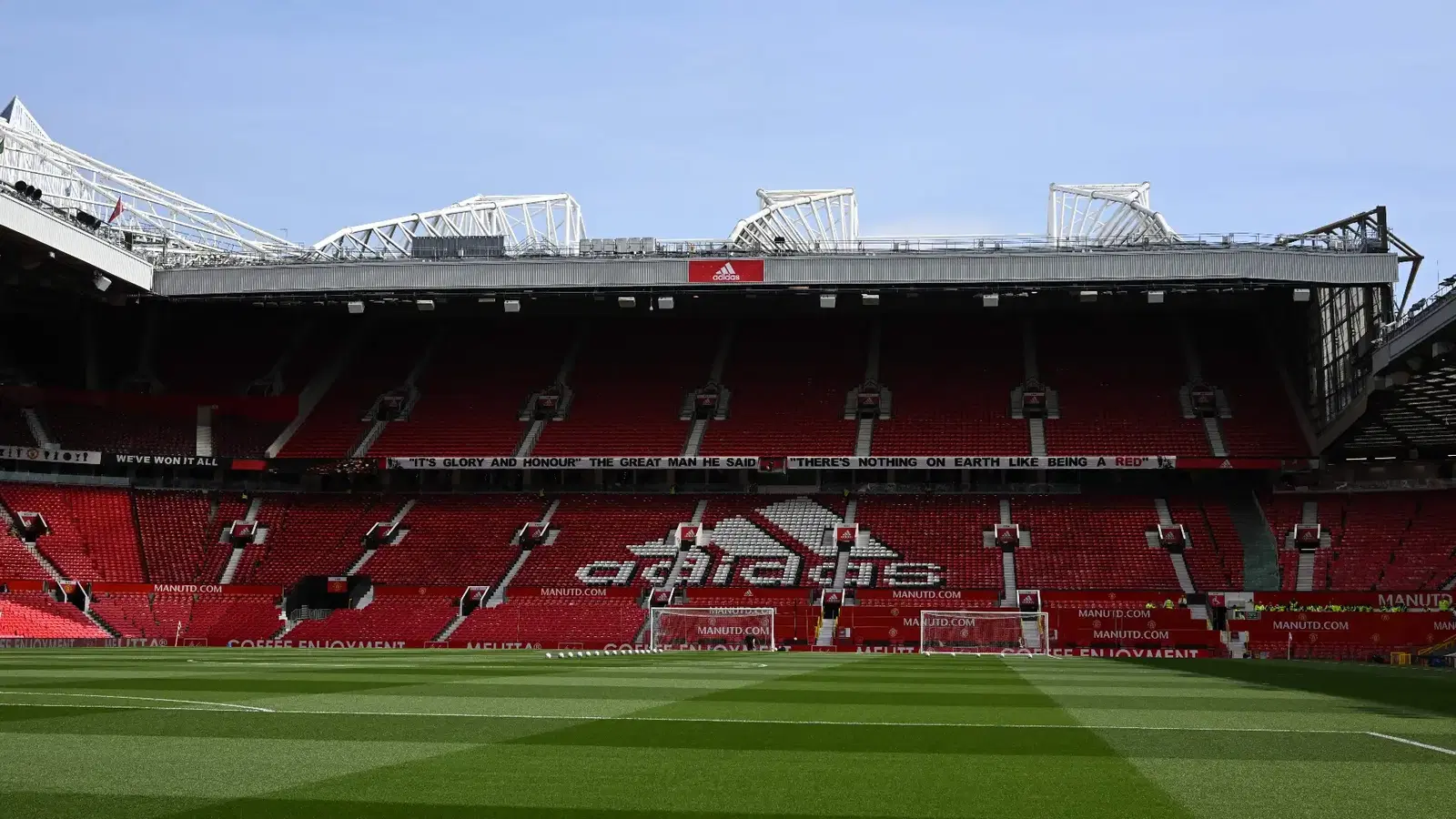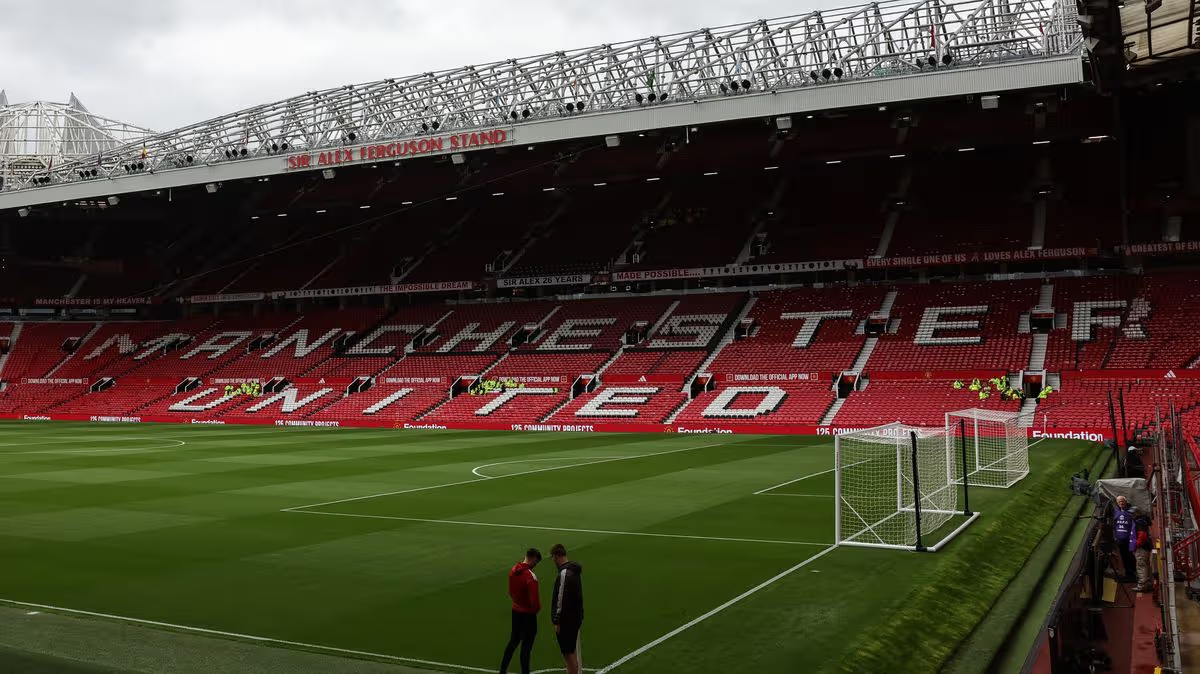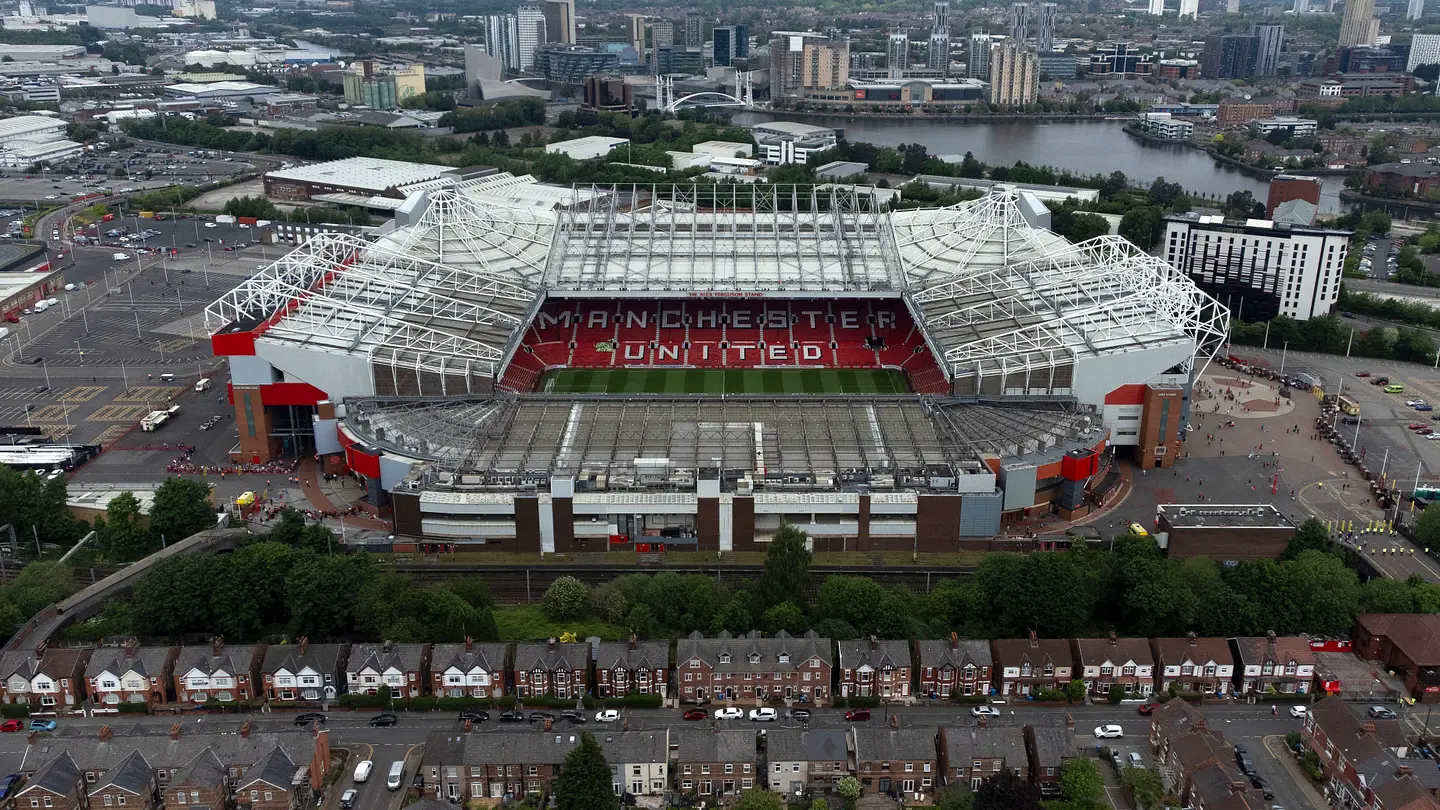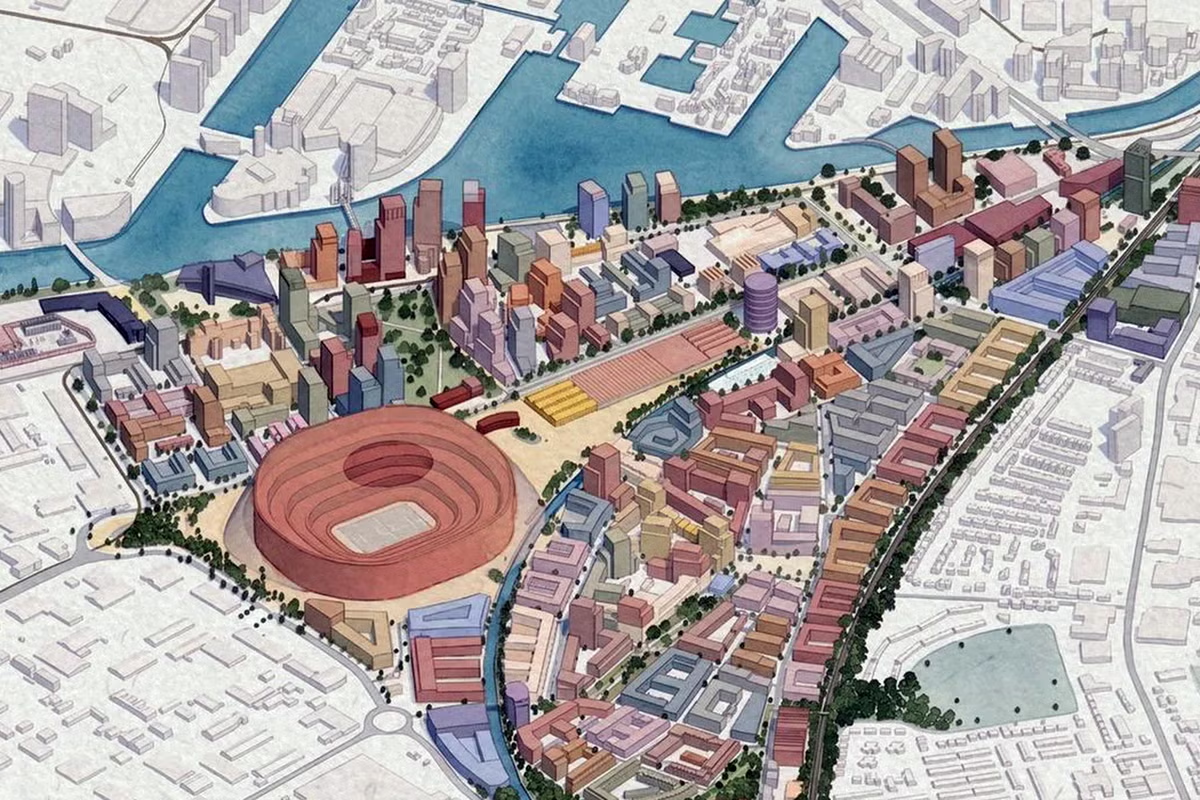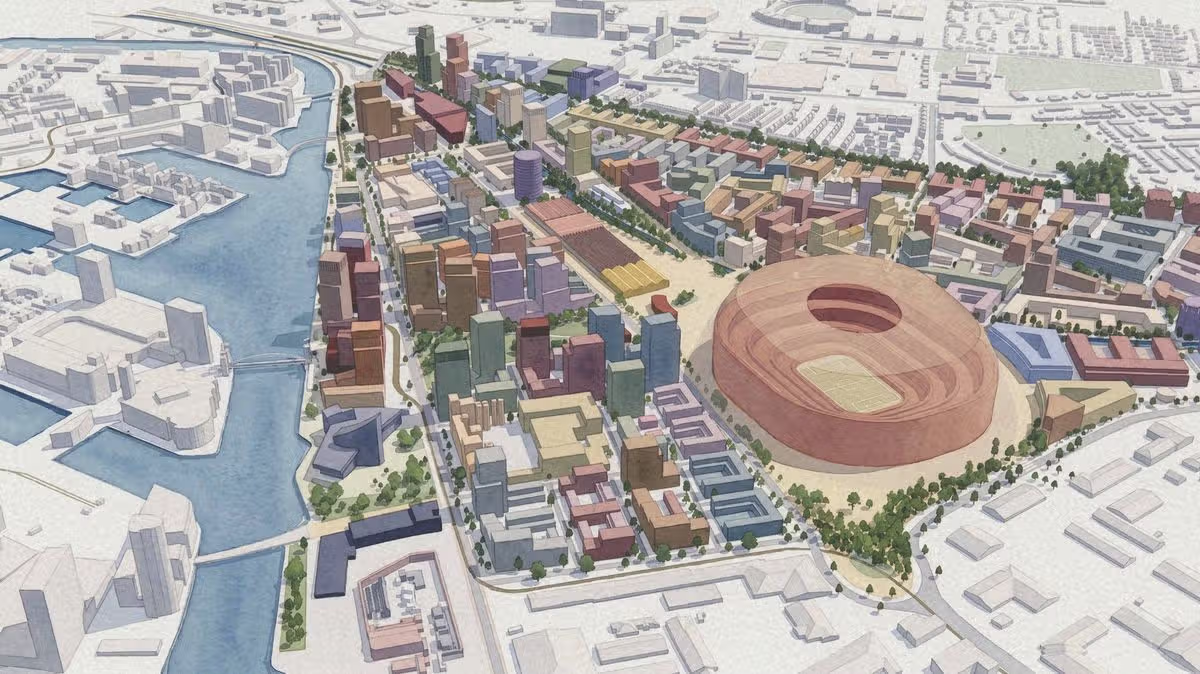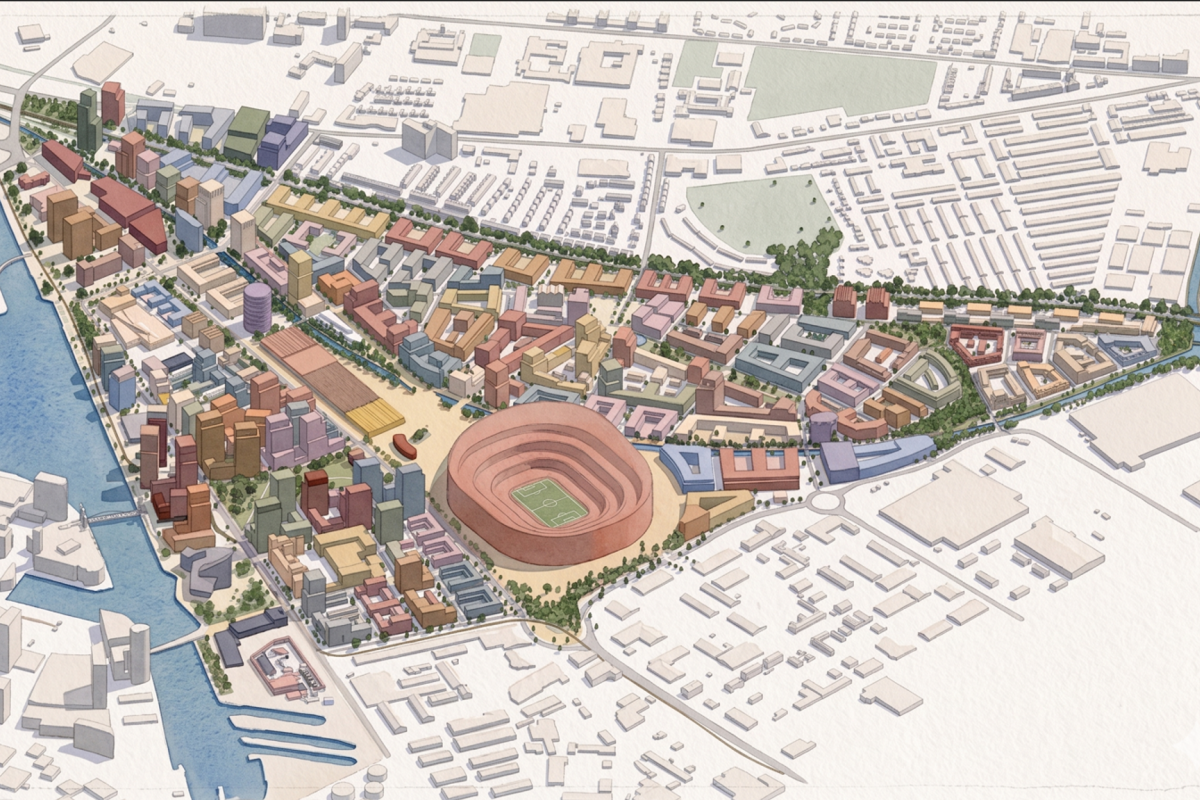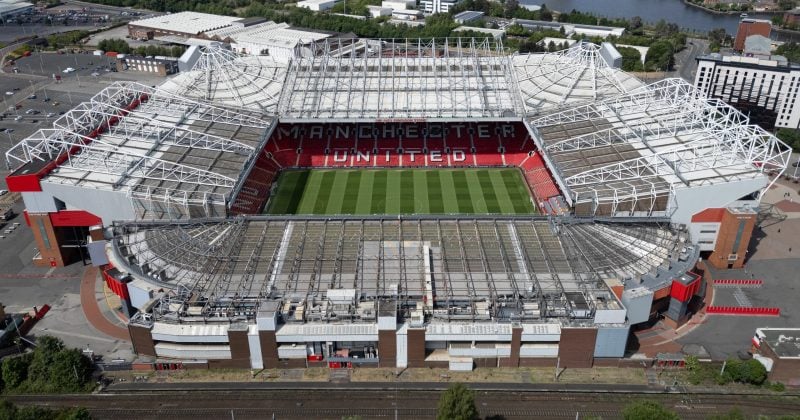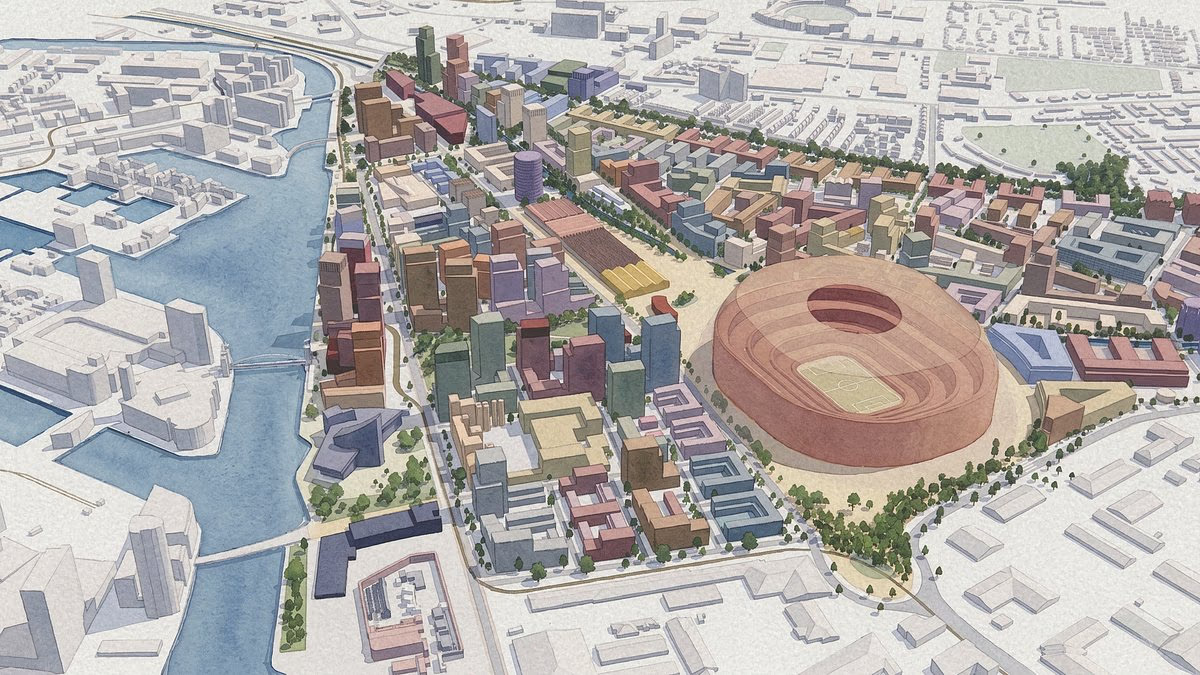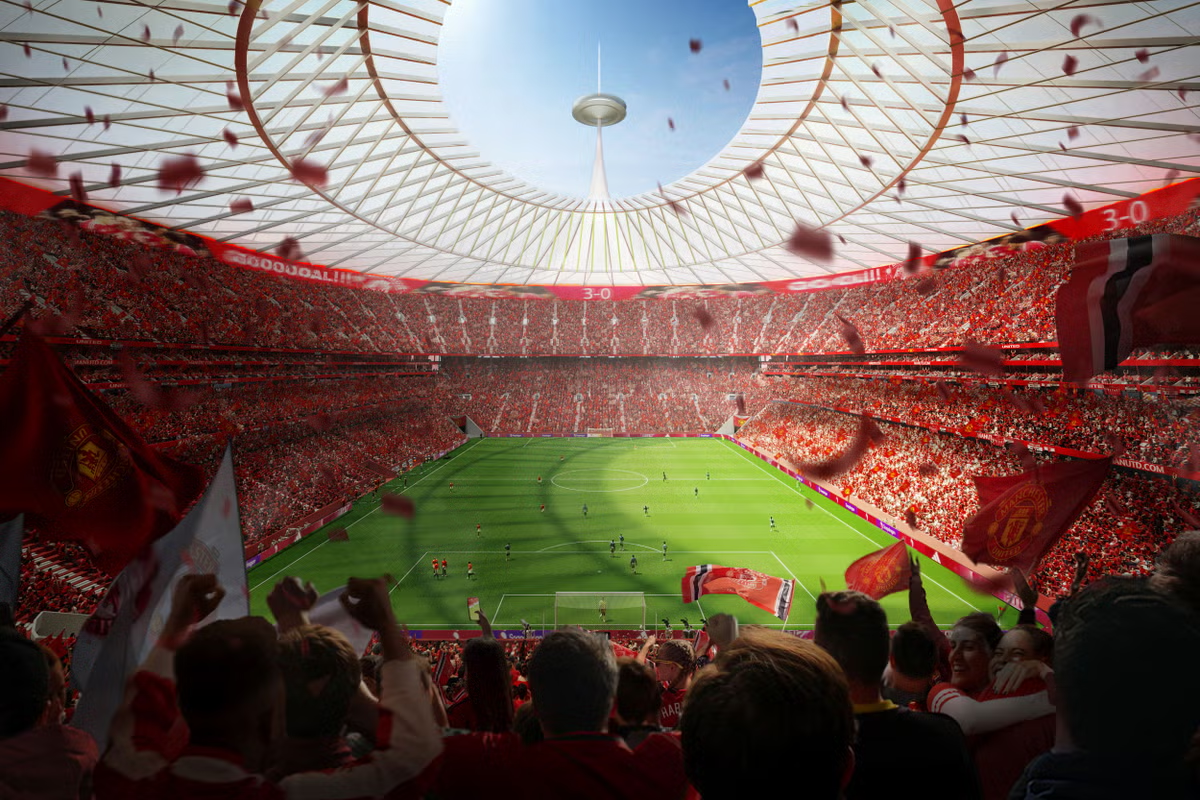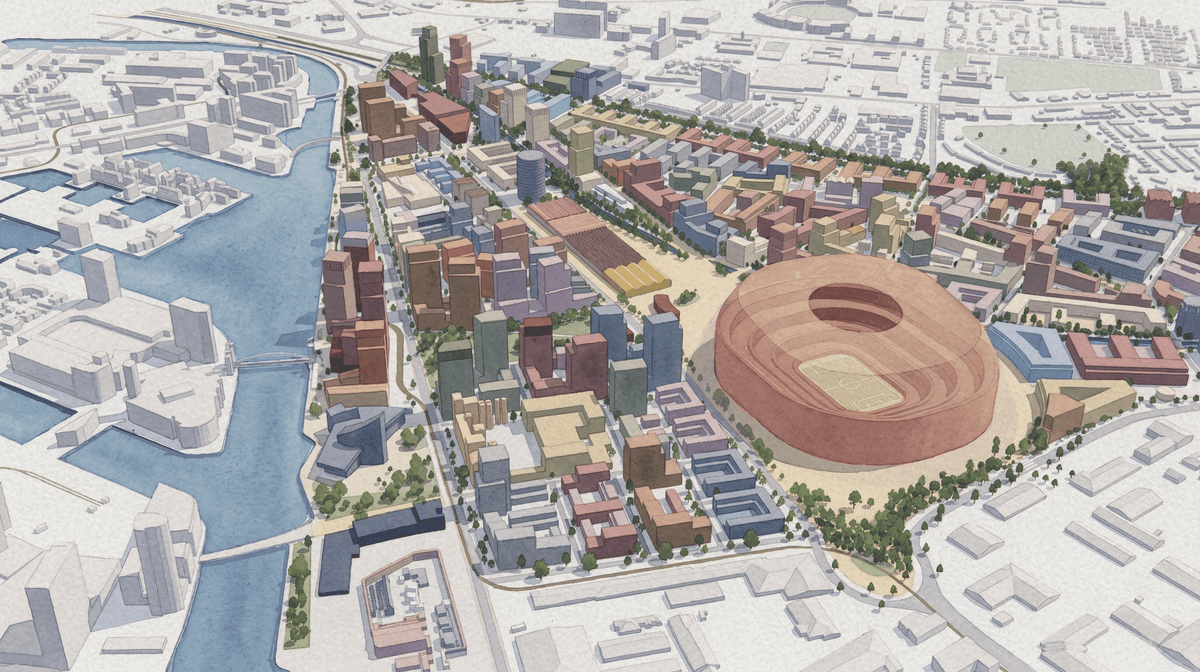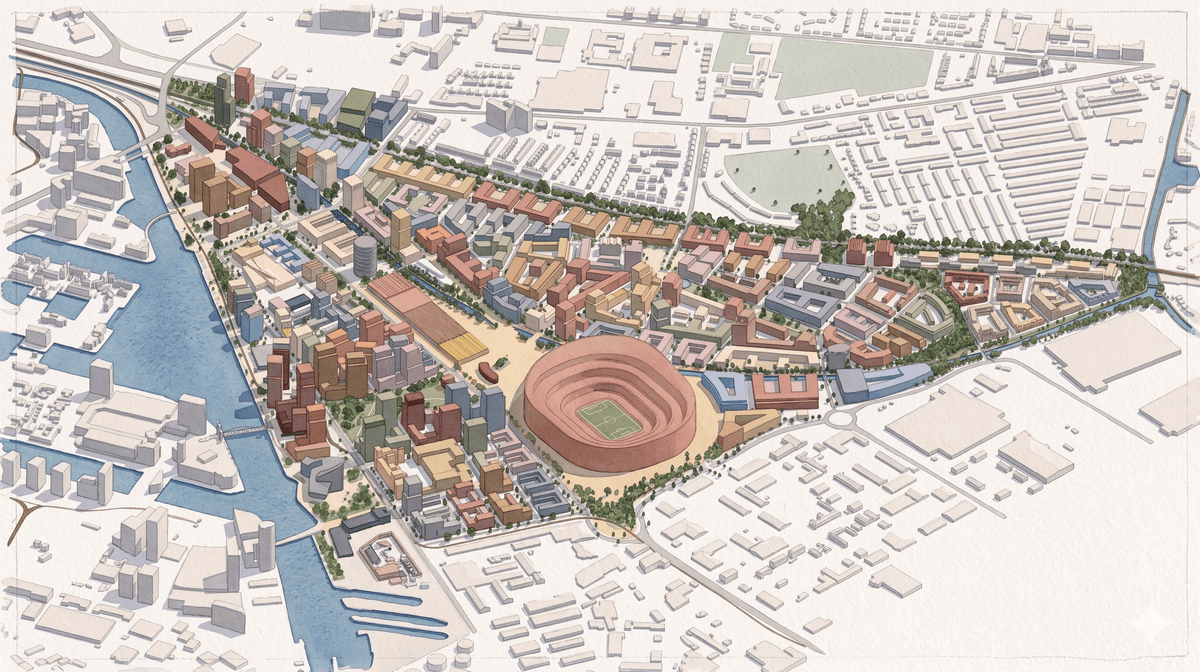
On Thursday morning, Manchester United unveiled the proposed location of their new, 100,000-capacity stadium.Unsurprisingly, minority owner Sir Jim Ratcliffe’s prize project will be based on land the club acquired last month to the north-west of the existing Old Trafford stadium, around 350 metres away from what has been their home since 1910.The event, hosted alongside Trafford Council and the Greater Manchester Combined Authority, was primarily concerned with the wider regeneration of the Trafford Wharfside district rather than the stadium project itself.And though acquiring the land marked a major step forward for the project, many outstanding questions remain.Collette Roche, United’s chief executive of new stadium development, spoke to journalists following the event at Old Trafford to give an update on where the plans stand, and how they have changed since United first announced their ambitions for a new home in March last year.When will the new stadium open?Back in March 2025, Ratcliffe expressed confidence that the project could be completed in as little as five years, provided it gained the support of local and national government.Omar Berrada, United’s chief executive, was unequivocal on timescales at that stage. When asked if the 2030-31 season was the target for the grand opening, he simply said: “Yes.”Yet after more than a year of lengthy negotiations to secure the land the project requires, United have been careful to play down expectations of moving into their new home so soon.“The design is going to inform how we’re going to construct the stadium,” said Roche on Thursday. “We’ve got to go to planning, and then that’ll give us the date, so the reluctance is not around us wanting to put a date, we just don’t want to make a decision that’s not within our gift right now.”United have set an ambition of the stadium being a venue for the 2035 Women’s World Cup, which is set to be hosted in England, Northern Ireland, Scotland and Wales that summer.Roche believes 2035 is still a “good milestone” and a more-than-realistic target, with every possibility the stadium is open and operational earlier than that.“We’ve got to listen, respond, react, and then we can get through with the planning, and then we can start to work out exactly what that date would be,” she said. “But I would think we should be done by 2035.”How much will it cost?When Ratcliffe launched his attempts to buy a stake in United in early 2023, with a new stadium at the core of his offer to the Glazer family, industry sources estimated the project would cost around £2billion ($2.7bn at the current rate). Berrada also confirmed that as a working estimate last year.But again, Roche was more reluctant on Thursday to commit to a specific cost before the design of the place is finalised.“There is not a price. I can’t go and get a quote on this right now,” she said. “We have to go through the design process, then it goes to the engineers… there’s cost consultants that will give us line items, and then we will get the price, so it’s not helpful to suddenly throw a figure out there.”Roche stressed, however, that United will take a measured and managed approach to ensure the cost of construction will remain under control.“This needs to be a sanity project, not a vanity project,” she said. “And I think you’ve seen from the way we now run the club, having control of our costs is really important to us. You’ve seen where we are financially, which we are improving. We’ve got no desire to go beyond and do anything that disturbs any of that.”How will United pay for it?Whether costs run to that £2billion figure or climb even higher, the question of how United are going to fund this project will remain key. Roche said that will only become clearer once the design and the bill for the stadium’s construction are finalised.United have a range of funding options available, including equity investment — which could potentially come through either the existing ownership or external investors, she added.“Since we had the conversation last time, we’ve had a lot of approaches, as you’d expect,” she said. “A few people saying, ‘I want to be part of this. Can I be part of this?’, so we’re not worried about the level of interest, support and funding options.”Another route is the club borrowing money, thereby taking on more debt.With United already £643million in the red — not including a refinancing last month which added a further £93m of borrowing to the books — that will not be welcomed by many of their fans.Roche argued that debt is often essential to projects of this nature. Tottenham Hotspur borrowed £637million while building their new £1.2bn stadium, which opened in April 2019, albeit at a time when interest rates were far lower.“While we can get over-obsessed with debt and borrowing, there is no stadium, I don’t think, where you would not have some form of borrowing. It’s natural,” she told reporters. “I am sure all of you haven’t paid for your houses out of your own pocket.“We just need to make sure it’s sensible and that it generates income and, obviously, money for the future of the club and doesn’t distract from what we’re here for, which is winning competitions, winning trophies, winning matches.”Roche once again ruled out the prospect of the club using public funding for the stadium itself: “I think we, as a football club, need to stand on our own two feet, and we need to pay for our stadium, for a whole host of reasons.”Why relocate the stadium?Whereas last year’s initial plans located the proposed stadium directly to the west of the present Old Trafford, Thursday’s announcement confirmed that United’s new home will be built on the land they acquired last month.United secured the 25-acre site after striking a deal with industrial warehousing firm Indurent, following an impasse in talks with rail and logistics company Freightliner to buy land which is currently the site of a major freight terminal.The former Indurent plot is north-west of Old Trafford, around 350 metres from the current stadium, between Wharfside Way, Europa Way and John Gilbert Way.Although still a location familiar to match-going United fans, that land is not within the current Old Trafford footprint so some will feel, in that sense, that this is going to be a departure from the club’s history.Roche argued that by locating the new stadium further from their existing home, United have minimised the impact the ongoing construction process will have on the matchday experience.“Was it a big decision to be 350m further away from Old Trafford? No. Because quite simply we're in Old Trafford (the Manchester district), which is really important,” she said. “But going back to what's more important to us is we can't disrupt what we're doing today.“If it's too close (to the current ground), it will be disruptive. Our players will be playing in a building site, the fans won't be able to get in and out, the transport's going to be a nightmare. Having that little bit of distance makes absolute sense.”Roche acknowledged, however, that maintaining the history and heritage of Old Trafford is important.United have resumed conversations with the club’s fan advisory board regarding what elements of the current Old Trafford matchday experience could be maintained at the new ground, and say they will consult with supporters during the design process.What will the new stadium look like?There was some surprise on Thursday when Trafford Council’s plans had only a placeholder-type, standard, oval-shaped stadium where United’s new home is going to be.(Trafford Council, Manchester United Football Club)This was not a mock-up of the eye-catching ‘canopy’ design unveiled by architecture firm Foster + Partners last year at Ratcliffe’s grand unveiling.United say those drawings were indicative of location rather than design, and have always stressed the plans revealed last year were conceptual in nature rather than final.They were also based on the stadium being built on Freightliner’s land. With land having since been acquired at a different location, and with United now set to embark on the process of finalising the stadium’s design, Roche said all options remain on the table regarding how their new home will look, and that changes could be made.“Is (the canopy) set in stone? No, is the first thing," she said. "We're going through the design process. We're not ripping things up, so to speak, but now we know where it's going to be, we need to make sure it fits in the right place. Does it look right from the different angles? Is it bigger, or is it smaller?“My job now is to work with Fosters, and we're going to start the process around design, and that's where it'll evolve. So it's not set in stone. It will evolve.”What will happen to the existing Old Trafford?The Wharfside plans did not include the existing Old Trafford stadium in any shape or form, with the site instead covered by apartment blocks that will be part of the area’s wider regeneration.Last year, Berrada had suggested that reducing the capacity and repurposing their historic home as somewhere for the United women’s and academy sides to play home matches was feasible but unlikely.United insist no decision on the future of the current Old Trafford has been made. Roche said the priority is building the new stadium and surrounding infrastructure and facilities:“At that point, we'll then think, ‘What should we do with this? Should we keep it? Should we knock it down? Should we redevelop it into something different? Should it become houses?’“That's going to be a consultation and also something we need to work really closely with the council on, because we've still collectively got to deliver the jobs, the homes, the businesses. And obviously, we're in prime position, because we own so much of that land.”Emma Paton previews the Premier LeagueWhat will the stadium be called?As revealed by The Athletic in June 2024, United are considering selling the naming rights to a newly-built stadium to help finance the project.“I really don't know what the stadium will be called. What I will say is that we've been really vocal, we are going to potentially sell the naming rights to the stadium,” Roche said. “It's an important revenue stream.“It's something we've discussed with our fan advisory board, and I think everybody realises affordable, accessible ticket prices is really important. In order to do that, we do need to generate revenue streams in other places.”Finally, will this actually happen?United’s announcement last year was met with scepticism as well as excitement, and the shift in timescales and uncertainty over financing since then have raised further questions as to whether the project can realistically be completed.When speaking at the FTWeekend Festival in New York last month, Berrada said that once the design and construction costs of the stadium project are finalised, United will then decide whether or not to move forward. But Roche insisted today that, despite outstanding questions over financing and the need to carefully manage costs, they must proceed.“We're really committed to do it. I think all of those things are important, but we've got to make this work right. We can't just abandon it,” she said. “We’re looking at making sure it happens, not whether it happens, or should it happen. I think the train's left the station, and we just need to make it happen now.”
Manchester United’s new stadium plans explained: The cost, the timeline… and will it actually happen?
It is more than a year since plans were unveiled to replace Old Trafford. On Thursday, more details were released. So what did we learn?
1,894 words~9 min read