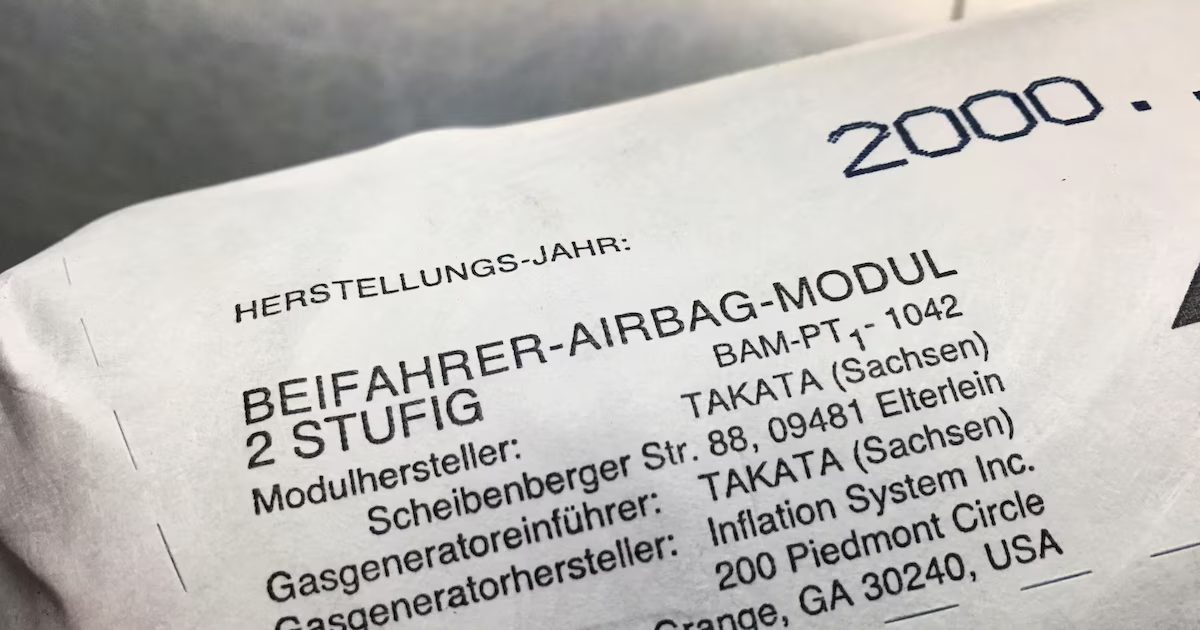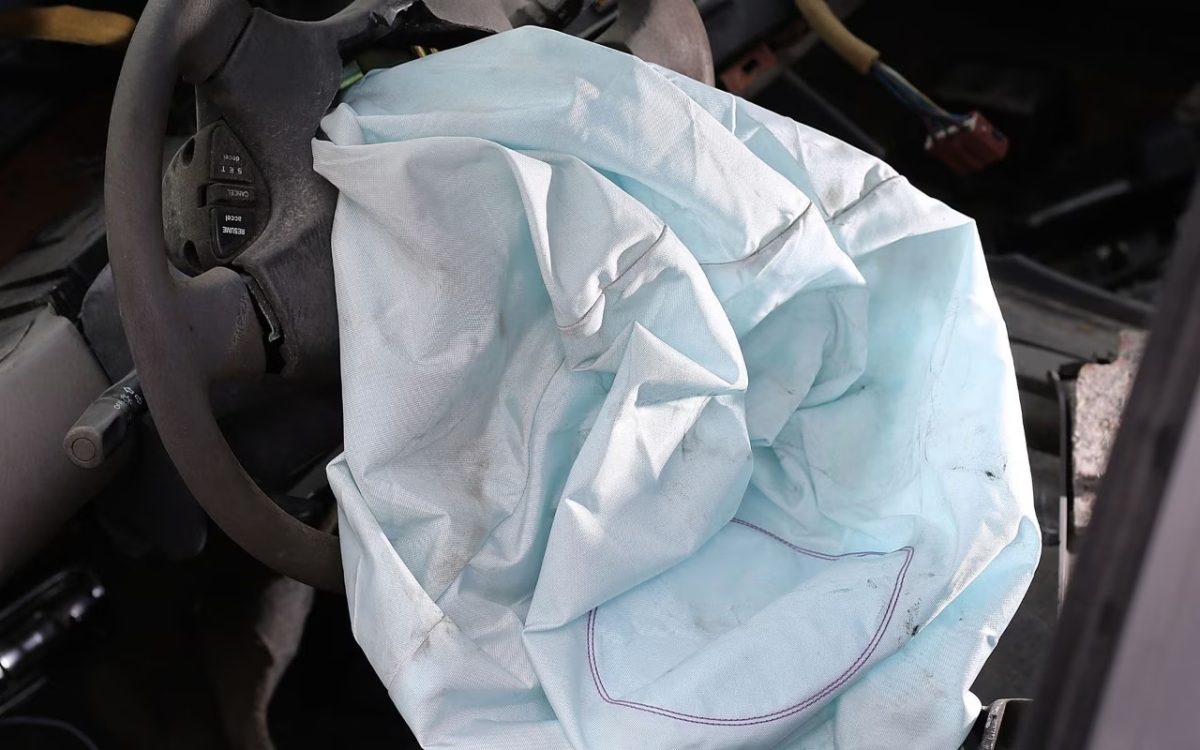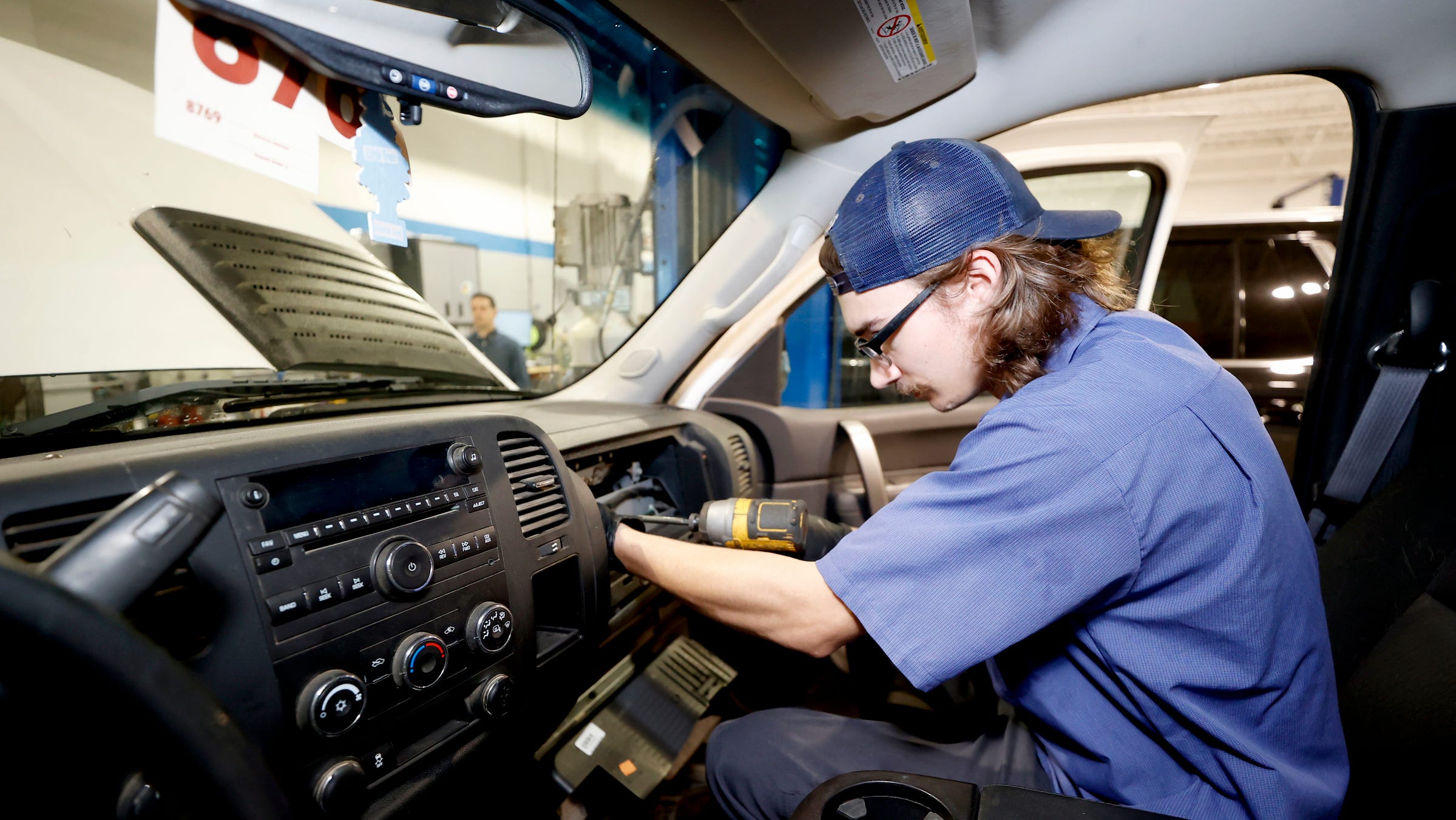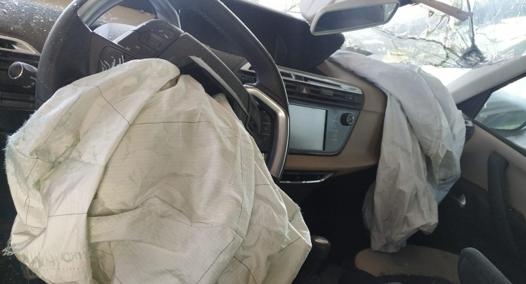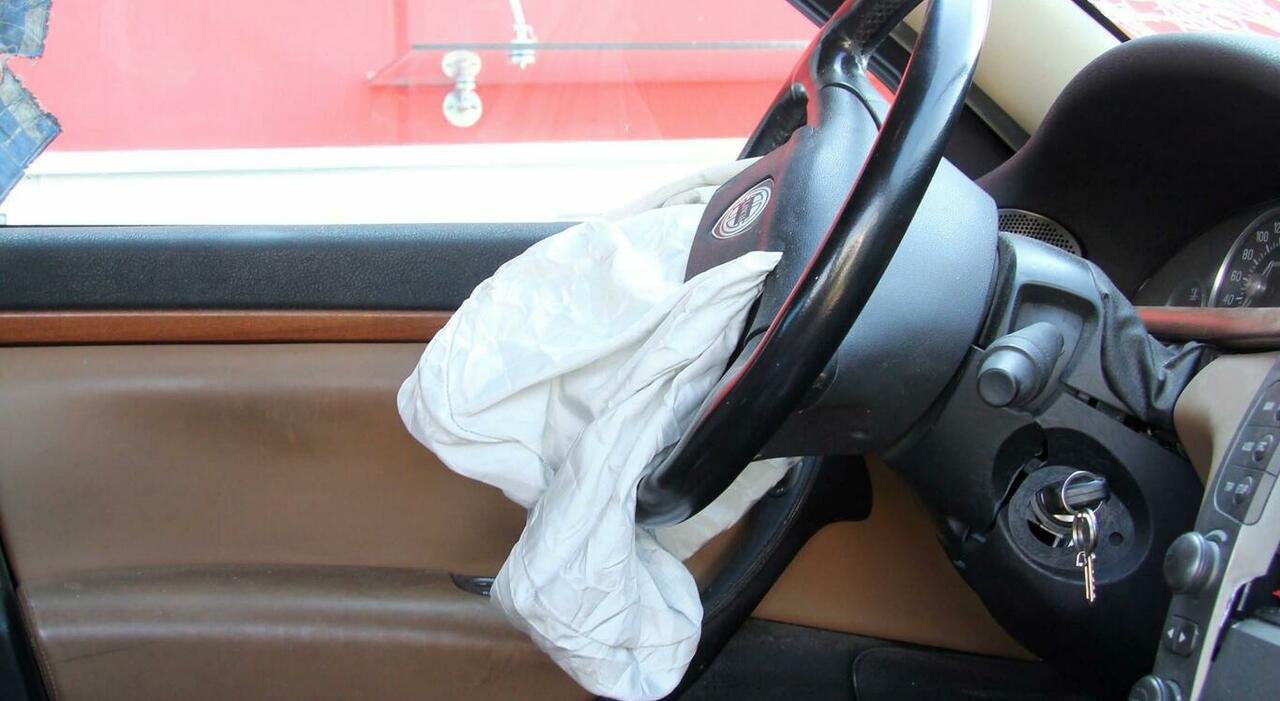
After 10 deaths, regulators are warning about air bags in used cars with components marked as made by a Chinese company, but tracing them is difficultEui Seok Kang lost control of his Chevrolet Malibu in torrential rain late one night in October 2023, spun sideways across two lanes of a Texas road and was struck by a pickup truck. When his air bag deployed, it tore apart his jaw.Eui Seok Kang lost half of his lower jaw, most of his lower teeth and some upper teeth. Over the next month, he underwent three surgeries, including for an infection and facial reconstruction.“I couldn’t breathe, I felt like something was stuck in my throat,” Kang recalled in an interview. He lost half of his lower jaw, most of his lower teeth and some upper teeth. Over the next month, he underwent three surgeries, including for an infection and facial reconstruction.The air bag, it turned out, had been purchased on eBay and installed by the Texas dealership that sold him the used car. When he crashed, it sent metal shards flying into Kang’s face.Kang survived, which made him luckier than others. The aftermarket air bag in his Malibu contained a dangerous component tied to at least 10 fatalities in the U.S. since 2023, according to a later report by federal safety officials and a government email reviewed by The Wall Street Journal. Three others have been severely injured, including a driver as recently as June in Louisville, Ky.The National Highway Traffic Safety Administration is racing to stop more drivers from being killed or injured by air-bag parts it says appeared to originate from the Chinese manufacturer called Jilin Province Detiannuo Safety Technology, also known as DTN Airbag.In a response to NHTSA in April, that company said it doesn’t do business in the U.S. and that it believes the part in question, which was stamped with a serial number associated with the firm, was “a counterfeit of our product manufactured by another company.” The company and lawyers previously representing DTN didn’t respond to requests for comment.Air bags have saved tens of thousands of lives, but they can pose dangers to drivers when improperly assembled replacements are installed in used cars whose original bags have deployed in a previous accident. Such replacements, sometimes labeled with counterfeit logos of American carmakers, are widely available online. That counterfeit supply chain has long been a concern for automakers, who employ teams to scour for fake parts out of reputational fear and to protect customers.In April, NHTSA, the top U.S. auto-safety regulator, banned the sale and import of air-bag inflaters marked with a DTN part number. It said the inflaters—a component that ignites and rapidly fills an air bag during a crash—were likely imported illegally into the U.S. and put inside air bags that were then sold online as aftermarket replacements. NHTSA ordered “each manufacturer, including each importer, of the inflaters to conduct a recall,” without naming any company.Recalls of automotive components are usually a straightforward process. An automaker notifies owners that their vehicle contains a defect and needs to be repaired.Kang's exploded steering wheel after the collision.In the case of air bags containing DTN-marked inflaters sold in the aftermarket, a traditional recall is unlikely if not impossible, NHTSA Administrator Jonathan Morrison said in an interview. Normally, carmakers can easily trace where potentially problematic parts originated and how they were imported, but with the substandard air-bag parts, there are no records of who sent them to the U.S. and distributed them. Morrison said the agency found that some aftermarket inflaters have been brought into the country stuffed inside items like toys and dollhouses. “This is a really unusual situation,” he said.The only way for drivers to know if the parts—or counterfeit versions of them—are even in their cars is to pay to have a mechanic inspect them.As a result, NHTSA investigators have been forced to play a game of whack-a-mole against a complex, gray-market supply chain to figure out which cars might have had air bags with the parts installed, according to emails and documents reviewed by the Journal.In a January email to a colleague and others, an NHTSA investigator said it was nearly impossible to determine how many more of the DTN-branded inflaters might explode. “As far as predicting future rupture events,” he wrote, “I think the estimate would be close to a wild guess as many of the factors cannot be determined.”Morrison said the agency is taking a multifaceted approach to addressing the problem, which represents an extraordinary risk of death or injury in a crash. “This is, to my knowledge, unprecedented,” he said.Over the past decade, more than a dozen people have been convicted for selling counterfeit air bags, most recently a North Carolina Department of Transportation employee, according to Justice Department news releases and court documents reviewed by the Journal.The oversight of such aftermarket air-bag products is limited, government officials and industry experts say. And the ease with which counterfeiters can move parts through the internet has so far made it impossible to account for how many air bags with DTN-branded components are in used cars on the road today. NHTSA said that, despite substantial efforts, it has been unable to obtain “sufficient information” to estimate the number of inflaters in the U.S.“The worry here is that a bunch of consumers are going to unwittingly purchase bombs and put them in their steering columns,” said U.S. Attorney Ellis Boyle of the Eastern District of North Carolina, whose office investigated the case involving the North Carolina employee.Murky marketThe practice of reusing parts from junked cars is common in the U.S. Every year, some four million vehicles are recycled in the U.S. and Canada, resulting in sales of over $32 billion in recovered parts, according to the Automotive Recyclers Association, whose members resell original vehicle parts after inspecting them. Auto-repair shops around the country often use such recycled parts.If an air bag is deployed, a replacement is needed to safely get a car back on the road. Automakers sell certified replacements. Counterfeit air bags have sold for as little as $100 on websites such as eBay and Facebook Marketplace, one-tenth the cost of a typical authentic replacement, according to court documents and interviews with government officials and carmaker representatives.EBay said it works diligently to prevent and remove unsafe product listings, that it prohibits counterfeit products and is cooperating with the NHTSA in its investigation. Facebook said its rules prohibit the purchase, sale or trade of certain vehicle parts and accessories, including air bags. Amazon said it prohibits the sale of air bags and air-bag parts.NHTSA warned the public about counterfeit air bags in 2012, saying that vehicles repaired by independent mechanics not tied to new car dealers could be at risk. No reported deaths were linked to counterfeit parts at the time.Three years later, an air-bag crisis hit the industry. The now-defunct Japanese supplier Takata said that inflaters in the air-bag modules it made for new cars had a defect that could cause air bags to rupture upon deployment, prompting the recall of millions vehicles. NHTSA ordered carmakers to begin reporting any incident where an air bag ruptures.The now-defunct Japanese supplier Takata testified in Congress in 2014 about the company's defective air bags.By then, DTN had been selling air-bag inflaters for years. Launched in 2009, it also makes life jackets and fire extinguishers. It currently has 29 employees and last year made 16,000 inflaters of various models, according to statements the company has made to U.S. regulators.Regulators said DTN-branded inflaters that wound up in cars and killed Americans were likely manufactured in 2021 and 2022.In 2023, Destiny Byassee, a 22-year-old mother in Florida, died after the air bag in her Chevrolet Malibu exploded during a crash, a police officer who investigated the accident told the NHTSA. The vehicle had previously been involved in another collision in which the air bags deployed, and the replacement part contained a DTN-marked part, according to a NHTSA filing and court records in a lawsuit alleging negligence in the air-bag part’s design and installation of it in her car.Andrew Parker Felix, who represented Byassee’s family in the lawsuit, said it was complicated to unpack what had happened. The 2020 Malibu had previously been owned by car-rental firm Enterprise, before an accident that resulted in the Manheim auction company selling it to a Florida repair shop for $9,000, according to the lawsuit and transaction records.The repair shop, Jumbo Automotive, bought an air bag in November 2022 on eBay from seller “ffnn2002,” later found to be a Michigan resident who shipped the air bag through the mail a day later, according to the family’s lawsuit.When repairs were complete, Jumbo resold the car through Manheim for $18,000 to used-car dealer Drivetime, which then sold it to Byassee, records show. Haim Levy, Jumbo’s owner, said he reached a settlement in the case, declining to comment further.Destiny Byassee, who died after the air bag in her Chevrolet Malibu exploded during a 2023 crash.Drivetime said it purchased the vehicle at auction from Jumbo and that there was no disclosure of any accidents or air-bag repair. Drivetime said it has continued to cooperate with law enforcement in the matter.Manheim said in a written statement that its role is to facilitate wholesale deals between buyers and sellers, that sellers are required to disclose safety issues, and that it was dismissed from the case pretrial.Enterprise declined to comment, but has said previously it wasn’t involved in the Malibu repair.When the lawsuit was filed in mid-2024, government authorities were learning more about how such air bags were filtering into the U.S. Homeland Security busted a counterfeiting group in North Carolina that had sold roughly 3,000 air-bag modules with DTN-marked inflaters, according to an NHTSA document.Over a two-year period through the spring of 2024, Mateen Mohammad Alinaghian, a former North Carolina state transportation department employee, imported about 2,500 counterfeit air bags into Raleigh, N.C., with counterfeit markings of several automakers, including Chevrolet and Honda, then sold them to buyers on Facebook Marketplace, according to Justice Department statements and court documents.Law-enforcement officers raided Alinaghian’s home and found a few dozen air bags, then seized packages from the United Kingdom en route to him. Alinaghian was later sentenced to a year and a day in prison. Alinaghian, through his lawyer, declined to comment.NHTSA has sought information from eBay and Facebook owner Meta about the companies’ oversight and ability to police counterfeit air bags on their websites.Meta said in a letter to NHTSA that it provides digital infrastructure for third parties to list items in accordance with internal policies, and doesn’t provide warehousing or delivery services.EBay said in its own letter that courts have held that it isn’t liable or responsible for defective or illegal products sold on its website, and that it “only acts as a publisher of sellers’ listings.”Used-car repairsKang now lives in Korea. He and his pregnant wife at a park near their home. Saad Attar owns the Fort Worth, Texas, dealership that sold the 2020 Malibu to Kang, whose jaw was disfigured in the crash. Attar, an electrical engineer who lived in Iraq until 2008, buys vehicles at auctions, makes repairs, then resells them, according to a deposition in a lawsuit that arose from the incident. (Attar’s name was redacted in a deposition published by NHTSA; Kang’s lawyer confirmed the person being questioned was Attar.)In August 2022, Attar bought the Malibu for $7,000 at auction, records show. At the time, the car had front-end damage from an accident that caused air bags to deploy. Attar said he taught himself how to install air bags. After acquiring the Malibu, he bought one on eBay.The lawsuit alleged that the eBay air bag seller was a man named Brian Handal. A lawyer for Handal said he was dismissed from the suit, but declined to comment further.Attar said the air bag seemed legit. “It has the seal on the bag,” he said in his deposition. “It says GM, the sticker for GM, that’s another proof that this is the origin.” After having the air bag installed, he sold the car to Kang—who had come to the U.S. to attend flight school—in mid-2023 for around $14,000, according to the deposition.Attar declined to comment. His lawyer said the lawsuit has been settled.Kang spent a month in the hospital after the accident. He continued to receive treatments back in South Korea, including tooth implants and having skin moved from the back of his neck to his chin to enable him to close his lips and talk properly. He eventually flew back to the U.S. to finish flight school and got married.Kang said it bothers him that others have died in similar incidents, and that other used cars might have the same problem. “You can’t exactly tell someone not to buy a used car,” he said.Kang showing images of how his jaw was reconstructed after the crash.Incheon, the city where Kang lives. He said he is concerned that more drivers could be hurt.Regulators received more reports of fatal explosions involving parts that appeared to be DTN’s in 2024 and 2025. A 17-year-old girl in Utah in a car her mom bought for her birthday. A middle-school English teacher in Oklahoma. A 20-year-old Mississippi man. An autopsy report on an Arizona man who died in a crash noted a large shard in his neck that had a DTN serial number inscribed on it.In January, the NHTSA created a page on its website dedicated to DTN. It assembled a team of engineers, defect investigators and lawyers to determine how to wield a seldom-used enforcement power to ban the dangerous parts.In meetings, some employees questioned how such an order would work in place of a traditional recall, given the difficulty of tracing suspicious parts. Morrison, the agency head, said it would raise awareness, helping investigators identify sellers and importers and make clear that selling such parts is illegal. “We want to make every aspect of commerce with these inflaters unlawful,” he said.In April, NHTSA said it believed the parts were clearly defective and planned to ban the sale of DTN’s inflaters.Shortly after, DTN said it believed the inflaters were counterfeits manufactured by another company, and that “the related accidents were not necessarily caused by a defect in the inflater.” It called for the NHTSA to “reassess its preliminary decision and terminate this investigation against DTN.”The NHTSA, while acknowledging DTN’s counterfeit argument, banned the sale and import of air-bag inflaters bearing a part number associated with DTN.After identifying a DTN-marked air-bag part, government investigators have asked eBay and Meta for details about sellers, then worked to trace who bought products from them, according to documents reviewed by the Journal. NHTSA has sent letters to people believed to have purchased the dangerous air-bag parts.Felix, a lawyer in the Orlando office of Morgan & Morgan, has represented seven families with members in fatal accidents who have alleged that DTN inflaters exploded in otherwise survivable crashes.The lawsuit involving the 22-year-old Byassee’s fatal crash went to trial in June in South Florida. In an earlier court filing, DTN had tried to shift blame to other possible actors, but the company didn’t appear to defend itself at trial. A jury awarded $603 million to Byassee’s family.Felix said he hopes the case raises awareness among drivers to get their used cars checked out. “We are going to keep having innocent Americans killed because they have no idea what’s been placed into their car,” he said.Write to Ryan Felton at ryan.felton@wsj.comHow Drivers Can Assess Their RiskCarfax, which provides vehicle histories, is allowing car owners to check their vehicle identification number for no charge to determine whether their vehicle has been involved in a crash that might have deployed air bags, putting them at possible risk. The NHTSA’s website contains information for car owners about the risk.Unlock a world of Benefits with HT! From insightful newsletters to real-time news alerts and a personalized news feed – it's all here, just a click away! -Login Now!See Less
Counterfeit Air-Bag Parts Are Killing U.S. Drivers—and the Government Can’t Stop It
After 10 deaths, regulators are warning about air bags in used cars with components marked as made by a Chinese company, but tracing them is difficult
2,664 words~12 min read