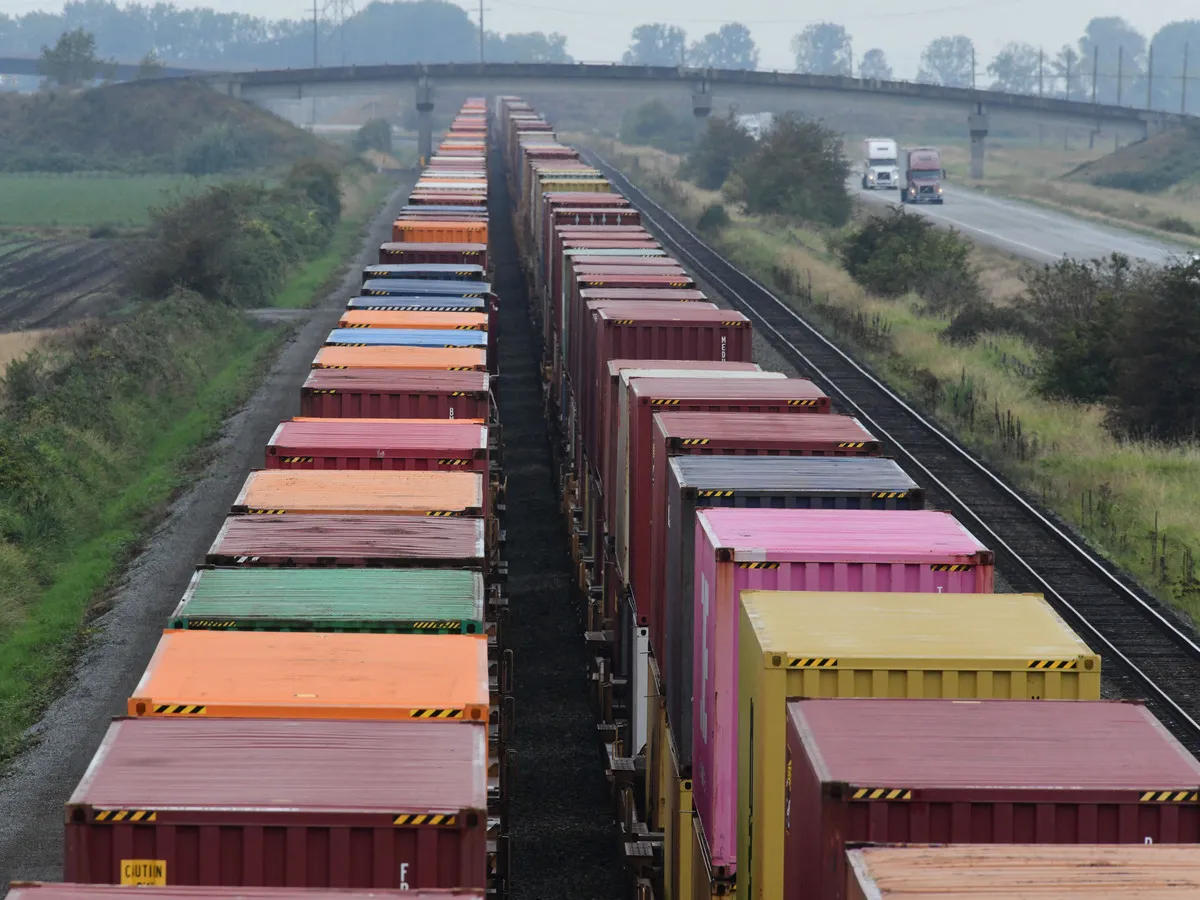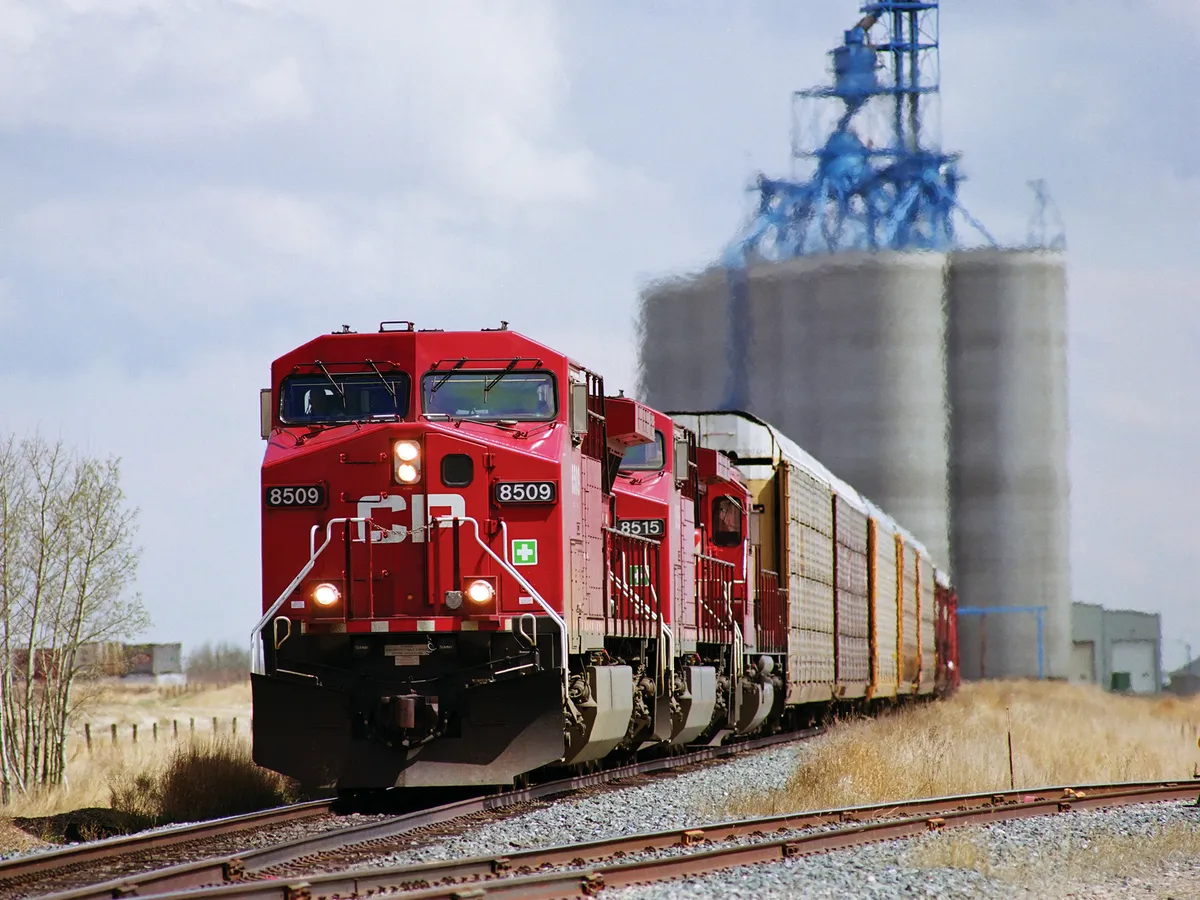
Skip to Content News Archives Economy Energy Oil & Gas Renewables Electric Vehicles Mining Commodities Agriculture Real Estate Mortgages Mortgage Rates Finance Banking Insurance Fintech Cryptocurrency Work Wealth Smart Money Wealth Management Investor Personal Finance Family Finance Retirement Taxes High Net Worth FP Comment Executive Women Puzzmo Newsletters Financial Times Business Essentials More Innovation Information Technology FP500 Podcasts Small Business Lives Told Tails Told Shopping Financial Post Store Obituaries Place a Notice Advertising Advertising With Us Advertising Solutions Postmedia Ad Manager Sponsorship Requests Classifieds Place a Classifieds ad Working Profile Settings My Subscriptions Saved Articles My Offers Newsletters Customer Service FAQ News Economy Energy Mining Real Estate Finance Work Wealth Investor FP Comment Executive Women Puzzmo Newsletters Financial Times Business Essentials HomeFP CommentOpinion: Volatile rail pricing plagues Canada’s grain industryOttawa controls the total amount railways can earn from hauling grain but short-term rate changes cause problems during peak periodsLast updated 7 minutes ago You can save this article by registering for free here. Or sign-in if you have an account.Railways argue that seasonal pricing reflects demand and helps them manage congestion on a network operating near capacity during the post-harvest grain surge. Photo by Handout/CP Rail/PostmediaLast fall, the cost of moving 550 rail cars of Saskatchewan wheat to Vancouver jumped by more than $1 million. According to the Grain Monitor, which tracks grain movement and rail logistics across Canada, the posted rail cost of $3.4 million in August increased to nearly $4.4 million in October. Nothing about the shipment changed; only the rail rate.Subscribe now to read the latest news in your city and across Canada.Exclusive articles from Barbara Shecter, Joe O'Connor, Gabriel Friedman, and others.Daily content from Financial Times, the world's leading global business publication.Unlimited online access to read articles from Financial Post, National Post and 15 news sites across Canada with one account.National Post ePaper, an electronic replica of the print edition to view on any device, share and comment on.Daily puzzles, including the New York Times Crossword.Subscribe now to read the latest news in your city and across Canada.Exclusive articles from Barbara Shecter, Joe O'Connor, Gabriel Friedman and others.Daily content from Financial Times, the world's leading global business publication.Unlimited online access to read articles from Financial Post, National Post and 15 news sites across Canada with one account.National Post ePaper, an electronic replica of the print edition to view on any device, share and comment on.Daily puzzles, including the New York Times Crossword.Create an account or sign in to continue with your reading experience.Access articles from across Canada with one account.Share your thoughts and join the conversation in the comments.Enjoy additional articles per month.Get email updates from your favourite authors.Create an account or sign in to continue with your reading experience.Access articles from across Canada with one accountShare your thoughts and join the conversation in the commentsEnjoy additional articles per monthGet email updates from your favourite authorsSign In or Create an AccountorThe increase came at a critical point in the calendar. October marks the start of Canada’s peak export season, when global buyers are competing for Prairie crops and grain companies are fulfilling sales negotiated months earlier. By then a good percentage of the harvest has already been contracted, even though it has yet to move through the system. So changes in the cost of moving product will eventually be felt directly in farmers’ bottom lines.Half of Canada’s crop moves in a compressed post-harvest period, when rail corridors are congested because of strained capacity, as well as pinch points at Vancouver’s port. Freight increases at this time land directly on grain companies, which must absorb the higher costs, giving up profit already priced into the deal.Get the latest headlines, breaking news and columns.By signing up you consent to receive the above newsletter from Postmedia Network Inc.A welcome email is on its way. If you don't see it, please check your junk folder.The next issue of Top Stories will soon be in your inbox.We encountered an issue signing you up. Please try againThe problem is the gap between when prices are set and when freight moves. Railways say rate adjustments reflect peak-season demand. But they can adjust their rates with only 30 days’ notice, while grain companies lock in sales months in advance. That can leave exporters exposed to freight increases that arrive after contracts are signed, turning predictable shipping costs into sudden hits to margins.Grain trader and risk adviser John DePape argues that the uncertainty created by the freight rate is highly damaging. When farmers sell grain for delivery at harvest, grain companies must manage the risk that transportation costs will change between the time they set the price to the farmer and the time the grain is shipped. To do this, they generally assume higher freight costs than they may ultimately experience. That inefficiency lowers prices to producers.Last October and November, Canada’s two main railways, Canadian National and Canadian Pacific Kansas City, each raised freight rates by roughly 36 per cent. The federally appointed Grain Monitor has warned that these mid-season increases amount to a “major commercial penalty” for grain handlers, particularly on export sales priced under earlier freight assumptions.For grain exporters, rail access is not an ordinary service but essential infrastructure. That reality was recognized in 2000 when Ottawa introduced the Maximum Revenue Entitlement (MRE), a policy intended to prevent railways from using their dominant position in Prairie grain transportation to impose excessive transportation costs on farmers and grain handlers.The MRE limits the total revenue CN and CPKC can earn from moving western grain, but it does not control when they earn it. Railways can shift freight rates across the crop year, provided their total revenue remains within the cap.Mark Hemmes, president of Quorum Corporation, which operates the Grain Monitor, says both railways have increasingly used that discretion to front-load rate increases. Historically, harvest freight rates tended to rise gradually, in line with annual railway cost adjustments. But since the 2021 harvest season CN and CPKC have imposed substantial increases immediately after harvest and then reduced rates later in the year. That’s allowed under the MRE, but it has created new pricing uncertainty for grain exporters, particularly those who commit to export sales months before grain is moved.The MRE was intended to allow railways to recover their costs while limiting the effects of concentrated market power. But if a framework designed around predictable cost recovery now permits large seasonal rate increases after export contracts have been signed, is it still achieving its original purpose?Railways argue that seasonal pricing reflects demand and helps them manage congestion on a network operating near capacity during the post-harvest surge. But demand for grain transportation is driven largely by harvest cycles, export commitments and global markets, not by freight pricing itself. If grain has to move, are higher rates changing shipping behaviour or simply increasing transportation costs?The question, then, is not whether the railways are following the rules. It is whether the rules continue to protect against the risks they were created to address. If seasonal freight increases increasingly determine which companies can compete, how export risk is distributed and what farmers ultimately receive for their crops, Ottawa may need to examine whether the balance struck a generation ago still serves the best interests of Canada’s grain economy.Mary-Jane Bennett, former member of the Canadian Transportation Agency, is a Vancouver-based transportation consultant. Join the Conversation This website uses cookies to personalize your content (including ads), and allows us to analyze our traffic. Read more about cookies here. By continuing to use our site, you agree to our Terms of Use and Privacy Policy.
Opinion: Volatile rail pricing plagues Canada’s grain industry
Ottawa controls the amount railways can earn from hauling grain but short-term rate changes cause problems during peak periods. Read here
1,262 words~6 min read