Ji Da-gyum
For over a decade, I’ve navigated the complexities of North Korean affairs, security, and foreign policy from both Seoul and Washington, D.C. As the National Desk Political Team Lead, I track the pulse of geopolitics, closely following developments from the Unification Ministry and the Foreign Ministry. My mornings start with Rodong Sinmun—North Korea’s state mouthpiece—before diving into the day’s headlines from Seoul and Washington.
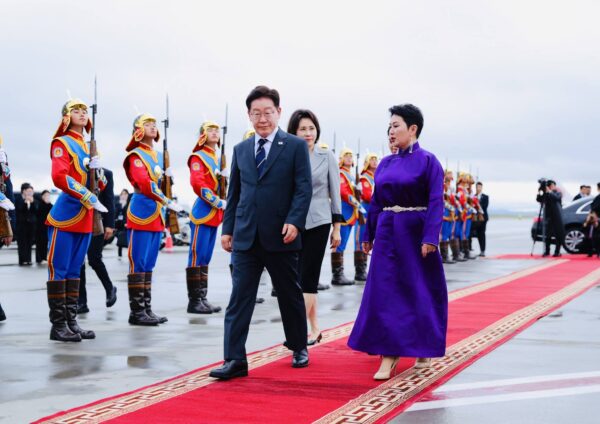
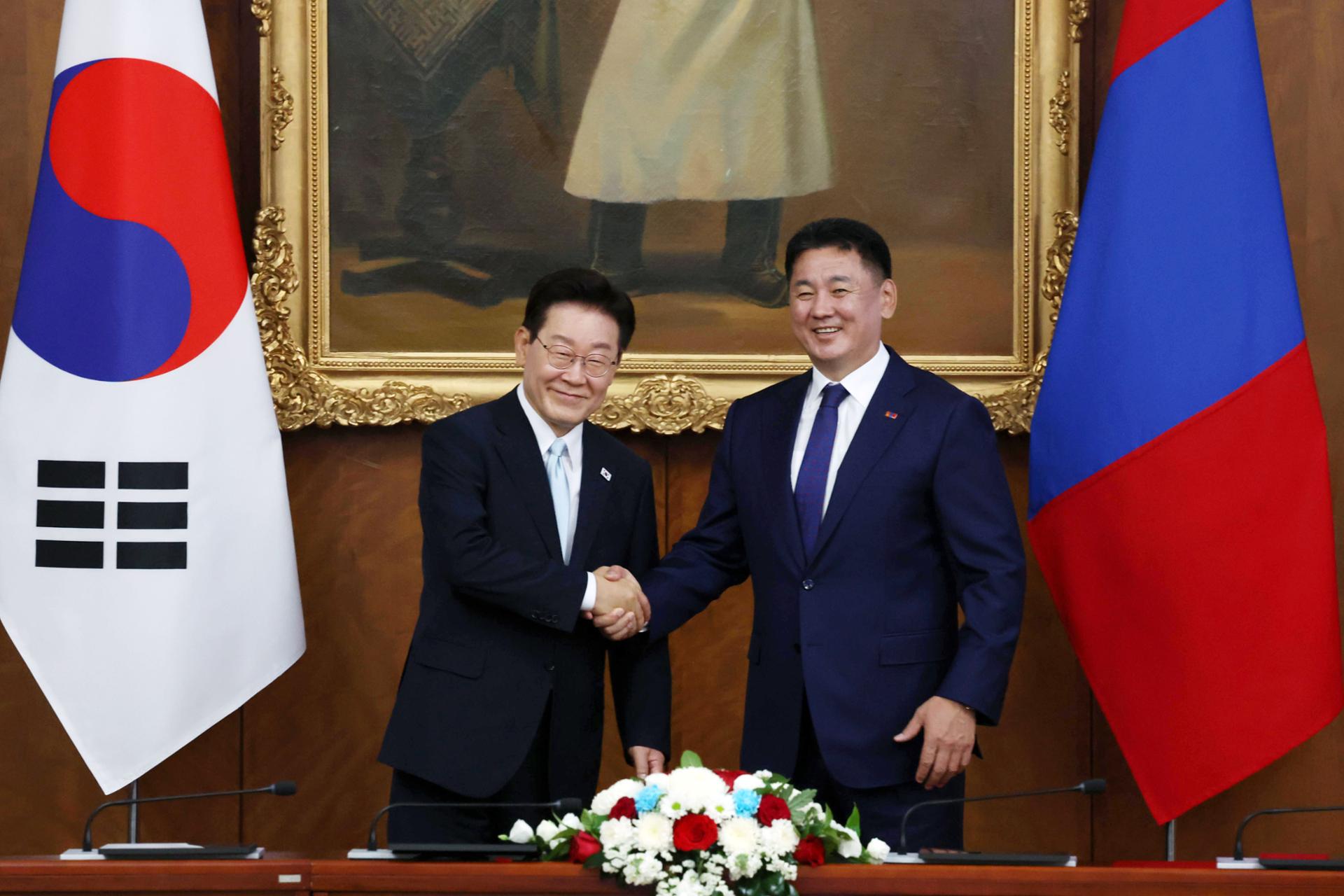
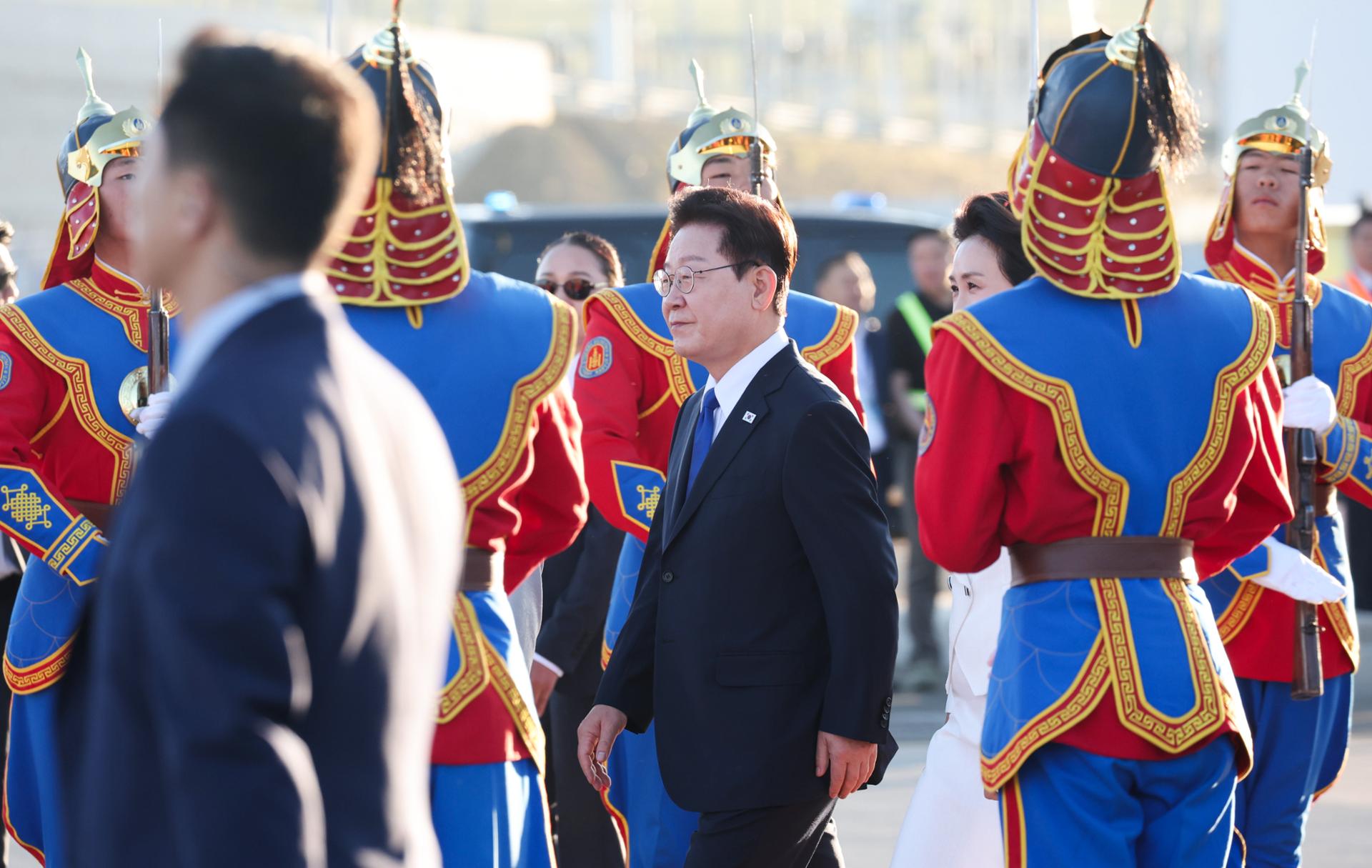
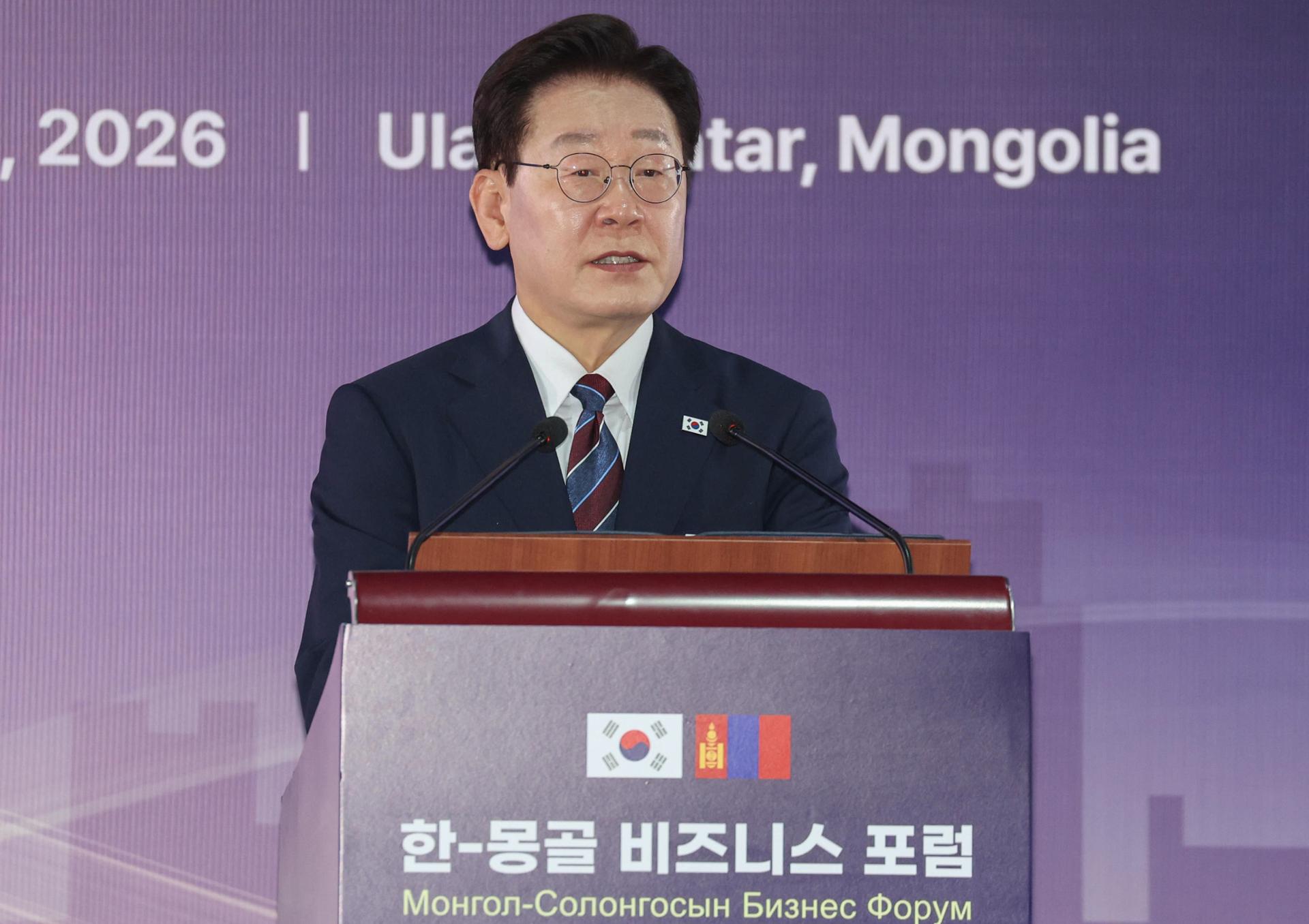
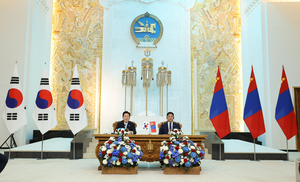
Seoul, Ulaanbaatar target $1 billion in bilateral trade by 2030 after reaching agreement in principle on CEPA President Lee Jae Myung (left) and Mongolian President Ukhnaagiin Khurelsukh deliver a joint press statement following their summit at the State Palace in Ulaanbaatar on Thursday. (Yonhap) ULAANBAATAR, Mongolia — South Korea and Mongolia opened a new chapter in bilateral relations Thursday, adopting a joint declaration that lays out a shared vision for a “golden age” in ties.President Lee Jae Myung and Mongolian President Ukhnaagiin Khurelsukh met for their first in-person summit on the opening day of Lee’s three-day state visit to Mongolia, marking the first visit by a South Korean president since 2011.Following the summit, the two leaders adopted a joint declaration on a “Golden Age of Korea-Mongolia Relations,” setting out the direction for the future development of bilateral ties.“The most significant achievement of this summit is that we two leaders reaffirmed a shared vision of ushering in the ‘Golden Age of Korea-Mongolia Relations’ and adopted a joint declaration,” Lee said during a joint news conference with Khurelsukh at the Government Palace in Ulaanbaatar.“Building on more than three decades of friendship and trust, this joint declaration will serve as an important milestone as we work together to forge the true ‘Golden Age of Korea-Mongolia Relations.’”Lee expressed hope that the two countries “can contribute to the livelihoods of the peoples of both countries and to peace and development in the region” based on the joint declaration.Khurelsukh said Lee's staet visit served as “a highly meaningful occasion that opens a new chapter in the history of relations and cooperation between our two countries.” President Lee Jae Myung (left) shakes hands with Mongolian President Ukhnaagiin Khurelsukh ahead of their summit at the Government Palace in Ulaanbaatar on Thursday. (Yonhap) CEPA opens new chapterLee also set a goal of increasing bilateral trade, building on the Comprehensive Economic Partnership Agreement, which reached a substantial conclusion a day before the summit.The CEPA goes beyond a traditional free trade agreement, encompassing a broader range of economic cooperation areas.“Taking the agreement in principle on the Comprehensive Economic Partnership Agreement as a milestone, the two sides will work together to achieve a Korea-Mongolia trade volume of $1 billion by 2030,” Lee added.Bilateral trade between the two countries has been on a sharp upward trajectory.According to the Korea International Trade Association, total trade more than doubled over the past five years, rising from $291.7 million in 2020 to more than $400 million in 2021 and reaching $693 million in 2025.Lee underlined that he and Khurelsukh “agreed to expand future-oriented, practical cooperation that delivers tangible benefits to the peoples of Korea and Mongolia.”“The two sides will expand cooperation in the areas of economy, trade and investment and strengthen cooperation on supply chains, including critical minerals,” Lee said.In 2023, the two countries established the Korea-Mongolia Rare Metals Cooperation Joint Committee, creating an institutional framework for cooperation in the sector that allows them to capitalize on their complementary strengths.South Korea opened a rare metals cooperation center in Ulaanbaatar in December 2025.Mongolia's abundant reserves of copper, molybdenum, tungsten and rare earths and other strategic minerals have drawn growing interest as demand rises for resources critical to advanced manufacturing and clean-energy industries.South Korea, meanwhile, has sought to leverage its technological and industrial capabilities to deepen cooperation in the sector.“We also agreed to broaden cooperation across a wide range of sectors in a mutually beneficial and sustainable manner,” Lee said.Lee cited areas including artificial intelligence and digital transformation, advanced science and technology, logistics and infrastructure, agriculture and livestock, healthcare, and development cooperation. President Lee Jae Myung holds summit talks with Mongolian President Ukhnaagiin Khurelsukh at the Government Palace in Ulaanbaatar on Thursday. (Yonhap) Beyond borders, togetherLee further underlined that “the two countries agreed to further solidify their political and diplomatic trust and deepen their strategic partnership to a higher level” as a key outcome of the summit.“The two of us agreed to expand high-level exchanges and strategic communication and to maintain close consultations while strengthening our cooperation on regional and international affairs,” Lee said.Lee added that he and Khurelsukh also “agreed to further strengthen bilateral cooperation on the international stage.”The two leaders also shared the view that it is important to preserve and further strengthen the tradition of cooperation and mutual support that South Korea and Mongolia have built over the years on the international stage, Lee said.In addition, Lee explained that the two leader further agreed to expand cooperation within international organizations and multilateral forums, including through close coordination in elections for positions at international bodies such as the International Court of Justice.The summit also covered peace and stability in Northeast Asia and on the Korean Peninsula.“President Khurelsukh and I agreed to expand our bilateral cooperation to promote stability and development in Northeast Asia,” Lee said.Lee further said he shared with Khurelsukh the Lee administration's vision for peace and cooperation on the Korean Peninsula.“President Khurelsukh expressed strong agreement with my view on the importance of maintaining peace and stability on the Korean Peninsula and in Northeast Asia,” Lee said.“I would like to once again thank President Khurelsukh for reaffirming his steadfast support for our government’s efforts to achieve denuclearization of the Korean Peninsula and establish lasting peace.”Mongolia carries diplomatic significance for the Lee administration as it seeks to revive inter-Korean dialogue after years of stalled relations.As the second country after the Soviet Union to establish diplomatic ties with North Korea, Mongolia has maintained traditional ties with Pyongyang while also supporting South Korea’s efforts to promote peace and stability on the Korean Peninsula.During the summit, Lee and Khurelsukh further concurred on expanding people-to-people exchanges in areas such as tourism, education, employment and culture, while strengthening consular cooperation to facilitate greater mobility and interaction between their citizens.“Mongolia is a key partner in Korea’s pragmatic, national interest-focused diplomacy, and Korea is Mongolia’s most trusted partner for strategic cooperation,” Lee said. “I hope that this message is clearly conveyed to the peoples of both our countries.”