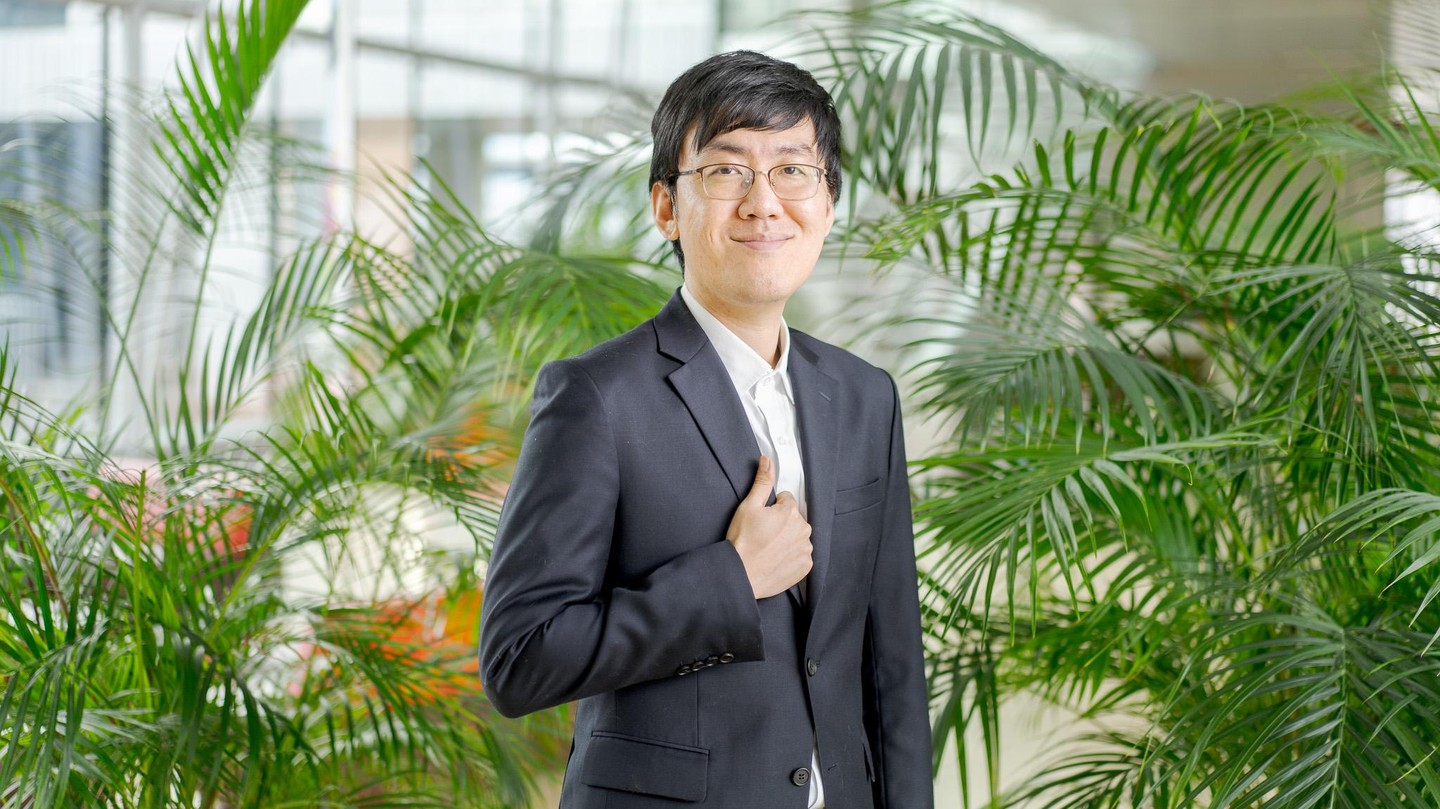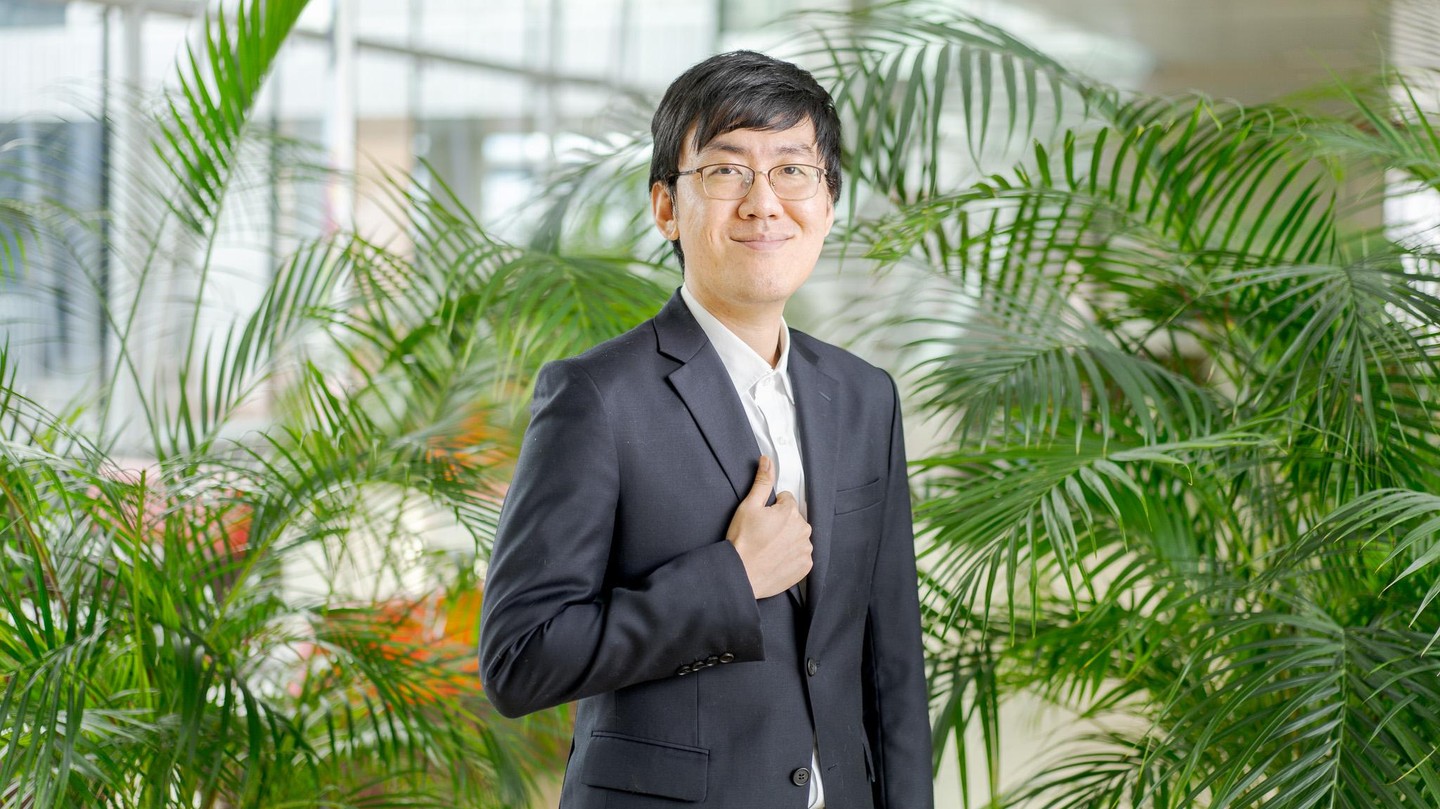
Inspired by a personal connection to neuroscience and trained across biology, chemistry and engineering, EPFL professor Yoon Seok Kim develops tools to study the brain while bringing together scientists from very different disciplines.Since May 2026, Yoon Seok Kim is an assistant professor in EPFL’s School of Life Sciences. His lab combines biochemistry, structural biology, neuroscience and engineering to understand how proteins work and to develop new tools for studying the brain.What do you research?I'm a bioengineer studying the brain. I'm really motivated to understand how important proteins, the molecular machines in our body, work. Then we use that knowledge to engineer or improve really important tools to study how the brain works.One of the main techniques we use is optogenetics, which uses light to control specific cells in the brain. The proteins behind this technology originally evolved in single celled green algae, where they help the organisms respond to light.Once we understand their structures and how they work, we can use those structures as blueprints to engineer better tools for neuroscience.Today, we're also expanding into areas such as brain cancer, Alzheimer's disease and amyotrophic lateral sclerosis. We're trying to understand the chemistry behind these diseases and also the more fundamental mechanisms that underlie them. Eventually, we hope that understanding leads to better therapeutic approaches.What led you to this field?I was always interested in studying the brain. My older brother has an autism spectrum disorder. So not only as a caregiver, I was always interested in what really causes those problems in the brain.At first, I thought about becoming a physician. But eventually I realized I wanted to become a scientist because scientists can usually influence way more people than physicians.I also grew up on a very rural island in South Korea, a bit like Hawaii. Being surrounded by plants and nature from an early age made me curious about how living organisms work. Looking back, that naturally led me to use proteins from other organisms to study the brain.What fascinates you about your topic?We're trying to go deeper into neuroscience, and there are a lot of exciting directions we're pursuing. One thing I find fascinating is that proteins which evolved for completely different purposes can become powerful tools for studying the brain. If we understand how they work at the molecular level, we can improve them and use them in ways that nature never intended.I'm also fascinated by interdisciplinary science. Throughout my career I've worked with chemists, structural biologists, engineers and neuroscientists. I think many of the most interesting discoveries happen when different fields come together.The biggest challenge is bridging the gap between different disciplines. I find it really exciting. Every time it happens, I learn a lot myself.What are you teaching at EPFL?I really enjoy teaching; I come from a family of teachers. My mother is an English teacher, and that's how I was exposed to English very early in my life.I've really enjoyed giving guest lectures at EPFL. One of the nicest surprises has been undergraduate students contacting me afterwards because they wanted to work in the lab.I’m planning to launch a course on membrane protein biology. Membrane proteins are fundamental because they're how cells communicate with the outside world, so understanding them is important for almost every area of biology.What do you enjoy about teaching?I enjoy taking complicated ideas and making them easier to understand. At Stanford, I was involved in outreach programs for students who had fewer opportunities to pursue research. I also gave lectures showing how traditional Asian medicines have led to modern drugs such as artemisinin.I read a lot of papers, then I try to distill them into short, interesting stories. I think people appreciate that. I'm excited to continue teaching bachelor's, master's and PhD students at EPFL.Tell us something interesting about yourself.Outside the lab, I'm a recreational poker player. While I was living in California, I used to travel to Las Vegas regularly to play. Before starting my PhD, I even thought about becoming a professional poker player. In the end, the money I made from poker was slightly less than my PhD stipend, so the decision became quite easy!Poker taught me something I still use in science. Sometimes you get lucky, sometimes you get unlucky. What matters is your attitude. You shouldn't become "tilted". You should focus on what you can actually solve rather than things you can't control.Looking back, I still think I made the right decision. Being a scientist has been way more fun than playing poker!
“The real power of science comes from bridging the gaps”
Inspired by a personal connection to neuroscience and trained across biology, chemistry and engineering, EPFL professor Yoon Seok Kim develops tools to study the brain while bringing together scientists from very different disciplines.
747 words~3 min read