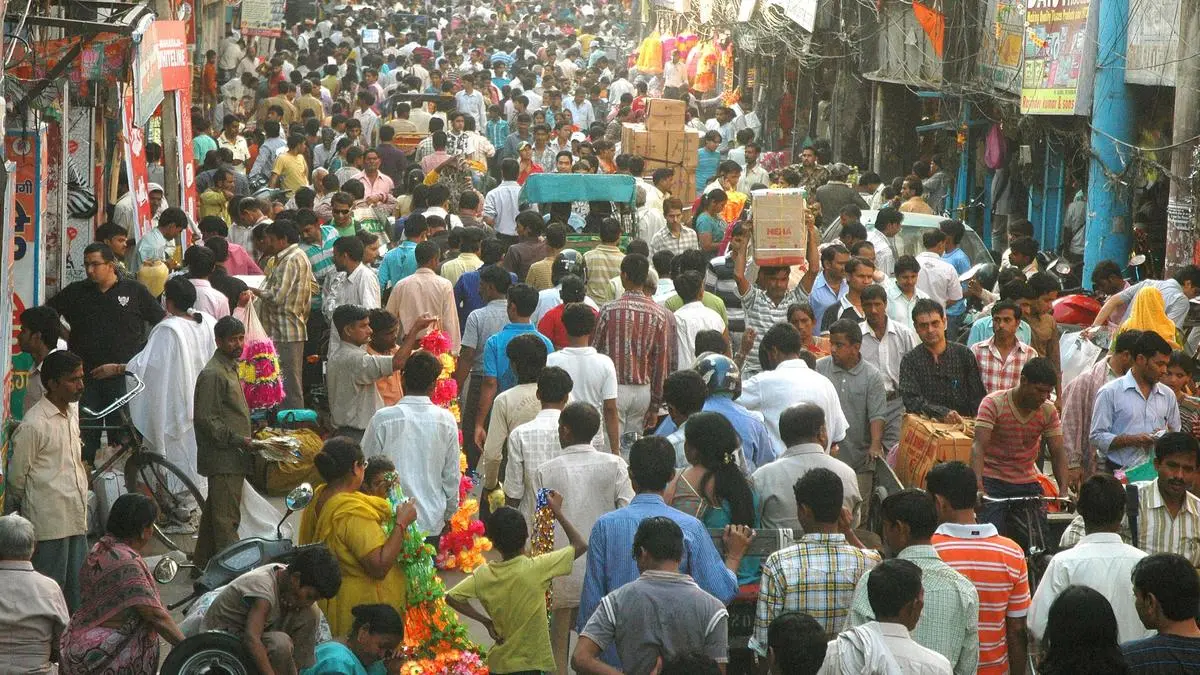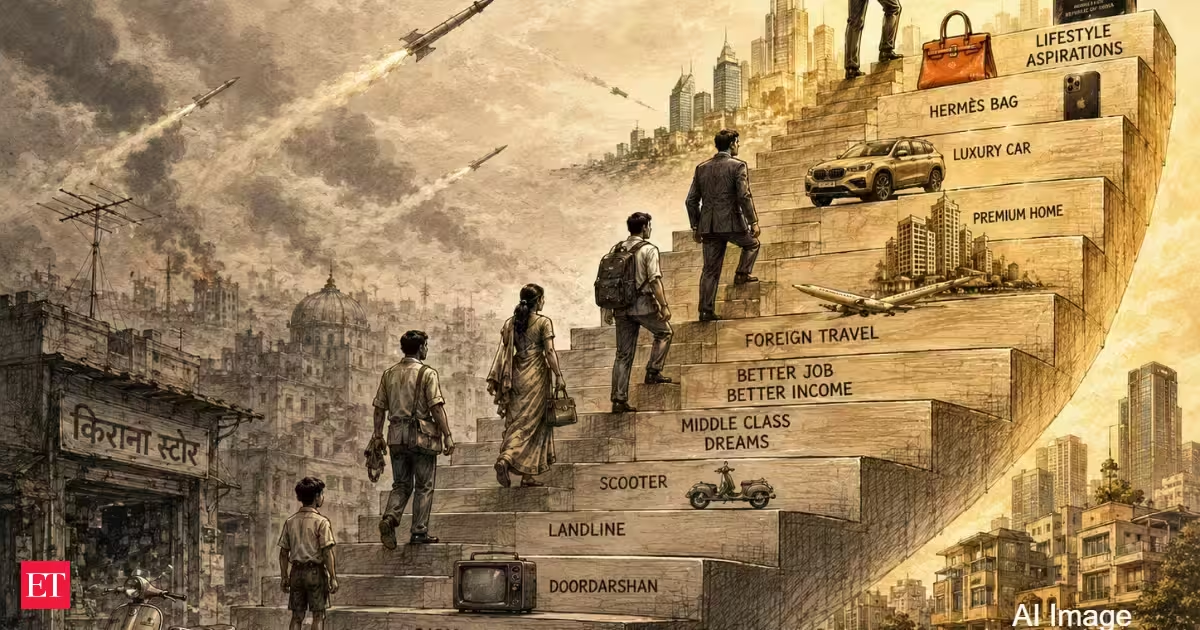
From overseas holidays and foreign degrees to AI subscriptions and premium gadgets, India's growing middle class is increasingly spending on products and services linked to foreign currencies. As aspirations become more global, economists say Indian households are also becoming more exposed to currency movements, raising an important question: Is the country's consumption story quietly becoming more dollar-intensive?When Prime Minister Narendra Modi in May 2026 urged Indians to avoid non-essential foreign travel, postpone discretionary gold purchases for at least a year to help conserve foreign exchange amid disruptions caused by the West Asia conflict, the appeal reflected more than a temporary response to geopolitical uncertainty. It underscored a structural shift underway in India's consumption economy.A growing middle class—larger, wealthier and more globally connected than ever before—is increasingly spending on goods and services priced directly or indirectly in dollars. International holidays, overseas education, AI subscriptions, streaming platforms, premium electronics, imported luxury products and even fuel consumed through greater mobility all carry a foreign exchange footprint.The phenomenon comes as India's middle class itself expands rapidly.Rajesh Shukla, Managing Director and Co-Founder of think tank People Research on India's Consumer Economy (PRICE), in a February 2025 analysis, stated that this segment— comprising households earning between ₹6 lakh and ₹36 lakh annually at 2024-25 prices—has grown to encompass over 560 million people across 126 million households. Earlier, in a 2023 report, Shukla had projected the middle-class population to reach 715 million by 2030-31 and cross one billion by 2046-47, making it one of the world's largest consumer markets.A new source of forex demandFor decades, India's foreign exchange demand was largely shaped by crude oil imports, capital goods and corporate trade."A decade ago, India's dollar demand was largely driven by crude oil imports, corporate borrowing and merchandise trade. Today, the middle class has become a meaningful contributor to forex demand," Ponmudi R, CEO of Enrich Money, told ET Online.He highlighted that overseas travel, international education, global OTT platforms, AI subscriptions, cloud software, gaming, imported electronics and cross-border e-commerce have together created a structural shift in household consumption.Jateen Trivedi, VP Research Analyst – Commodity and Currency at LKP Securities, echoed the view. "Consumer-led dollar demand has grown meaningfully over the past decade due to higher spending on overseas travel, education, digital subscriptions and global investments. While oil imports remain the largest driver, household demand for dollars is becoming an increasingly important structural component," he told ET Online.Yet both experts caution against overstating the trend. Retail spending alone, they said, is unlikely to dictate RBI policy, as exports, imports, FDI and portfolio flows continue to dominate India's external account.However, sustained growth in household dollar demand could become an increasingly important variable over the next decade.Also read: The 'little boy' in the Pacific, India's monsoon and the big test aheadET OnlineHolidays abroad become an annual expensePerhaps nowhere is the shift more visible than outbound tourism.International travel, once considered an occasional luxury, is increasingly becoming an annual line item in middle-class household budgets.According to the Ministry of Tourism, Indian nationals made a record 32.83 million outbound trips in 2025, up 6.3% from the previous year.The Reserve Bank of India's Liberalised Remittance Scheme (LRS) data tells a similar story. Of the nearly $29 billion remitted overseas under the scheme in FY26, travel alone accounted for over $16.4 billion, making it by far the largest category of outward remittances.Gagan Malhotra, chief operating officer at MakeMyTrip's forex arm BookMyForex, said the change has been one of the most significant developments in the forex market over the past five years."International travel has evolved from being an occasional aspiration for middle-class households to becoming a regular annual expense. Many families are now taking two vacations a year instead of just one," he told ET Online.Several factors are driving the trend: higher disposable incomes, easier visa regimes, improved air connectivity and, strikingly, the narrowing price gap between premium domestic vacations and overseas holidays.Anil Kalsi, vice president of the Travel Agents Federation of India (TAFI), noted affordability has reshaped travel choices."If you're spending Rs 20,000 for a hotel room in India but can stay in Bangkok for Rs 5,000, there's no comparison. People also want different experiences, different cultures and different lifestyles. Foreign travel has become aspirational," he told ET Online.Visa-free entry to destinations such as Thailand, Malaysia and the Philippines, along with expanded flight capacity and strong social media influence, has further widened international travel beyond metro cities.Malhotra noted that travellers are also buying foreign exchange earlier than before to lock in exchange rates, reflecting greater awareness of currency volatility.Also read: Indians may be roaming closer to home because of a war far awayOverseas education, healthcareIf foreign holidays are becoming a recurring expense, overseas education remains one of the largest financial commitments that Indian households undertake.RBI data shows that remittances for studies abroad exceeded $2.3 billion in FY26, while another $450 million was remitted under travel for education, reflecting the multiple channels through which families finance international education.Healthcare-related remittances, while much smaller, also contribute to household foreign exchange spending.As per the LRS data, in FY26, resident Indians remitted $2.79 million under 'Travel for medical treatment' which covers expenses incurred when an individual travels overseas for treatment. Indians spent another $58.55 million under 'Medical treatment', which includes payments for medical services availed from abroad without travelling.The invisible dollar billUnlike travel or education, much of India's new dollar consumption is invisible.Streaming subscriptions, cloud storage, software licences and AI tools have quietly become recurring household expenses.While global streaming giants operate in India, the market is highly mixed with major local entities. According to the FICCI-EY India Media & Entertainment Report, in 2025, total digital subscription revenues increased by 60%, reaching Rs 163 billion. Paid video subscriptions rose to 216 million, spanning 143 million households in India, driven by the introduction of premium sports and films behind paywalls. Paid music subscriptions expanded by 37% to 14.4 million, following measures by music streaming platforms to discourage free usage.Premium standalone foreign services account for part of this growing subscription market.Beyond paid subscriptions, Indian consumers also spend increasing amounts of time on global social media platforms.According to research firm DataReportal, India had 500 million unique social media user identities as of October 2025. While Google parent Alphabet and Meta do not officially disclose country-specific user numbers, DataReportal estimates that India had around 500 million YouTube users, 481 million Instagram users, 403 million Facebook users and 213 million Snapchat users by late 2025.As AI adoption accelerates, recurring payments for premium software and digital services are expected to become another source of sustained dollar-denominated spending."Many digital subscriptions, smartphones, electronics, cloud services, AI tools and software licences are either priced directly in dollars or linked to global dollar-based pricing," Ponmudi said. Trivedi added that imported electronics, digital entertainment and AI subscriptions are likely to emerge as some of the fastest-growing sources of household dollar demand over the coming decade.Indians are also increasingly looking at foreign markets for equity investments, creating another form of dollar bill for the economy. According to Reserve Bank of India data, Indians invested more than $2.65 billion in overseas equities and debt in FY26.In March 2026, under LRS, Indians invested $440 million into global equity and debt investments. This number was up 43% from $306 million in March 2025.Also read: Middle class, aspirational consumers to drive 93% of India's spending by 2036: SitharamanBeyond remittances: The import dollar drainNot all foreign exchange linked to consumption appears in outward remittances; much of it arises indirectly through imports. Gold, crude oil and electronics remain among the country's biggest sources of merchandise dollar outgo, although each reflects a different mix of consumer demand, industrial use and domestic production.Crude petroleum continued to lead India's import dependencies in FY26, with the nation's crude oil import bill climbing to $123.37 billion over the previous fiscal year as New Delhi imported 245.77 million MT of crude, according to PPAC data.Gold imports, long driven by household demand, moderated after the government raised the import duty from 6% to 15% in May 2026 and tightened rules for gold imports linked to exports. Against this backdrop, gold imports declined 39% month-on-month to $3.4 billion, though they remained 34% higher year-on-year, according to the World Gold Council. As a share of total merchandise imports, gold accounted for around 5%, down from the elevated 14% seen in January–February.Also read: Modi wants Indians to press pause on gold. But the $5.2 trillion obsession runs deepThe electronics story is more nuanced. While India has reduced smartphone import dependence from around 78% in 2014 to almost negligible levels through domestic manufacturing, electronics imports still crossed the $100-billion mark for the first time in FY26, rising nearly 18% to $116.2 billion. Electronics exports also grew strongly to $48 billion, led by smartphone shipments, but continued to trail imports by a wide margin.Notably, the electronics bill also includes industrial raw materials, besides consumer electronic devices.Consumption meets currencyFor most Indian households, exchange rates were once relevant mainly to importers or families sending children abroad. Today, a weaker rupee affects everything from international vacations and imported gadgets. Since January 2025, the rupee has depreciated by about 9%. INR was amongst the weakest currencies in Asia during May 2026 when it weakened to 96.96 against dollar, according to a report by The Economic Times.Experts say essential spending such as education and medical treatment tends to be relatively resilient even when the rupee depreciates. Discretionary expenses, however, including holidays, premium gadgets and luxury purchases, are far more sensitive to exchange-rate movements."Rising incomes are enabling greater global consumption, but the growing dependence on dollar-priced products and services also means the Indian middle class is becoming increasingly sensitive to movements in the rupee-dollar exchange rate," said Trivedi.Ponmudi agreed, describing the shift as both natural and structural."It reflects India's deeper integration with the global economy, where the US dollar continues to be the dominant currency for international consumption," he said.What emerges is not a departure from India's consumption story, but an evolution of it. As the middle class expands, the geography of its spending is changing just as much as its purchasing power.India may still earn in rupees, but for millions of middle-class consumers, the aspiration basket is becoming unmistakably global, and with it, increasingly tied to the fortunes of the dollar.
India's richer middle class is living a more dollar-linked life while earning in rupees
Dollar spending India: The country's expanding middle class now spends more on foreign goods and services. International travel and overseas education are becoming regular annual expenses for many families. Digital subscriptions, AI tools, and imported electronics also contribute to this growing dollar demand. While oil imports remain the largest driver, household spending is a significant factor. This trend reflects India's deeper integration with the global economy.
1,704 words~8 min read