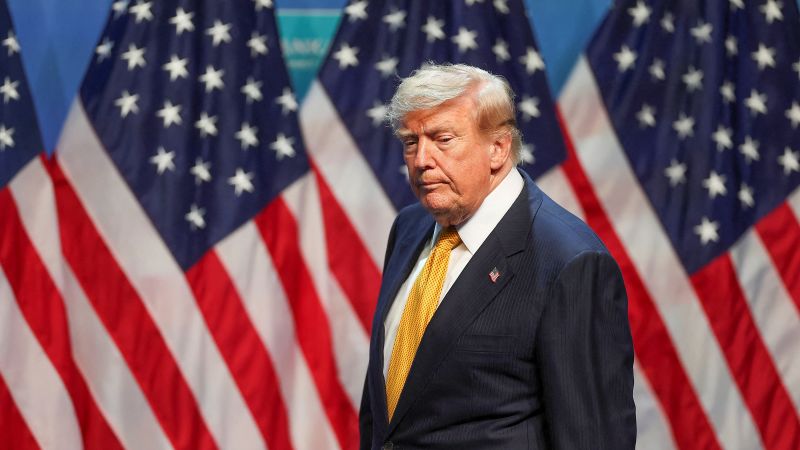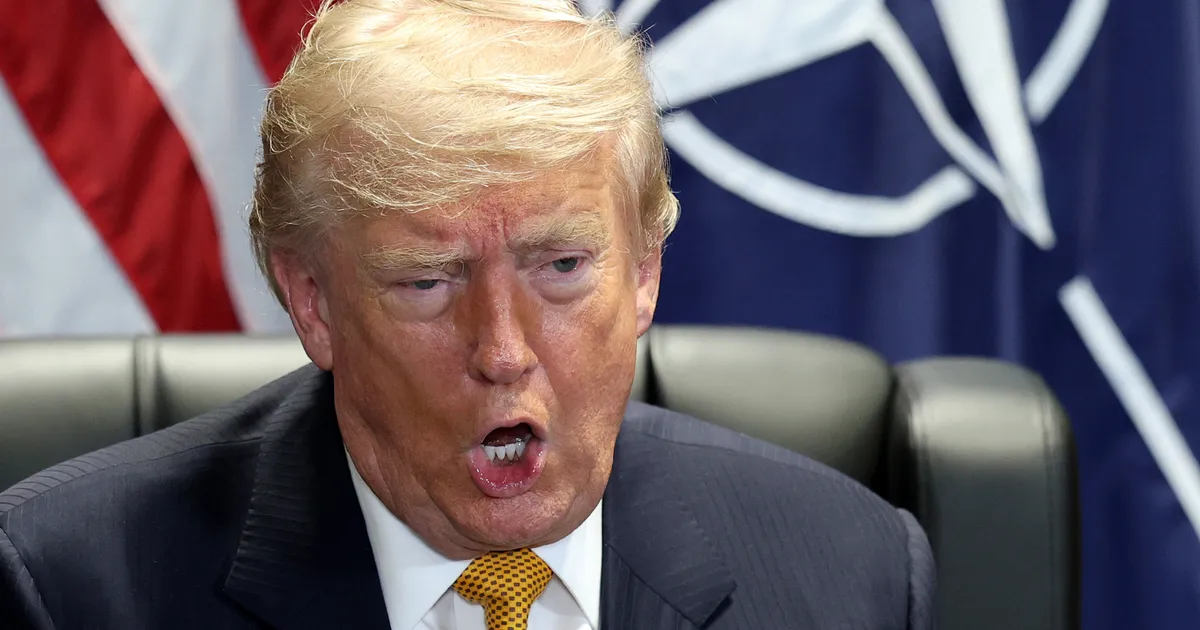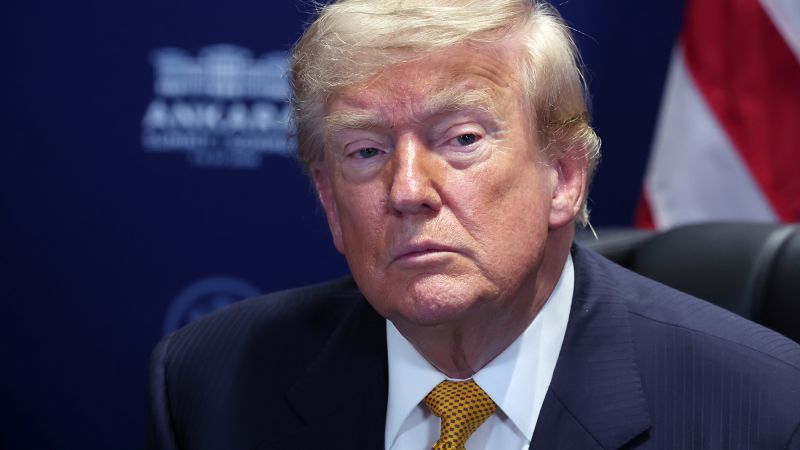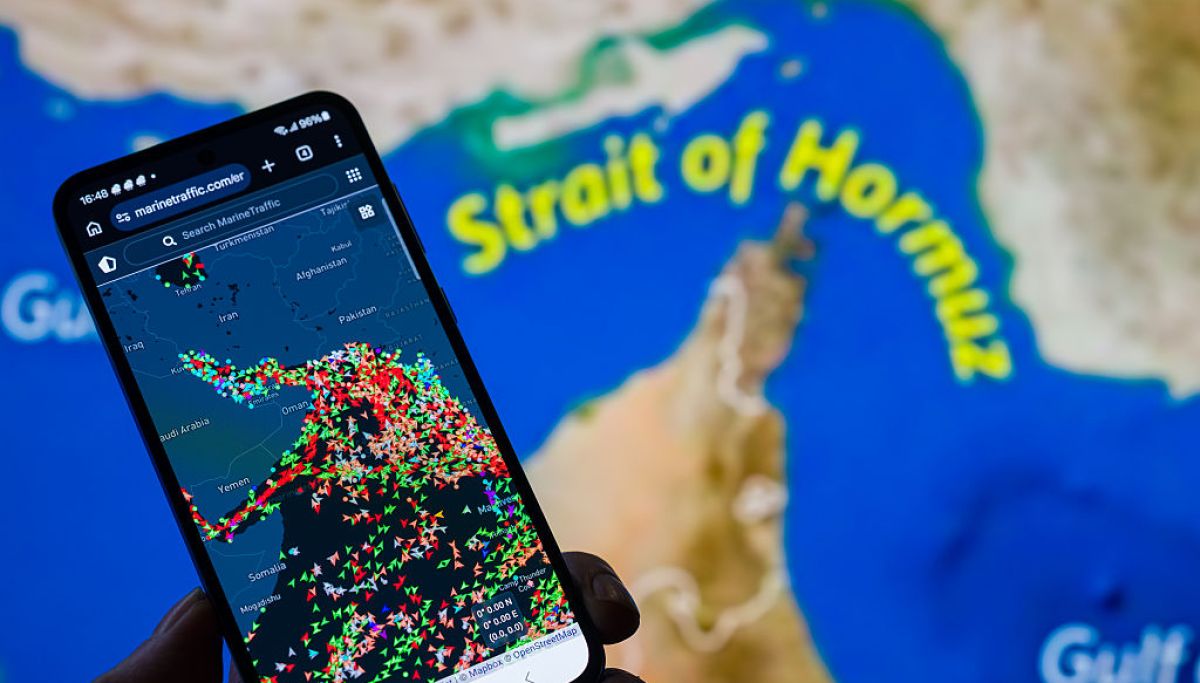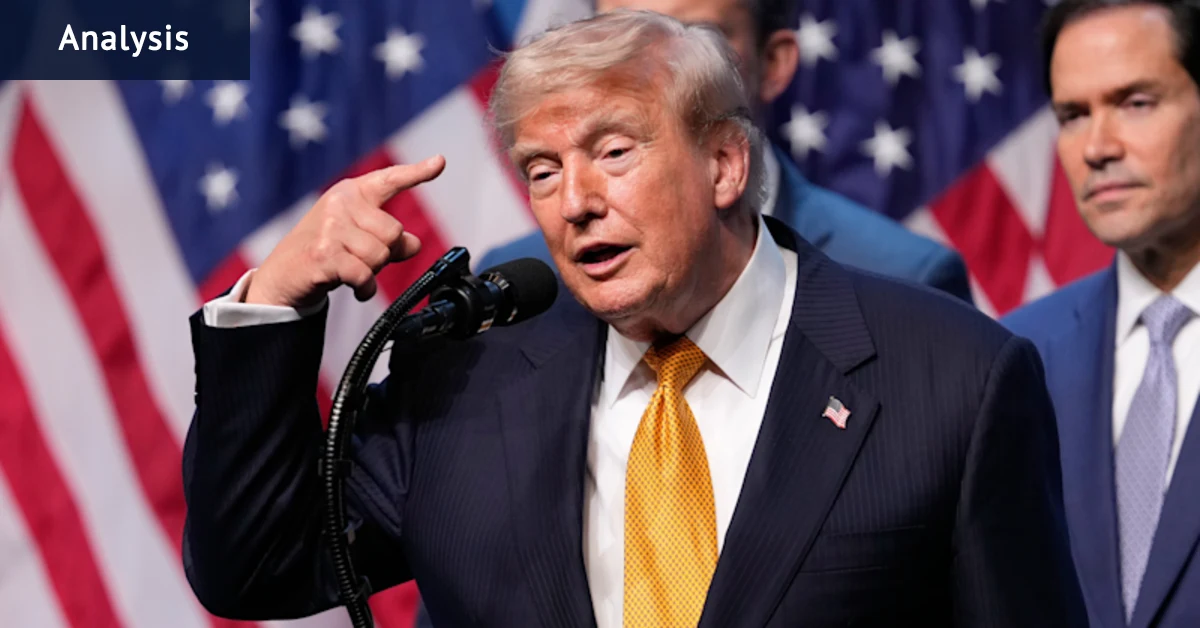
July 9, 2026 — 3:29pmWashington: Only a few weeks ago, Donald Trump was praising Iran’s new and improved leadership, with whom American negotiators had just inked a “memorandum of understanding” to end the war.“We’re dealing with people that I think are very rational people, and they were nice to deal with,” the president extolled on June 16 at the G7. “They were strong people, smart people. They’re not radicalised, and they’re looking to help their country.”President Donald Trump leaving his news conference at the NATO summit in Ankara, Turkey.BloombergNow, Trump says the Iranian leaders are “scum” and “sick people”; violent, vicious and “a little loco”. He has talked down the prospects of reaching a deal and says it’s probably not even worth trying.What changed? That was the exact question The New York Times’ Tyler Pager asked Trump at the NATO summit in Ankara overnight, and it drew a rare direct answer. “I got to know them,” Trump said, as Secretary of State Marco Rubio chuckled on stage behind him.It was a pithy response, but one that highlights what most Iran experts and Middle East analysts were saying all along: that Trump and his team – JD Vance, Steve Witkoff, Jared Kushner – did not really understand Iran and its leadership, and were clumsily treating the war’s resolution as just another business deal.Of course, what materially changed is that Tehran – apparently – began flexing its muscles again in the Strait of Hormuz, the crucial shipping passage that it successfully weaponised to hold much of the world’s oil supply hostage and send prices skyrocketing.The US launched a series of “powerful strikes” in retaliation; then the Islamic Revolutionary Guard Corps (IRGC) announced it had fired missiles and drones at 85 American military targets in the region.On Wednesday (Washington time), US forces attacked Iran again. Officials told US media outlets the second strikes were larger in scope than the first.This is already escalating beyond previous skirmishes, which have typically ended after Iran targets US assets in the Gulf.And it was certainly not the plan outlined in the MoU, under which Iran would fulfil its obligations to become a “normal country”, in Vance’s language, and get economic benefits in return.But Iran’s commitment to the 14-point agreement was always questionable. It was signed by the country’s political leadership – President Masoud Pezeshkian and parliamentary Speaker Mohammad Bagher Ghalibaf – but with only the begrudging permission of Supreme Leader Mojtaba Khamenei.And it never enjoyed support within the IRGC, whose power increased markedly amid the vacuum left by the US-Israeli attacks that wiped out many Iranian leaders.Trump may have finally emerged from his delusion that he is dealing with a new and improved, rational Iran. Nor is he dealing with a puppet, Delcy Rodriguez-type figurehead.Where does that leave things? Trump says the ceasefire is basically “over”. But neither side seems inclined to return to full-scale war. Trump muses that he ought to “finish the job”, but he was more definitive when he said: “I don’t think it’s going to start again … Anything that happens is going to be over very quickly.”That effectively means the door is open to a cycle of tit-for-tat strikes constantly undermining a diplomatic track that seems to be over before it even began.Many predicted some form of this difficulty. Paul Musgrave, associate professor of international relations at the US’s Georgetown University in Qatar, said last month that the wafer-thin MoU was destined to cause headaches for Trump down the track.“If Iran fails to perform – if they close the strait or engage in hostilities with Israel again – the US would then have to go back to war,” Musgrave said at the time. “The president has discovered that that’s a very costly exercise. It’s costly in terms of budget … and most of all, it’s costly in political terms.”“Trump clearly prefers an agreement and thought he had one.”Richard Fontaine, Centre for a New American SecurityHe added that one could easily imagine a situation in late August or September, when the 60-day timeframe of the MoU expired, and Trump was faced with either letting Iran get away with its bad behaviour or restarting an unpopular war and having oil prices spike weeks before the midterm elections. Musgrave’s only error was that this came even sooner than expected.Iran, having weaponised the strait, appears unwilling to give up its leverage. As Vali Nasr, an Iran expert at Johns Hopkins University, said on X, the current escalation in violence “could be the end of the MoU for the simple reason that Iran thinks [the] US wants to use MoU to take away its control of Strait of Hormuz, and if so, it should be ready to go to war over it”.Richard Fontaine, a foreign policy analyst and chief executive of the Centre for a New American Security, says the most likely outcome is an ongoing series of low-level, tit-for-tat attacks, followed by frantic diplomacy by mediators, the emergence of a fragile new ceasefire, and probably another round of strikes. “That would produce a long oscillation between [a] cold war and low-level hot war.”Trump has three options on the table: reimpose the naval blockade against Iranian ships “and hope the economic pain breaks Iran’s will before ours”, escalate the conflict or reach a new agreement.The president has spoken about potentially reimposing the blockade, and on Wednesday (US time), US Central Command posted a video on social media showing the massive armada and air fleet still patrolling the region’s waterways and skies, ready to do exactly that.“The problem is that all three options – endure, escalate or agree – are unattractive in different ways,” Fontaine says. “Trump clearly prefers an agreement and thought he had one in hand. But though Iran is weakened by war, it is also emboldened. That’s unlikely to change any time soon.”Get a note directly from our foreign correspondents on what’s making headlines around the world. Sign up for our weekly What in the World newsletter.From our partners
Trump trusted Iran’s ‘rational’ new leaders. Now he says he knows better
Many predicted the paper-thin memorandum of understanding signed last month would amount to little. It has taken even less time to collapse than they thought.
994 words~5 min read