view more
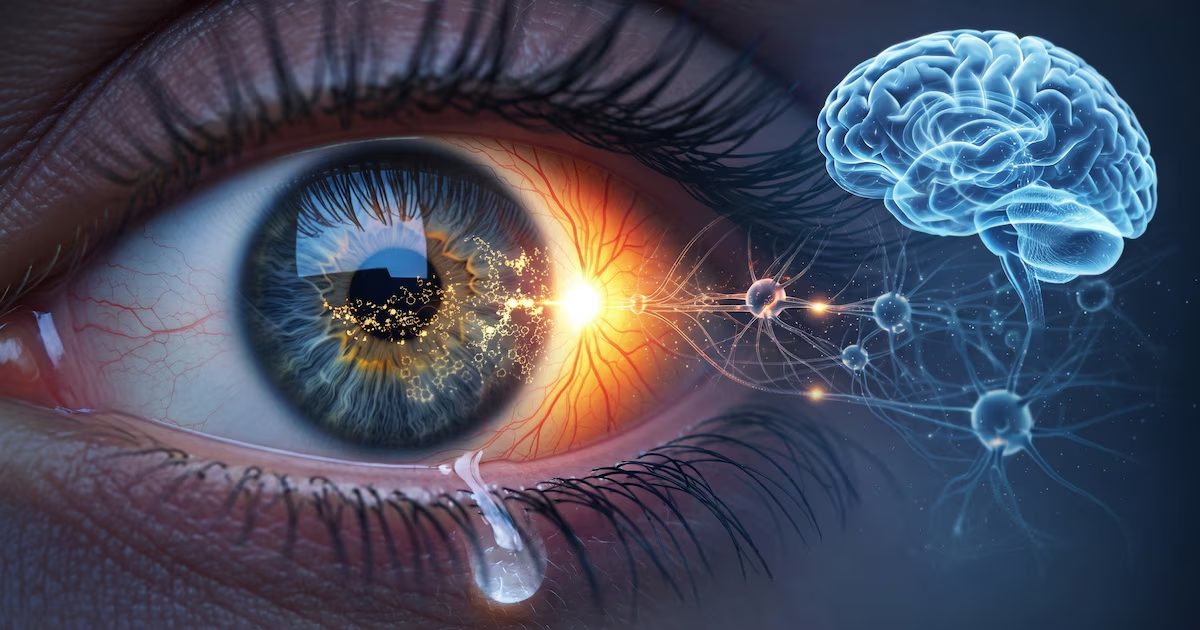
A few tears may someday reveal important clues about a person’s neurological health. Researchers reporting in ACS Omega developed a low-cost electrochemical sensor designed to detect dopamine, a neurotransmitter involved in movement, learning, motivation, and emotional regulation. They tested the device using artificial human tears, where it accurately detected a range of dopamine concentrations. The technology could support the development of new tools for monitoring Parkinson’s disease and other conditions linked to atypical dopamine levels.
By creating this sensor, “we aim to facilitate the ultra-early detection of neurological disorders, creating opportunities for clinical interventions before major symptoms manifest,” says corresponding author Neftalí Lênin Villarreal Carreño.
Changes in dopamine levels — whether higher or lower than normal — are associated with neurological and psychiatric conditions. For example, with Parkinson’s disease, concentrations of dopamine tend to decrease. Current monitoring methods, such as blood samples, urine analysis, or implanted devices, take time or require invasive procedures. As an alternative, tears could be a source of health information because they can be collected quickly and painlessly. So, Carreño and colleagues built and tested a sensor to explore whether tears could provide a noninvasive way to monitor dopamine levels.