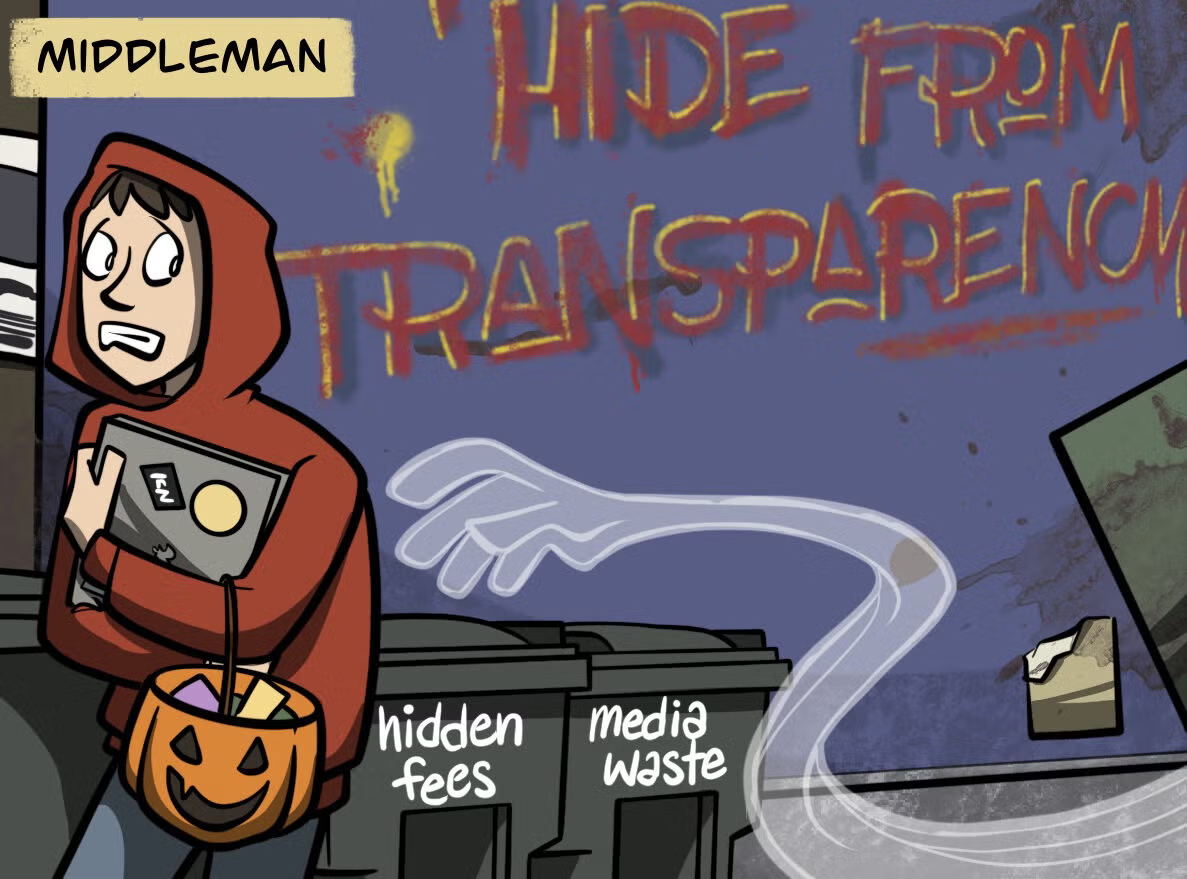
Blockchain spent the better part of a decade promising to fix advertising’s supply chain. The pitch was reasonable on paper: verifiable delivery, transparent intermediaries, an auditable record of who got paid for what, fewer opaque middlemen skimming margin in the dark. It was one of the more concrete non-speculative use cases anyone put forward for distributed ledgers. Most of it did not ship, or shipped and did not matter. It is worth asking honestly why, because a quieter version of the very same fix is now happening in an unexpected corner of advertising, and it needs no token at all.
The reason the blockchain-for-adtech thesis mostly failed is that it misdiagnosed the problem. The problem in digital advertising was never the absence of a ledger. It was that the supply chain routed through a handful of platforms that graded their own homework. You saw the numbers the platform chose to show you, produced inside a system the platform controlled end to end. A distributed ledger does not fix that, because the trust gap was never about record-keeping. It was about who controls the environment in which the record is generated. Adding cryptographic proof to a self-reported metric just gives you a tamper-evident version of a number you already could not fully trust. The integrity of the ledger was never the weak link. The integrity of the input was.