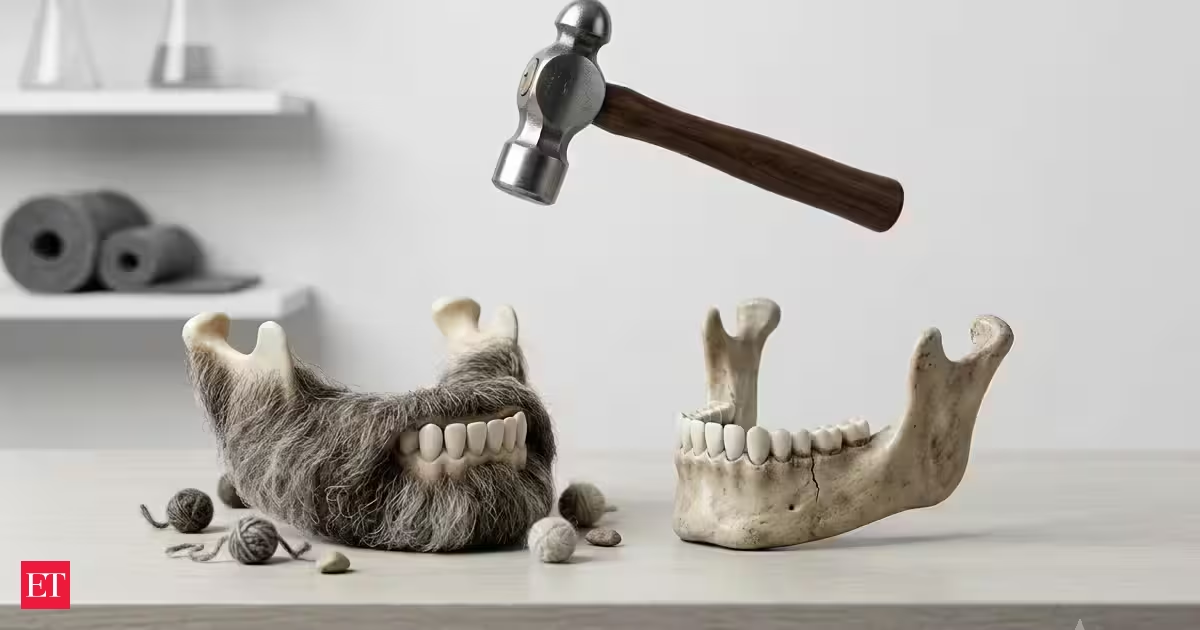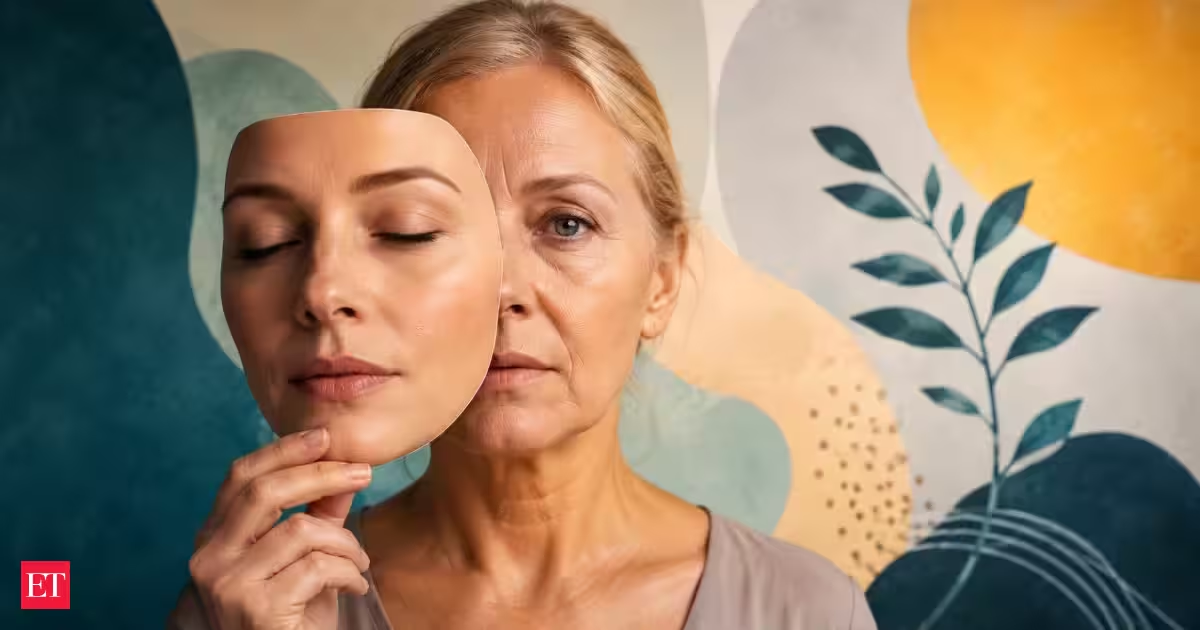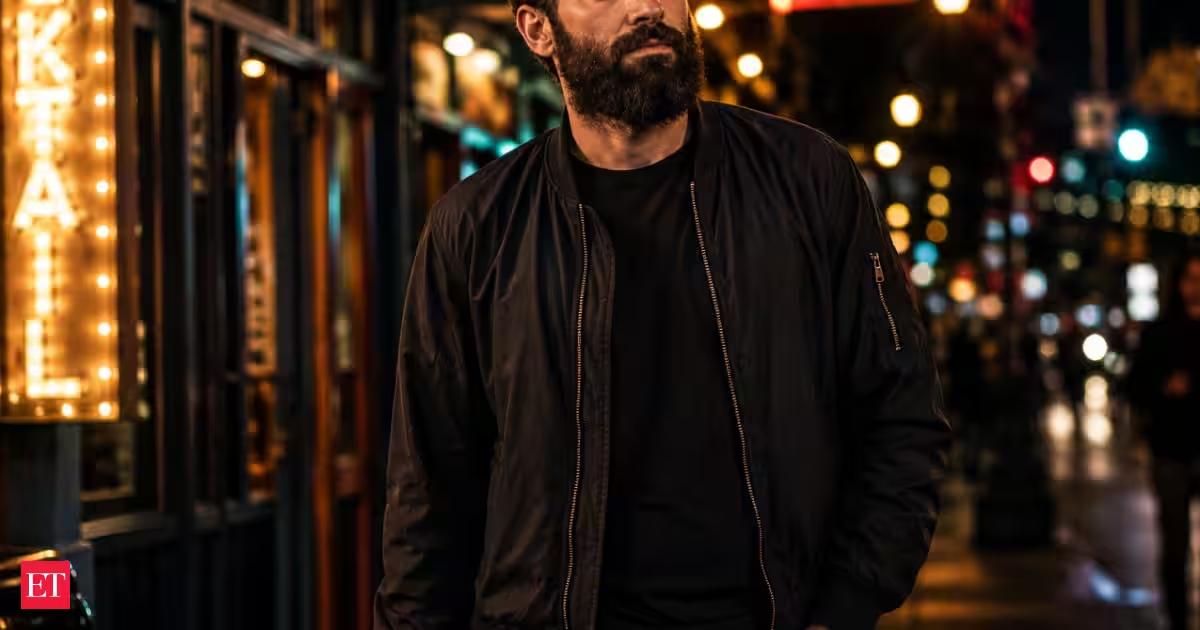
Beard trends come and go on social media, but the reasons many men grow beards may run deeper than fashion. The study, ‘Beards augment perceptions of men's age, social status, and aggressiveness, but not attractiveness Get access Arrow,’ published in the journal Behavioral Ecology by researchers Barnaby J. Dixson and Paul L. Vasey, suggests that beards alter the way other people often perceive a man. Facial hair makes men look older, of higher social status, and more capable of aggression when already making an angry face, the study found. It did not, however, make them more attractive.What the researchers actually didEuropean-descent men from New Zealand and Polynesian men from Samoa were recruited into the study, all of whom had full beards that had not been shaved or trimmed for at least six weeks. Researchers took two photos of each man, one with a beard and one without, both with a neutral, happy, or angry expression each time. This gave a neat way to compare reactions to the same face with and without facial hair. The photos were then shown to both men and women from both cultures, who rated the photos on perceived age, social status, attractiveness, and aggressiveness. Testing two very different cultural groups was important because it allowed the researchers to see whether reactions to beards were a universal human pattern or culturally specific.Older and higher-status, according to almost everyoneIn both cultures, the same men were consistently judged to be older with beards than without. It makes sense on a basic biology level, since facial hair is a marker of male puberty that takes place well into adulthood. So the more of it there is, the more mature it tends to appear to the human eye.Same face, same man, but one version reads as older and more serious. Image Credits: ChatGPTBearded faces were also rated as having higher social status by both men and women in both cultures. Think about how often a beard is coded in film and television: the wise mentor, the seasoned outdoorsman, the boss who's obviously been around longer. The results show that instinct isn’t merely random pop-culture noise but a measurable pattern that shows up in two very different societies.The aggression effectHere is the part to remember before a tense meeting. When the men in the photographs wore an angry expression, the bearded versions were judged to be significantly more aggressive-looking than the clean-shaven versions of the same face. It was the expression, not the beard, but it seemed to increase the volume of how threatening that expression was, almost like a volume knob on an angry face.Not everyone's convinced it's a good lookHere is the twist Charles Darwin did not foresee. Darwin had proposed that beards had evolved because women considered them attractive and regularly preferred bearded partners. This study directly contradicts that idea, as women in both New Zealand and Samoa did not find bearded faces more attractive than clean-shaven faces. So a beard might make a man look older and more dominant, but on the attractiveness front, it didn’t seem to help much, at least according to this data.From these combined results, the researchers suggested that beards may function more as a signal used between men, part of a wider facial communication system built around status and aggression rather than appeal.An angry face often reads angrier with a beard. Image Credits: ChatGPTThis is not an isolated finding. In a 2008 study by Nick Neave and Kerry Shields in Personality and Individual Differences, five different types of facial hair were rated for masculinity, aggressiveness, social maturity, and attractiveness. The study used a within-subjects design, applying five levels of facial hair (clean-shaven, light stubble, heavy stubble, light beard, and full beard) to three base male faces to create 15 images that were rated by 60 women. Full beards were rated the most masculine, aggressive, and socially mature, whereas light stubble was rated the most attractive.Separately, according to a 2013 study, ‘The role of facial hair in women's perceptions of men's attractiveness, health, masculinity and parenting abilities,’ by Barnaby Dixson and Robert Brooks, published in Evolution and Human Behavior, facial hair's effect on attractiveness was not a simple straight line either. While they were not rated most attractive overall, heavier beards were rated as indicating better health and stronger parenting potential than very light stubble.The takeaway for guys deciding whether to shaveNone of this makes beards good or bad; it just means they send a certain social signal. In general, the evidence indicates that facial hair is less about increasing beauty and more about communicating status, influencing how mature, competent, or dominant a man seems to those around him, whether he intends to or not.So the next time someone jokes that a beard is “just a trend,” it’s worth remembering that psychologists have been studying its social effects for well over a decade. It could be less about looking good and more about looking like someone worth taking seriously.
Psychology of keeping beards: People who keep a beard aren't just following a trend; a 2012 study found beards make a man look older, higher-status, and more aggressive
Explore why men grow beards beyond fashion trends. Discover the psychological impacts of facial hair on perceptions of age, status, and aggression according to scientific research.
826 words~4 min read