Frameworks like LangChain are great for moving fast, but they also hide a lot of what's actually happening under the hood. If you want to understand RAG at a deeper level — or just want a lighter-weight stack without extra abstraction layers — you can build a fully functional Retrieval-Augmented Generation pipeline using just ChromaDB and a handful of standard Python libraries.
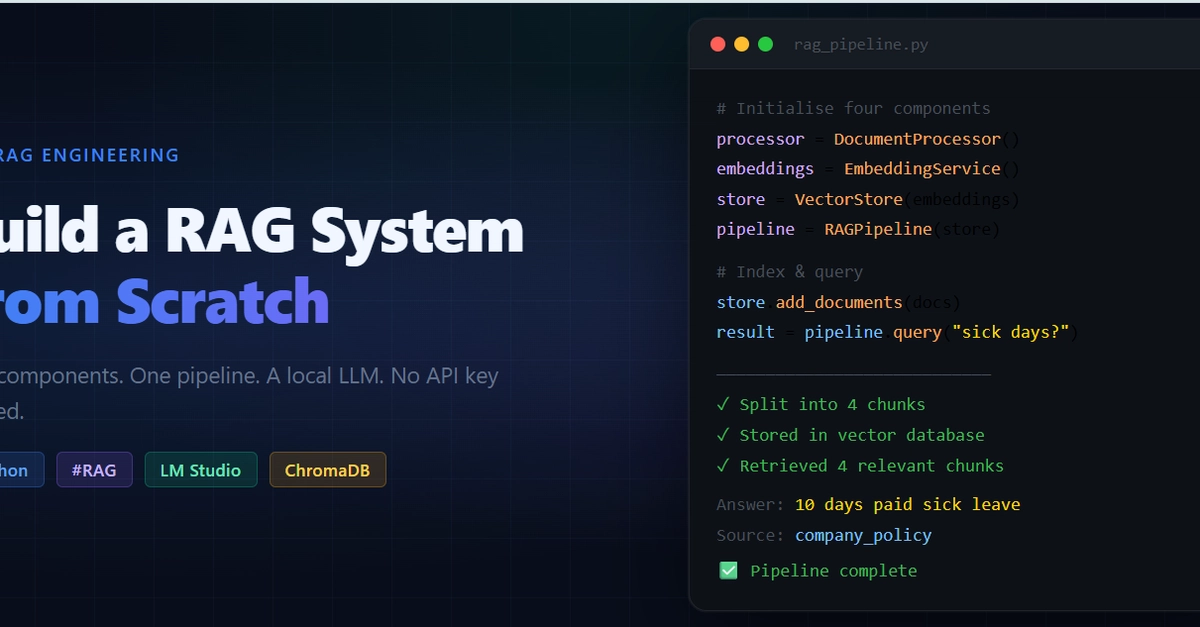
This article walks through building RAG from first principles: chunking documents, generating embeddings, storing and querying vectors in ChromaDB, and passing retrieved context to an LLM — all without a single LangChain import.
LangChain is useful, but going framework-free has real advantages in certain situations:
Transparency — You see exactly what's happening at each step: chunking, embedding, retrieval, prompt construction. Nothing is hidden behind an abstraction.
Fewer dependencies — Your project stays lightweight, with fewer version-compatibility headaches.