Stay up to date with notifications from The IndependentNotifications can be managed in browser preferences.Jump to contentThank you for registeringPlease refresh the page or navigate to another page on the site to be automatically logged inPlease refresh your browser to be logged inAllNewsSportCultureLifestyleThirty years after Dolly the sheep, animal cloning remains an inefficient and complex process, primarily using somatic cell nuclear transfer. Despite its challenges, cloning research has led to breakthroughs like induced pluripotent stem cells, aiding disease study and regenerative medicine. Current applications include replicating desirable traits in livestock, commercial pet cloning, and scientific research, such as the recent cloning of a rhesus monkey. Cloning offers promise for conservation efforts, successfully restoring genetic diversity in endangered species like the black-footed ferret, though true de-extinction of ancient animals is largely unfeasible. Human cloning is not a reality due to significant safety risks and major ethical concerns, leading to its prohibition or heavy restriction in many nations. In fullWhat we’ve learned about cloning since Dolly the sheep’s birth 30 years agoMore bulletinsThank you for registeringPlease refresh the page or navigate to another page on the site to be automatically logged inPlease refresh your browser to be logged in
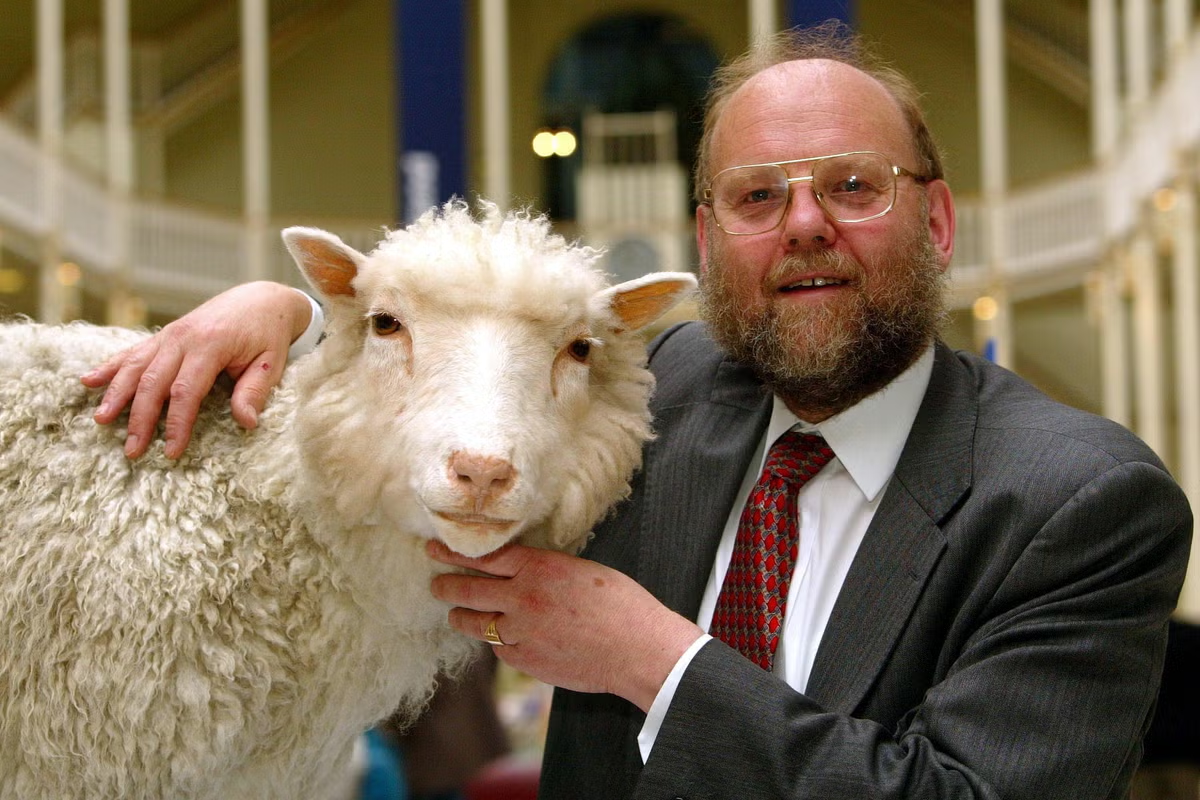
Dolly the sheep was cloned 30 years ago. Here’s what we’ve learned about cloning
Stay up to date with notifications from The IndependentNotifications can be managed in browser preferences.Jump to contentThank you for registeringPlease refresh the page or navigate to another page on the site to be automatically logged inPlease refresh your browser to be logged inAllNewsSportCultureLifestyleThirty years after Dolly the sheep, animal cloning remains an inefficient and complex process, primarily using somatic cell nuclear transfer. Despite its challenges, cloning research has led to breakthroughs like induced pluripotent stem cells, aiding disease study and regenerative medicine. Current applications include replicating desirable traits in livestock, commercial pet cloning, and scientific research, such as the recent cloning of a rhesus monkey. Cloning offers promise for conservation efforts, successfully restoring genetic diversity in endangered species like the black-footed ferret, though true de-extinction of ancient animals is largely unfeasible. Human cloning is not a reality due to significant safety risks and major ethical concerns, leading to its prohibition or heavy restriction in many nations. In fullWhat we’ve learned about cloning since Dolly the sheep’s birth 30 years agoMore bulletinsThank you for registeringPlease refresh the page or navigate to another page on the site to be automatically logged inPlease refresh your browser to be logged in