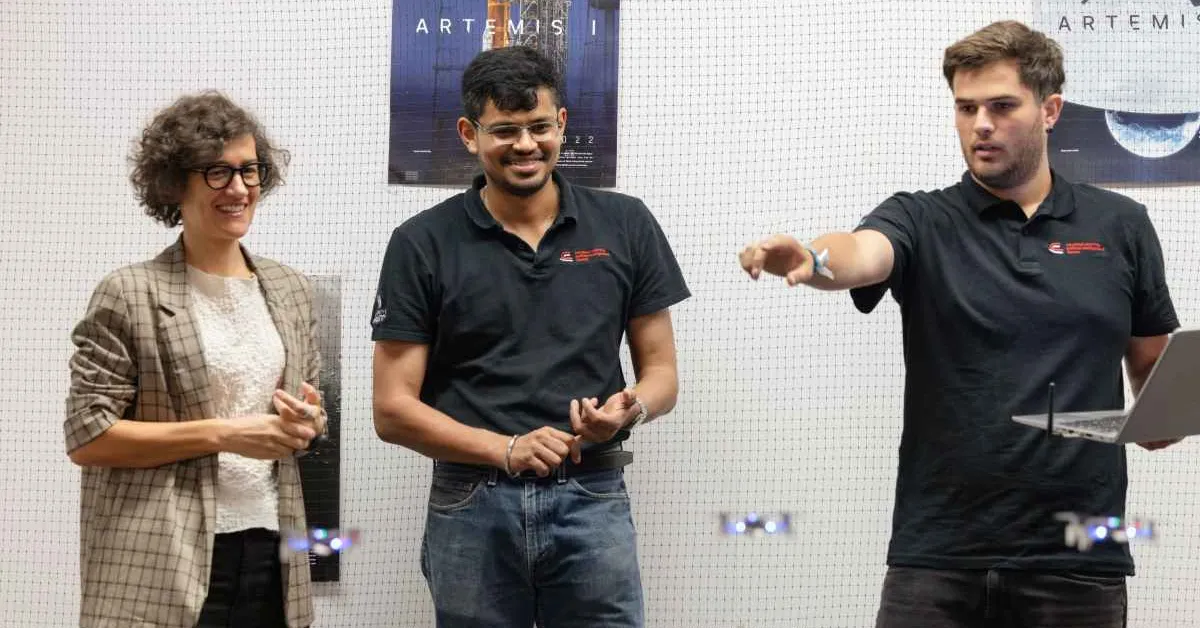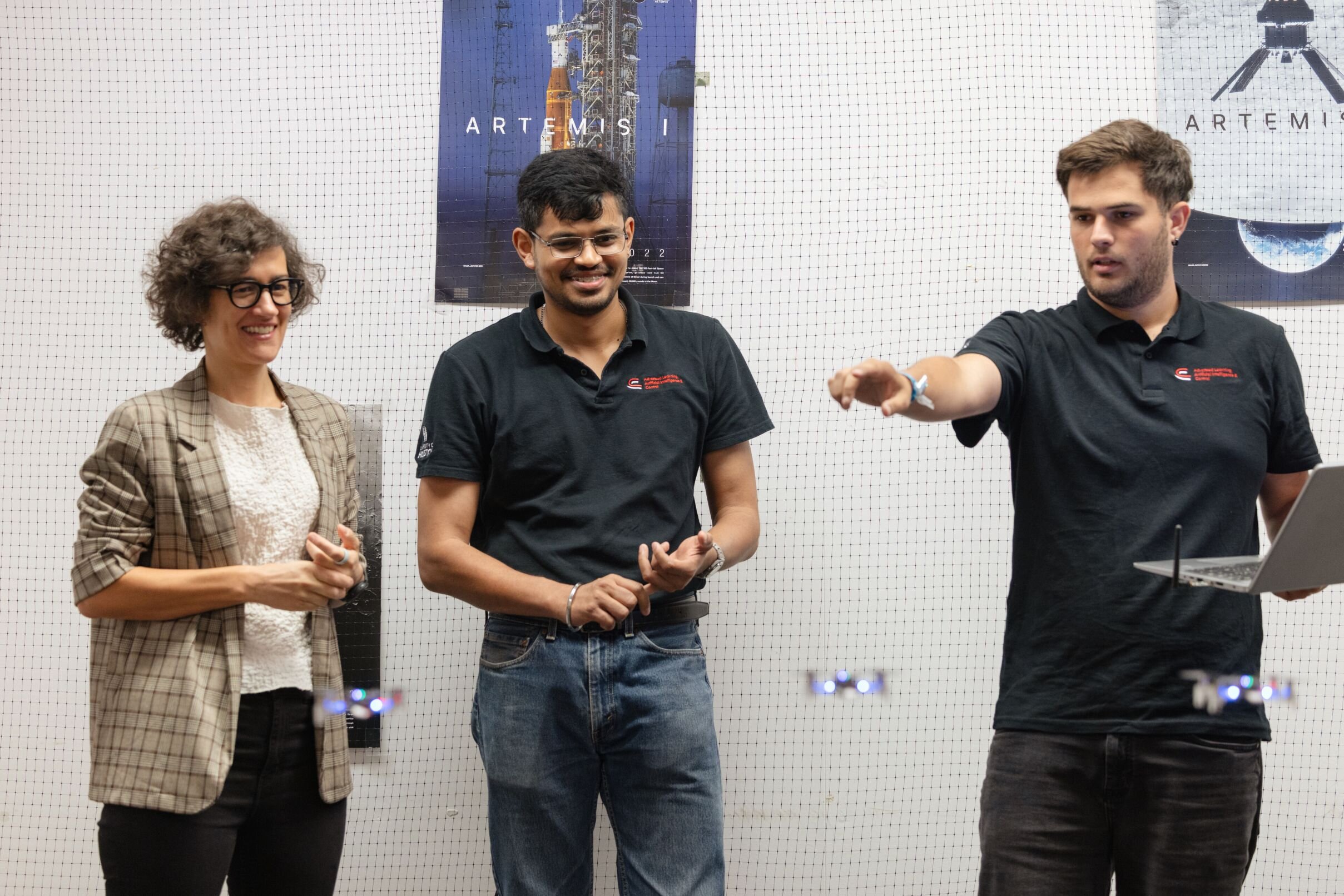
At left, Marzia Cescon, the David C. Zimmerman Assistant Professor of Mechanical & Aerospace Engineering, along with students Paramjit Singh Kainth and Andoni Urrutia Urcelay, fly drones inside the drone lab. Credit: University of Houston
A University of Houston engineer has built a new safety monitoring system for the operation of quadrotor drones that can keep them on course and out of danger in real time.
Typically, a drone follows directions from its pilot or onboard software, but if there is an unexpected occurrence, like a gust of wind, the drone can be thrown off course and head toward danger. That's when this new system would step in, enabling the drone to stay within safety limits and complete its task.
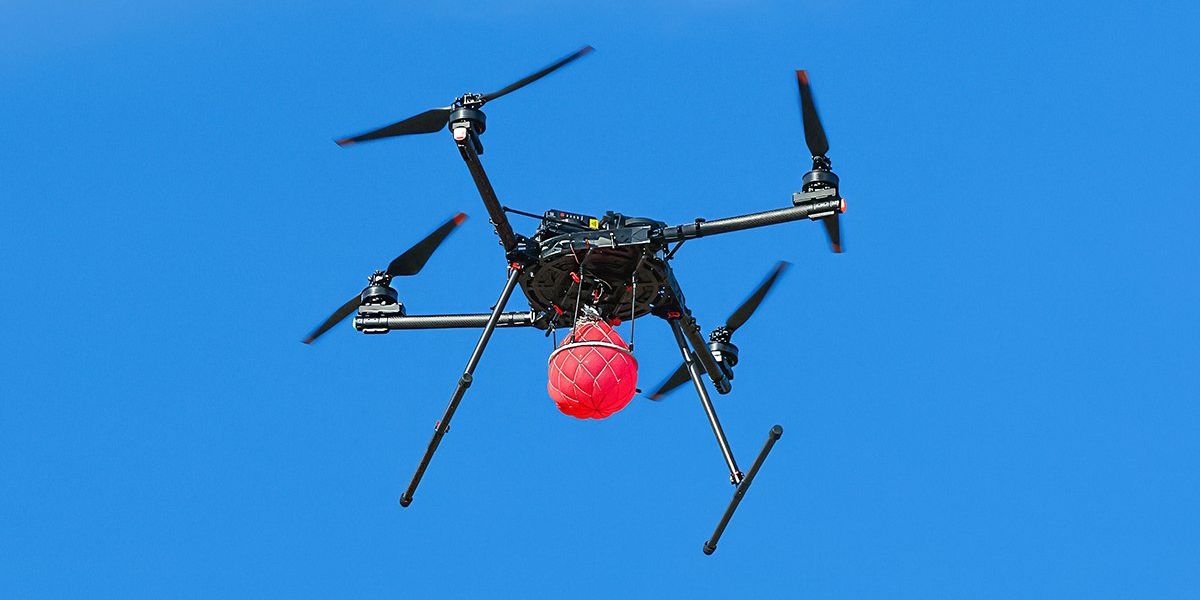
The quadrotor (or quadcopter), the most popular type of drone, is powered by four rotors, is extremely agile and can hover with precision. Because it is easy to fly and fits nicely into tight spaces, it is widely used for everything from structural inspections to photography.
Marzia Cescon, David C. Zimmerman Assistant Professor of Mechanical & Aerospace Engineering at the UH Cullen College of Engineering, calls her new system a "safety supervisor." She announced the system in the Journal of Dynamic Systems, Measurement, and Control.