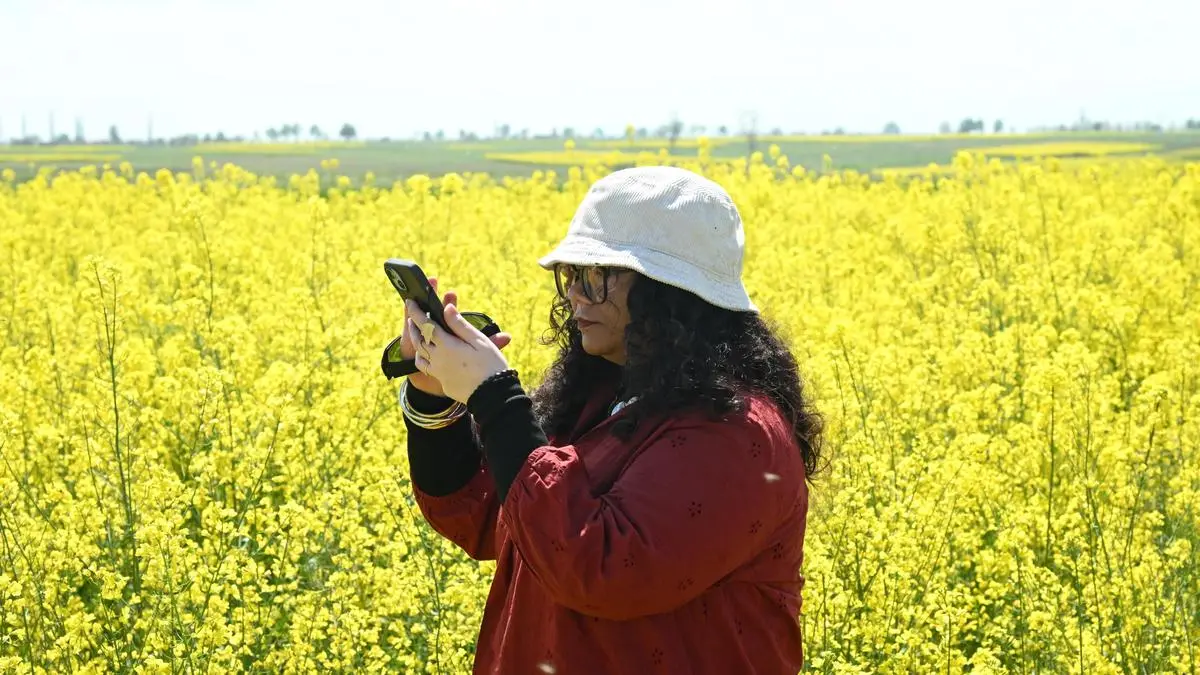
The Lieutenant Governor described the initiative as an example of how simple, cost-effective scientific interventions could help tackle complex environmental challenges
| Photo Credit:
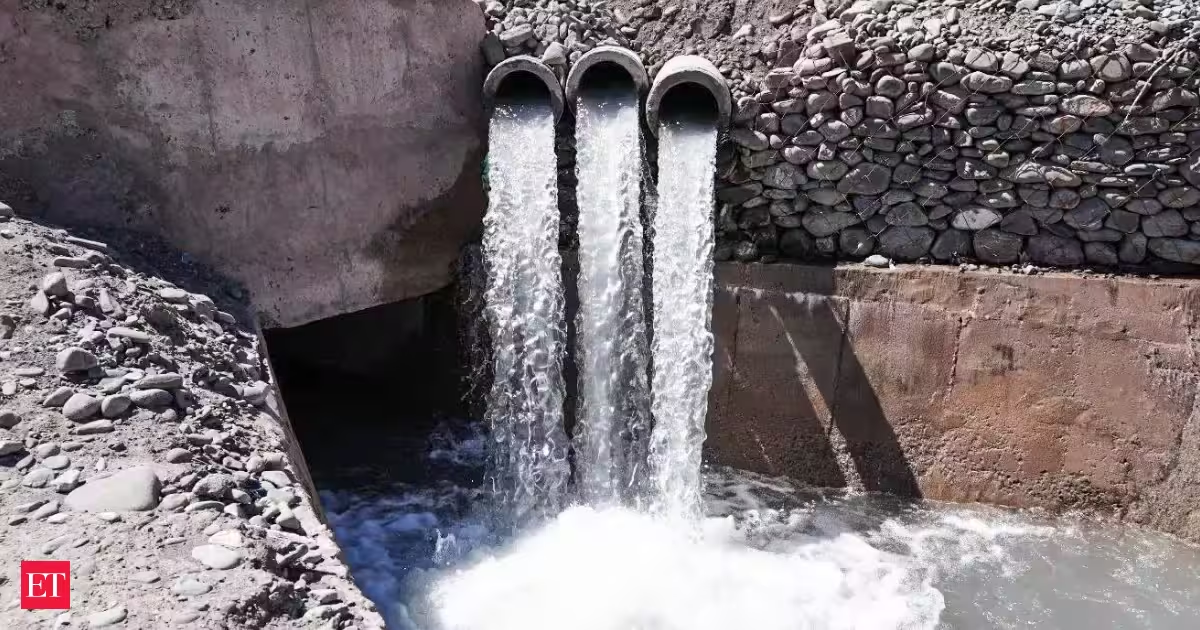
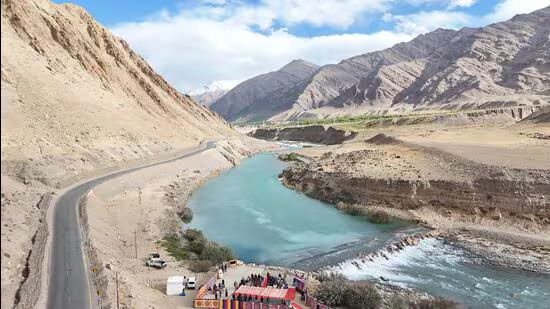
Large swathes of land that had remained barren for centuries in the Himalayan cold desert of Leh are showing signs of life, with bright yellow mustard flowers and green foliage replacing the dusty, windswept landscape in what officials describe as the first visible outcome of an ambitious ecological restoration experiment.The transformation has unfolded on nearly 800 acres of arid land near Spituk, where glacial meltwater was channelled across the parched terrain before mustard seeds were sown. In little over a month, the once-barren expanse has turned into a patchwork of yellow blooms and green vegetation, demonstrating how a relatively simple freshwater recharge technique can revive land long considered uncultivable.The project was launched in May by Lieutenant Governor Vinai Kumar Saxena as part of an ecological restoration initiative aimed at reclaiming nearly 800 acres of degraded land through freshwater recharge and transforming it into a productive ecosystem. The initiative seeks to explore whether glacier-fed irrigation can restore soil moisture and support vegetation in one of India’s most inhospitable landscapes.According to experts, over 90 per cent of Ladakh’s land is barren and devoid of vegetation. The region’s sandy soil and limited availability of irrigation have historically restricted cultivation to small pockets.“The soil is mostly sandy. Farmers cultivate crops such as wheat, barley and mustard, but they rely heavily on organic manure to improve soil fertility,” said Deldan Namgial, professor at School of Agriculture and Technology at University of Ladakh.He said irrigation has remained the biggest challenge for agriculture in the cold desert over the years.“If this restoration project succeeds, it can help make barren land cultivable and expand the region’s cultivable area,” Namgial said.Sharing photographs of the mustard fields on social media platform `X’, Saxena said the project had begun yielding “remarkable results”. He said that after the arid soil was treated with fresh glacier water for a few days, mustard seeds were sown and, in little over a month, widespread germination had transformed the barren landscape into a vibrant green cover.The Lieutenant Governor described the initiative as an example of how simple, cost-effective scientific interventions could help tackle complex environmental challenges. He said the project was inspired by Prime Minister Narendra Modi’s call to reverse land degradation and desertification and reflected the Union Territory administration’s commitment to ecological regeneration, sustainable agriculture and a greener future for Ladakh.Published on July 8, 2026