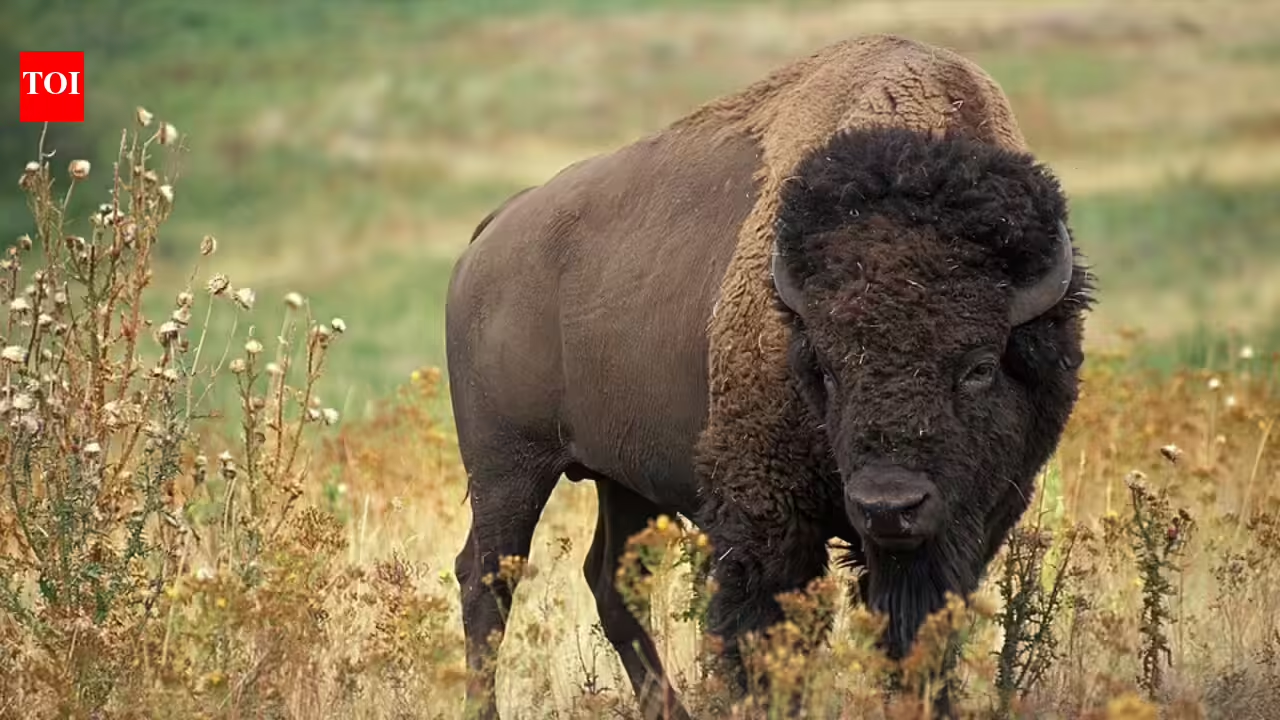
The American bison was brought back from the brink of extinction through one of the earliest wildlife conservation efforts in the United States. Image Credits: Wikimedia CommonsMillions of American bison once roamed the plains of North America over many millennia, shaping a rich ecosystem. The massive herds ranged from what is now Canada to Mexico. They supported indigenous cultures while helping to maintain the health of the Great Plains ecosystem through their grazing and spreading seeds.All this richness was lost rapidly in the nineteenth century. The bison population declined from an estimated 30 million to mere hundreds in the last decade of that century. In response to the decline, conservationists, ranchers and the U.S. government began one of the earliest animal conservation efforts in U.S. history. By the early 1900s, all of the surviving wild bison were captured and protected, and with careful management programs, the herd was restored.Even though today almost all of the bison are part of managed herds rather than wild herds, there are hundreds of thousands of them roaming around national parks and wildlife refuges in North America.A species driven to the edge of extinctionBefore colonisation transformed the Great Plains, the American bison (Bison bison) was the most common large mammal herbivore across North America. The massive herds moved throughout the landscape seasonally and shaped the ecology by enriching the soil and providing homes for birds and insects.Prior to colonisation changing the face of the Great Plains, the American bison (Bison bison) was the most common large mammal herbivore across North America. The massive herds moved throughout the landscape seasonally and shaped the ecology by enriching the soil and providing homes for birds and insects.The introduction of commercial hide hunting in the 1800s dramatically altered this way of life. Improvements in firearms, expanding railroad systems and increasing demand for leather resulted in unprecedented levels of slaughter. Thousands of bison were shot daily by hunters who often left dead carcasses in their wake after harvesting their skin or tongues.Historians have argued that the eradication of bison herds disrupted the livelihoods of many Indigenous communities whose cultures revolved around the animals. This destruction also had political ramifications, as historians agree that the eradication of the bison herds disrupted the livelihoods of many Indigenous communities whose culture revolved around the animals.In 1889, fewer than 1,000 bison existed, with only dozens left alive in the wild within the bounds of what was soon to become Yellowstone National Park. The species was on the brink of becoming extinct.Recognising the danger, wildlife conservationists such as William T. Hornaday worked along with ranchers and government agents to begin saving the remaining bison through captures into herds in zoos and wildlife sanctuaries.Early conservation changed the species' future.This effort gained momentum in the early twentieth century. In 1905, the American Bison Society was formed by some conservationists who wanted to prevent the extinction of the bison species. This society cooperated with the federal government to set up protected herds and restore the bison in their natural habitats.One of the most significant achievements in this regard was made in 1907 when the Bronx Zoo’s captive bison were moved to the Wichita Mountains Wildlife Refuge in Oklahoma. Similar efforts followed in other parts of the US and Canada.Yellowstone National Park also played a critical role. The park's small remnant population was carefully protected, and additional animals from conservation herds were introduced to strengthen numbers and improve long-term survival.Research published in Proceedings of the National Academy of Sciences (PNAS) has shown that coordinated conservation actions, including protected areas, legal safeguards and managed breeding programmes, were essential to preventing the extinction of the American bison. The study describes the recovery as one of the earliest large-scale wildlife restoration efforts in North America, while noting that conserving the species' genetic diversity remains an ongoing priority. Yellowstone National Park is home to the largest continuously wild population of American bison in the United States, making it central to the species' recovery. Image Credits: Wikimedia CommonsHundreds of Thousands Once Again Roam North AmericaToday, conservation efforts have changed the outlook for the American bison. The International Union for Conservation of Nature (IUCN) reports that there are between 400,000 and 500,000 American bison in North America. While most of these bison live in commercial or private herds, about 20,000 to 30,000 American bison live in conservation herds, which are managed to preserve their ecological and genetic integrity.Yellowstone National Park is home to the largest herd of wild bison in the US, while other conservation herds are living in places like Wind Cave National Park, Badlands National Park, and others. Research published in Biological Conservation has highlighted the ecological importance of restoring bison to grassland ecosystems. Their grazing patterns create habitat diversity, recycle nutrients and support many other species, making them ecological engineers similar to elephants in African savannas. The recovery has also become a symbol of Indigenous-led conservation. In recent decades, many Native American tribes have established their own conservation herds, recognising the bison's cultural, spiritual and ecological significance. Collaborative initiatives between tribal nations, conservation organisations and government agencies continue to expand opportunities for restoring bison to larger portions of their historic range.Although the recovery has been notable, conservationists have warned that the task is far from finished because most of the bison are still confined within fences, while only a minority roams free in functional natural environments. Issues such as habitat fragmentation, disease control, and the preservation of genetic diversity are still problems for the species.Still, the bison’s recovery is often cited as a major wildlife conservation success story.〕 Not so long ago, less than a century back, the bison had become an endangered species, with merely hundreds of individuals left alive.
The United States in the early 1900s rounded up the last remaining wild American bison after commercial hunting reduced the species to only a few hundred animals; today, hundreds of thousands once again roam protected lands
Millions of American bison once roamed the plains of North America over many millennia, shaping a rich ecosystem. The massive herds ranged from what is now Canada to Mexico.
949 words~4 min read