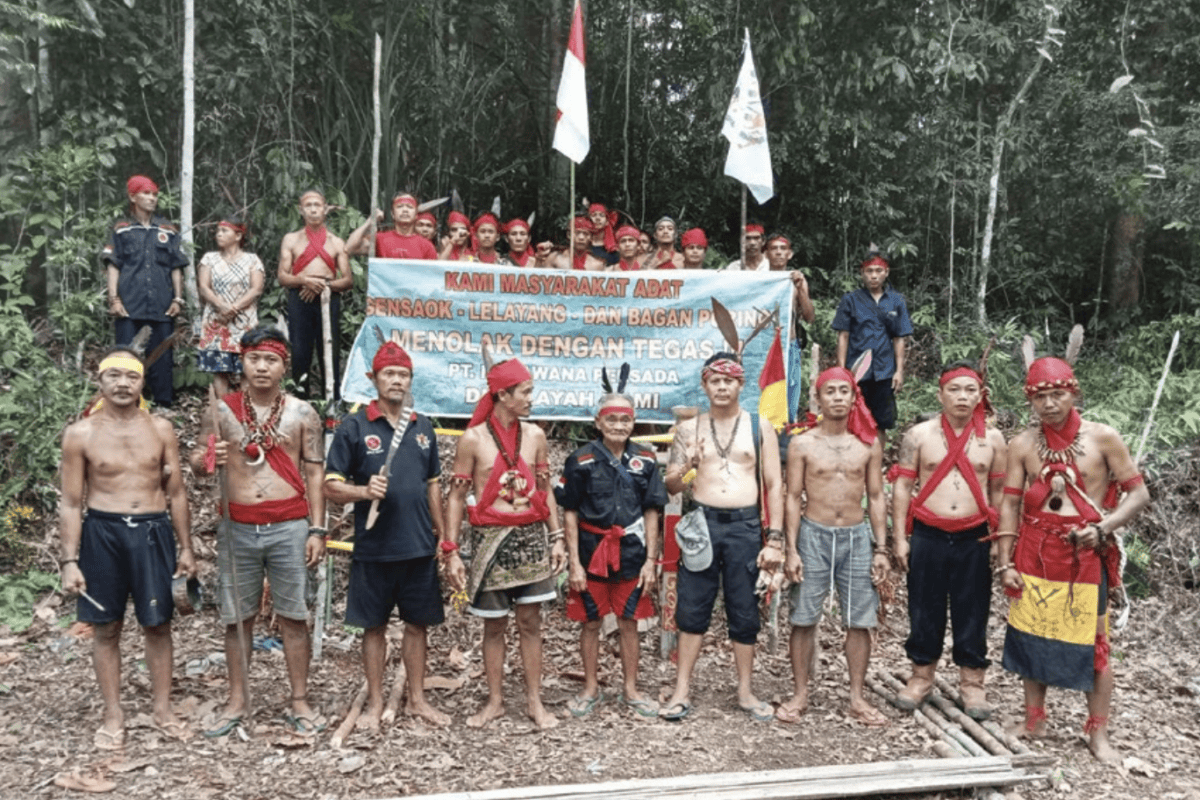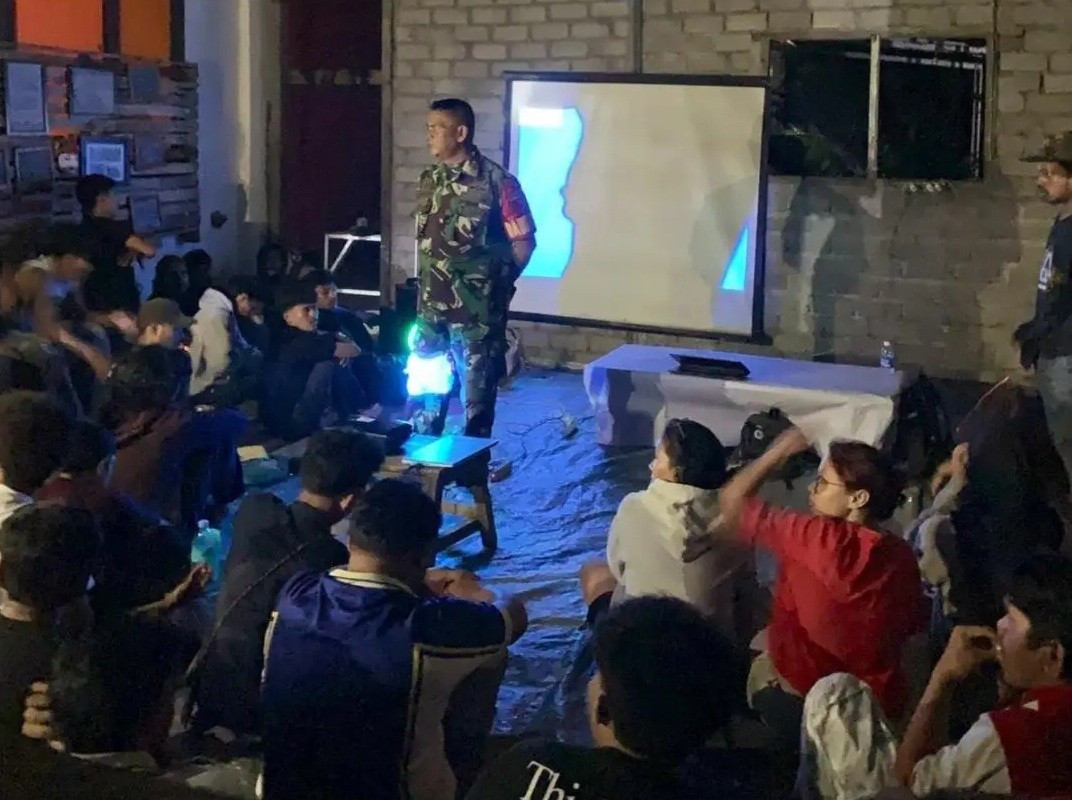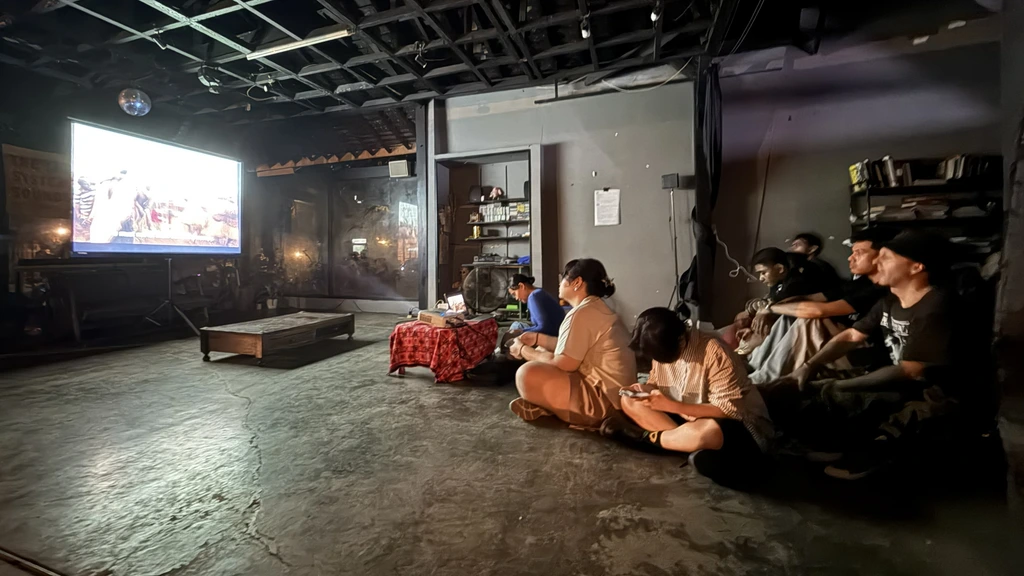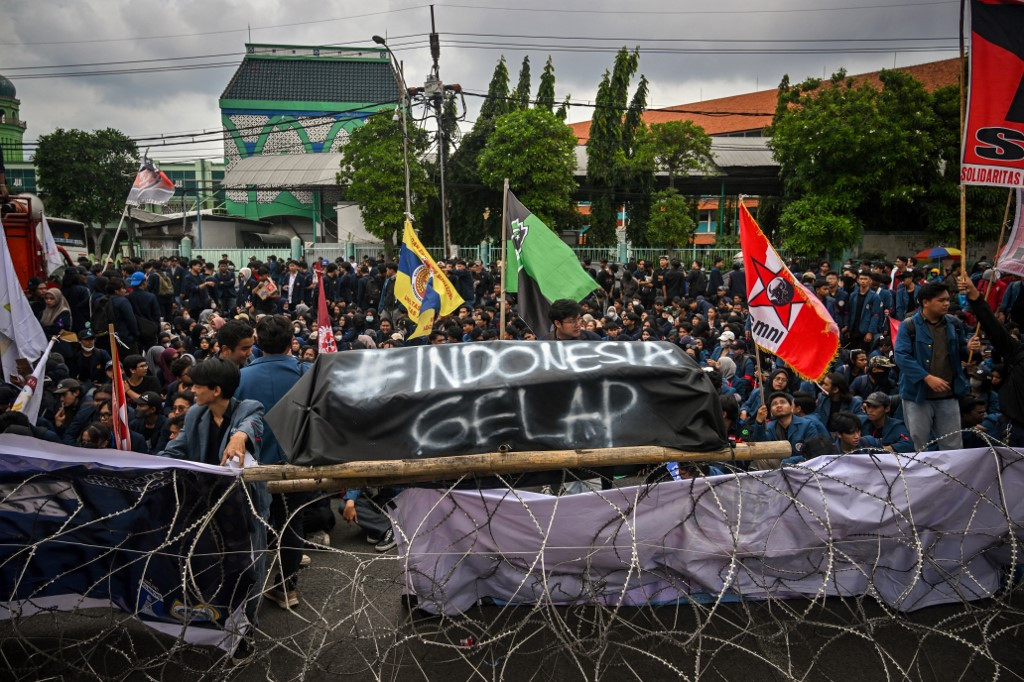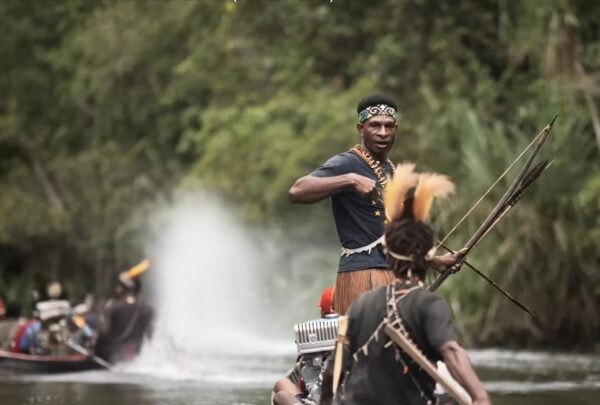
For the Indigenous communities of Indonesian Papua, Awon Atatbon is no routine ceremonial gathering. The ritual, which involves dancing, singing, and other communal performances, is only held every decade or so, and symbolizes these communities’ resilience in protecting their ancestral lands. The central focus of Awon Atatbon is the pesta babi (pig feast), the traditional cooking of specially-hunted pigs, which are then shared among members of the community and any visitors who may be in attendance. These feasts, and the sufferings and injustices that prompted such ceremonies among Indigenous Papuans, form the symbolic core of Dandhy Laksono and Cypri Dale’s acclaimed (and controversial) documentary, “Pig Feast: Colonialism in our time,” which was released in late May.
The 95-minute film illustrates how the Indonesian state, through its National Strategic Project (PSN), has furthered its historical oppression of Indigenous Papuans through massive state-led development projects that prioritized food and energy security for the majority at the expense of local Papuan communities and ecosystems. Through interviews with Indigenous leaders and villagers, as well as everyday footage of massive destruction and loss, Laksono and Dale highlight how the PSN has created what they have described as the world’s largest ongoing deforestation project, protected by Jakarta’s authoritarian military arm. The film also sheds light on the historical impunity enjoyed by the Indonesian state in its quest to pursue profit over the well-being of ethnic minorities in West Papua.