July 8th, 2026
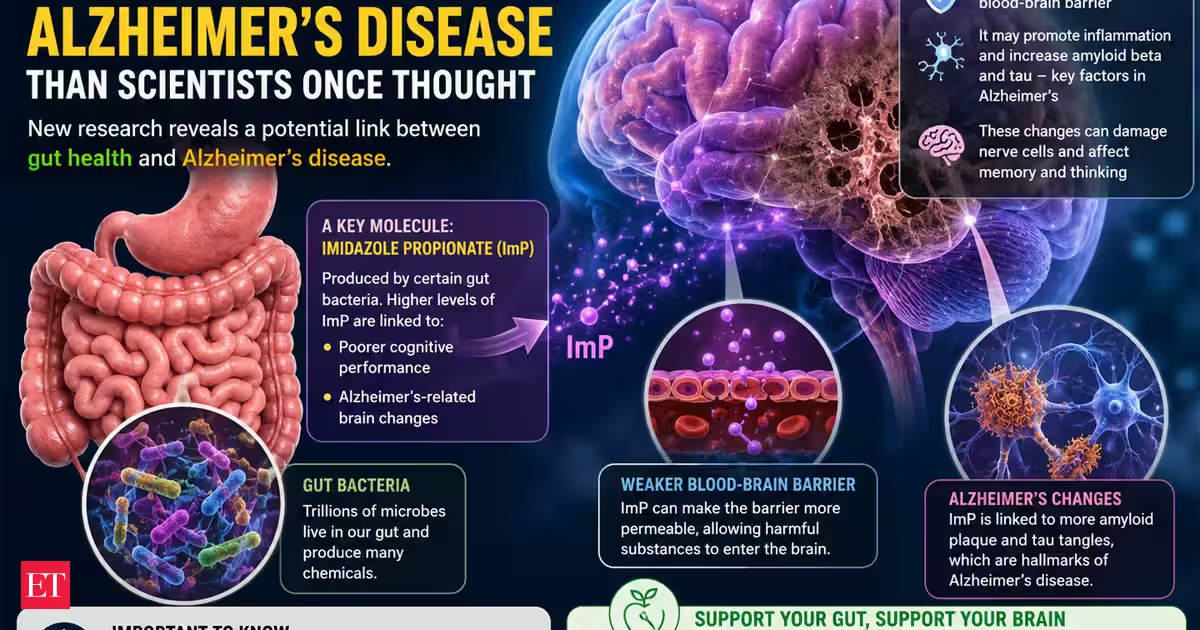
The gut microbiome generates a vast range of metabolites, some beneficial or even necessary to health, and some actively harmful, provoking chronic inflammation or other dysfunction. With age the balance of microbial populations making up the gut microbiome changes for the worse. Researchers have observed declines in the generation of some beneficial metabolites and increases in the generation of some harmful metabolites. Among the harmful metabolites, the neurotoxic imidazole propionate has been shown to accelerate atherosclerosis, and evidence suggests a contribution to a range of other age-related conditions. Here, researchers report on evidence in mice and humans for imidazole propionate to accelerate the pace of neurodegeneration leading to Alzheimer's disease.
The gut microbiome modulates metabolic and neurovascular processes implicated in Alzheimer's disease and related dementias (ADRD), but the underlying mechanisms remain unclear. Here, we identify the bacterial metabolite imidazole propionate (ImP) as a modifier of ADRD pathology.
In a cohort of 1,196 cognitively unimpaired adults, higher plasma ImP levels were associated with lower preclinical cognitive scores and biomarkers of ADRD, both cross-sectionally and longitudinally. Fecal metagenomic analysis linked putative ImP producers to ADRD phenotypes. Genome-wide integrative analysis revealed a locus on chromosome 12 associated with both plasma ImP levels and AD risk in humans, supporting a host genetic contribution to ImP regulation and a causal role of this metabolite in AD.