in Art, Film, History | July 8th, 2026 Leave a Comment
Alfred Hitchcock was not American, as even casual viewers of his television show could tell right away. He may have exaggerated his Englishness, but like more than a few high-profile outsiders, he also used his cultural position to render the United States all the more vividly in his work. Growing up, he amassed enough second-hand knowledge of the country in which he would one day live that he already knew his way around New York when first he set foot there. But it was some years after he relocated to Hollywood that his films began to feel American — and, eventually, more American than those made by domestic directors, thanks in part to his unconventional perspective on local sources of inspiration.
Image by Diego Delso, via Wikimedia Commons
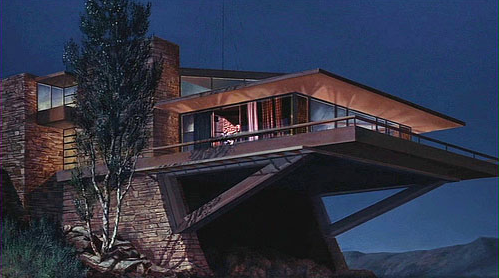
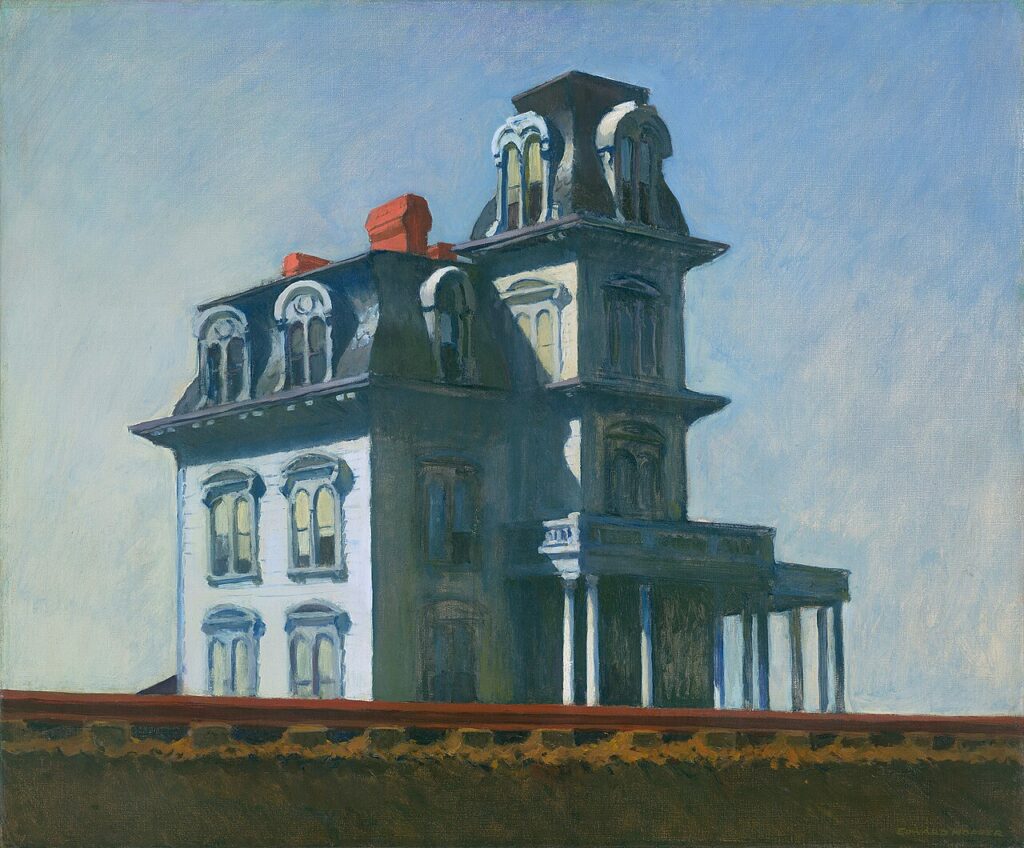
Take the architecture. Asked by François Truffaut about Norman Bates’ “ghostly house” in Psycho, he explained that “the mysterious atmosphere is, to some extent, quite accidental. For instance, the actual locale of the events is in northern California, where that type of house is very common.” He wasn’t trying to “reconstruct an old-fashioned Universal horror picture atmosphere,” but “simply wanted to be accurate.” Yet the house is reported to have been inspired by an east-coast model as well, and one found in art: Edward Hopper’s paintingHouse by the Railroad(top), from 1925, itself made with reference to a real Victorian mansion that still stands in Haverstraw, New York, between a railroad and a cemetery.