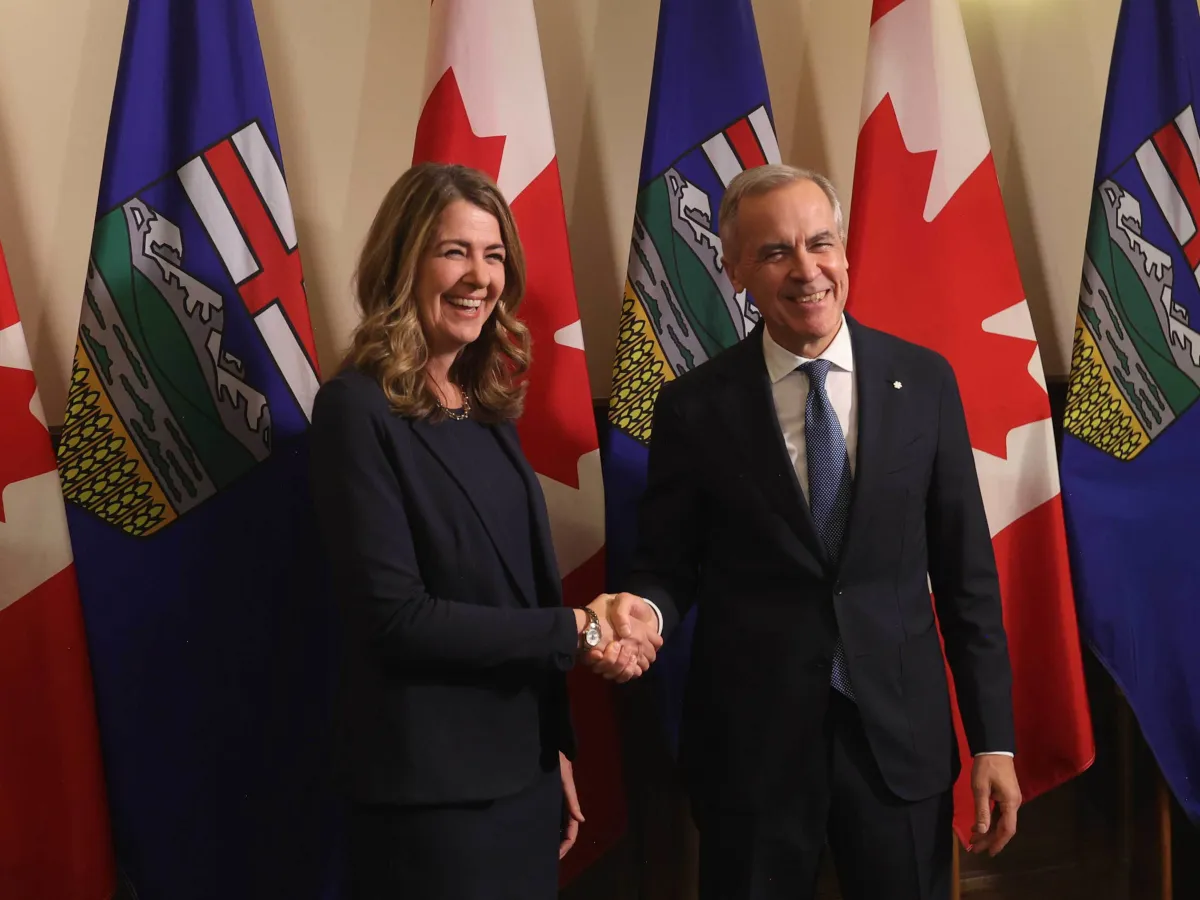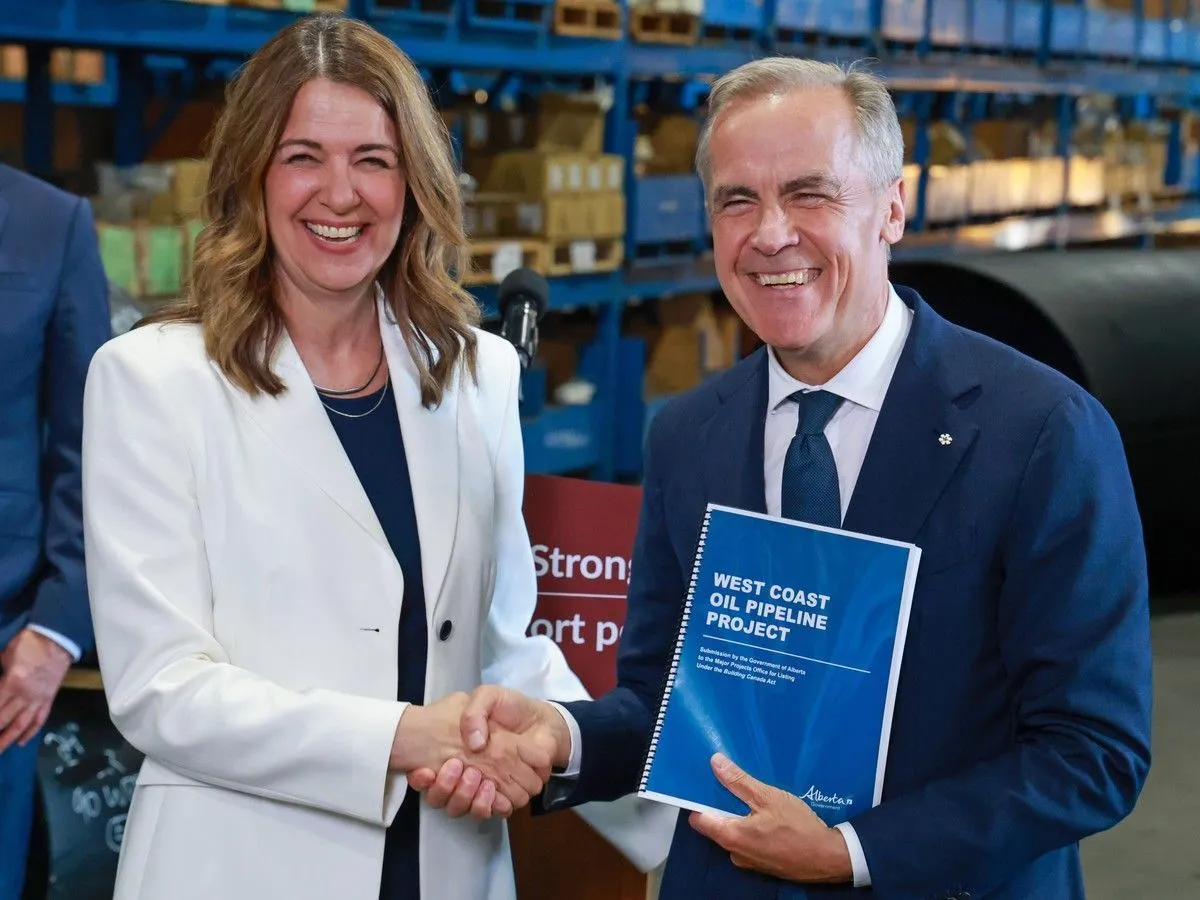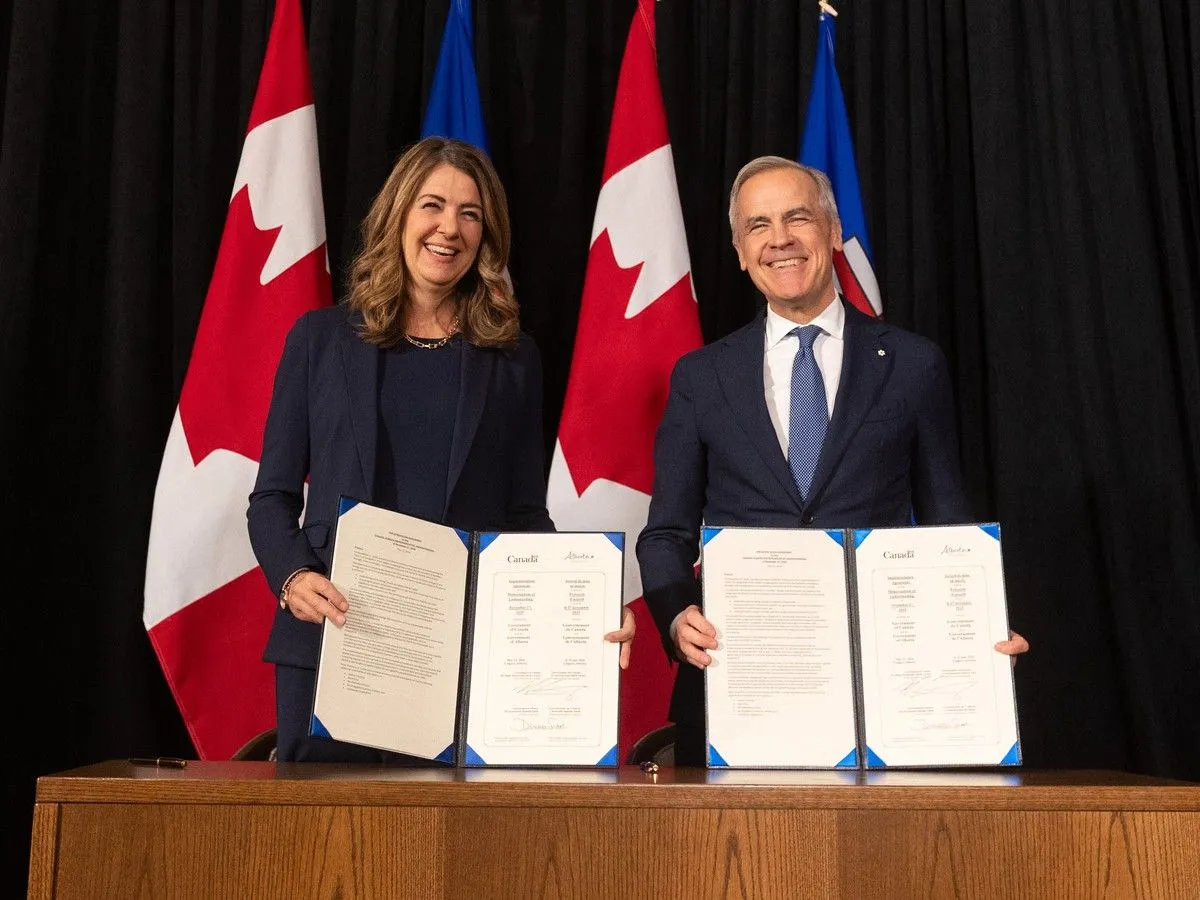
Skip to Content Subscribe Our Offers My Account Manage My Subscriptions FAQ Newsletters Canada Canadian True Crime Canadian Politics Health World Israel & Middle East Financial Post NP Comment Longreads Puzzmo Diversions Comics NP News Quiz New York Times Crossword Horoscopes Life Eating & Drinking Style Sponsored Play for Ontario Travel Travel Canada Travel USA Travel International Cruises Travel Essentials Culture Books Celebrity Movies Music Theatre Television Business Essentials Advice Lives Told Tails Told Shopping Buy Canadian Home Living Outdoor Living Kitchen & Dining Tech Style & Beauty Personal Care Entertainment & Hobbies Gift Guide Travel Guide Amazon Prime Day Deals Savings National Post Store More Sports Hockey Baseball Basketball Football Soccer Golf Tennis Driving Vehicle Research Reviews News Gear Guide Obituaries Place an Obituary Place an In Memoriam Classifieds Place an Ad Celebrations Working Business Ads Archives Healthing Epaper Manage Print Subscription Profile Settings My Subscriptions Saved Articles My Offers Newsletters Customer Service FAQ Newsletters Canada World Financial Post NP Comment Longreads Puzzmo Diversions Life Shopping Epaper Manage Print Subscription HomeNP CommentJohn Ivison: Carney’s oil patch wishes might really come trueThe Prime Minister's grand bargain is just intentions for now. But it's harder for Alberta’s separatists to say he's trying to hobble their industry.Last updated 45 minutes ago You can save this article by registering for free here. Or sign-in if you have an account.Prime Minister Mark Carney and Alberta Premier Danielle Smith sign an agreement on oil pipeline approvals and carbon pricing in Calgary on Friday, May 15, 2026. Brent Calver/PostmediaIt may not be apparent for another 15 years, but the events of the past week have the potential to initiate what Alberta Premier Danielle Smith has called a new “super-cycle of production growth” in the oil patch.Enjoy the latest local, national and international news.Exclusive articles by Conrad Black, Barbara Kay and others. Plus, special edition NP Platformed and First Reading newsletters and virtual events.Unlimited online access to National Post.National Post ePaper, an electronic replica of the print edition to view on any device, share and comment on.Daily puzzles including the New York Times Crossword.Support local journalism.Enjoy the latest local, national and international news.Exclusive articles by Conrad Black, Barbara Kay and others. Plus, special edition NP Platformed and First Reading newsletters and virtual events.Unlimited online access to National Post.National Post ePaper, an electronic replica of the print edition to view on any device, share and comment on.Daily puzzles including the New York Times Crossword.Support local journalism.Create an account or sign in to continue with your reading experience.Access articles from across Canada with one account.Share your thoughts and join the conversation in the comments.Enjoy additional articles per month.Get email updates from your favourite authors.Create an account or sign in to continue with your reading experience.Access articles from across Canada with one accountShare your thoughts and join the conversation in the commentsEnjoy additional articles per monthGet email updates from your favourite authorsSign In or Create an AccountorThings don’t just happen, they are made to happen.In 2000, crude production from the oilsands was around 610,000 barrels a day. Successive provincial governments adopted a low-royalty/ high-volume extraction model that attracted investment to major projects that were quickly approved and constructed. The result was that the oilsands saw a cumulative average annual growth rate of nine per cent over the subsequent 18 years. (Production averaged around 3.5-million barrels a day in 2025).The last few days have seen a steady stream of government and private sector announcements that give the impression of fresh momentum, although they currently remain little more than good intentions.This newsletter from NP Comment tackles the topics you care about. (Subscriber-exclusive edition on Fridays)By signing up you consent to receive the above newsletter from Postmedia Network Inc.We encountered an issue signing you up. Please try againThe most consequential of those is clearly the announcement by the federal and Alberta governments of a new oil pipeline to the West Coast.As Calgary basks in the annual Stampede glow, there is a renewed air of confidence in the city.“The mood is good, I’ll tell you that much,” said Heather Exner-Pirot, director of natural resources, energy and the environment at the Macdonald-Laurier Institute.She has been a harsh critic of Ottawa’s energy policies in recent years. But she said she is optimistic about the commitments made by the Carney government.“Two years ago, a West Coast pipeline was not even in the back of people’s minds. Now, I think we’re going to get another West Coast pipeline shipping a million barrels a day to Asia.” she said. “It is very improbable,” she added, pointing to the lack of common ground between the B.C. NDP government and Alberta’s United Conservative Party, not to mention the federal Liberals.Prime Minister Mark Carney appears to have tripped through a minefield to even get this far. He signed a “prosperity partnership” with Premier David Eby’s B.C. government that grants accelerated permitting, financing and construction for four big liquefied natural gas projects (LNG Canada Phase 2, Ksi Lisims, Cedar and Woodfibre). The deal also invests $500 million in the Red Chris copper mine expansion; $3.9 million in the province’s North Coast Transmission Line; $3 billion in the George Massey Tunnel Replacement project; and $630 million in affordable child care in B.C.In return, Eby has committed to dropping his opposition to a new pipeline that will closely follow the route of the existing Trans Mountain line, terminating at the Roberts Bank Terminal, part of the Port of Vancouver. The proposal for the line to go southwest instead of northwest preserves the federal tanker ban on the north coast that the premier considered a red line. Eby and some First Nations along B.C.’s northern coast have been vocally opposed to any lifting of the tanker ban, which was put into law under former prime minister Justin Trudeau in legislation known as Bill C-48. Photo by Government of British ColumbiaCritics contend that this was a gigantic bribe to gain Eby’s tacit consent for the pipeline. It certainly amounts to a major upfront fiscal commitment by the federal government. But these were all projects that Carney was pushing anyway. That their promotion may facilitate the biggest prize of all is a skillful use of the thread to unite the pearls.The southern route makes a lot of sense, allowing the new line to use existing corridor knowledge and access infrastructure.The decision to terminate the pipeline in Delta, rather than the Westridge Marine Terminal in Burnaby, is also logical, in that it allows Very Large Crude Carriers (VLCC) with up to 2.2-million-barrel capacity to dock, rather than the Aframax mid-size tankers that navigate the Burrard Inlet to Burnaby.The estimated cost of the new pipeline is $35 to $44 billion, with construction beginning (all being well) next year and completing in 2038.The massive capital investment has seen some financial illiterates bemoaning the “loss” to taxpayers, by pointing to the $34 billion cost of the Trans Mountain Expansion.But Trans Mountain generated $1.7 billion for the federal government through its ownership stake last year and it is forecast to return $46.7 billion in royalties over 20 years.These are slow-burning but highly profitable investments, once they have been de-risked (i.e., granted approval by the Canadian Energy Regulator and received First Nations consent).Private capital is extremely interested in Trans Mountain, now that it is operational. At some point, Ottawa might be tempted to sell it to help finance the new pipeline. Kilometre Zero of the Trans Mountain pipeline system at Edmonton Terminal located in Sherwood Park.But for now, the happy state of regulatory and Indigenous approval remains some way off for the southern route, which has to cross up to 11 First Nations reserves.Exner-Pirot said she takes comfort from the team in the federal Major Projects Office who will be advocating for the new pipeline.“(The office’s CEO) Dawn Farrell was CEO of Trans Mountain and she has brought many of her staff with her,” notes Exner-Pirot. (Rob Van Walleghem, who was Indigenous affairs officer at Trans Mountain, is now head of Indigenous affairs at the Major Projects Office).“This is a team that knows exactly what it takes to build a pipeline, how to consult with the affected Nations along the route and what it takes to ship oil out of the Port of Vancouver. They must feel confident that they can do it all again,” she said.Part of the impetus is to reduce the differential paid for Canadian oil because the U.S. has historically been the only buyer. (Alberta estimates the attendant discount has cost the Canadian oil sector US$49 billion between 2010 and 2025).But Exner-Pirot said it is unlikely a new pipeline to Asia will mean that fewer barrels will be shipped south, given that nearly one million barrels a day of new pipeline capacity is expected to come online.“(The new pipeline) is absolutely not coming at the expense of the Americans; it’s about growing production into Asia,” she said.Calgary-based South Bow is partnering with U.S.-based Bridger Pipeline to link Alberta to Cushing, Okla., using 150 kilometres of previously installed pipe from the cancelled Keystone XL on the Canadian side. A final investment decision is expected next year. Meanwhile, Enbridge’s Mainline system is set to undergo a 400,000-barrel-a-day expansion.“We have enormous reserves and we have a lot of pipeline projects ahead. It will take time to fill them. By the (time of the fall federal) budget, we’ll know what the sweeteners are that will incentivize industry to do that work. What we need is greenfield expansions to fill up Trans Mountain 3.0 (the newly announced pipeline),” Exner-Pirot said.A much more speculative announcement was made on Monday by Danielle Smith and Ontario Premier Doug Ford, who proposed the development of a Canadian route to move 500,000 barrels a day of crude from Alberta to Sarnia, Ont. The Northern Shield Energy Corridor is still at feasibility stage, but Exner-Pirot is unconvinced about its viability. A map of the proposed “Northern Shield” pipeline. Photo by Brent Calver/Postmedia /Brent Calver/PostmediaShe said that Eastern Canada cannot absorb another half-a-million barrels a day, with the only rationale for the proposal being the efforts by Michigan Governor Gretchen Whitmer to close the underwater segment of Enbridge’s Line 5 that carries crude to Sarnia.“Are we going to spend $60 billion on a pipeline so that they can get it from above the Great Lakes, instead of below the Great Lakes? It goes through Michigan and Wisconsin, so there is risk there, of course. We’d rather have it all within Canada. But is the risk worth $60 billion for the exact same oil?”It’s clear not every proposal will reach fruition. But the energy landscape is unrecognizable from two years ago.As Exner-Pirot points out, Carney’s grand bargain remains a series of announcements. The oil sector still has to balance an industrial carbon tax hike and a commitment to subsidize a carbon capture project with the prospect of government financial incentives.But it is becoming a hard sell for Alberta’s separatists to claim that the federal government is intent on trying to hobble the province’s largest industry.Carney will host the first-ever Canada Investment Summit in Toronto in September, a month ahead of the referendum on whether Alberta should remain in Canada. It would be the ideal time to announce investment incentives that show the oil patch is open for business.“At that point, I think it would be hard to say: ‘This is all just talk and he’s not actually going to do it,’” said Exner-Pirot.National Postjivison@criffel.ca Join the Conversation This website uses cookies to personalize your content (including ads), and allows us to analyze our traffic. Read more about cookies here. By continuing to use our site, you agree to our Terms of Use and Privacy Policy.
John Ivison: Carney’s oil patch wishes might really come true
Carney’s grand bargain is just intentions for now. But it's harder for Alberta’s separatists to say he's trying to hobble their industry.
1,942 words~9 min read