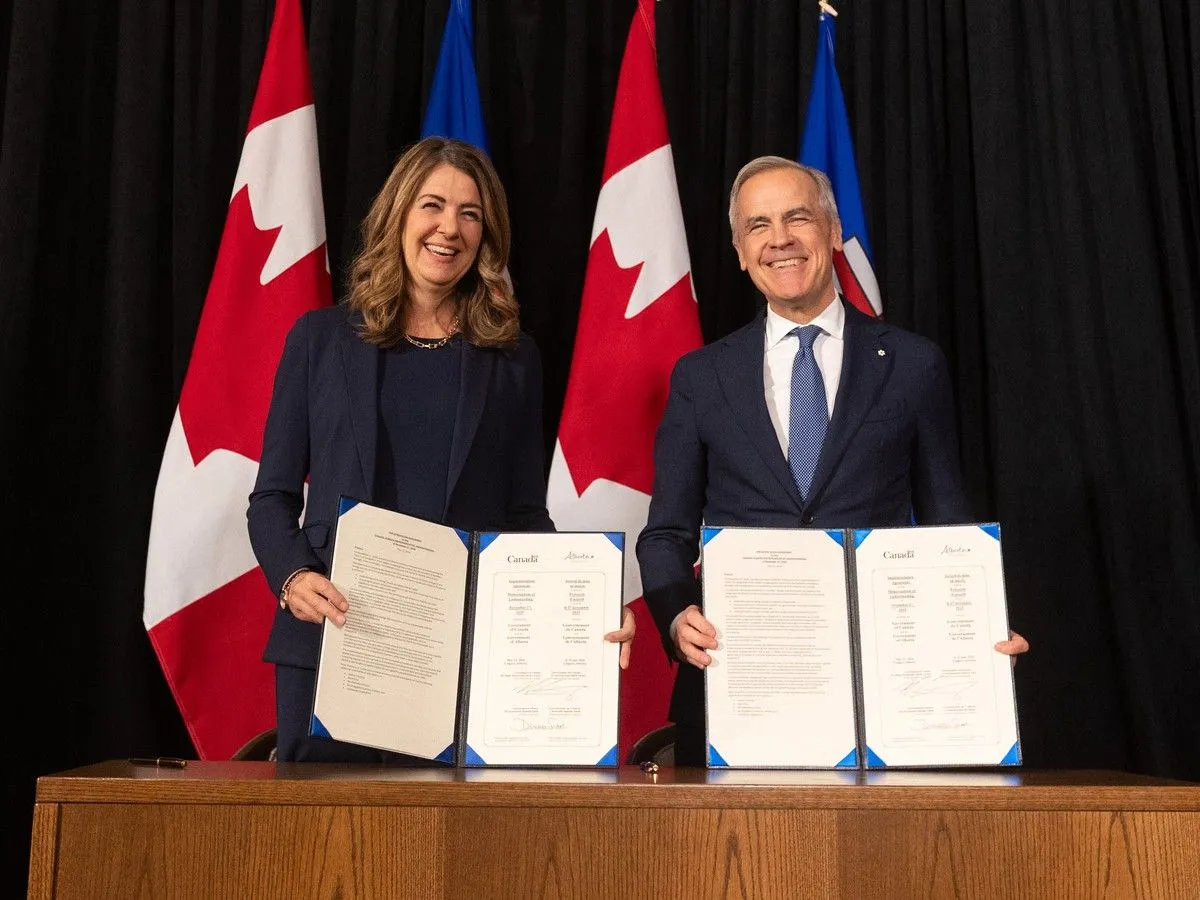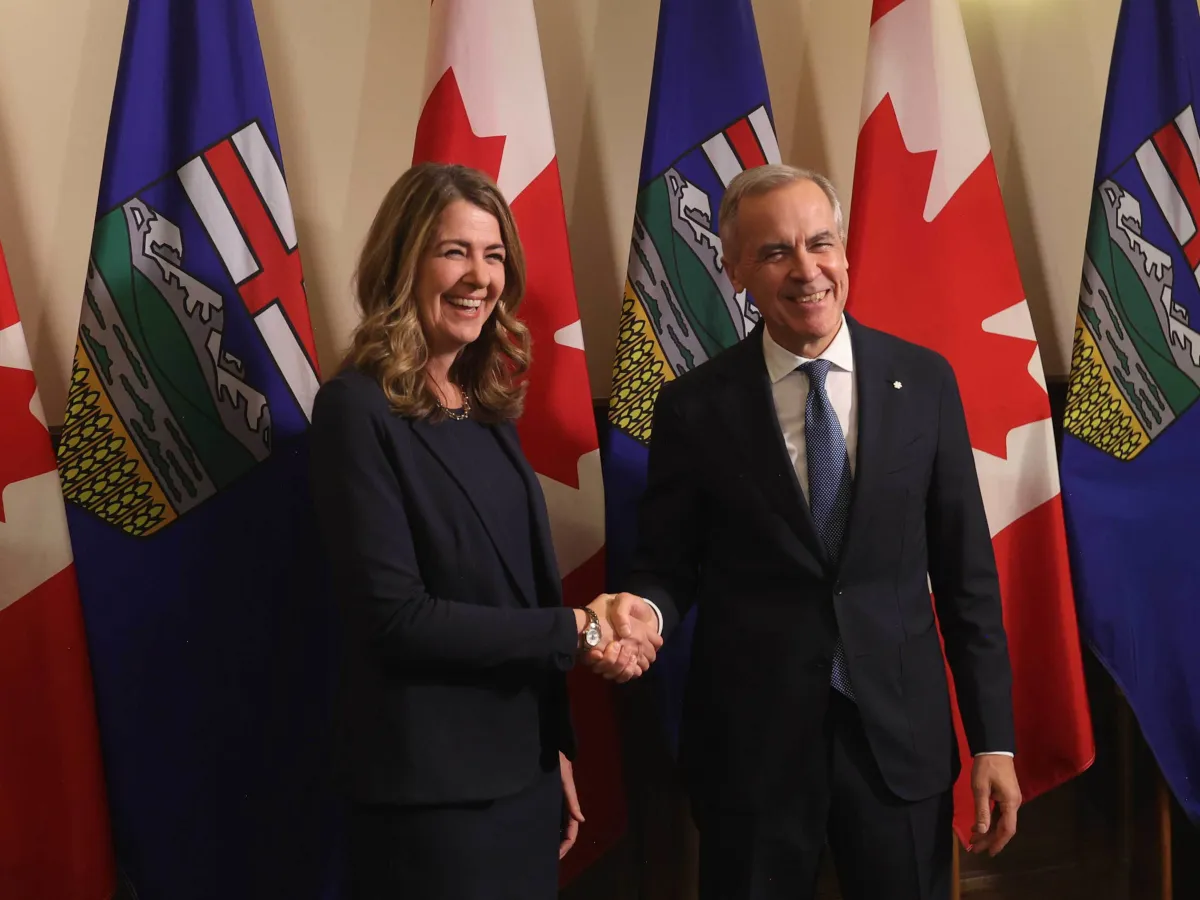
Skip to Content Subscribe Our Offers My Account Manage My Subscriptions FAQ Newsletters Canada Canadian True Crime Canadian Politics Health World Israel & Middle East Financial Post NP Comment Longreads Puzzmo Diversions Comics NP News Quiz New York Times Crossword Horoscopes Life Eating & Drinking Style Sponsored Play for Ontario Travel Travel Canada Travel USA Travel International Cruises Travel Essentials Culture Books Celebrity Movies Music Theatre Television Business Essentials Advice Lives Told Tails Told Shopping Buy Canadian Home Living Outdoor Living Tech Style & Beauty Kitchen & Dining Personal Care Entertainment & Hobbies Gift Guide Travel Guide Deals Savings National Post Store More Sports Hockey Baseball Basketball Football Soccer Golf Tennis Driving Vehicle Research Reviews News Gear Guide Obituaries Place an Obituary Place an In Memoriam Classifieds Place an Ad Celebrations Working Business Ads Archives Healthing Epaper Manage Print Subscription Profile Settings My Subscriptions Saved Articles My Offers Newsletters Customer Service FAQ Newsletters Canada World Financial Post NP Comment Longreads Puzzmo Diversions Life Shopping Epaper Manage Print Subscription HomeNP CommentJohn Ivison: Carney knows from experience separatism can get very real if Alberta is mishandledSimply issuing a scare story a day sends a message of dependency and worthlessness that risks alienating swing voters You can save this article by registering for free here. Or sign-in if you have an account.Alberta Premier Danielle Smith, left, and Prime Minister Mark Carney meet in Calgary on May 15. Photo by Brent Calver/PostmediaMark Carney was asked Monday about his role in the forthcoming Alberta referendum campaign and the response was reassuring.Enjoy the latest local, national and international news.Exclusive articles by Conrad Black, Barbara Kay and others. Plus, special edition NP Platformed and First Reading newsletters and virtual events.Unlimited online access to National Post.National Post ePaper, an electronic replica of the print edition to view on any device, share and comment on.Daily puzzles including the New York Times Crossword.Support local journalism.Enjoy the latest local, national and international news.Exclusive articles by Conrad Black, Barbara Kay and others. Plus, special edition NP Platformed and First Reading newsletters and virtual events.Unlimited online access to National Post.National Post ePaper, an electronic replica of the print edition to view on any device, share and comment on.Daily puzzles including the New York Times Crossword.Support local journalism.Create an account or sign in to continue with your reading experience.Access articles from across Canada with one account.Share your thoughts and join the conversation in the comments.Enjoy additional articles per month.Get email updates from your favourite authors.Create an account or sign in to continue with your reading experience.Access articles from across Canada with one accountShare your thoughts and join the conversation in the commentsEnjoy additional articles per monthGet email updates from your favourite authorsSign In or Create an AccountorThe prime minister wasn’t exactly Henry V at Agincourt on St. Crispin’s Day, rallying his outnumbered troops in a call to arms.But he is a veteran of these campaigns from his time in the United Kingdom during the Brexit and Scottish independence referendums. He knows that when emotions run high, a positive appeal is needed to offset gloomy portents about the certain costs, and uncertain gains, of independence.He also appeared to appreciate that, even as a native Albertan, the “remain” campaign must be led from inside the province. Carney was asked what he plans to do to campaign for Canadian unity.This newsletter from NP Comment tackles the topics you care about. (Subscriber-exclusive edition on Fridays)By signing up you consent to receive the above newsletter from Postmedia Network Inc.We encountered an issue signing you up. Please try againHe said the federal government’s first response requires it to look at the question to see if it is consistent with the Clarity Act, adopted after the 1995 Quebec referendum.The author of that legislation, former minister Stéphane Dion, wrote last week that in his opinion Alberta is committed to respecting the Canadian constitutional framework and does not envisage unilateral secession. As such, he said nothing is required for the government of Canada.Only if a second referendum is held because of strong support for the second part of the question — on proceeding with a binding vote on separation — would the House of Commons be required to judge the clarity of the question and the required majority, Dion wrote.The prime minister was clear in his press conference in Ottawa that a referendum on the prospect of independence is not helpful. “The premier (Danielle Smith) doesn’t always take my advice,” he said, when asked whether he had counselled against putting the question to Albertans. “Is this the democratic will of Albertans? Did they vote for this in the last provincial election? No, they didn’t … it wasn’t in the platforms of the governing party or the official Opposition. (But) it is what it is,” he said.He said the danger is that people take the claims made by the separatists on faith.“This is an observation from experience in these separation issues. It is often advanced that: ‘vote for this and it’s a free option’; ‘vote for this and we will strengthen your hand in future negotiations’. That is a very dangerous bluff. I saw this firsthand from what happened in the U.K. when the view was: ‘vote for this, it’ll be soft and then we’ll negotiate’. They’re still, 10 years later (post-Brexit), trying to undo what people didn’t think they were voting for but what they ended up having,” he said.In both the Scottish and Brexit referendums, Carney was a vocal critic of independence/leave campaigns, raising inconvenient questions about pensions, currency and trade bloc memberships that the other side didn’t want to talk about.Former Conservative minister, Monte Solberg pointed out similar shortcomings in the current Alberta separatist movement over the weekend. “Where is the costed and detailed plan for the new Alberta?” he wondered. Would parts of Alberta that don’t want to separate be allowed to separate from Alberta? Would the new entity devote five per cent of GDP to defence to meet NATO targets? Would it seek to join NATO? What about seniors’ benefits, employment insurance, foreign affairs and Indigenous relations?These are all pointed questions that have no answers now and are unlikely to have in the future.They are the reason why the effort to cleave Alberta from the rest of Canada is likely to fail. Albertans may want to give Ottawa a kick in the groin, but anxious and uncertain voters will soon realize, if they don’t already, that this is not about the next four years, it is about the next century.Academic research shows that in the final day or so of a referendum, support for reform falls around two-thirds of the time, as voters decide to stick with the devil they know.A new Angus Reid Institute poll suggests three in five (61 per cent) will vote to stay in Canada in October, based on the question Danielle Smith revealed last week.But Carney has seen the shortcomings of gloomy, uninspiring campaigns for the status quo that lost during the Brexit vote in 2016 and nearly lost the Scottish referendum in 2014 (the Yes side was ahead in the closing polls, having started 20 points behind).Simply issuing a scare story a day sends a message of dependency and worthlessness that risks alienating swing voters.Canadians have their own experience of how a charismatic leader can overturn relentless negative campaigns. For most of the 1995 Quebec vote, the No side held a comfortable lead until the Yes side pivoted and made the Bloc Québécois’ Lucien Bouchard, their chief negotiator. Sovereigntist support gained momentum, and in the days before the vote, the Yes side was ahead by six points in the polls, before losing by just 54,288 votes.Carney acknowledged the need to reassure by pointing out that there is “a very strong, positive case for Canada, a strong Alberta in a united Canada … I look forward to making that case, with many, many other Albertans and Canadians over the course of the next 150 days,” he said.The “remain” campaign will be buoyed by new polling numbers that show the number of people feeling the country is heading in the right direction is the highest since 2017. That group will include Smith, who despite her recklessness in calling an unnecessary referendum, said she, her government and her caucus support remaining in Canada.She said that the Carney government’s policy of “co-operative federalism” is “turning the tide on 10 years of disastrous policy” under Justin Trudeau.And she defended her decision to hold the referendum by saying 700,000 voters (including federalists) signed referendum petitions and her government “needs to get direction from all Albertans.”There is a hope among some in the province that a resounding “remain” vote will put the issue to rest.I doubt it. In similar fashion, unionists in the U.K. argued that the 1998 Scotland Act that created a parliament in Edinburgh would “kill nationalism stone dead.” By 2007, the independence-supporting Scottish National Party was the governing party; seven years after that, it came close to creating a sovereign Scotland.These are deep collective emotions, and once unleashed they create passions and resentments that are not quickly abandoned.Another who will be campaigning for Canada, is federal Opposition Leader Pierre Poilievre, who said he will be “fighting for a united Canada every day, in every way.”He pointed out that under the Harper Conservative government, the separatists were virtually wiped off the electoral map in Quebec (the Bloc Québécois was reduced to just four seats in 2011) and did not exist in Alberta.“It’s the job of the prime minister to unite the country and if it is not united, that is the responsibility of the prime minister,” he said.Carney will be keenly aware that, for all his accomplishments, if this process goes badly wrong, he will enter the history books as the last prime minister to preside over a united Canada.National Post Get the latest from John Ivison straight to your inbox Join the Conversation This website uses cookies to personalize your content (including ads), and allows us to analyze our traffic. Read more about cookies here. By continuing to use our site, you agree to our Terms of Use and Privacy Policy.
John Ivison: Carney knows from experience separatism can get very real if Alberta is mishandled
Simply issuing a scare story a day sends a message of dependency and worthlessness that risks alienating swing voters.
1,684 words~8 min read