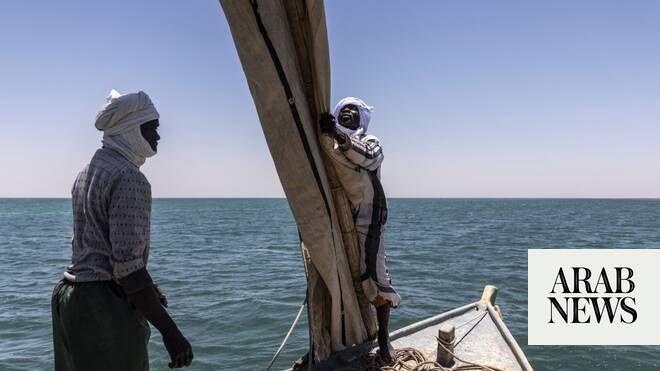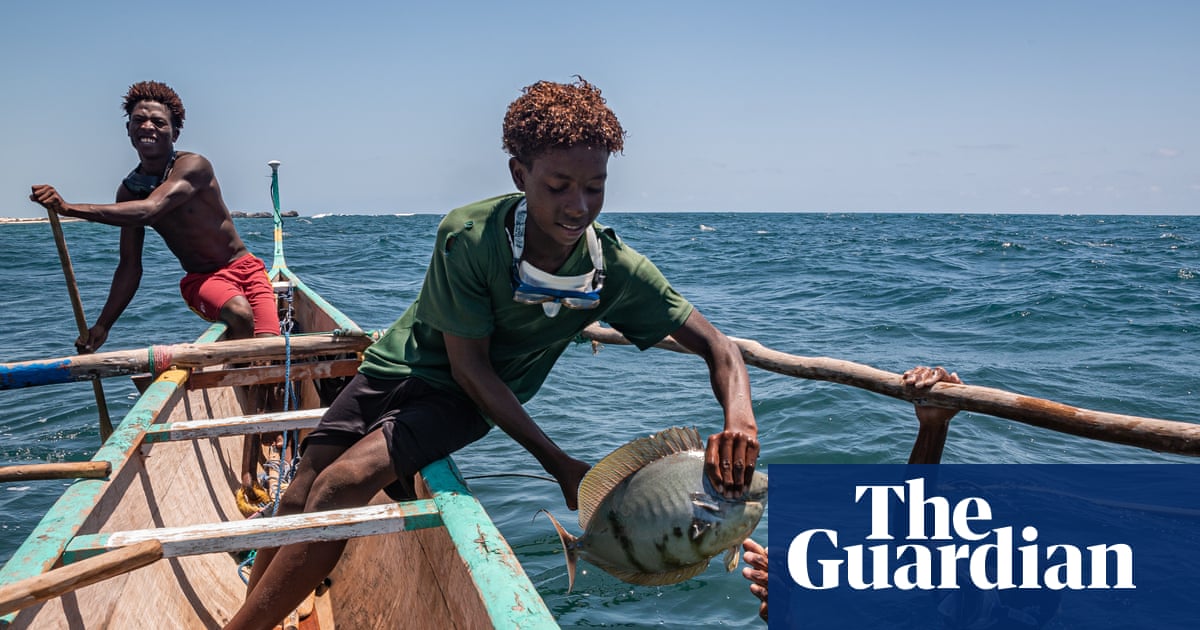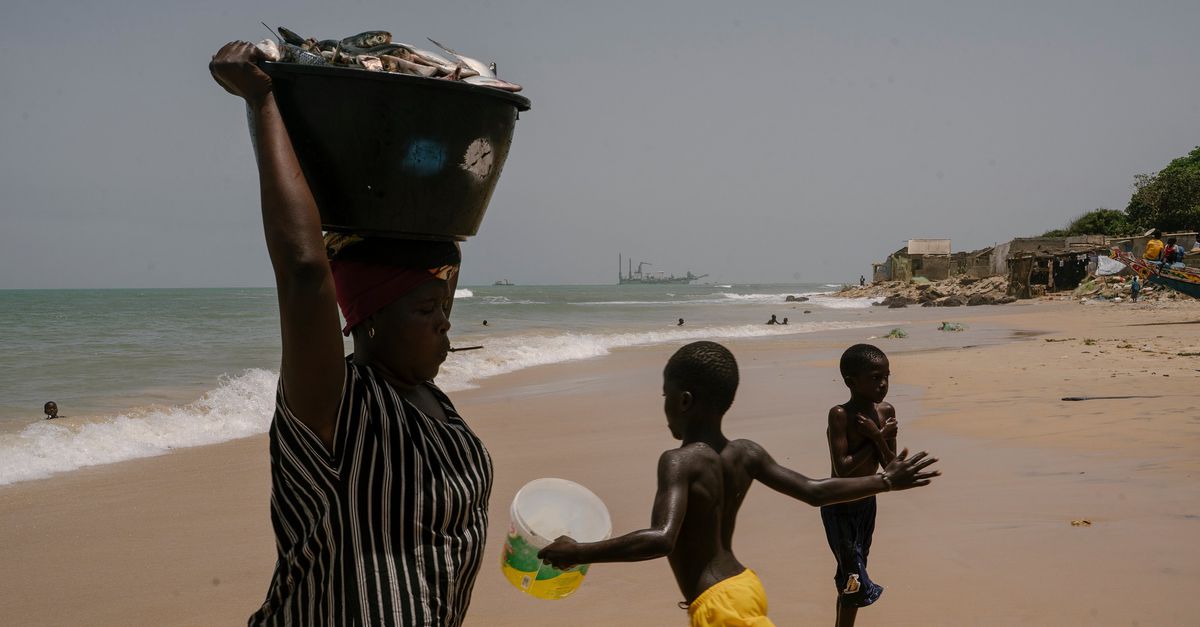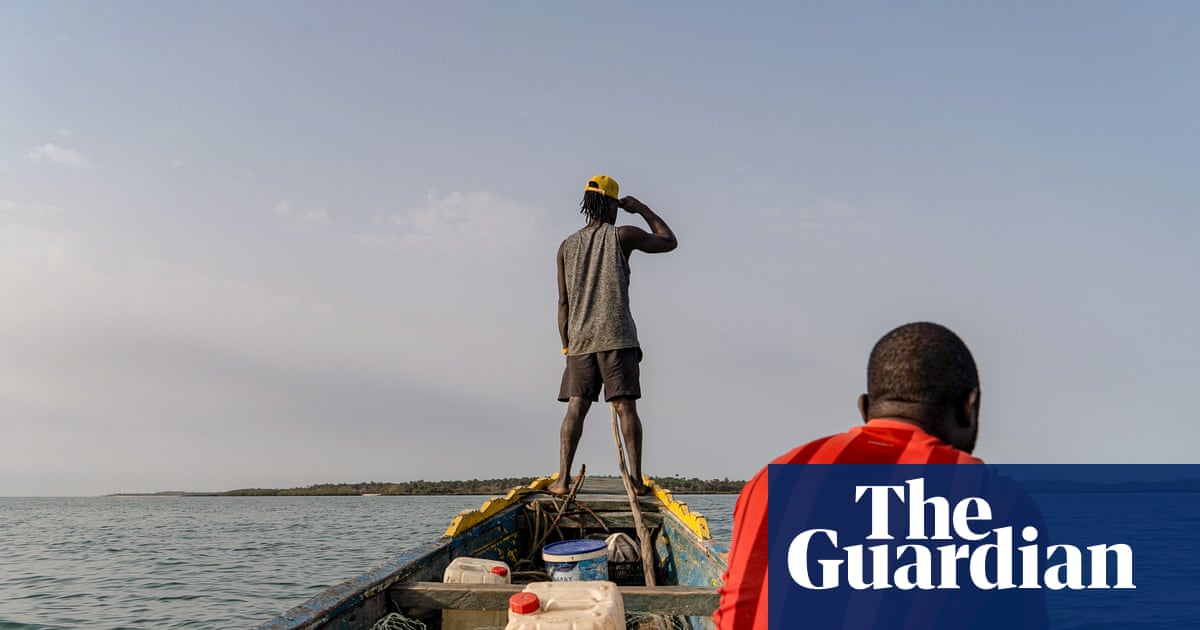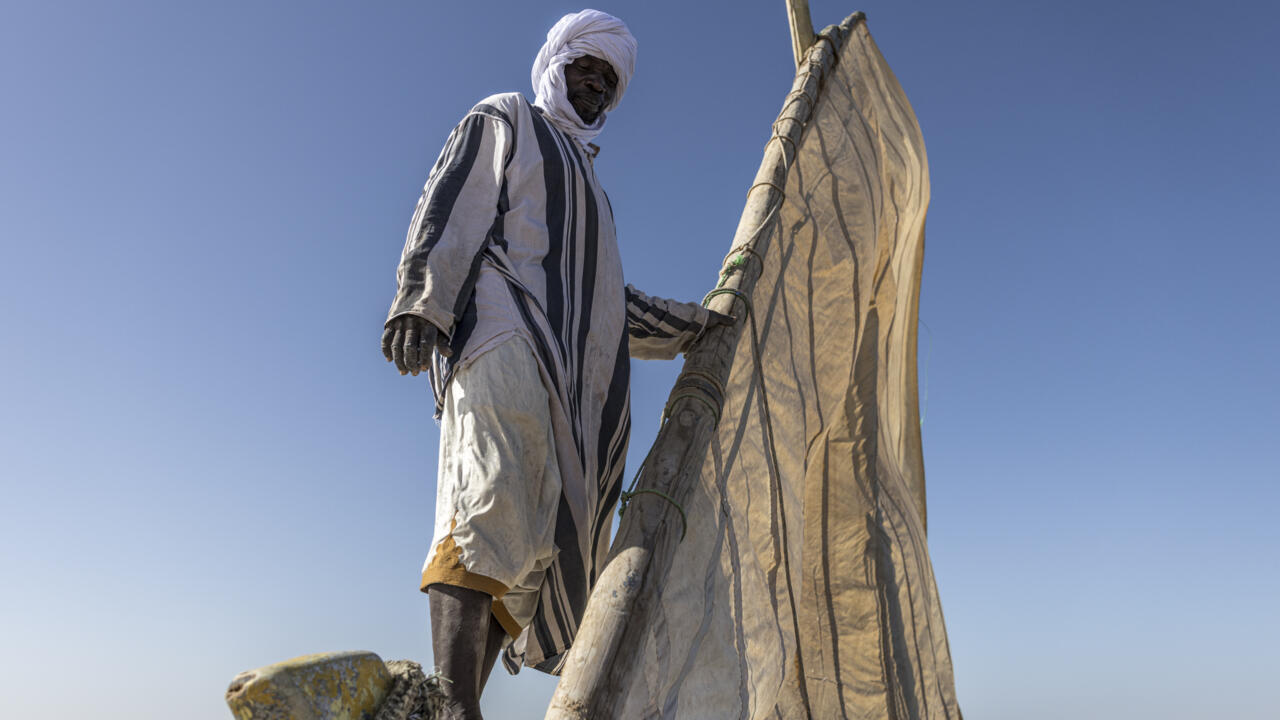
Mahmoud is a member of the Imraguen fishing-based community, a desert people who have spent centuries developing practices in harmony with nature, living in the area where the Sahara meets the Atlantic.At the first light of dawn the village of Iwik stirs to life, white sails unfurling across the bay's calm waters.With motors banned, the only vessels gliding about are "lanches", small sailboats said to have originated from ancient ties with the Spanish Canary Islands.
The Imraguen people use 'lanches', small sailboats said to have originated from ancient ties with the Spanish Canary Islands © PATRICK MEINHARDT / AFP
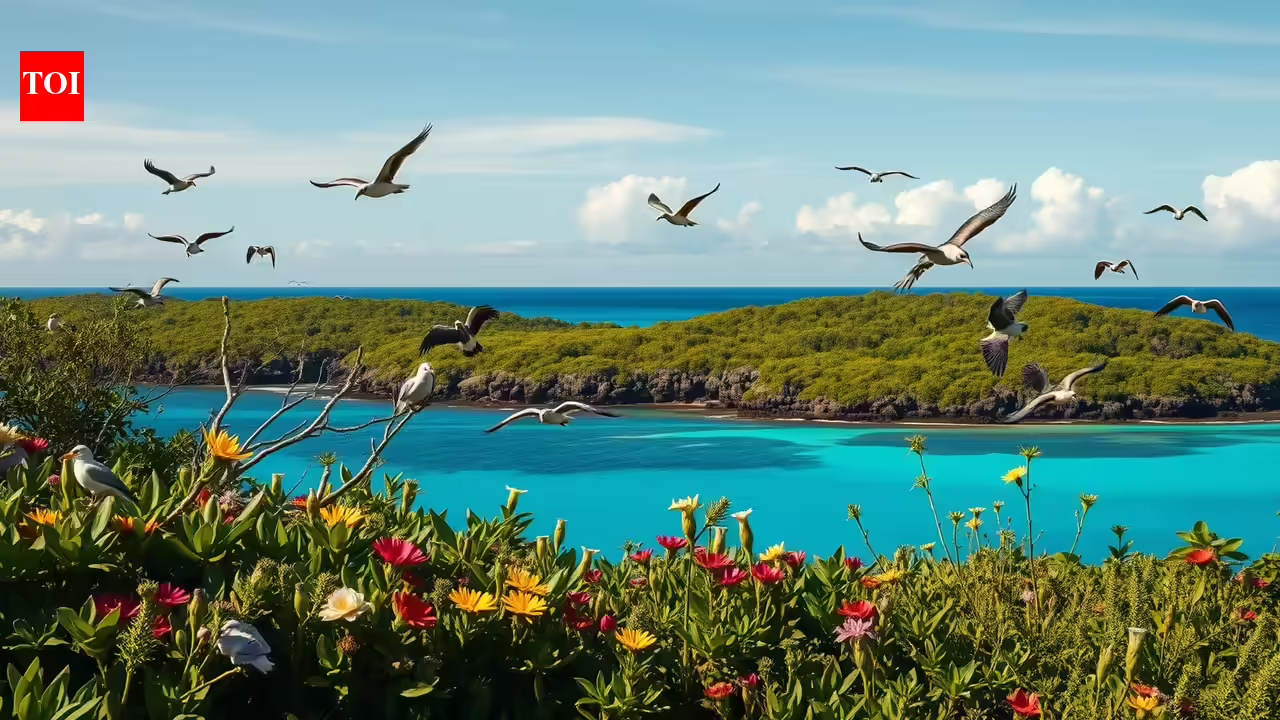
Banc d'Arguin National Park, which was designated a UNESCO World Heritage Site in 1989 and is located on Mauritania's northern coast, is home to some 4,000 Imraguen people, the only population permitted to live within the reserve.The area attracts an abundance of migratory birds, marine mammals and diverse fish species, nourished by cold, nutrient-rich deep-water upwellings and abundant seagrass beds.The Imraguen have developed a unique method of wading-based fishing, practised only in the summer.At low tide, two fishermen stretch a long, slender net measuring dozens of metres (yards) across a mudflat, while a third uses a pole to strike the water, driving fish into the trap.Increasing scarcityHis face protected from the scorching sun by a white turban, Mahmoud lifts several sea bream and a grouper into the boat."The fish aren't the same as before", said the boat's captain, a man in his 60s, who noted a decline in certain species like yellow mullet.