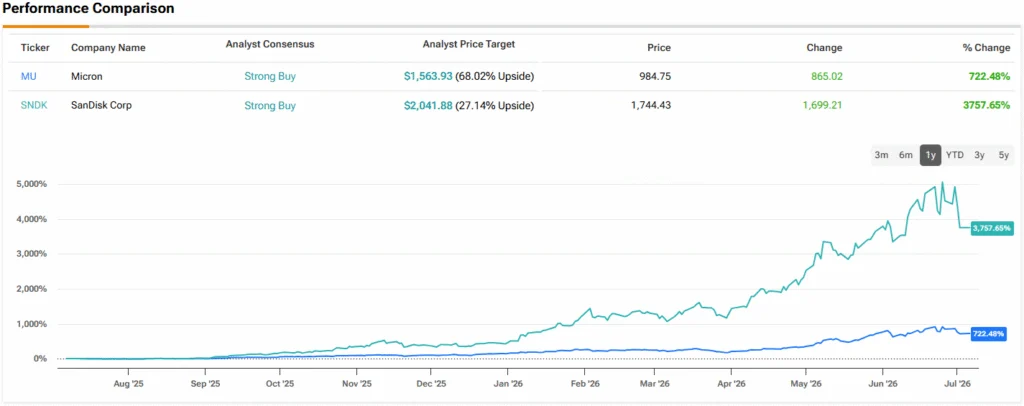
The concerns aren’t difficult to understand, as memory has always been a cyclical business. After such a strong run driven by soaring demand for high-bandwidth memory and AI infrastructure, many are wondering whether expectations have simply gotten too high. If supply eventually catches up with demand, pricing power could weaken, margins could come under pressure, and the recent winners could face a much tougher road ahead.
Yet, while some believe the recent pullback marks the start of a more prolonged downturn, investor Bram de Haas has a simple message: Don’t blink just yet.
“At the end of the day, I expect memory demand to remain very strong for the foreseeable future,” Haas opined.
That’s not to say that the investor dismisses the cyclical worries. Rather, he believes any slowdown remains a few years down the pike.
The investor notes that up-and-coming agentic workloads – requiring “vastly” more computing power and memory – are still in their initial stages. Moreover, both Europe and Asia are playing catch-up with the U.S. when it comes to enterprise adoption, and that’s where the “real money” lies. Meanwhile, the hyperscalers are fighting tooth and nail to attain the strongest positions in this lucrative market.