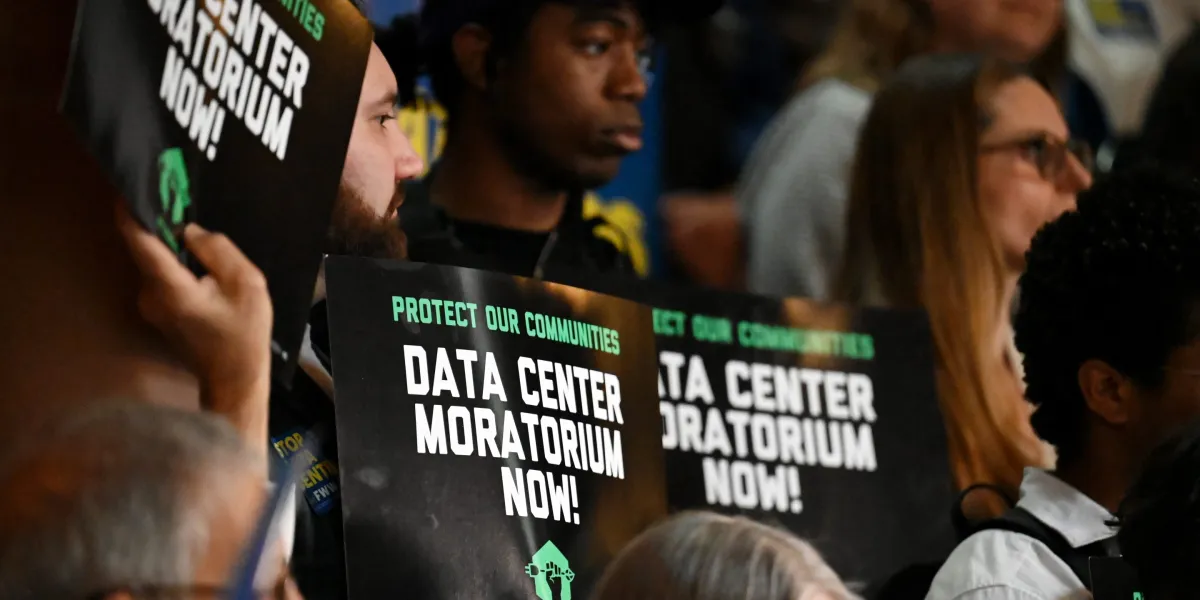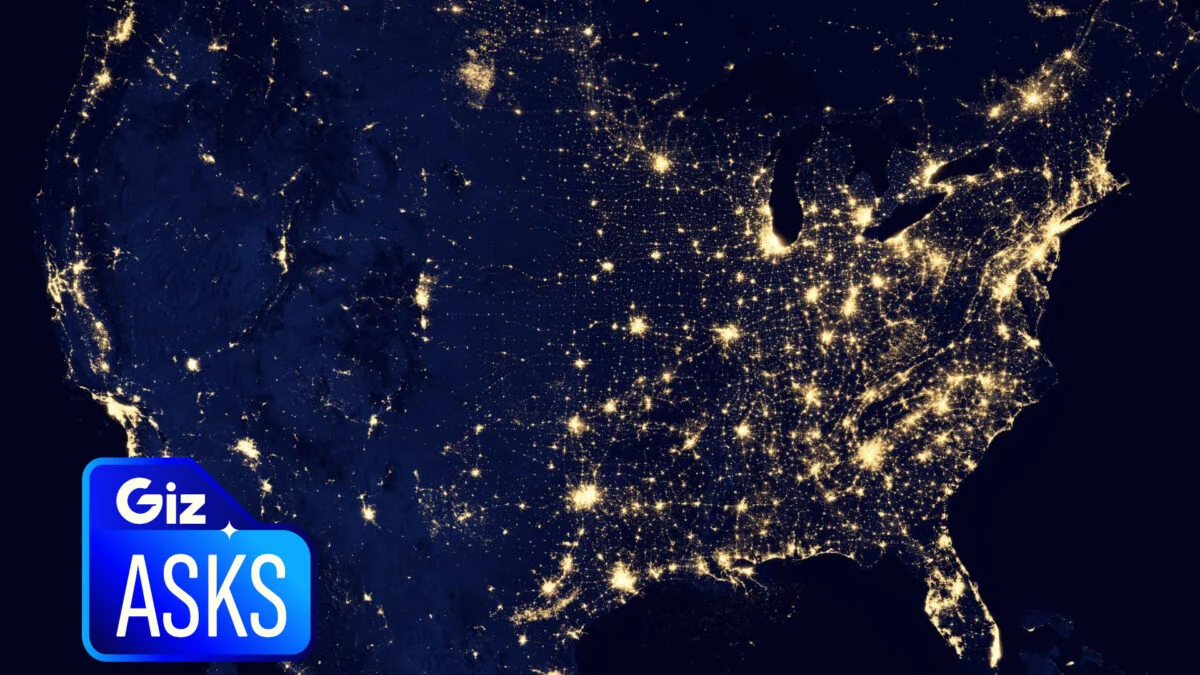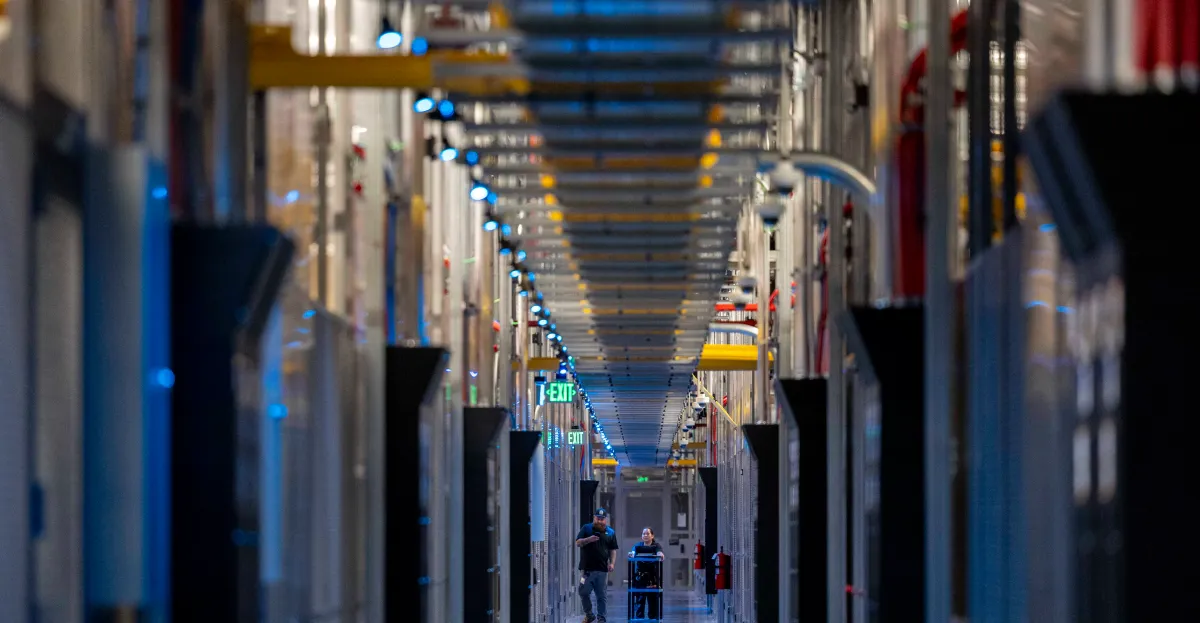
The American power grid is about to fail the most important industry it has ever been asked to support.In fact…the dominoes in this potentially disastrous scenario have already begun to fall. Large companies that right now depend heavily on the grid are making behind-the-scenes moves that are key to understanding what’s about to happen next.Microsoft just signed a 20-year deal to restart the Three Mile Island nuclear plant, a facility that has been offline since 2019. Amazon paid $650 million for a single data center campus to co-locate directly with the Susquehanna nuclear station in Pennsylvania. Google signed agreements with Kairos Power for small modular reactors. Meta has issued a request for proposals seeking up to 4 gigawatts of new nuclear capacity.These are the most valuable companies on earth…and they’re committing billions of dollars and waiting years to lock in power. They are not doing that because the grid is working. They are doing it because the grid is breaking.This is the story Wall Street has not priced in yet. And it explains why a tiny Canadian-listed Bitcoin miner with infrastructure in Norway, Bitzero Holdings (NASDAQ: AIBZ), just signed a binding letter for a 15-year, $2.6 billion lease.The Grid Was Built for a Different CenturyThe American electrical grid was designed for a world where electricity demand grew at one to two percent per year. That’s a reliable, manageable rate that is also slow enough to allow utilities to plan their generation and transmission decades in advance with a comfortable margin for error.That world is gone.A single ChatGPT query consumes roughly 10 times the energy of a Google search. Training the next generation of large language models requires the equivalent power draw of small cities. Industry forecasts from McKinsey now put AI data center capital expenditure at roughly $5.2 trillion between now and 2030. Goldman Sachs Research projects global data center power demand will surge up to 165% by 2030 compared to 2023 levels.That kind of demand growth has no precedent. The grid was not built for it, the utilities running the grid have no plan for it, and the regulatory framework governing the utilities cannot move fast enough to keep up.And now the numbers are starting to show it. Berkeley Lab recently found that more than 70% of grid interconnection requests in the United States are ultimately withdrawn because the grid simply cannot accommodate them. Kevin O'Leary, the Shark Tank investor and longtime infrastructure backer, has gone further. He believes 50% of the data centers currently planned across the United States will never be built.That’s a startling estimate: Half of the projects sitting on the books, projects backed by some of the deepest pockets in corporate America, will not happen. Not for lack of money. Not for lack of demand. The grid simply cannot deliver the power.The Hyperscalers Already Figured This OutLook at what the smart money is doing.Microsoft did not pay to restart Three Mile Island because it wanted to be in the nuclear business. It did it because the grid could not deliver the power it needed, on the timeline it needed, for any price.Amazon did not pay $650 million for a co-located data center because it loves nuclear chemistry. It did it because direct co-location was the only way to guarantee AI-grade power without waiting on a utility queue.Google did not announce agreements for small modular reactors because the technology is mature. It did it because the company expects to outgrow utility-supplied power within the decade, and has no faith the grid can keep up.And Meta did not issue an RFP for 4 gigawatts of new nuclear capacity as an academic exercise. It did it because the company has concluded that the only way to secure enough power for its AI ambitions is to build the generation infrastructure itself.These are not the moves of companies that think the grid will be fine. They are the moves of companies that have looked at the next five to ten years of demand and concluded that the existing utility model cannot deliver. They are spending billions to route around it.Smaller AI companies cannot afford to restart nuclear plants or co-locate with reactors. And smaller companies certainly do not have the balance sheet to issue 4-gigawatt nuclear RFPs. Which means that as the hyperscalers route around the grid, every other AI player in America gets squeezed harder by what is left.Bitzero figured the same thing out years earlier, in a place the hyperscalers wish they could buy into.A Local Veto Killed a $12 Billion Data CenterIf you want to understand how fragile the U.S. data center pipeline has become, look at what happened in St. Joseph County, Indiana, in September 2025.A developer proposed a $12 billion data center complex, which would have been the largest single project investment in state history. The developer had the capital. They had identified the land. They had support from county economic development officials desperate for the construction jobs and tax revenue.None of it mattered. The Local Area Plan Commission voted 7-0 against the project. Community members raised concerns about water demands, electricity demands, tax impacts, and the conversion of farmland to industrial use. Sixteen single-family homes and two family farms would have been displaced. The commission shut it down.Twelve billion dollars in proposed investment, killed by seven local officials in a single vote.This is the new reality across the American data center pipeline. Even when the power is theoretically available, even when the utility is theoretically willing, even when the project has every other piece in place, local opposition can kill it. And local opposition is rising, not falling, as communities across the country wake up to what AI data centers actually consume.All of it adds up to a long list of local objections. The power load alone strains regional grids. The water demand for cooling competes with the municipal supply. Property tax abatements shift the cost burden onto existing residents. Truck traffic and construction disruption rattle quiet communities for years. And none of it sits well with neighbors who do not directly benefit from the AI boom but bear every one of the local costs.The result is a pipeline of proposed AI capacity that gets thinner with every passing month. The big projects that survive get bigger. The marginal projects die in committee. The map of where AI data centers can actually get built shrinks.The Window Closing on Existing OperatorsNow ask the obvious question. If the U.S. grid is breaking, the hyperscalers are bypassing it, and local communities are killing new projects, who actually wins?The companies that already own AI-grade power capacity in jurisdictions where the grid works. There are not very many of them.The Nordic countries, especially Norway and Finland, are the cleanest examples. Both have massive hydroelectric and nuclear generation, cold climates that slash cooling costs, stable governments, and EU data sovereignty protections that make them ideal for AI workloads. For a few years, the Nordics looked like the escape valve for hyperscalers shut out of the U.S. grid.That window has now mostly closed. Norway has capped new data center operators at just 5 megawatts of initial allocation, which is barely enough to run a small Bitcoin mining operation, let alone an AI training cluster. Finland and Sweden are tightening as well. The companies that secured significant Nordic power capacity before the AI boom kicked in are sitting on something that cannot be replicated, no matter how much capital is thrown at it.Bitzero (NASDAQ: AIBZ) is one of those companies. The company is a licensed grid operator in Norway with direct connections to hydroelectric power plants, all-in power costs of roughly 3 to 4 cents per kilowatt-hour, and more than 1 gigawatt of secured capacity across four sites in Norway, Finland, and the U.S.In May 2026, Bitzero signed a binding letter for a 15-year lease with OneQode for the entire 110 megawatts at its Namsskogan, Norway site. Total contracted revenue runs approximately $2.6 billion, with implied annual revenue of $178 million at full capacity and a net operating margin of 85%. OneQode is deploying GPU clusters at the site for enterprise AI, large language model training, and sovereign AI workloads. Commissioning is targeted for the first half of 2027.That deal exists because Bitzero has what almost nobody else has. Secured power in an EU jurisdiction, drawn from renewable supply, running through infrastructure that already exists, and operating outside the utility timelines that have brought US development to a crawl. Everything the hyperscalers are paying billions to recreate in the US, Bitzero already operates in Norway.The Rare Stock That Owns Power AND ChipsThe thing that separates Bitzero from a pure energy play is what it does with the power.Two weeks before the OneQode signing, Bitzero acquired its first eight NVIDIA Blackwell B300 servers, representing 64 GPUs, for deployment at the Norway site as the company's first direct entry into AI compute revenue. In the same month, Bitzero announced a partnership with Hydra Host, a top-10 NVIDIA Cloud Partner backed by Founders Fund, which operates GPU clusters across more than 50 locations and distributes Bitzero's compute capacity to global enterprise customers through its Brokkr platform. Bitzero also retained CBRE, a brokerage firm that manages roughly $6 billion in annual data center transactions, as the strategic broker for its 200-megawatt Finland site.Most companies in the AI economy are either chip-heavy or power-heavy. NVIDIA owns the chips. Power producers own the electricity. Bitzero now owns secured low-cost power, has the latest NVIDIA Blackwell chips deployed on that power, has a global NVIDIA Cloud Partner distributing the resulting compute…and has a $2.6 billion long-term tenant locked in for its largest single block of capacity.The Bitcoin mining operations that built the infrastructure originally still run today, generating roughly $25 million in trailing twelve-month revenue and demonstrating to AI customers that the infrastructure can handle sustained, real-world high-load conditions.The Peer Group Trades 20x Higher. Bitzero Hasn’t Moved.Add the OneQode lease revenue to Bitzero's existing mining business, and the combined company would sit in the same conversation as Bitcoin mining and AI infrastructure names already trading at multi-billion dollar market caps.IREN Limited (Nasdaq: IREN) trades at a market cap above $19 billion. TeraWulf Inc. (Nasdaq: WULF) sits above $14 billion. Cipher Mining (Nasdaq: CIFR) is north of $11 billion. Hut 8 (Nasdaq: HUT) and Core Scientific (Nasdaq: CORZ) trade above $13 billion and $9 billion, respectively. Each of these companies has built its valuation on a similar thesis as Bitzero is now executing: owned power infrastructure plus a credible long-duration HPC contract.Yet Bitzero (NASDAQ: AIBZ) currently trades at a market cap of roughly $500 million.A company with more than 1 gigawatt of secured capacity across four sites, a binding letter for a 15-year $2.6 billion AI lease signed with OneQode, profitable Bitcoin mining operations, and the latest NVIDIA Blackwell GPUs already deployed in Norway trades at just a small fraction of IREN's market cap.Phoenix Group, the publicly-listed Bitcoin miner ranked tenth globally by market capitalization, holds a 20.8% equity stake in Bitzero and a board seat. Kevin O'Leary is on the cap table. The proposed board includes investment banking veterans from Credit Suisse and JPMorgan.The Bottom LineThe U.S. power grid is breaking under the weight of AI demand. The hyperscalers know it, which is why they are restarting nuclear plants and signing 20-year contracts. Local communities are killing projects worth billions. Berkeley Lab data shows seven out of ten interconnection requests get withdrawn. And the small group of companies that secured AI-grade power outside the U.S. grid before the crisis is sitting on assets that cannot be replicated at any price.Bitzero is one of those companies…and its OneQode deal is the proof. The market has not adjusted to what that means yet, and the window to position before it does is closing fast.By. Michael KernThe AI boom is triggering an unexpected and unprecedented bull run in natural gas and power stocks. If you aren't paying attention to the energy demands of data centers, you will miss the biggest energy story of the decade. The smart money is already quietly moving into the few companies prepared to power the trillion-dollar AI machine.Oilprice Intelligence brings you the inside view on where the next gains will come from, breaking down the market's biggest growth driver with analysis from veteran oilmen and experts. Click here to get this crucial intel for freeIMPORTANT NOTICE AND DISCLAIMERNeither the author nor the publisher, Oilprice.com, was paid to publish this communication concerning Bitzero Holdings, Inc. (NASDAQ: AIBZ). The owner of Oilprice.com owns shares and/or stock options of the featured company and therefore has an incentive to see the featured company’s stock perform well. The owner of Oilprice.com may buy or sell shares of the featured company at any time including at or near the time you receive this communication. This share ownership should be viewed as a major conflict with our ability to be unbiased. This is why we stress that you conduct extensive due diligence as well as seek the advice of your financial advisor or a registered broker-dealer before investing in any securities.This communication is not, and should not be construed to be, an offer to sell or a solicitation of an offer to buy any security. Neither this communication nor the Publisher purport to provide a complete analysis of any company or its financial position. The Publisher is not, and does not purport to be, a broker-dealer or registered investment adviser. This communication is not, and should not be construed to be, personalized investment advice directed to or appropriate for any particular investor. Any investment should be made only after consulting a professional investment advisor and only after reviewing the financial statements and other pertinent corporate information about the company. Further, readers are advised to read and carefully consider the Risk Factors identified and discussed in the advertised company’s SEC, SEDAR and/or other government filings. Investing in securities is speculative and carries a high degree of risk. Past performance does not guarantee future results. This communication is based on information generally available to the public and does not contain any material, non-public information. The information on which it is based is believed to be reliable. Nevertheless, the Publisher cannot guarantee the accuracy or completeness of the information.INDEMNIFICATION/RELEASE OF LIABILITY. By reading this communication, you acknowledge that you have read and understand this disclaimer, and further that to the greatest extent permitted under law, you release the Publisher, its affiliates, assigns and successors from any and all liability, damages, and injury from this communication. You further warrant that you are solely responsible for any financial outcome that may come from your investment decisions.TERMS OF USE. By reading this communication you agree that you have reviewed and fully agree to the Terms of Use found here http://oilprice.com/terms-and-conditions If you do not agree to the Terms of Use http://oilprice.com/terms-and-conditions, please contact Oilprice.com to discontinue receiving future communications.INTELLECTUAL PROPERTY. Oilprice.com is the Publisher’s trademark. All other trademarks used in this communication are the property of their respective trademark holders. The Publisher is not affiliated, connected, or associated with, and is not sponsored, approved, or originated by, the trademark holders unless otherwise stated. No claim is made by the Publisher to any rights in any third-party trademarks.
Why the AI Boom Is About to Break the U.S. Power Grid | OilPrice.com
The U.S. power grid was built for a 20th-century economy and cannot deliver what the AI boom requires. A handful of companies that secured power capacity outside the American grid are about to look very different from the way they do today.
2,537 words~12 min read