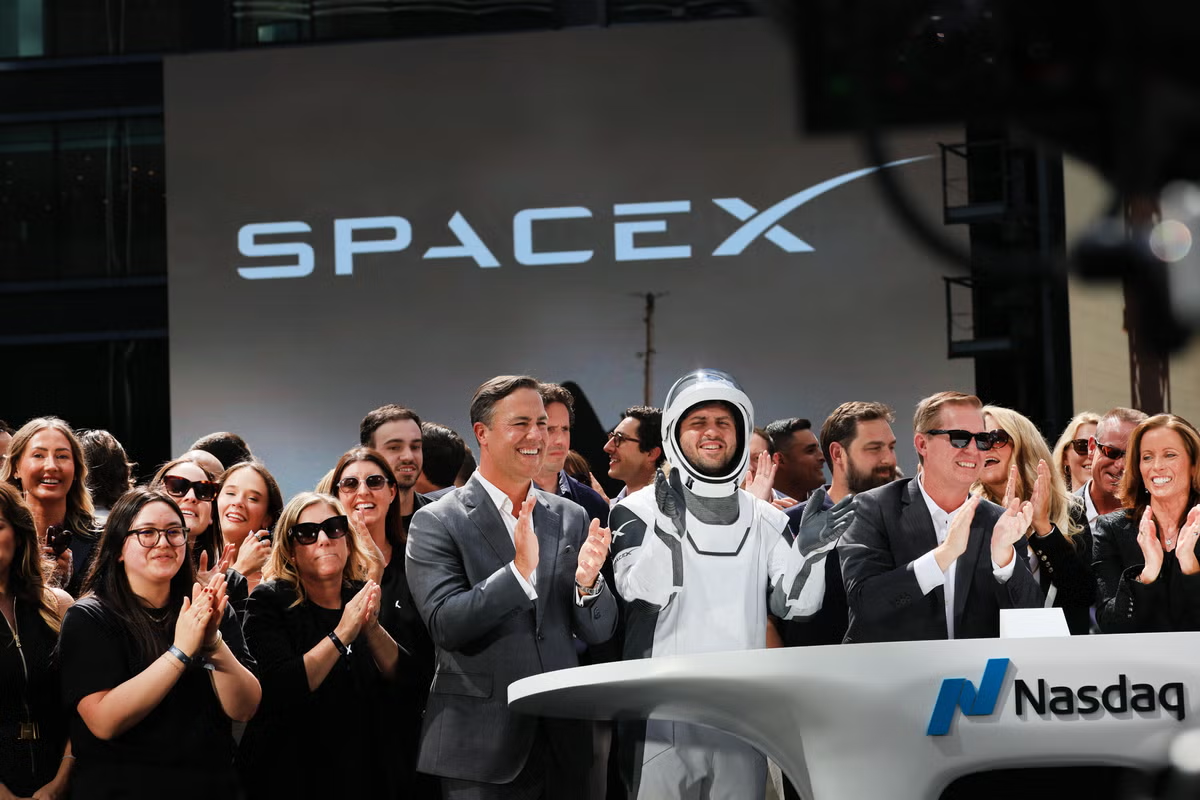
SpaceX raised $75 billion on its first trading day, making it the biggest initial public offering in history. Even if you didn’t purchase any of its $135 shares, you may still own a piece of the $2 trillion company. On Tuesday, SpaceX joined the Nasdaq-100, which consists of the 100 largest nonfinancial companies on the Nasdaq exchange. Around mid June, SpaceX also joined the CRSP US Total Market Index, which tracks thousands of companies and represents the entirety of the U.S. investable equity market. SpaceX also joined the Russell 1000, which tracks 1,000 of the largest U.S. companies, and indexes from the investment research firm MSCI.So if you’ve invested your retirement savings in a fund that tracks one of these indexes, that means you’re also invested in SpaceX. The Nasdaq-100 relaxed its eligibility rules, allowing SpaceX and other companies to enter the index after just 15 days. SpaceX’s inclusion brings a lot of attention to Nasdaq, which makes other companies want to be listed there, said Paolo Pasquariello, a finance professor at the University of Michigan. That in turn brings listing and trading fees to the exchange, he said. Amid all the hype that surrounds SpaceX’s IPO, some experts have expressed concerns about the company’s valuation. SpaceX pulled in $18.7 billion in revenue last year, making its price-to-sales ratio more than 100, said Jay Ritter, director of the IPO Initiative at the University of Florida. “The median tech company IPO from 1980 to 2025 had a price-to-sales ratio of 6.2 using the offer price and the revenue in the four quarters before going public,” Ritter said. He noted that “companies with very high ratios on average underperform.” “The company has to grow its revenue enormously and become very profitable to justify a $2 trillion valuation,” Ritter said. “It might happen, but lots of things have to go right, and it's definitely a stock where you should not put all of your eggs in one basket.” SpaceX has ambitions to develop a Starship rocket that’s reusable, which could help lower the costs of putting satellites and data centers in space, and launch a human mission to Mars. But the financial services firm Morningstar puts the odds of SpaceX developing a reusable Starship and launching "highly successful" data centers at 7%. Ben Carlson, director of institutional asset management at Ritholtz Wealth Management, said he understands why some people are divided about SpaceX. “It’s such a big company, but it's also almost like a private market bet. Like we're talking about data centers in space and going to Mars someday,” Carlson said. “It’s potentially a huge opportunity, but also a huge risk.”Because of that risk, some have expressed concerns about having SpaceX in their 401(k)s. The stock has dipped since its IPO, and is down 30% since its peak closing price. But a much smaller amount of shares are going into these indexes than you might realize, Carlson said. A company's weight in the Nasdaq-100 is based on how much of the company is actually being sold, which is known as its free float. Elon Musk, for example, owns about 40% of SpaceX and he’s not selling his shares, so those shares won’t be freely traded, Carlson said. Let’s say you’ve invested in the Vanguard Total Stock Market Index Fund, which tracks the CRSP US Total Market Index. Your investment in SpaceX would be around 1% of the index based on the company's current float, according to estimates from Carlson. “If you invested $100,000, around $100 would be invested in SpaceX,” Carlson said. “So it's a pretty small amount.” Because SpaceX makes up such a small portion, Carlson said he doesn’t see it as a huge area of concern right now. For investors who don’t want to own SpaceX, it’s become easier to diversify your portfolio if you need to, Carlson said. “You don't have to own these total market index funds. You can own a small-cap fund or a value fund,” Carlson said.Ritter said he thinks “a little exposure to SpaceX is fine.”“I've got some money in the Vanguard Total Market Fund, so my wife and I have some exposure to SpaceX,” Ritter said. “But have I gone out of my way to buy some additional shares to get more exposure? Absolutely not.” For now, SpaceX has yet to enter the S&P 500’s indexes. To be eligible, it’ll have to be profitable and wait at least a year. The S&P also has a committee that decides which companies to include among those that are eligible, aiming to offer a mix of different industries, Ritter saidThat means you’re not guaranteed entrance into that index. So for example, if pharmaceuticals are overweighted in the index relative to their overall market cap, they might not decide to include a pharmaceutical company that’s eligible, Ritter said. But space- and AI-related industries are underrepresented in the S&P 500, so he thinks SpaceX will be included if it does become eligible. “But that profitability requirement is an important criteria, and it might take many years before SpaceX does meet that,” Ritter said.
Should you be worried about SpaceX being in your 401(k)?
Some experts have raised concerns about SpaceX’s $2 trillion valuation.
844 words~4 min read