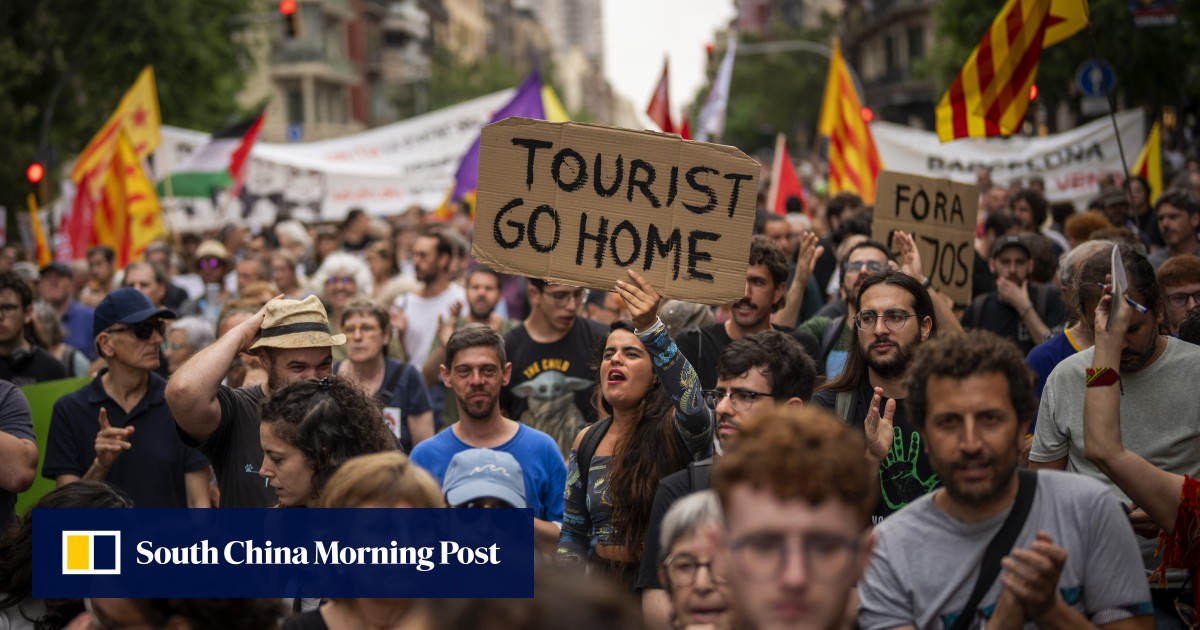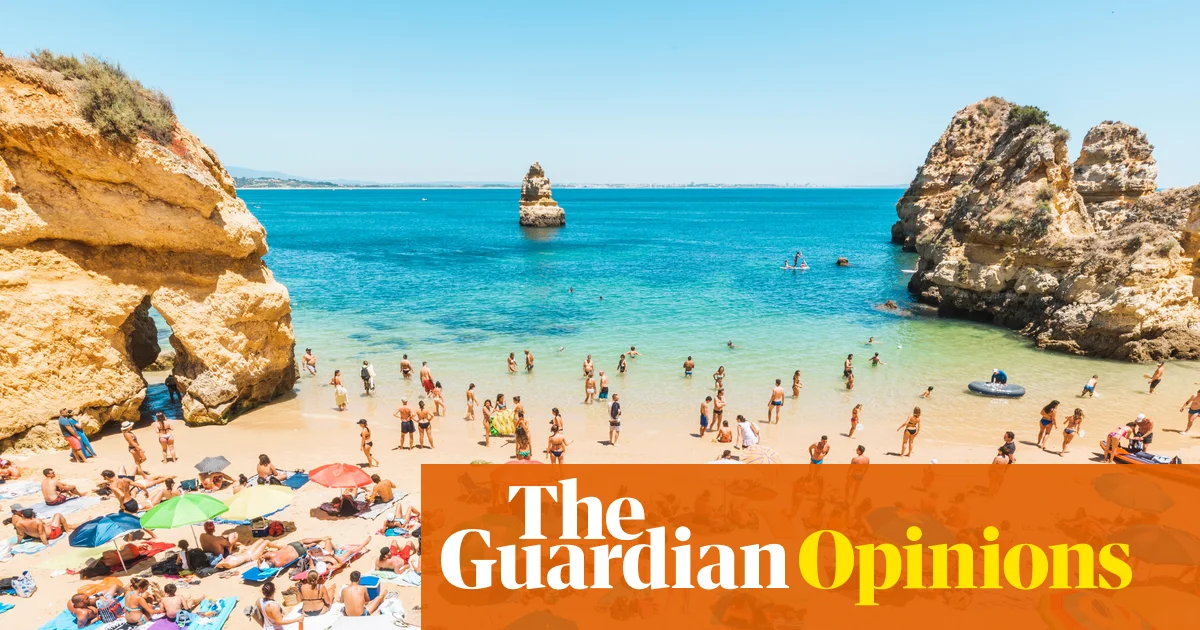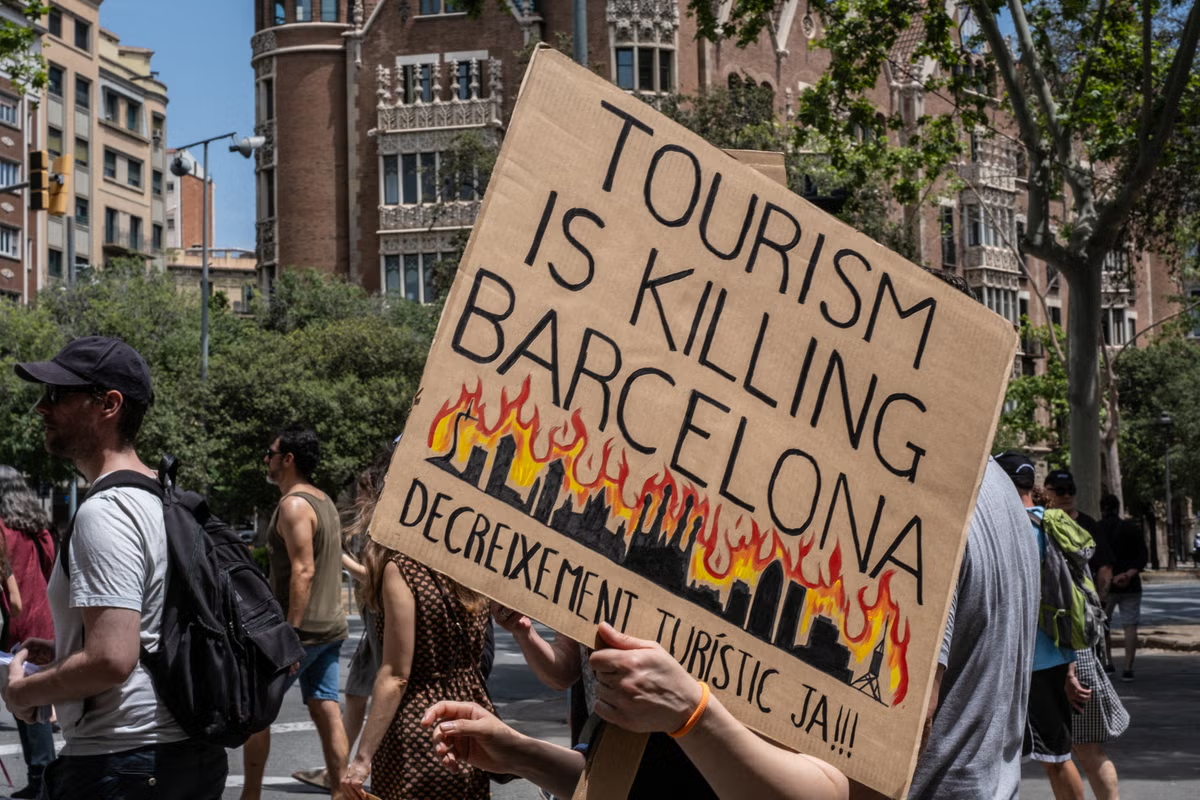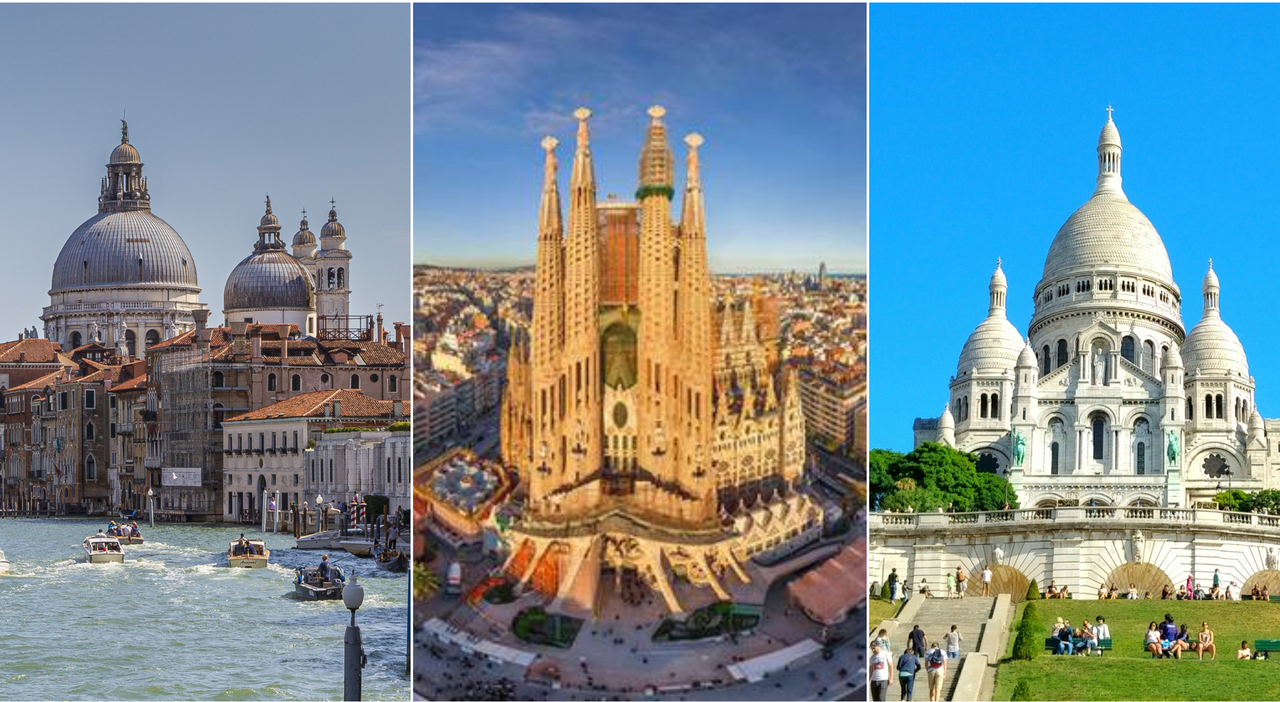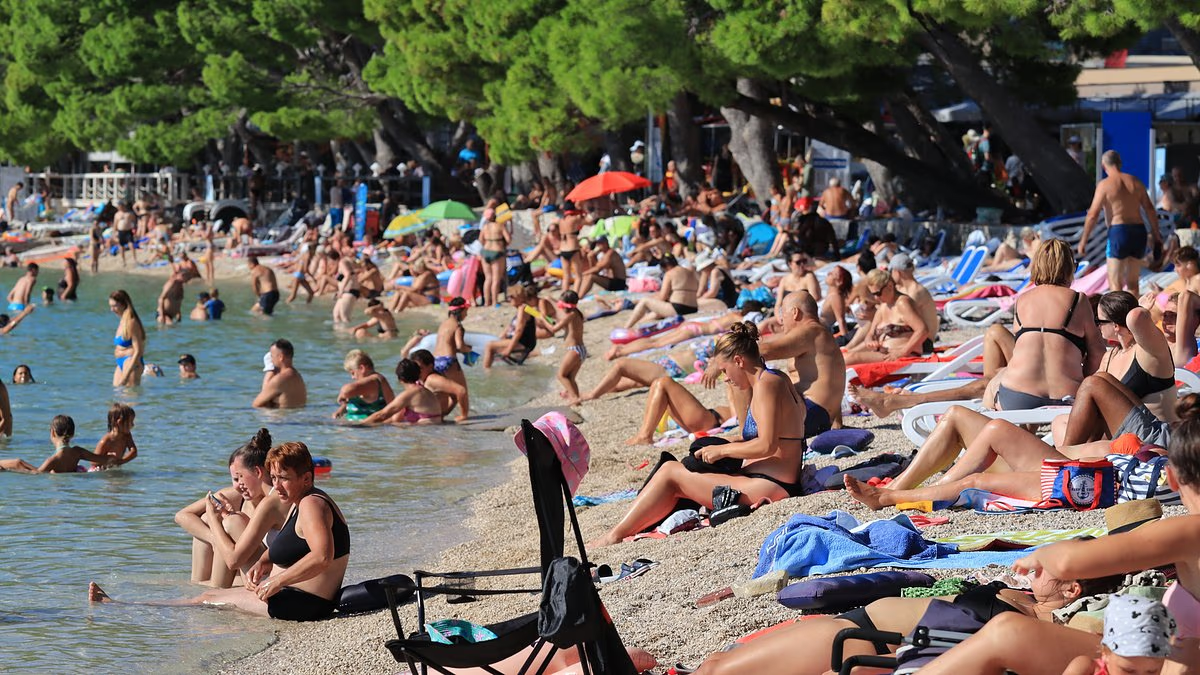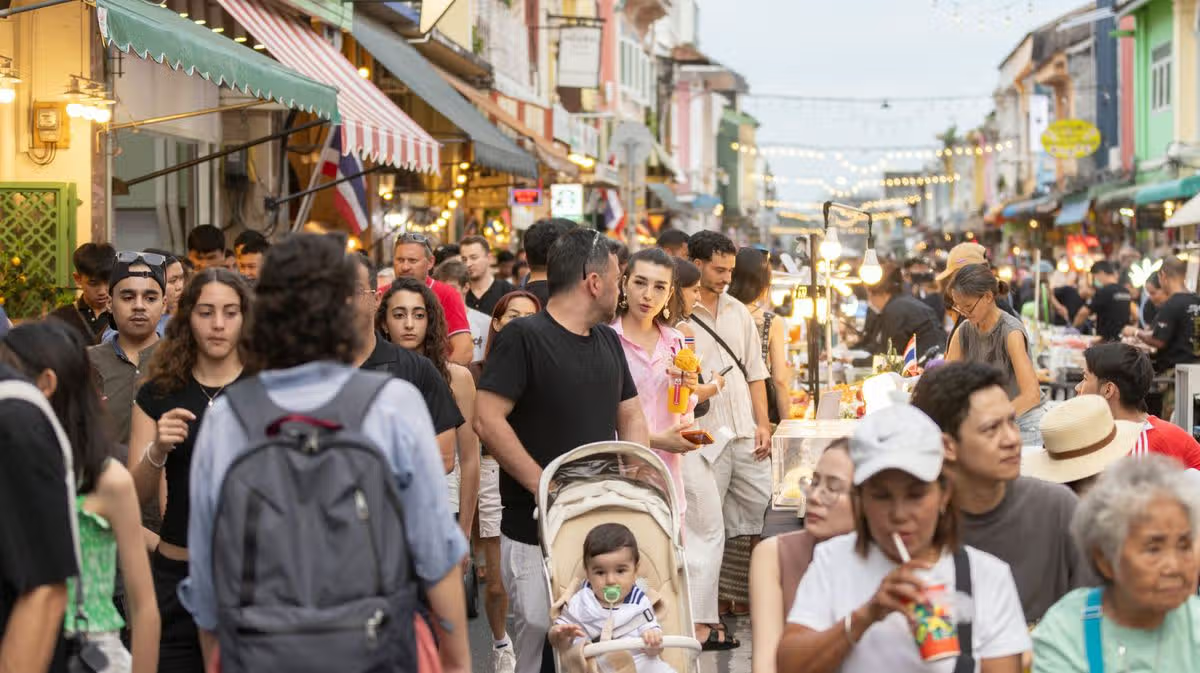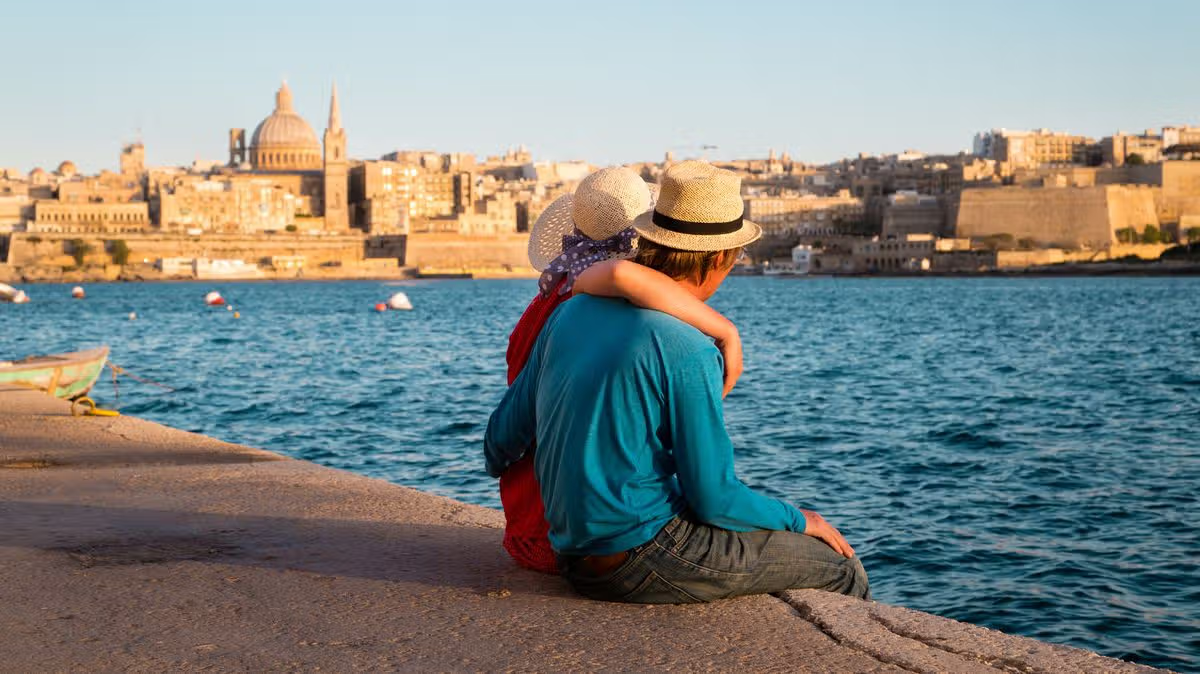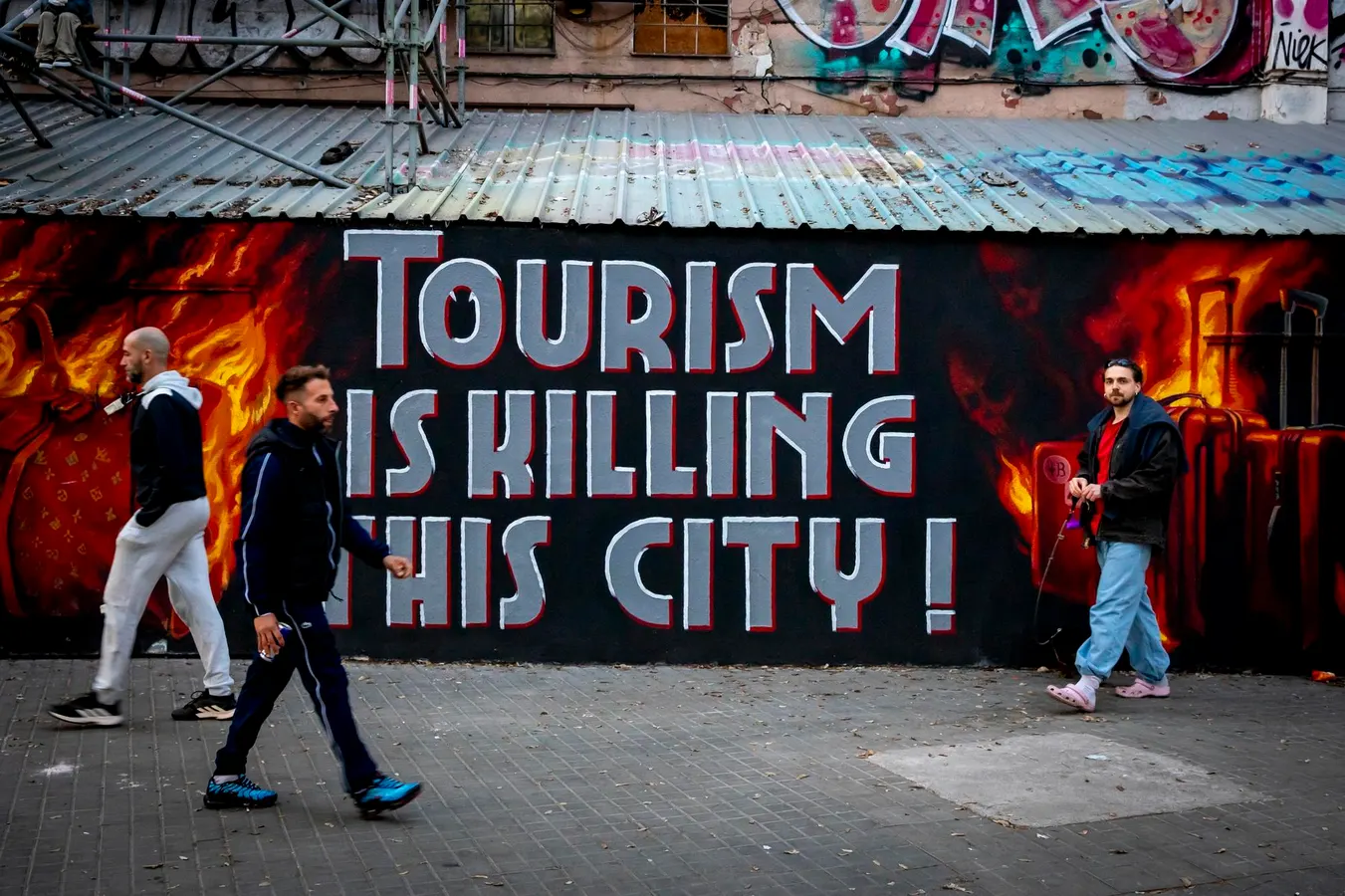
Graffiti in Barcelona against overtourism is now, ironically, a tourist photo spot.NurPhoto via Getty ImagesOvertourism in Europe has been a hot potato for decades, with locals arguing that increasing tourist numbers take much-needed housing from locals, strain infrastructure, and raise prices. In recent years, the prevalence of social media and jetsetting has fueled the trend for visiting places we see on Instagram or in our favorite series. And in summer 2026, the fight now includes big business.Overtourism In Europe Is Changing NeighborhoodsDespite searing heat, scorching wildfires and overcrowding, visitors keep on coming to Europe, with the biggest burden falling on southern Europe to accommodate them. The biggest flashpoints are in the Canary Islands, Mallorca and Barcelona in Spain, Venice, Rome and the Amalfi coast in Italy and several Greek islands such as Santorini and Mykonos. Major cultural sites and areas, such as Montmartre, are under perennial pressure across France.Montmartre, actually, is a good example of what happens when the number of tourists becomes too unwieldy to manage—shops and services here have pivoted away from supporting locals, becoming souvenir stores and tourist-only businesses. And it obviously fundamentally changes the feel of a neighborhood.Overtourism In Europe Leads To Housing IssuesToo many tourists can easily reduce locals’ quality of life, adding extreme pressure on local infrastructure—water shortages are a regular flare-up across France, for example, and energy shortages and the mountains of debris left to collect after tourists leave every day can become debilitating for a city.But housing is always the biggest issue. Residents argue that homeowners pivot towards short-term rentals that offer a better return, leading to a shortage of long-term housing. Rents also rise, and entire neighborhoods can become out of reach.Overtourism In Europe Is Greatest In Italy, France And SpainEuroNews writes that the backlash is greatest in Spain, Italy and France. All three countries were expecting a significant rise in tourists in June, with increases of 2.6% in France, 7.1% in Spain, and 12% in Italy.In 2025, locals protested across Spain against overtourism, from the Balearics to Barcelona. Key boxes were sabotaged, a common sight in cities with many short-term rentals on sites like Airbnb.Governments and municipalities have put in place a lot of measures to tackle overtourism:In Italy, Venice is keeping its summer tourist entry tax, introduced in 2024, reducing outdoor dining in Florence, and reducing its ski passes in the Dolomites.The Spanish government took action by removing 65,000 Airbnb listings and introducing a tax on foreign buyers. It intends to phase out short-term rentals in Barcelona by 2028.In Southern France, Nice and Cannes have begun limiting cruise ship passengers coming into the towns starting in summer 2026.Overtourism In Europe Has A New Face—Big BusinessAll across Europe, locals are now fighting what The Guardian calls “the real villain of overtourism”—big business—in a bid to stop the privatization of large stretches of the European coastline.In Portugal, in the Parque Natural da Arrábida, protesters recently marched against a luxury real estate firm that wants to privatize five beaches. They held signs saying ‘No to new kings’ and ‘Arrábida is not for sale’. Arrábida was recently designated by UNESCO as a biosphere reserve, and locals view the ability to swim in the sea and go to the beach as a basic human right. It is even more important in the context that a third of the population cannot currently afford a week-long holiday.In Albania, tens of thousands of locals have been protesting against Ivanka Trump and Jared Kushner’s plans for a luxury hotel on Sazan island. What began, The Guardian says, as an environmental protest over disruption to delicate ecosystems has turned into a national debate over corruption and luxury tourism.Critics argue that both examples show just how far overtourism is beginning to impede locals’ access to local infrastructure. Deregulated housing markets are attracting tourists and investors with deep pockets, but many argue that this is at the expense of efforts to build better roads, schools and hospitals.Overtourism in Europe is no longer just an inconvenience for residents in Europe’s most popular places. It’s a political problem, a housing issue, and a test of how much visitor pressure cities can absorb.MORE FROM FORBESForbesTraveling To Europe? Five Things To Expect This SummerBy Alex LedsomForbesAs Europe Swelters, Travelers Are Reminded Where To Wear ClothesBy Alex Ledsom
More Protests Show The High Cost Of Overtourism In Europe
Summer after summer, locals have been increasingly protesting against overtourism in European hotspots but this summer they have a new enemy—big business.
712 words~3 min read