I wear at least three rings every day—wedding and engagement bands, and an Oura ring as a fitness/recovery tracker. But in the summer, I often find myself taking them off before I go for a run. If I don’t, sometimes they’ll be stuck. This is a common problem, especially in hot weather. Here's what's going on, and what you can do about it.
Why your hands swell after you exerciseThere are several reasons why your hands might swell during or after a run (or walk). Scientists haven’t figured out this phenomenon with as much precision as we might hope, but there seem to be a few factors that affect swelling in otherwise healthy people who exercise. They include the following:Your fingers change size throughout the dayIt’s normal for your fingers to change size throughout the day. Scientists have noted that our hands swell slightly overnight, and that this swelling resolves over the course of the day. By afternoon, our hands are back to what you might call their normal size. Because of this, you may be more likely to notice swollen fingers after morning runs than afternoon or evening runs.
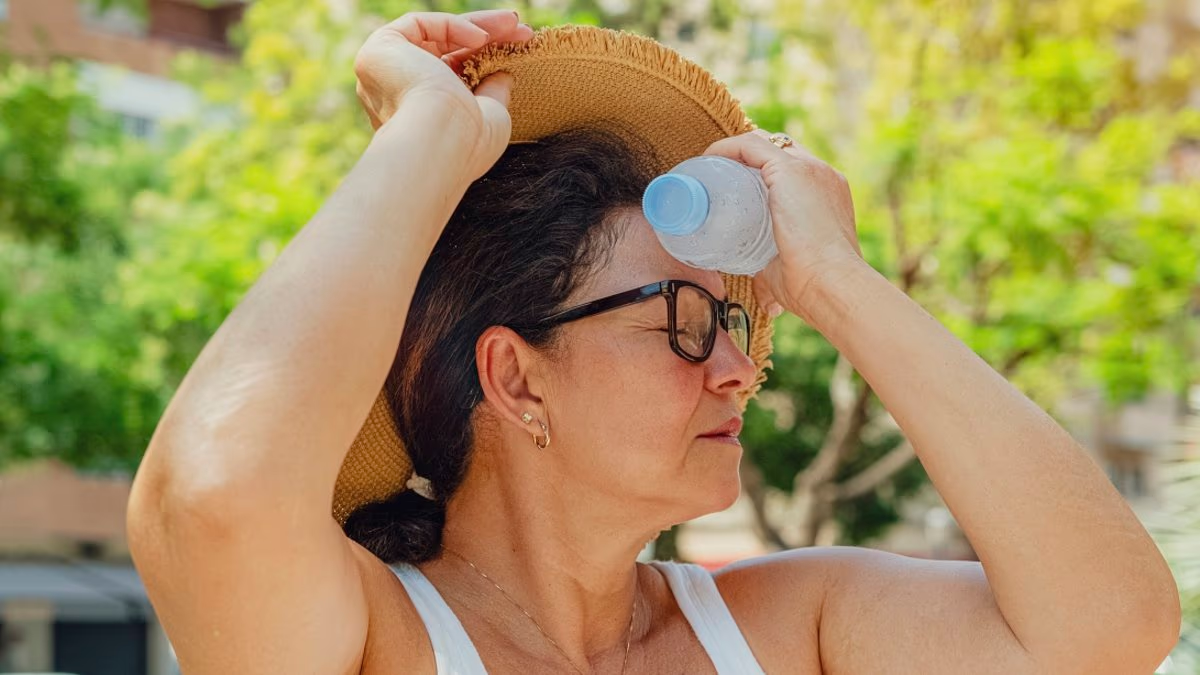
Hot weather can result in swellingPart of the way our body responds to heat is by dilating the blood vessels close to the surface of our skin. This helps cool us down, but it can also result in swelling since there is more fluid closer to the skin. Fluid can leave the blood vessels and pool in body tissues, which is fine—normal motion of our body tends to massage the lymph away. But when we’re running or walking, there may be more fluid entering our hands than leaving, with the result that we end up with sausage fingers. Exercise increases blood flowJust as our heat response increases blood flow, so does exercise. Even in weather that’s not too hot, the increase in blood flow can result in more fluid entering the hands and fingers. The swinging of our arms that happens when running or walking may also be a factor; this and gravity both contribute to moving fluid toward our hands while also impeding its path back up. Electrolytes may be a factorElectrolytes like sodium and potassium can affect the way our bodies hold fluid. If you drink plenty of water but don’t get enough sodium—a condition called hyponatremia that can become life-threatening if severe—you may experience swelling of the hands. This has led some runners and doctors to conclude that electrolytes may help with ordinary finger swelling.