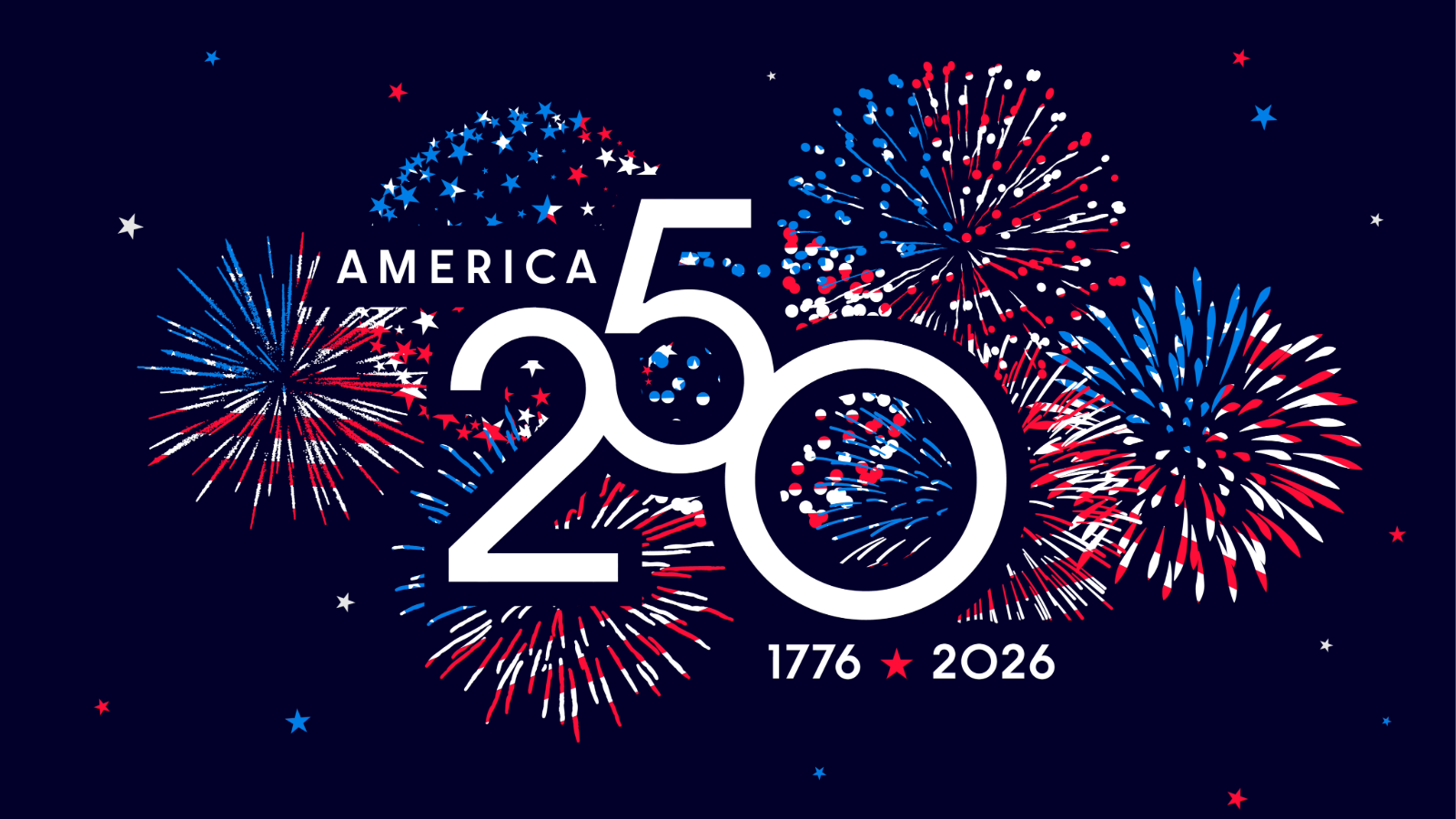
This past weekend marked America's 250th birthday, and it's worth remembering that without taxes, the country might not exist in quite the same way. As Forbes' Kelly Phillips Erb writes, the American Revolution was driven by a struggle over political power, economic control and representation—but taxes were the spark. Colonists had no say over the Stamp Act, the Townshend Acts or the Tea Act, making "taxation without representation" more than a slogan. It ultimately led to the First Continental Congress in 1774 and, two years later, the Declaration of Independence. Two hundred fifty years later, taxes remain part of nearly every aspect of American life. The difference is that today's tax policies are shaped by elected local, state and federal officials who can, in turn, be held accountable by voters. (For the most part, that is.) The debates may have changed, but the connection between taxes, representation and public policy remains as relevant as ever. We’re taking a summer break, and Forbes CFO will not publish next week, July 14. We’ll be back in your inbox on Tuesday, July 21. Until next time. This is the published version of Forbes' CFO newsletter, which offers the latest news for chief finance officers and other leaders focused on the budget. Sign up here to get it delivered to your inbox every Tuesday.Economic IndicatorsgettyThe job market continues to grow slowly, according to reports last week. June employment data from the Bureau of Labor Statistics showed little change from May. The unemployment rate held fairly steady at 4.2%, and the number of unemployed people remained roughly the same at 71 million. A total of about 57,000 nonfarm jobs were added last month, which the report notes is roughly the same as the average monthly increase over the last 12 months, with business and professional services accounting for the bulk of those new jobs, adding 36,000 positions. Private sector employment also continued slow growth, according to new data from payroll processing firm ADP. Total payrolls were up 98,000 in June, with nearly half of that growth coming from the education and health services sectors. More growth came at the smallest businesses—those with 50 or fewer employees added 53,000 jobs last month. Analysts say many employees and job seekers feel somewhat stuck in the current market, with many people wanting to stay put because new opportunities are limited, writes Forbes’ Courtney Connley-Hampton. But there appears to be a prospect for more employment growth in the near future. BLS data published last week shows job openings are at a near-two-year-high, with 7.59 million available in May.TariffsPresident Donald Trump opted not to renew the U.S.-Mexico-Canada trade agreement for another 16 years, meaning more trade negotiations and uncertainty with the U.S.’s closest partners are guaranteed in the near future, writes Forbes senior contributor Erik Sherman. The initial agreement, negotiated for a 16-year term in 2020, is still in place to some extent, but now the U.S., Canada and Mexico will meet annually to renegotiate individual aspects of trade between the countries until 2036.Given Trump’s attitude toward trade and tariffs, the failure to renew is not surprising—even though signing the deal in 2020 was one of the significant policy achievements of his first term. U.S. Trade Representative Jamieson Greer said in an interview with Bloomberg that there are “substantial issues” with the agreement and the U.S.’s trade deficits with Mexico and Canada. But this decision creates more uncertainty for businesses and long-term trade deals, making it difficult to negotiate multi-year agreements across different commodities and products when terms can be changed quickly.Meanwhile, thousands of businesses of all sizes are waiting for refunds of other tariffs enacted by Trump that were subsequently found to be illegal. Forbes’ John Schroyer talked to experts about how to navigate the process to get your money back if you’re still waiting—and what to do to prepare for the next two and a half years of Trump’s pro-tariff policy.Artificial IntelligenceAI is a powerful force in global markets, every bit as formidable as war, commodity shortages or economic policy moves. And while nervousness about rising infrastructure costs and sharp increases in borrowing to pay for them has sparked multiple tech stock selloffs in recent years, Forbes' Brandon Kochkodin writes that this hasn't had much impact on the corporate credit market. Todd Czachor, global head of fixed income research at Columbia Threadneedle, told Kochkodin that the appetite for corporate bonds remains strong in the current environment, with spreads driven more by supply chain disruptions stemming from the war in Iran. However, bank stocks are high. Kochkokin writes that the Invesco KBW Bank ETF is up 13.7% this year, beating the S&P 500's 10.2% gain and the Magnificent Seven's relatively flat performance.We’re still in the early days of the AI revolution, but soon its impact will be felt much more broadly on Wall Street and in companies, writes Forbes senior contributor Bill Conerly. He runs through seven signals that can show AI's true economic impact, including employment and wages, aggregate productivity, and impacts on entry-level hiring and inflation. Deep DiveHow Bending Spoons Built A $18.4 Billion Empire By Buying Internet Has-Beens Like AOLBending Spoons' Luca Ferrari, Matteo Daniel, Luca Querella and Francesco Patarnello.Sebastian Nevols for ForbesBending Spoons is not known for any of its own business, but for rehabilitating the online giants of yesteryear. The Italian company has bought several of the well-diminished online empires of the ‘90s and ‘00s, including AOL, Evernote, Vimeo and Eventbrite, and had its IPO last week at a valuation of $18.4 billion. Forbes' Iain Martin talked to CEO Luca Ferrari about the company's strategy and playbook. The company buys companies with a solid revenue base, then restructures and cleans up internal infrastructure: consolidates servers, cleans up codebases and cuts employees. And then, often, Martin writes, they hike subscriber fees. These loyal subscribers seem willing to pay: Bending Spoons noted in its IPO prospectus that 48% of its subscription revenue came from customers who had been subscribers for five years or more. In its first days on Wall Street, Bending Spoons’ value has gone up and down a bit, and currently sits above its IPO price. Ferrari told Martin that as traditional buyout firms and SaaS company stocks are seeing a downturn, Bending Spoons has an attractive game plan. “We are thinking 10 or 20 years out we don’t really care too much about what the environment is,” Ferrari said. “If you choose Bending Spoons stock, you do because you like the compounding engine and arguably that works in an environment where most of those targets are cheaper.”Comings + GoingsEnterprise IT services provider Kyndryl appointed Ellen Johnson as its next chief financial officer, effective August 6. Johnson will join the company from Interpublic Group where she worked as executive vice president and chief financial officer.Semiconductor equipment manufacturer ASM intends to nominate Chris Figee as its next chief financial officer. Figee will join the company from KPN where he works as chief financial officer, and he will succeed Paul Verhagen, who plans to retire.Fintech firm Nuvei selected David McLaughlin as its new chief financial officer. McLaughlin joins the company from Blackhawk Network where he worked in the same role, and his appointment comes along with two other executive hires for the firm.Strategies + AdviceAI can be a money pit like no other, but there are ways to realize its value. Here are six ways to bridge the gap between losing funds and AI ROI.Keeping your best employees is always a challenge, and losing expertise can be expensive. Here are five signs an employee is looking for other options and how to turn them into a retention strategy.QuizIn its IPO paperwork filed last week, which restaurant chain revealed it had a $41 million private jet, which was transferred to an entity controlled by its founder?A. In-N-Out BurgerB. Jersey Mike’sC. Chick-fil-AD. Panda ExpressSee if you got the right answer here.
The Big Business Of Buying Comebacks
Also in the Forbes CFO newsletter: Job market continues slow growth, Trump says no to renewing USMCA, AI hasn’t impacted credit market.
1,313 words~6 min read