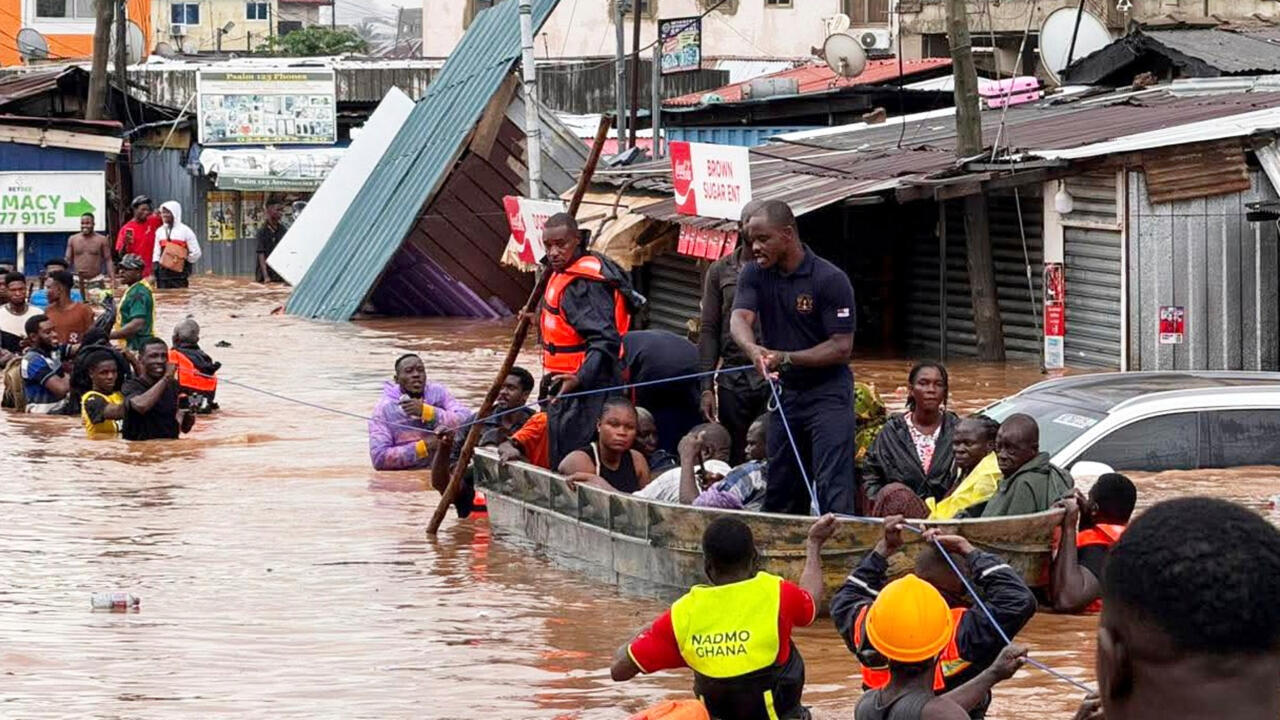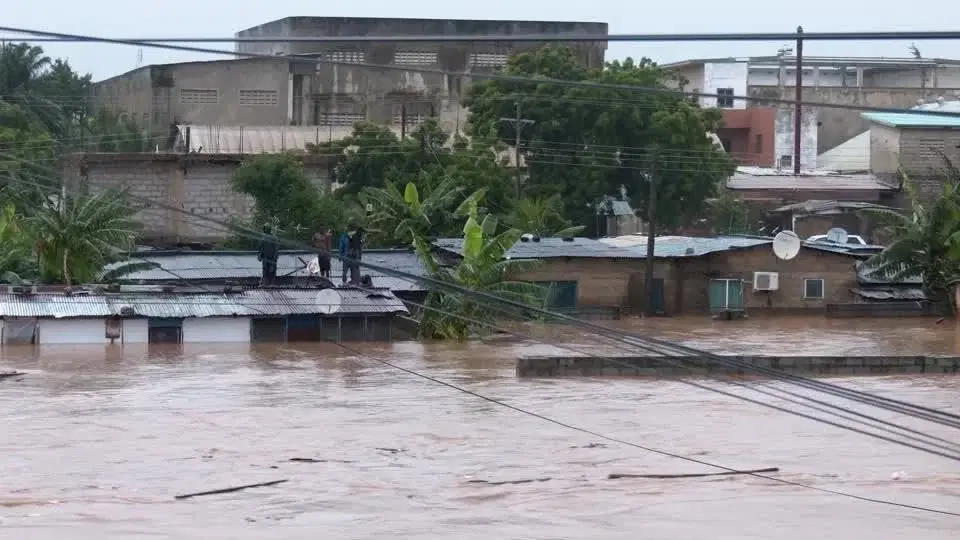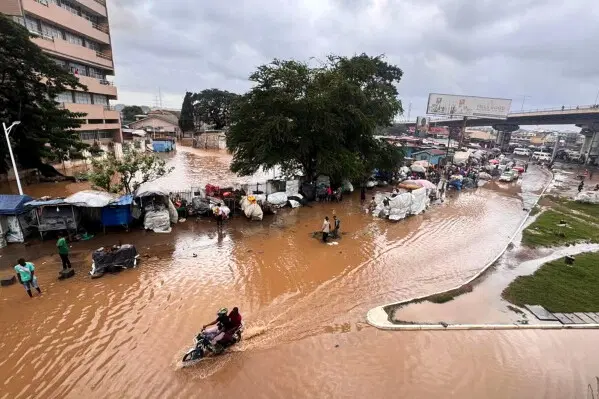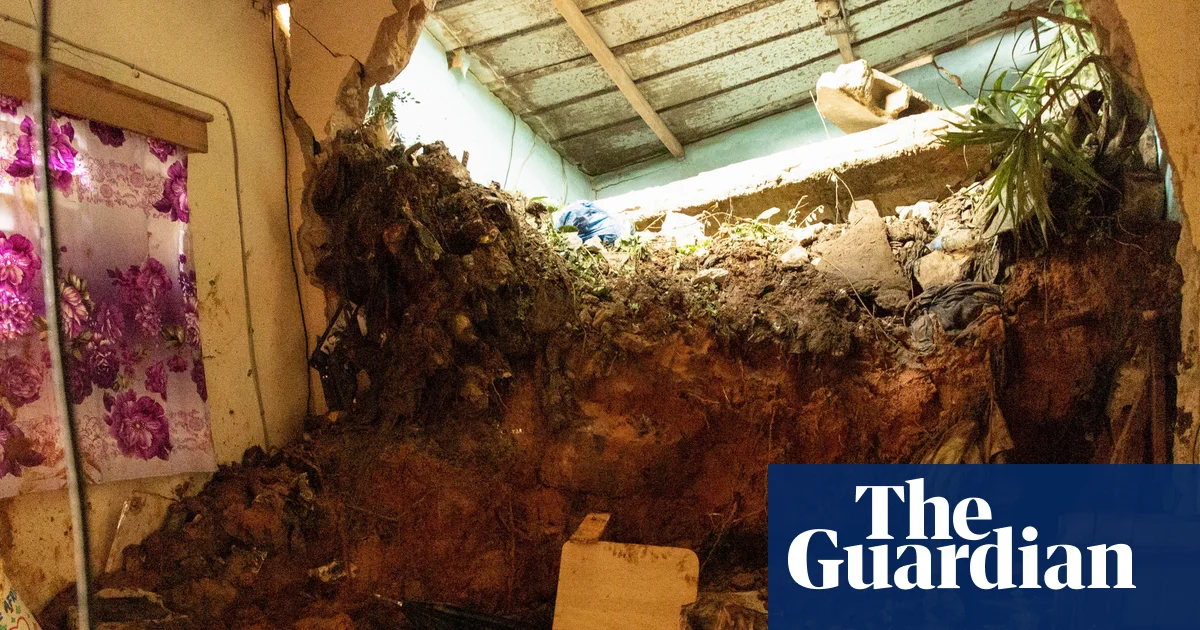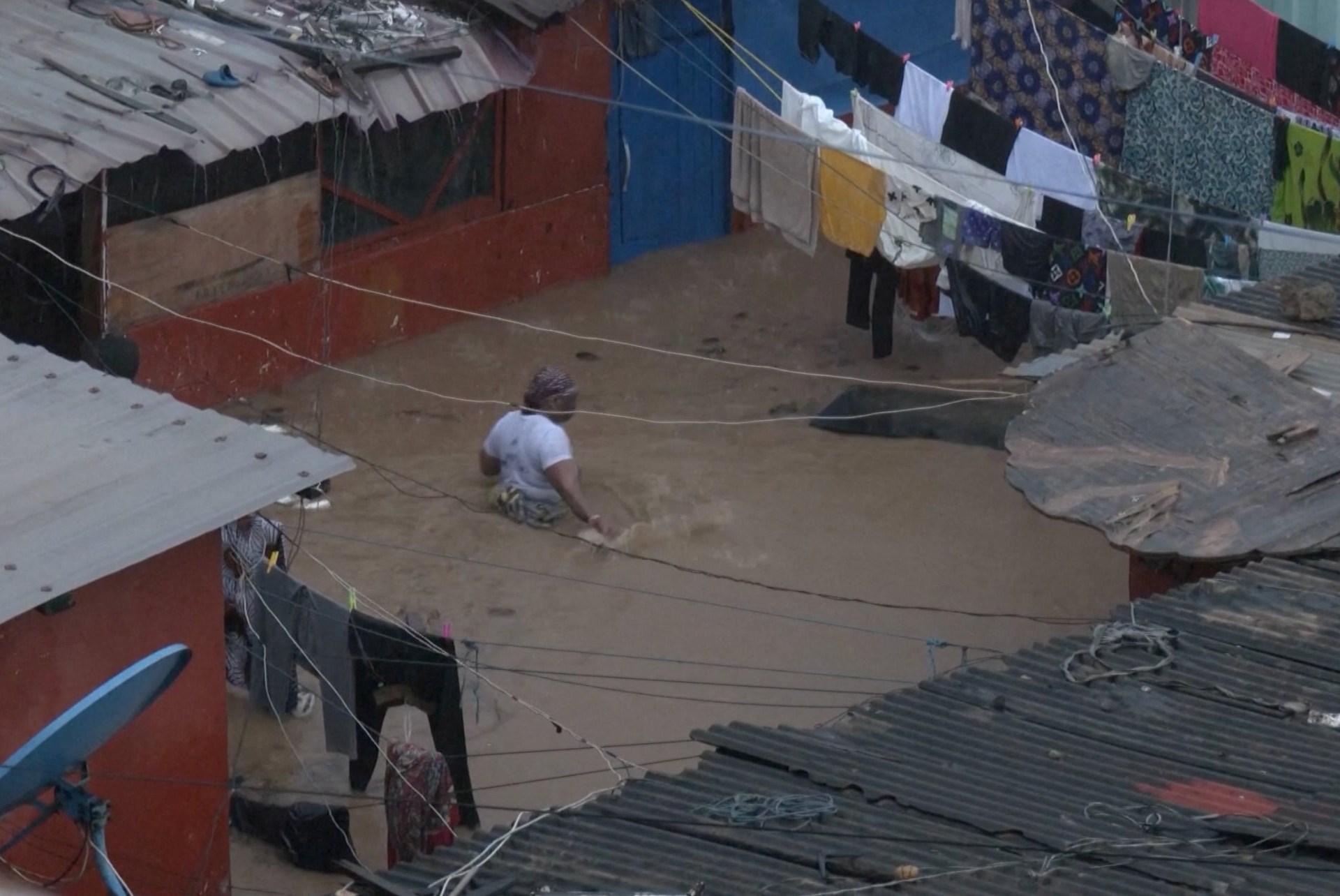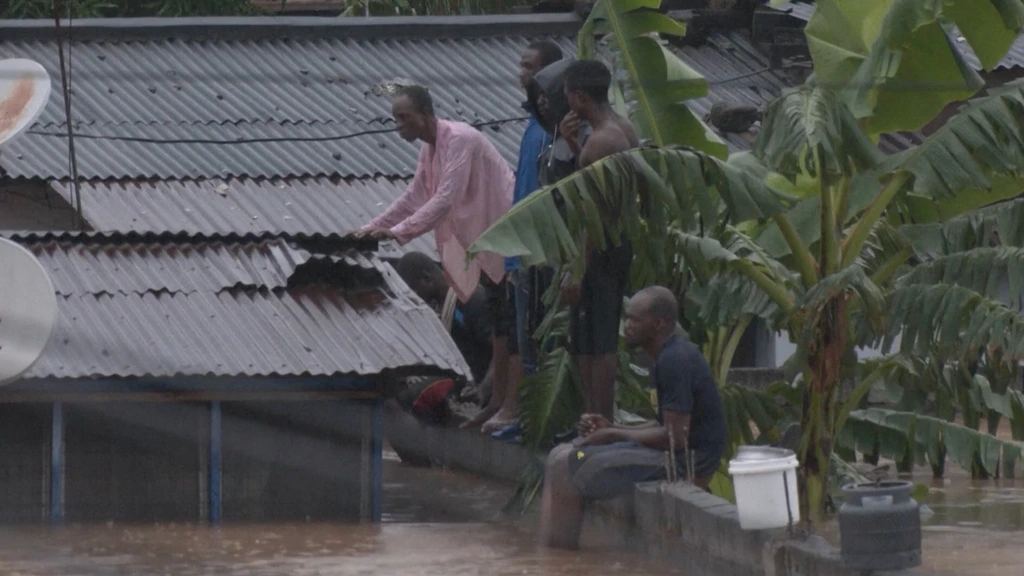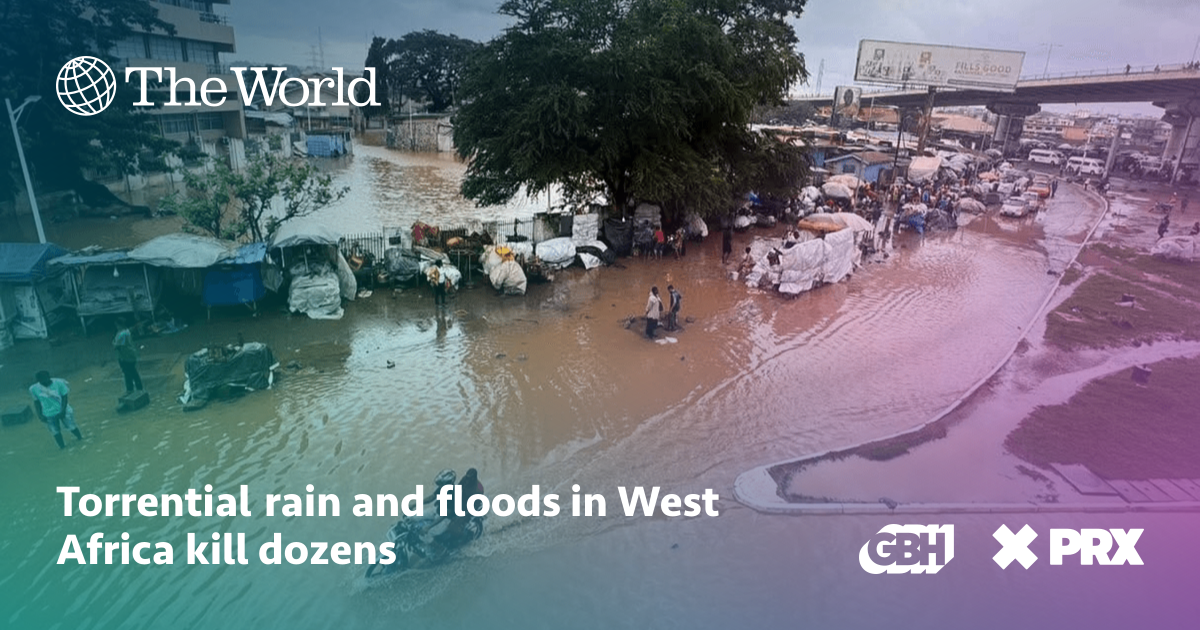
Public radio’s longest-running daily global news program.AboutContactDonateMeet the TeamPrivacyTerms of use©2026 The World from PRXPRX is a 501(c)(3) organization recognized by the IRS: #263347402.Torrential rain and floods in West Africa kill dozensDozens of people have died, and hundreds have been displaced in flooding across West Africa. The World’s Marco Werman speaks with Vincent Ojeh, professor at Taraba State University in Nigeria, about how communities are adapting to what has become a cyclical event.8:02In this photo released by Ghana’s National Disaster Management Organisation, flooded neighbourhoods are seen in Accra, Ghana, Monday, June 29, 2026. For weeks now, torrential rain has been pummeling West Africa from Côte d’Ivoire to Nigeria, with flooding killing dozens of people. Hundreds more have been forced from their homes. The region’s rainy season is expected to last for a few more weeks, so more bad weather and potentially more tragic outcomes are to come. The flooding, though, was not unexpected. Heavy rains have become more intense in recent years.“There are people [whose] farms have been flooded. Those living in the city or nearby cities also have a fair share of flooding experience,” Vincent Ojeh, a professor at Taraba State University in northeastern Nigeria, told The World. “In fact, many people also vacated their residences. They see the atmosphere change as if it’s going to rain. They become so afraid of this issue.”A house damaged by landslides in an informal settlement of Attecoube, in Abidjan, Ivory Coast, Tuesday, June 30, 2026. Diomande Ble Blonde/APOjeh chatted with The World’s Host Marco Werman about how residents of the affected countries, as well as policymakers, are adapting to this new reality. “And I must say that flooding is just not a one-time event. It’s been like this. The greatest we had was in 2012. There was a return period in 2022, and this year it is already happening.”Wow. That is a [major issue regarding] the impact of floods on agriculture. In the midst of the flood, we have a dry spell. That has been an experience for the past 2 or 3 years over here. So, it means that farmers lose their crops. In the initial stages, they are planted early without early warning; then, in the middle of the road, there is a dry spell- a period where they are still expecting rain, but the rain goes off for about a week or more. So most farmers lose their crop completely. Some others harvest little to nothing, compared to what was planted and the supposed yield for the year. So it affects livelihoods; it affects the price in the marketplace and, of course, affects rural people, Indigenous people.In this AP file photo, people travel on the road with flooded farmlands after heavy rainfall in Hadeja, Nigeria, Sept 19, 2022. West and Central African countries are battling deadly floods that have upended lives and livelihoods, raising fears of further disruption of food supplies in many areas battling armed conflict. “Above-average rainfall and devastating flooding” have affected 5 million people this year in 19 countries across West and Central Africa, according to a new U.N. World Food Program situation report. AP/FileThis AP file photo shows a view of stranded people due to floods following several days of downpours in Kogi Nigeria, Thursday, Oct. 6, 2022. Authorities in Nigeria say they have activated a national response plan for another round of deadly floods blamed mainly on climate change and infrastructure problems. The West African nation’s National Emergency Management Agency said Thursday, July 6, 2023 it has begun to work based on dire forecasts by seeking air support for search and rescue missions while stockpiling relief materials. Fatai Campbell/AP/FileIn this photo released by Ghana’s National Disaster Management Organisation, flooded neighbourhoods are seen in Accra, Ghana, Monday, June 29, 2026.Ghana’s National Disaster Management Organisation via APMost people in Nigeria are aware about climate change. At my own level, I do the weather forecast for the state on a radio station, and it’s related to the communities to know what to expect. Sometimes I can give a prediction up to, uh, 3, 4, or 5 days ahead, a week in advance, to know what is coming. But at my own level, this is just an independent contribution I’m making, and of course they are appreciative of it because it’s been of help for the 2-3 years I’ve started doing that.Yes, we are still in the middle of the rainy season. It’s not over yet. It’s not yet over for those of us in West Africa. So many people are trying to clean up their environment, making sure that the drains are emptied and all that. So, that’s how they respond at the individual level. At the government level, I think the state government has created a ministry properly dedicated to environmental sanitation. They go around sweeping the streets and clearing every drainage that has been clogged over the years. And this will also help to take water away from the city. But those in the farming zones, where people go to farm, the only thing that can save them from flooding, of course, is maybe building embankments around the farms and all that, which is not possible because of the farmers’ inability. They need money to do a lot of things, so they may not have money to fence off their farm against floodwaters.Parts of this interview have been lightly edited for length and clarity.
Torrential rain and floods in West Africa kill dozens - The World from PRX
Dozens of people have died, and hundreds have been displaced in flooding across West Africa. The World’s Marco Werman speaks with Vincent Ojeh, professor at Taraba State University in Nigeria, about how communities are adapting to what has become a cyclical event.
899 words~4 min read