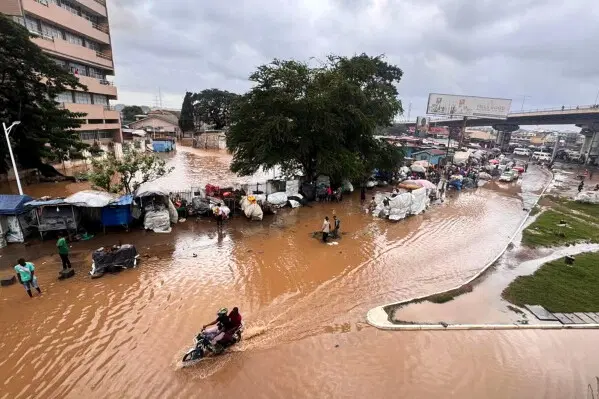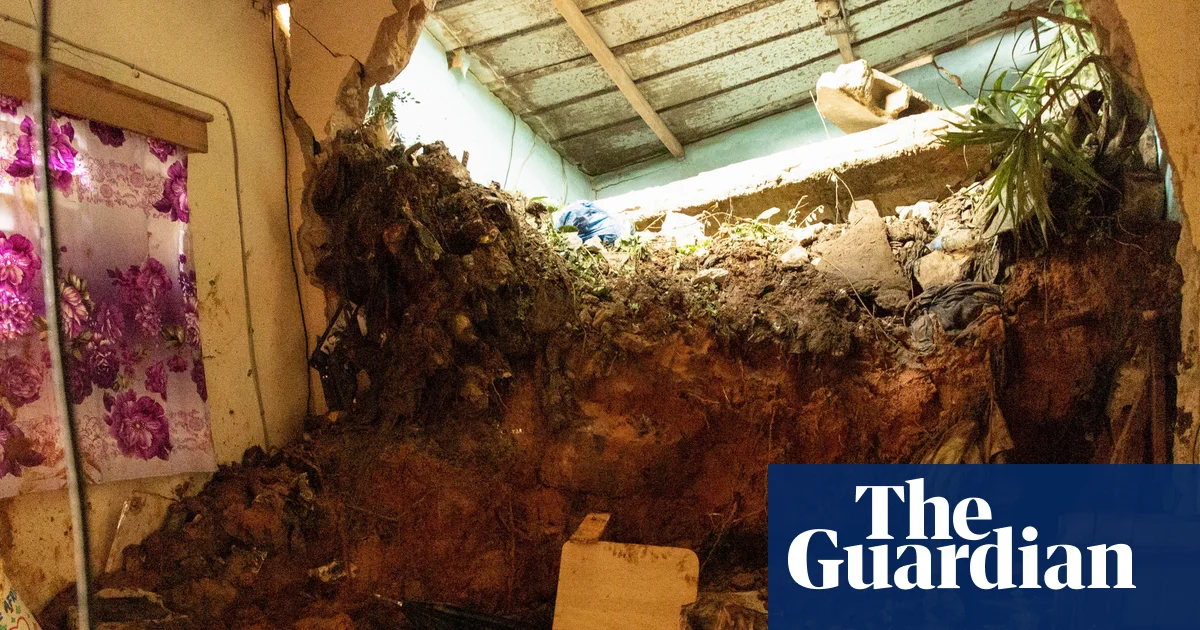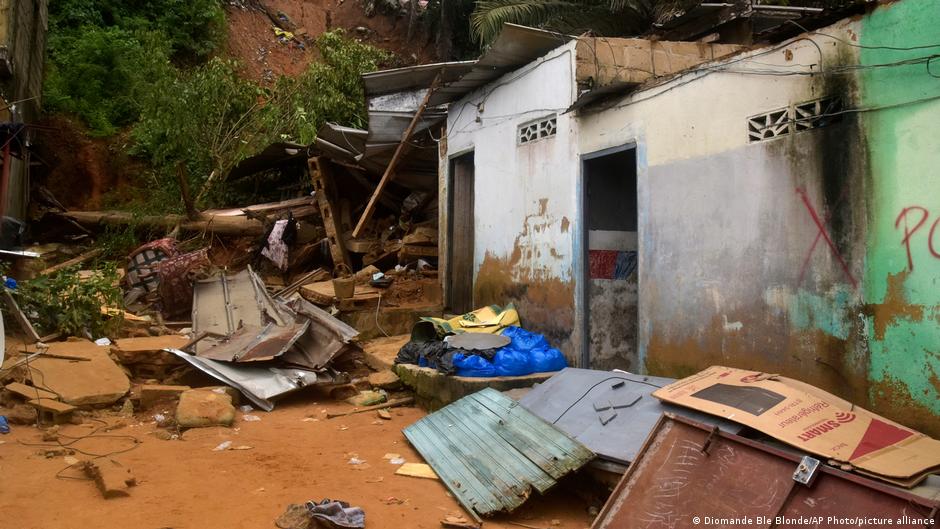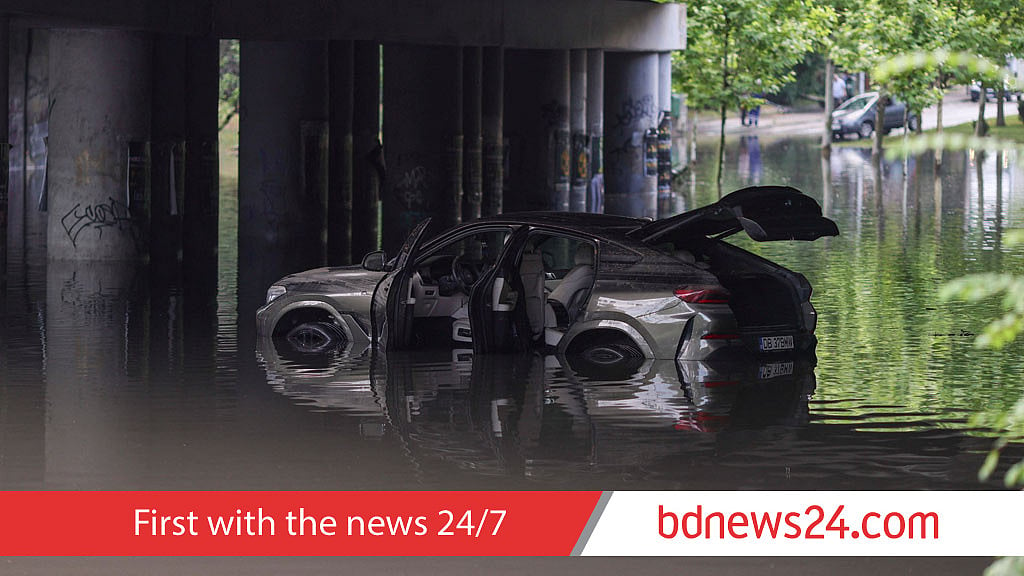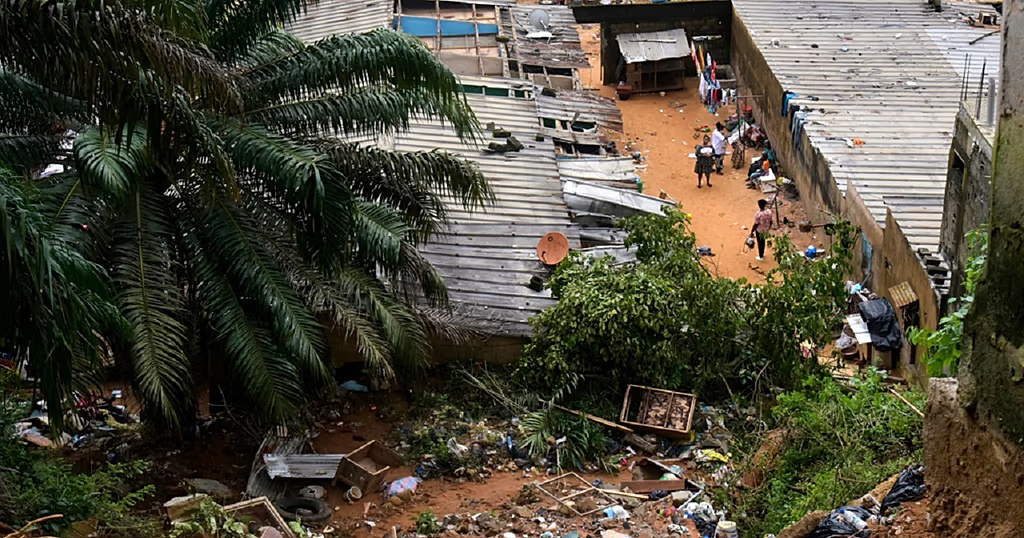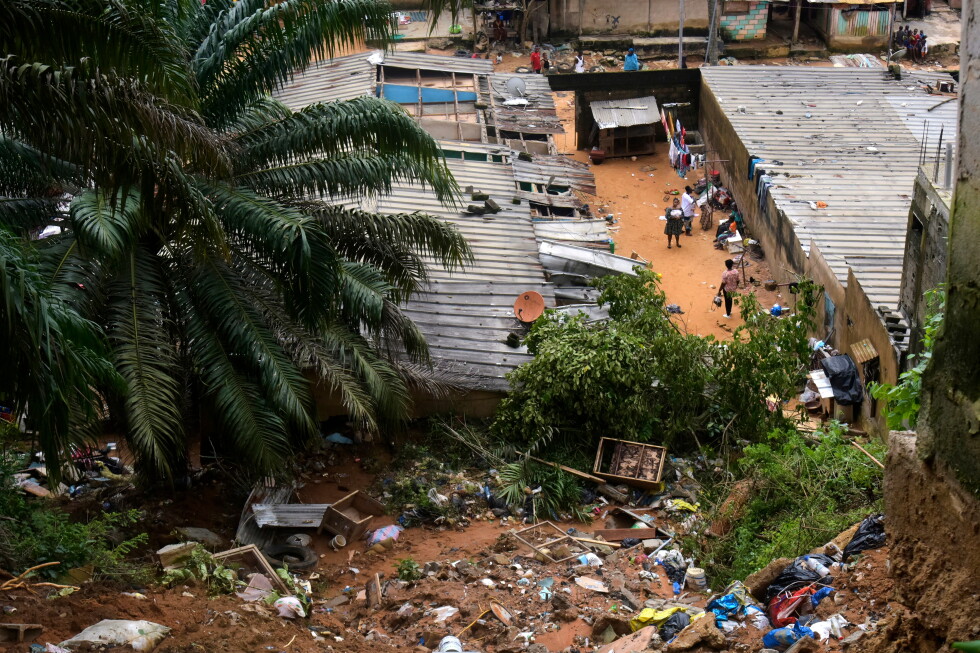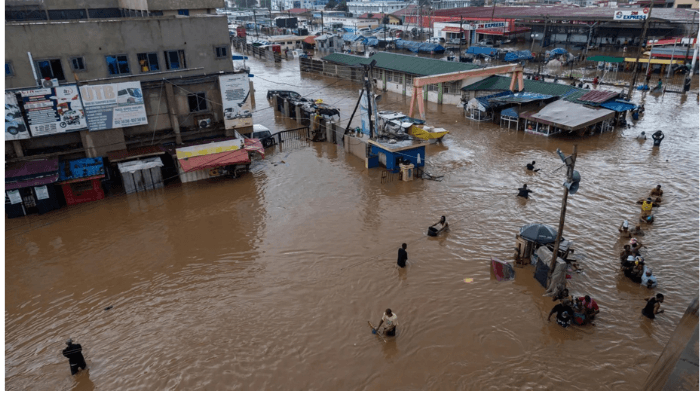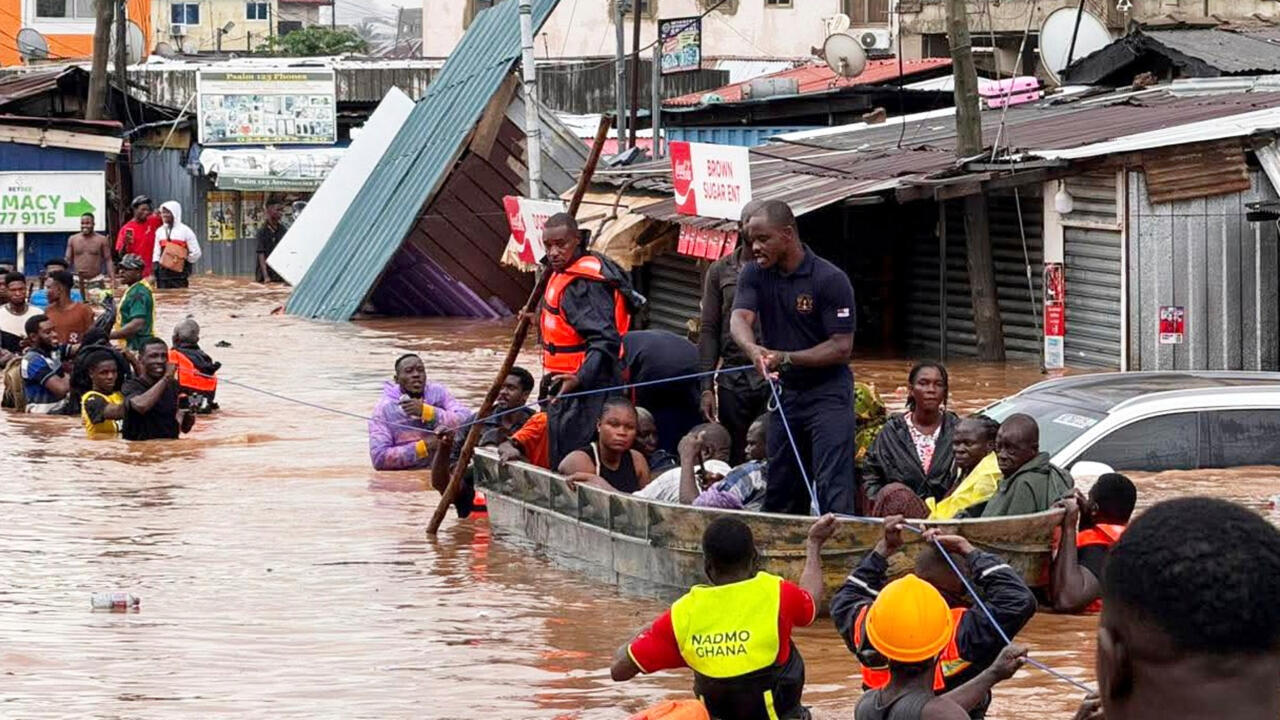
Severe floods have hit Côte d’Ivoire, Ghana, Benin, Togo and Nigeria this week. At least 13 people have been killed in recent days in Ghana and five in Togo, while 59 have died in Côte d’Ivoire since the rainy season began in mid-May.
Issued on: 03/07/2026 - 16:44
3 min Reading time
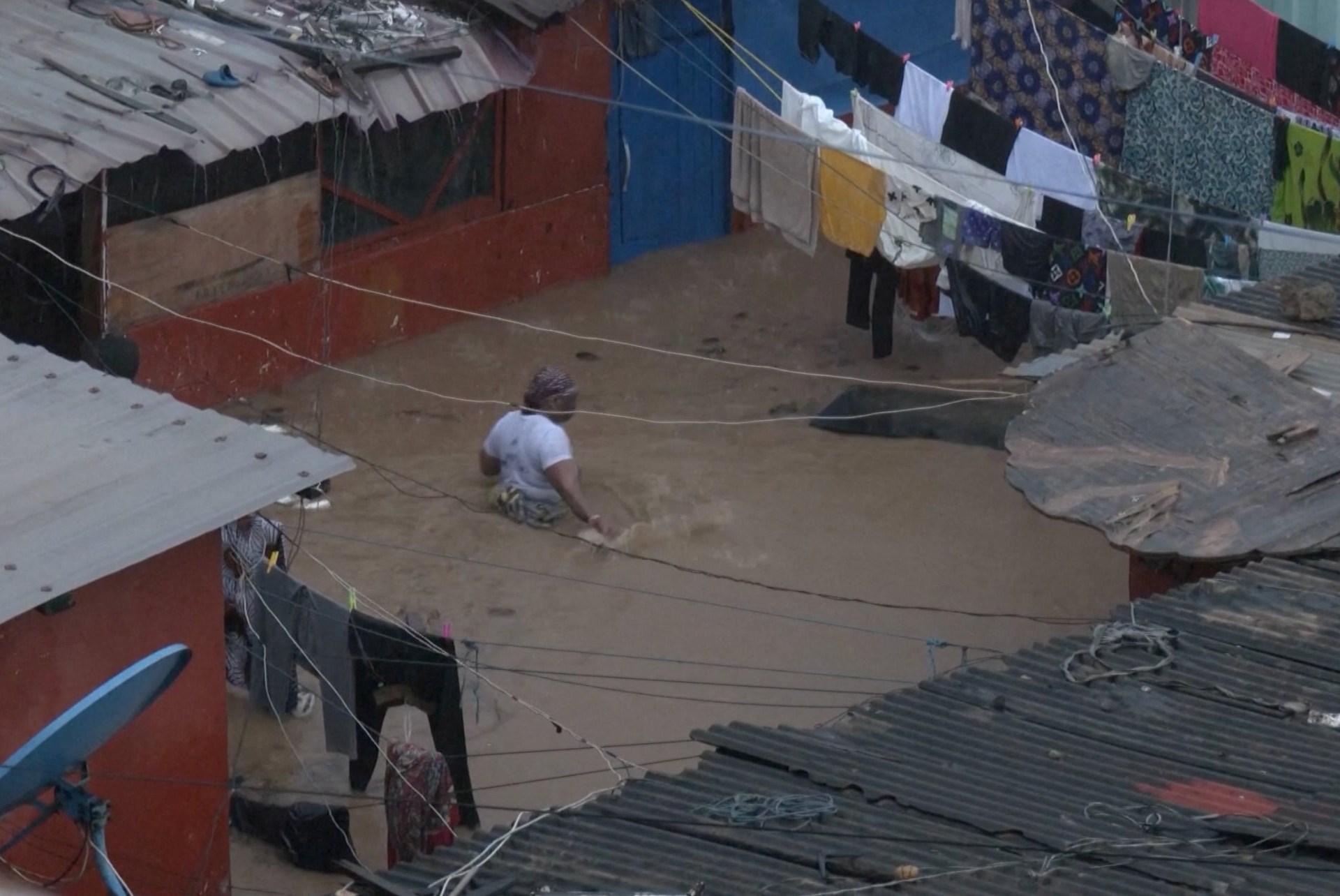
Flooding is a recurring problem in the region, where the rainy season runs from May to July. But Ghana registered more than 140mm of rainfall within a 24-hour period, which represents one of the highest volumes recorded by the country in a single day since 1995. “These floods will continue to become increasingly frequent and severe as global warming will intensify in the coming years,” said Benjamin Sultan, a researcher at the French National Research Institute for Sustainable Development. "It is normal for it to rain at this time of year, but not with such intensity as to cause deadly flooding." Entire buildings and roads were submerged in Ghana's capital Accra on Monday, cutting off access to several areas of the city. Video footage showed residents swimming in neck-deep water to rescue trapped neighbours, while vehicles were abandoned on flooded roads. Government responses The country's President John Mahama ordered the demolition of all structures built in waterways after the devastation seen in Accra, which is home to more than 5 million people. He also ordered the immediate release of $29 million for flood relief efforts. In Côte d’Ivoire, communications minister Amadou Coulibaly said the death toll could rise as rescue teams continue looking for victims. “The highest death toll was recorded in the municipality of Attécoubé, with around 20 deaths, where people have, sadly, returned to sites from which they had previously been displaced,” he said. “This is the time to issue another appeal to the general public, asking them to leave these sites that have been identified as being at risk." The Ivorian government has announced two sites for the construction of 12,000 affordable homes, which should eventually enable around 60,000 people to be rehoused. World Bank drops climate funding target, raising fears for Africa Human toll According to Sultan, Africa is particularly affected by such extreme weather conditions due to "the human factor". "Poor housing conditions, large populations residing in precarious construction [in] flood-prone areas, poor drainage systems, blocked waterways.... All these add further difficulties in managing the risks posed by global warming," he explained.