For eight parts the agent has ended every turn the same way: it prints a sentence and we read it. That's fine for a demo and a dead end for a product. The moment you want to build on the agent — render it in a UI, score it in a test, return it from an API — prose fights you. You're reduced to scraping text with regexes and hoping the wording doesn't change.
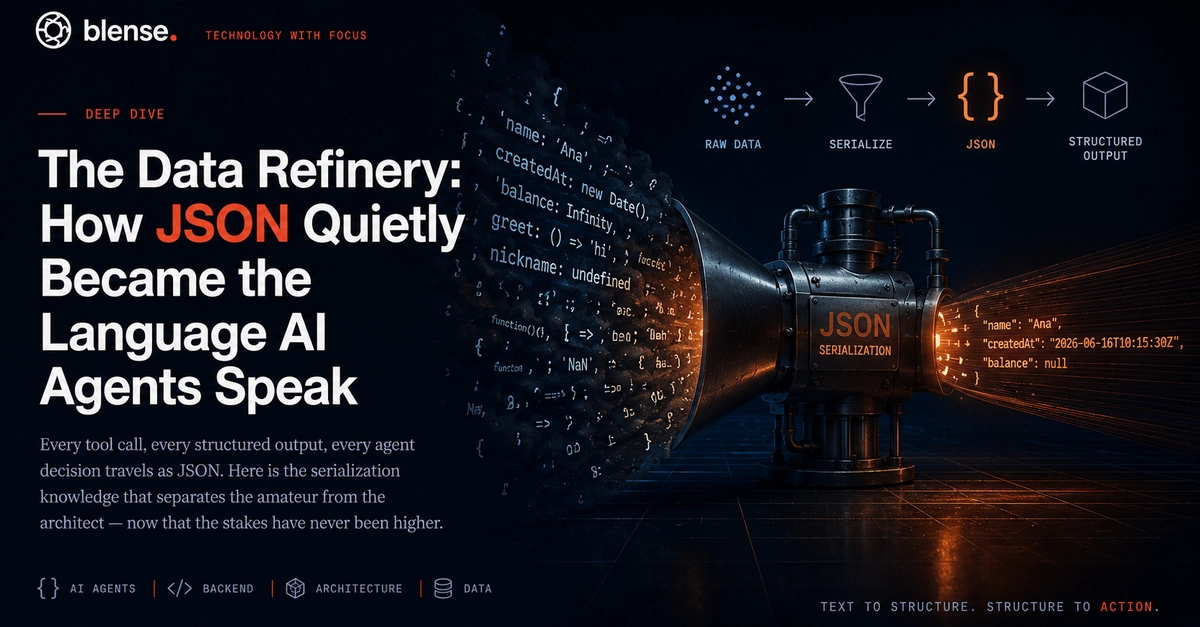
This post fixes that with one capability: the final answer becomes a validated JSON object with a fixed shape. Same agent, same tools, same memory — but now it returns {"status": "...", "answer": "...", "items": [...], ...} instead of a paragraph. That contract is the hinge the rest of this series turns on: the tracing chapter logs it, the evaluation chapter asserts on its fields, the deployment chapter returns it as the HTTP response body.
There's an honest catch, and it's the real lesson of this post. The tidy answer would be "use response_format with a JSON schema and let the API enforce it." On the hosted API Catalog with an open model like llama-3.3-70b, that's not dependable — strict schema mode is a server-side feature that open-model endpoints implement inconsistently, and it interacts badly with tool calling. So we don't lean on it. We ask for JSON in the prompt and then do the grown-up thing: parse it, validate it ourselves, and repair it once if it's wrong. No framework.