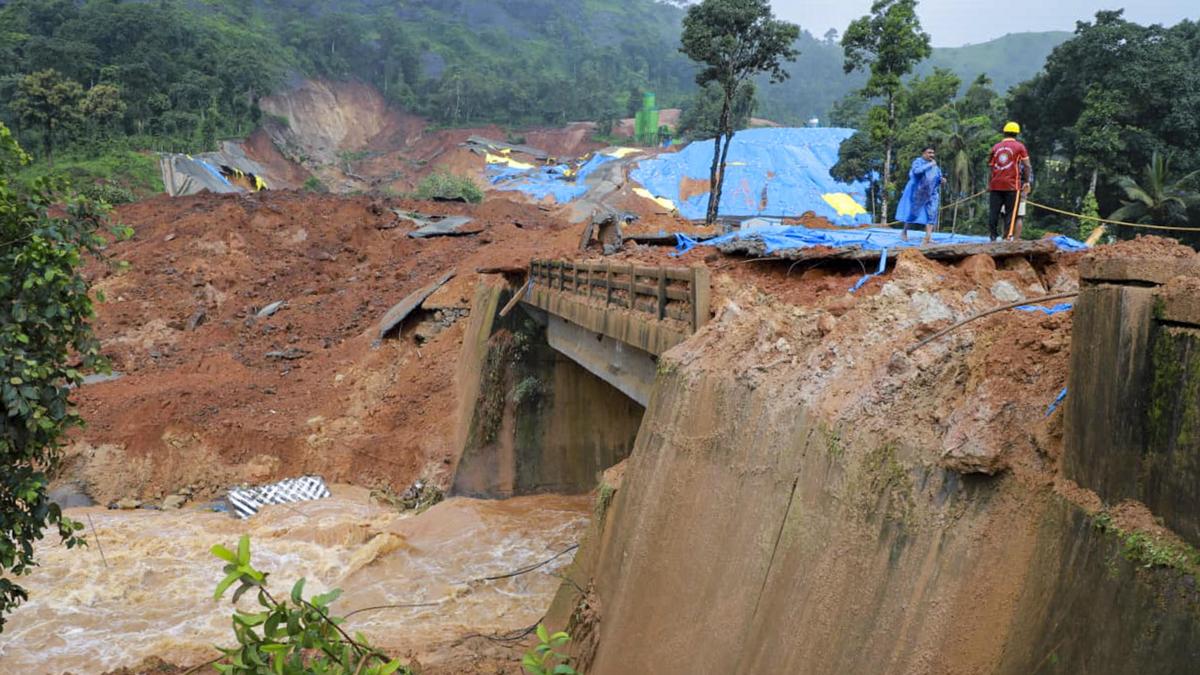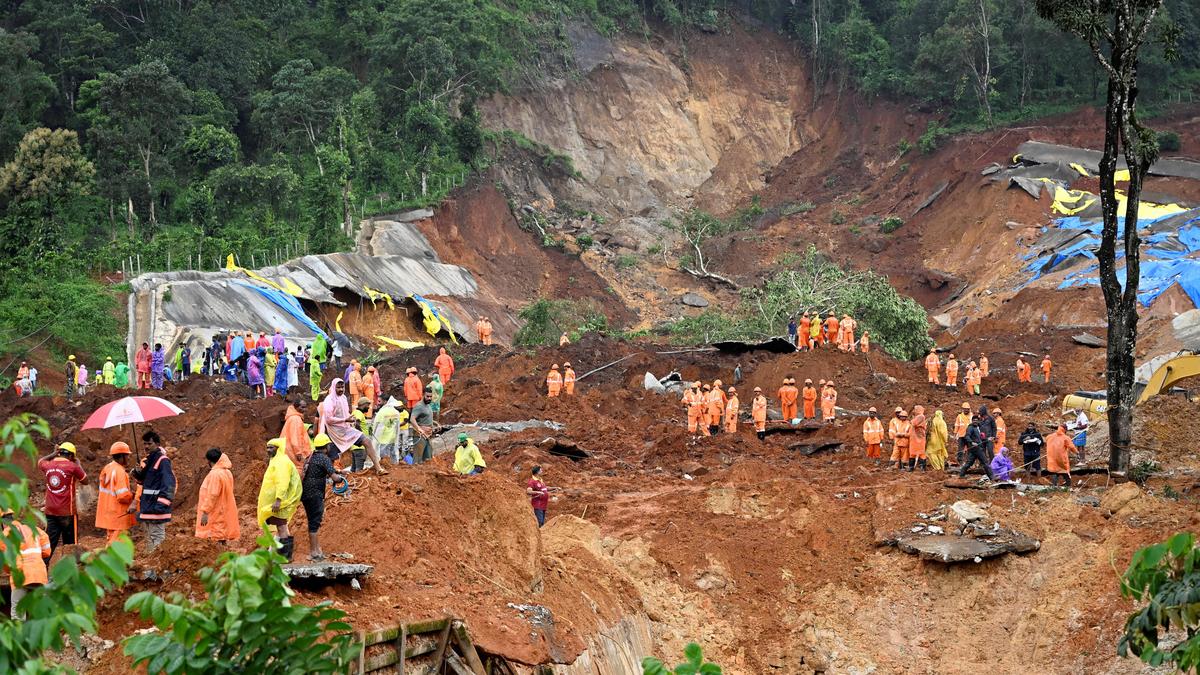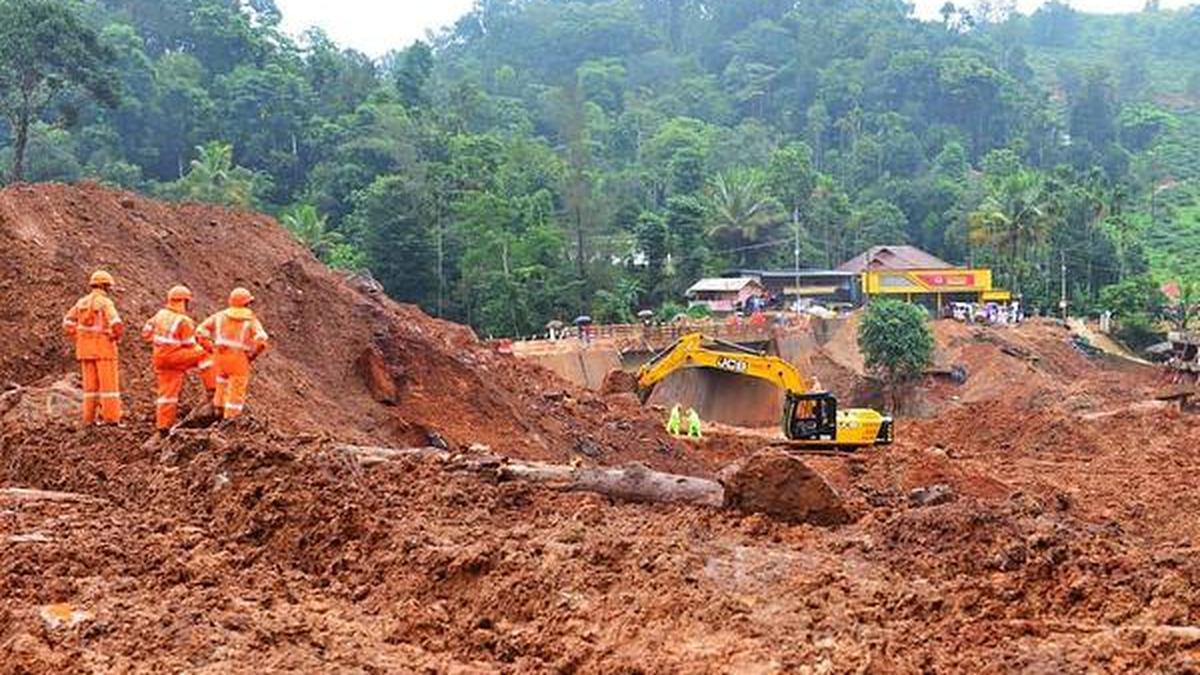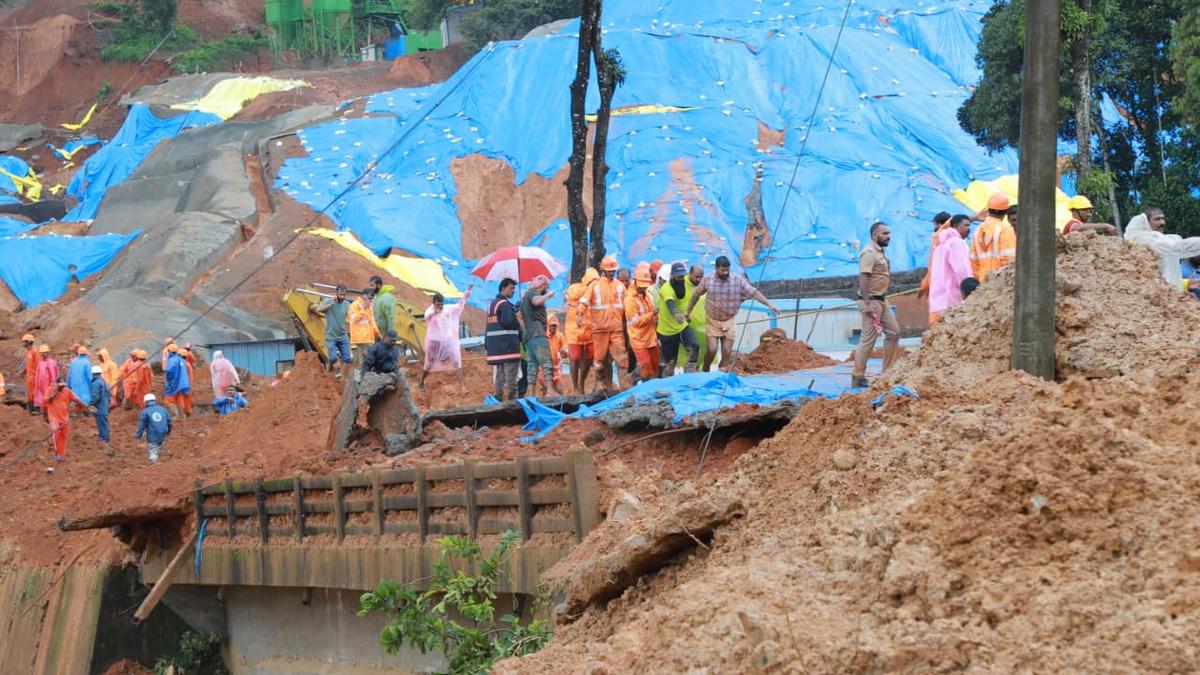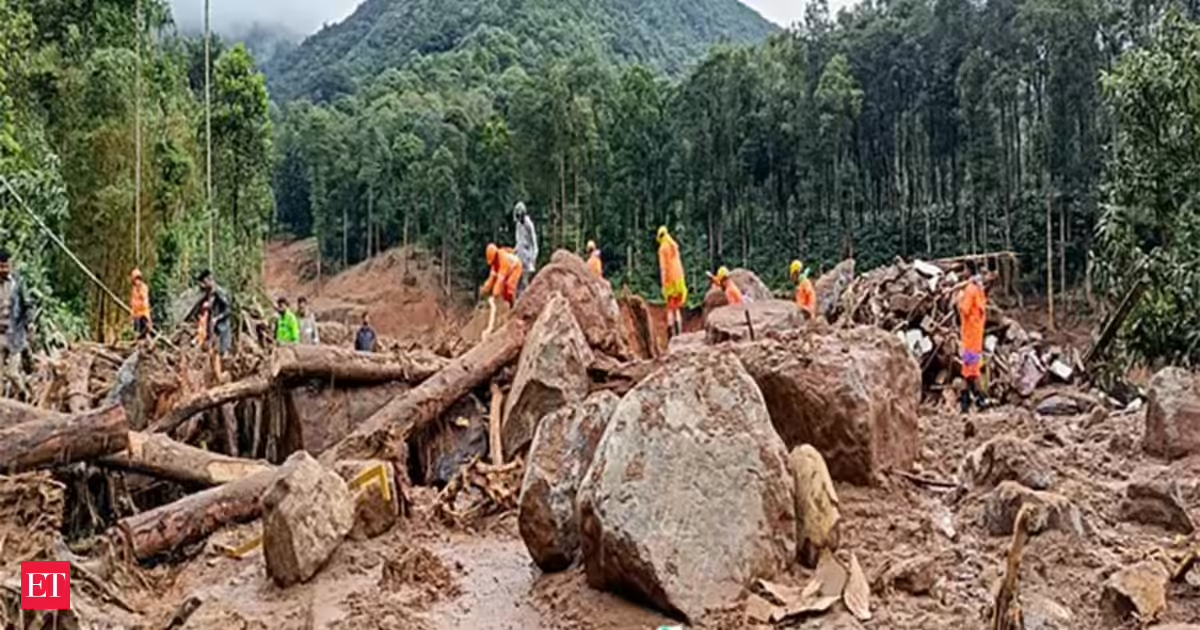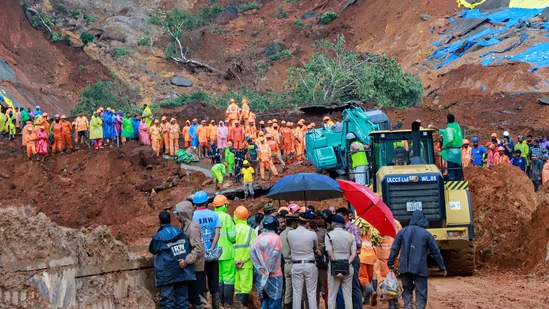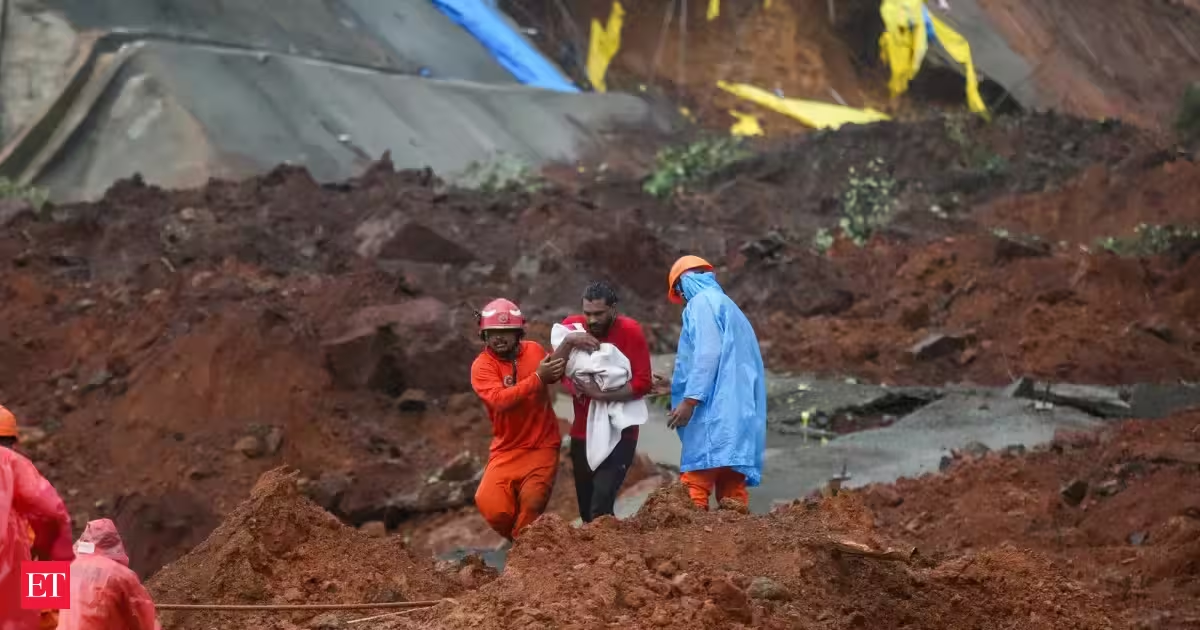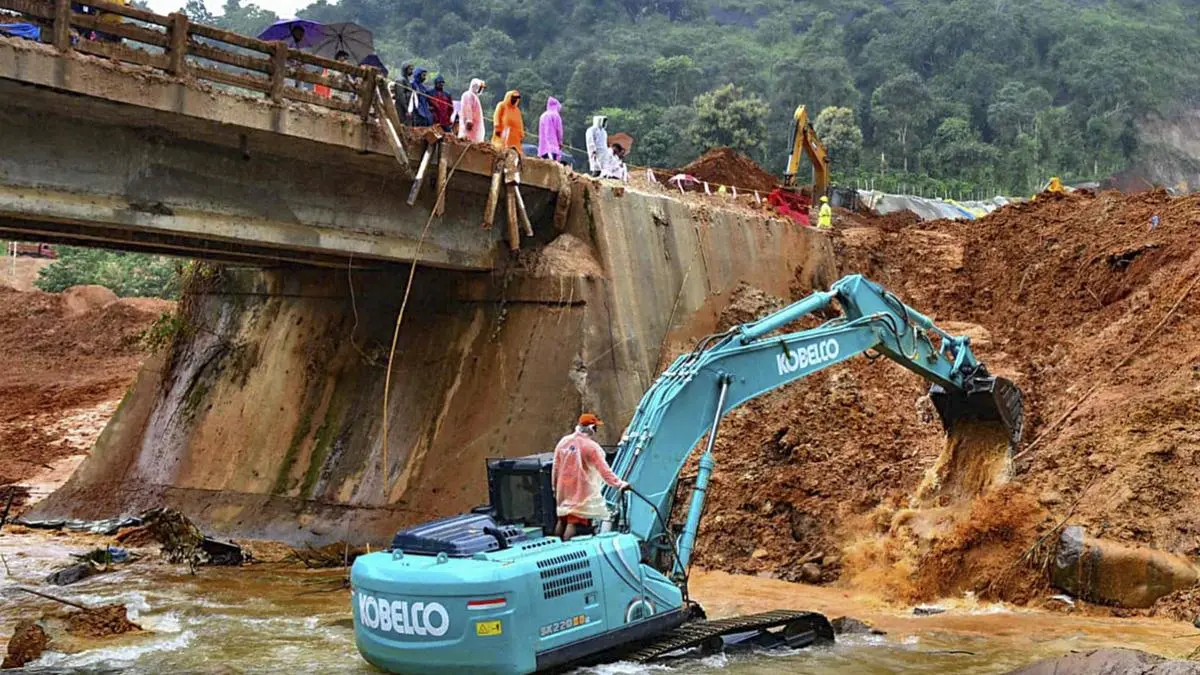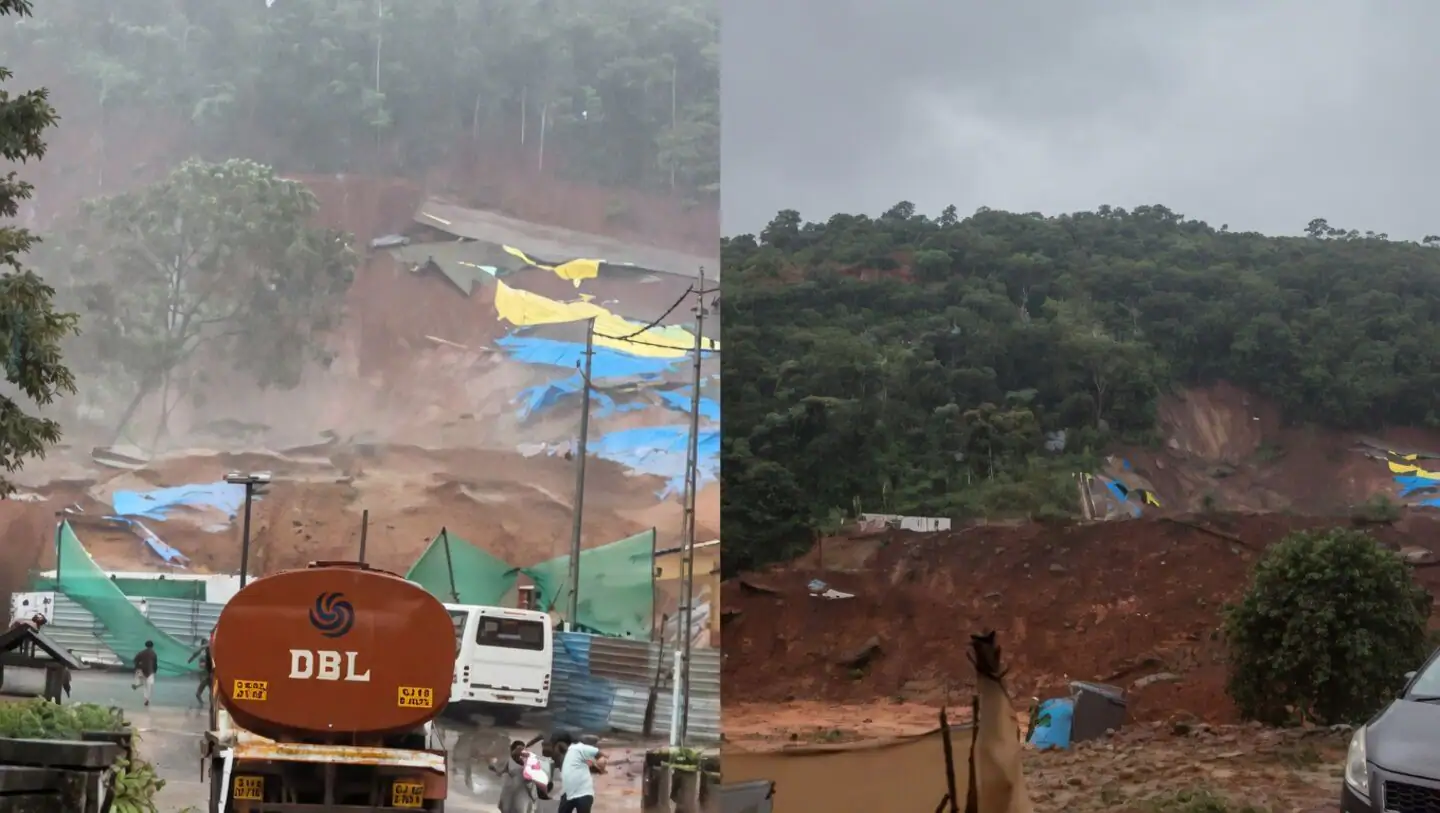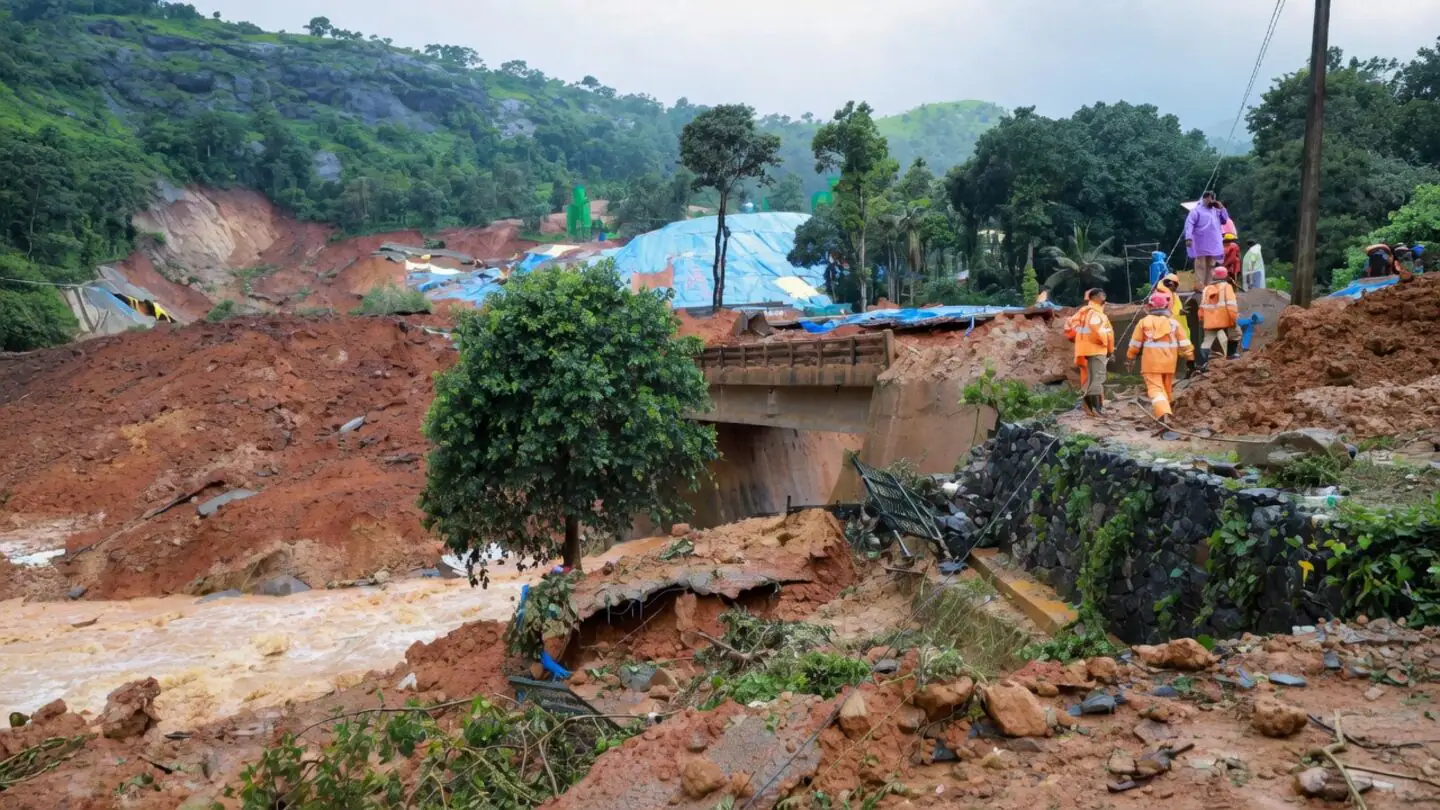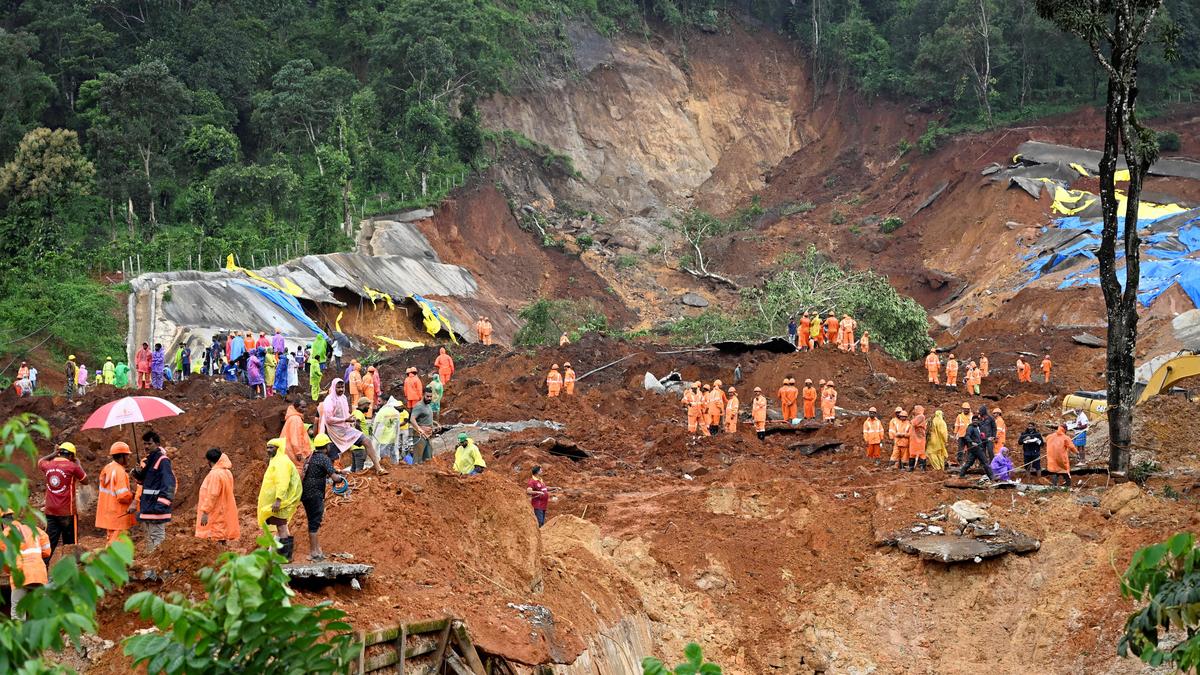
Rescuers work on the debris following a debris slip at Kalladi in Wayanad on July 7, 2026.
| Photo Credit: REUTERS
Ariff, a cleaning staff member at a hotel at Kalladi near Meppadi in Wayanad, vividly recalls the terrifying moments when the debris slip struck the area on Tuesday (July 7, 2026).“I was cleaning a table when I heard a loud roar. I looked outside and saw the huge mound of earth near the entrance of the under-construction Wayanad tunnel road beginning to move. Within seconds, water, mud and debris came rushing down. Vehicles on the road were engulfed by the mud, and the Meenakshi bridge was almost completely obscured,” Mr. Ariff says, and adds that he and his colleagues ran for safety as the mud reached the edge of the hotel.The incident occurred after 11 a.m.; there was not much construction activity at the site over the past two weeks, following directions from the district administration in view of the monsoon rains.Residents said the earth excavated in connection with the tunnel construction and related works was dumped in a large mound near the tunnel entrance, at the foot of a rocky slope.Intensified impactAccording to experts and residents of the area, following heavy downpour, the mildly concrete-reinforced slope on the left side of the tunnel and the underlying soil gave way. The sliding mass also carried soil from the forested area above, while excavated earth and construction debris dumped below intensified the impact.C.K. Vishnudas, executive director of the Hume Centre for Ecology and Wildlife Biology, described the Kalladi tragedy as an “engineering failure-induced disaster” rather than a natural landslide, arguing that extensive modifications to the terrain for the under-construction tunnel project had destabilised the slope.Mr. Vishnudas said large-scale excavation and alteration of the natural landform had been carried out to construct the tunnel, with soil removed and both sides of the alignment cleared. “The cut slope on the left side has been stabilised by creating stepped terraces and covering them with mild concrete reinforcement. However, following nearly 200 mm of rainfall recorded between 8.30 a.m. on July 6 and 8.30 a.m. on July 7, the concrete-reinforced slope and the underlying soil gave way, triggering the debris slip,” he said.Mr. Vishnudas said the project might have disrupted the area’s natural drainage, preventing rainwater from flowing freely into the river and increasing water saturation in the slope. “In my view, inadequate engineering safeguards and failure to take sufficient precautionary measures contributed to the disaster,” he added.‘Ignored warnings’Jithin Macherikkal, local ward member, said the project authorities had ignored repeated warnings to build a proper concrete retaining wall at the site. “We had advised the firm to construct a concrete retaining wall, anticipating heavy rain. However, the necessary precautions were not taken, and only mild concrete protection was applied on the left side of the tunnel,” he said. Published - July 07, 2026 09:00 pm IST