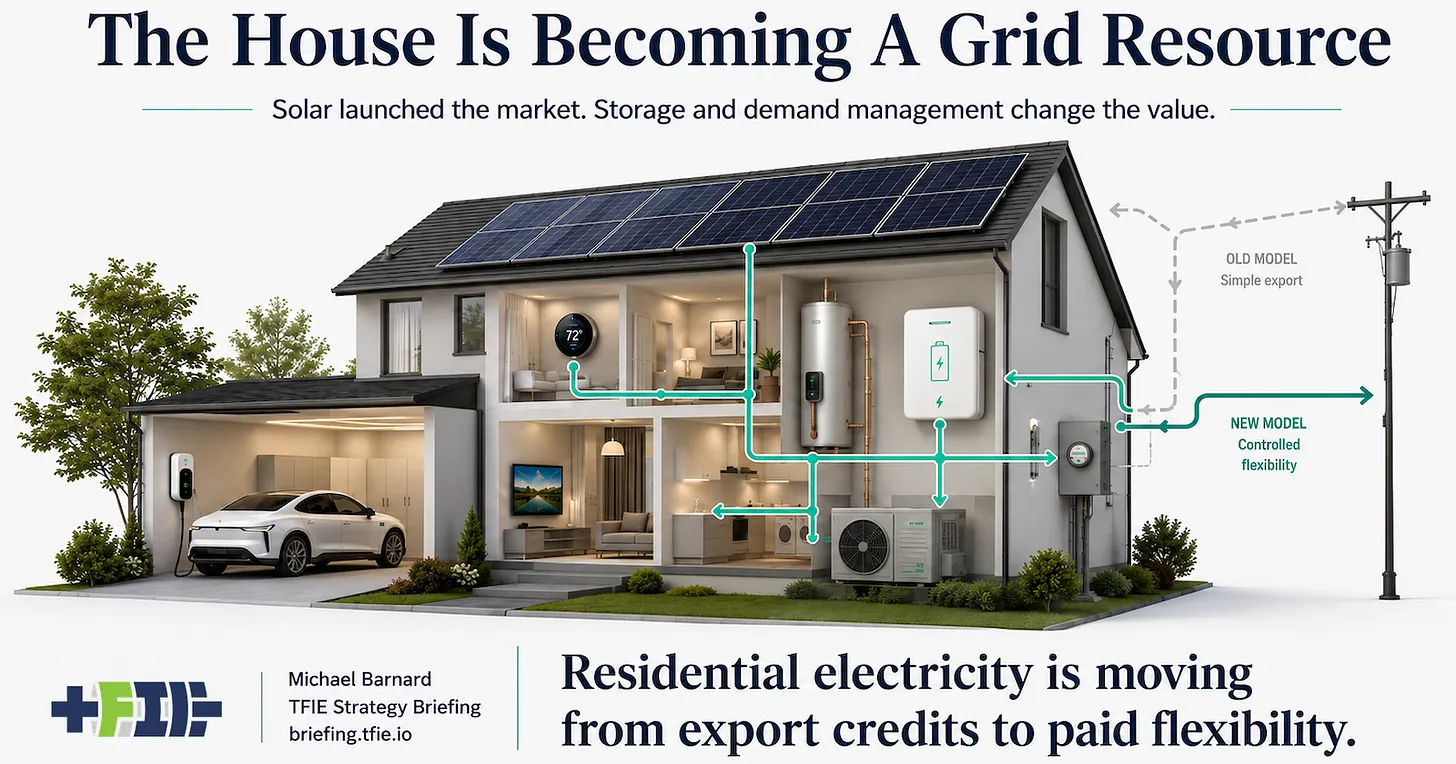
The home is becoming a grid resource as solar, storage, EV charging and flexible loads replace simple export credits.
Support CleanTechnica's work through a Substack subscription or on Stripe.
BC Hydro’s change to net metering looks, at first glance, like another rooftop solar fight. The old Rate Schedule 1289 is closing to new customers on July 1, 2026, and new self-generation customers will move to Rate Schedule 2289, where excess generation is paid at 10¢/kWh in the billing cycle instead of being banked as future kWh credits. Existing net-metering customers get a transition period, and BC Hydro has also created a community generation option. That is the local tariff story. The larger electricity-system story is that residential compensation is moving from passive export credits toward paid flexibility.
Net metering was useful because it made rooftop solar simple enough to sell, finance, install and interconnect. A household could understand the proposition, an installer could build a business around it, lenders could underwrite it, and utilities could learn how to connect small systems without turning every rooftop into a bespoke regulatory exercise. At low penetration, retail net metering was a reasonable early-market bargain in developed countries. It helped launch markets that would otherwise have been slowed by transaction costs and uncertainty.