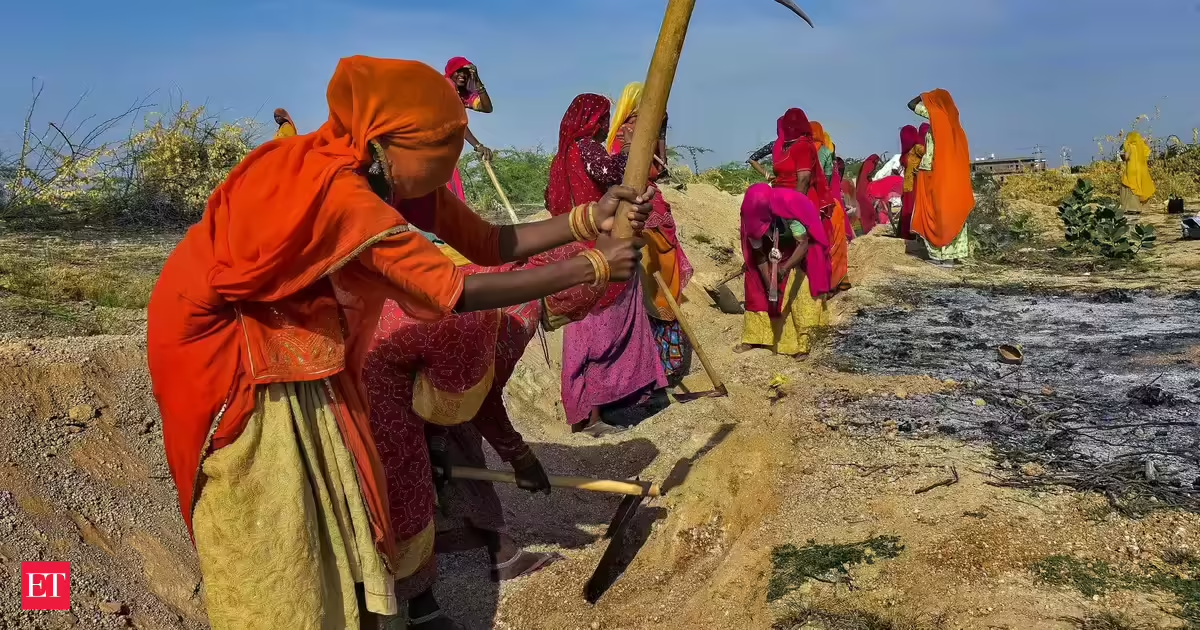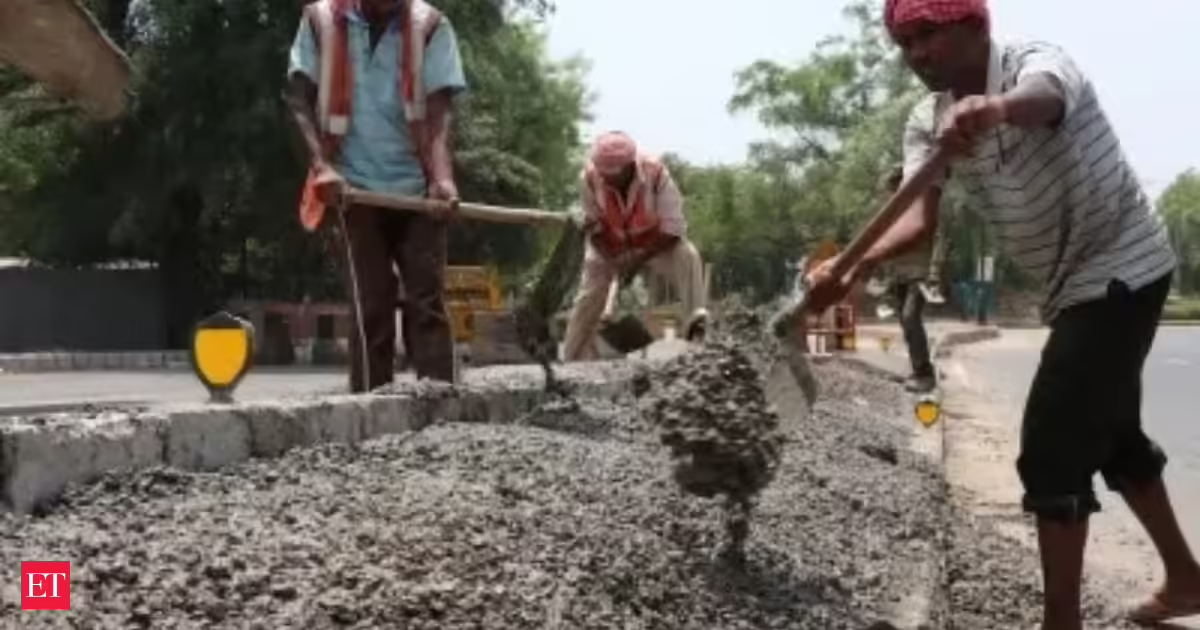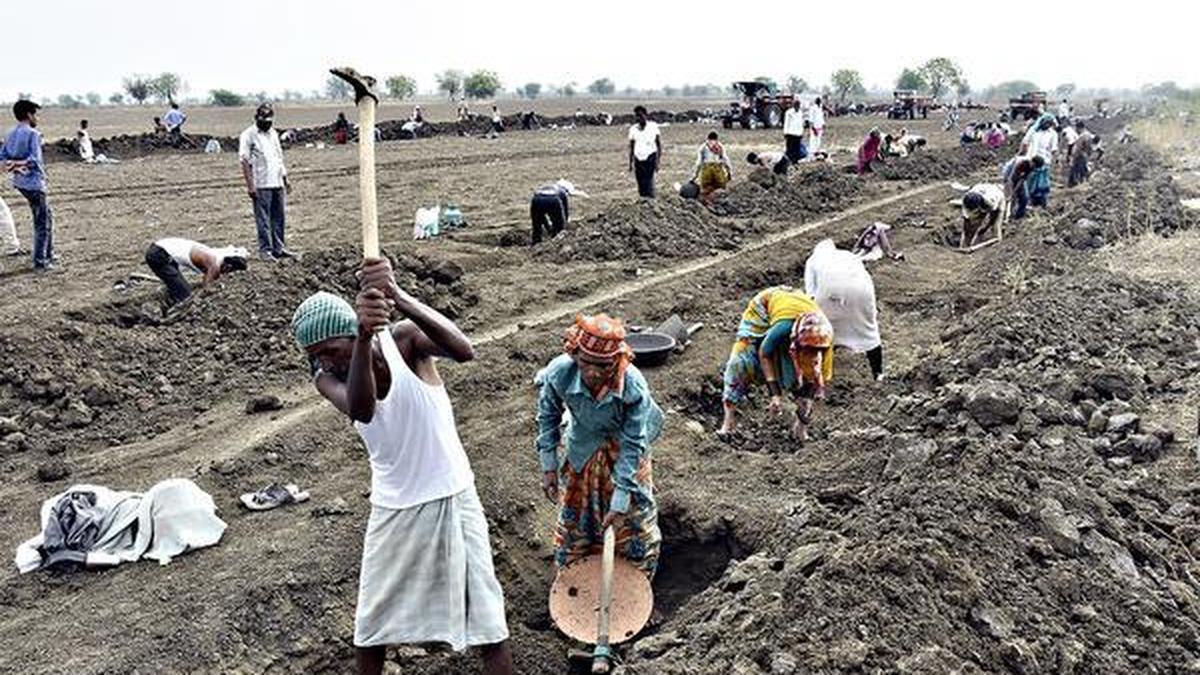
India’s flagship rural jobs guarantee has been rewritten. VB-G RAM G replaces MGNREGA with a bigger headline promise — 125 guaranteed workdays instead of 100, at a higher wage — but a fundamentally different architecture: centrally capped funding instead of open-ended demand, panchayat plans tied to national infrastructure priorities, and a much steeper cost burden for States. We examine whether the more generous entitlement can survive its more centralised, fiscally constrained design.The Viksit Bharat-Guarantee for Rozgar and Ajeevika Mission (Gramin) Act, 2025 (VB-G RAM G) replaces the two-decade-old MGNREGA and took effect nationwide on July 1, 2026. It raises the guaranteed workdays from 100 to 125 per household per year, with employment due within 15 days of demand, and lifts the average daily wage nearly 10 per cent, from ₹299 to ₹327.Financially, the Act shifts most States from MGNREGA’s roughly 90:10 Centre-State cost split to 60:40, though North-Eastern and Himalayan States keep the 90:10 ratio. Planning now runs through Viksit Gram Panchayat Plans (VGPPs), which must align with the PM Gati Shakti infrastructure system and feed into a new Viksit Bharat National Rural Infrastructure Stack. States can pause the scheme for up to 60 days a year in peak farm seasons. Implementation leans further into biometric attendance, digital muster rolls, e-KYC job cards, and direct benefit transfers. The interim allocation across States and Union Territories is ₹95,692.31 crore.The case for the change rests on stronger accountability, durable asset creation, and alignment with the Centre’s Viksit Bharat @2047 vision, with the 10 per cent wage rise and 25 per cent increase in guaranteed days billed as the main income drivers. But rural real wages and incomes have stagnated, MGNREGA allocations have been falling, and rural consumer sentiment fell sharply in an RBI survey from May 2026, so the real test is whether the new design, not just its headline numbers, can turn things around.Expense splitThe formula-based ceiling for each State will be set by the Centre, replacing MGNREGA’s open-ended, State-driven labour budget. Meanwhile the expense split is not weighted to fiscal capacity: most States must now fund 40 per cent of costs, up from 10 per cent, with any overshoot falling entirely on them. Since the normative formula is still undecided, and could be anchored to the Finance Commission’s tax-devolution formula or delimitation considerations, it risks becoming a flashpoint between the Centre and States. A further centralising element requires every work to originate from a VGPP and feed into the VB-NRIS (Viksit Bharat National Rural Infrastructure Stack), narrowing grassroots flexibility, while a Centre-set performance matrix on wage delays, social audits, and work completion adds another lever over fund release.MGNREGA let gram sabhas choose works and gram panchayats implement most of them, funded on an open-ended, demand-driven legal right with local social audits. VB-G RAM G moves this balance towards the Centre: VGPPs must align with national plans, funding is capped by a Centre-determined formula, permissible works are narrowed to four categories, fund release is tied to central metrics, and the Centre can selectively notify which areas the scheme covers rather than it being automatically universal.The FY27 interim allocation of ₹95,692.31 crore is 13 per cent above total MGNREGA spending in FY26, with States accounting for ₹92,550.17 crore. Applying the new 60:40 formula to FY27 against actual FY26 State spending, States would need to spend around ₹35,300 crore versus ₹8,690 crore last year — roughly 4.1 times more, with West Bengal (24x) and Uttar Pradesh (21.3x) facing the steepest jumps. A separate counterfactual applying the 60:40 split to the roughly ₹10 lakh crore spent on MGNREGA between FY14 and FY26 implies States would have had to spend close to ₹4 lakh crore, about five times their actual contribution. Both estimates point the same way: the fiscal burden on States could rise four to five times, likely forcing States to raise revenue, cut capital spending, or scale back other transfer schemes, even as MGNREGA funding has already fallen from a FY21 peak of ₹1.11 lakh crore to ₹78,000 crore in FY26.Falling allocationCombined Centre-State MGNREGA allocation has fallen 30 per cent since FY21, and registered workers have declined since FY22 to 274 million in FY26, below the FY14 level. Average workdays remain low at 43, with FY26 households completing 100 days (2.3 million) the lowest in 12 years, making it unlikely the 125-day guarantee will be meaningfully better utilised than the 100-day one it replaces.VB-G RAM G carries forward MGNREGA’s biometric attendance, NMMS app, Aadhaar-based payments, and mandatory e-KYC, a compliance stack already linked to a 25.6 per cent drop in persondays in 2025-26 versus 2023-24, and to 27.4 per cent of workers being ineligible for Aadhaar-linked payment in one recent period. Migrants, women, and older workers without smartphones, stable connectivity, or matching Aadhaar records are hit hardest, compounded by over one crore job-card deletions nationally in 2023-24 alone. What is framed as anti-leakage modernisation risks functioning as gatekeeping that excludes the workers the scheme is meant to serve.VB-G RAM G represents less a strengthening of India’s rural jobs guarantee than a restructuring of who bears its cost and who controls its design. A higher wage and 25 per cent more guaranteed days sit atop a funding model shifting four to five times the burden onto fiscally stretched States, a planning process subordinating local discretion to central priorities, and a digital compliance regime already shown to exclude workers under MGNREGA.The persistent decline in mandays, real wages, and registrations suggests these are structural features, not transition teething problems. Whether VB-G RAM G becomes a genuine modernisation or a more centralised, fiscally offloaded version of the same weaknesses will hinge on the still-unresolved allocation formula, performance-linked fund release, and digital access barriers as they play out on the ground.The writer is CEO and Co-Head of Equities & Head of Research, Systematix Group. Views expressed are personalPublished on July 7, 2026
VB-G RAM G: Reading the fine print
The scheme represents less a strengthening of India’s rural jobs guarantee than a restructuring of who bears its cost and who controls its design
974 words~4 min read