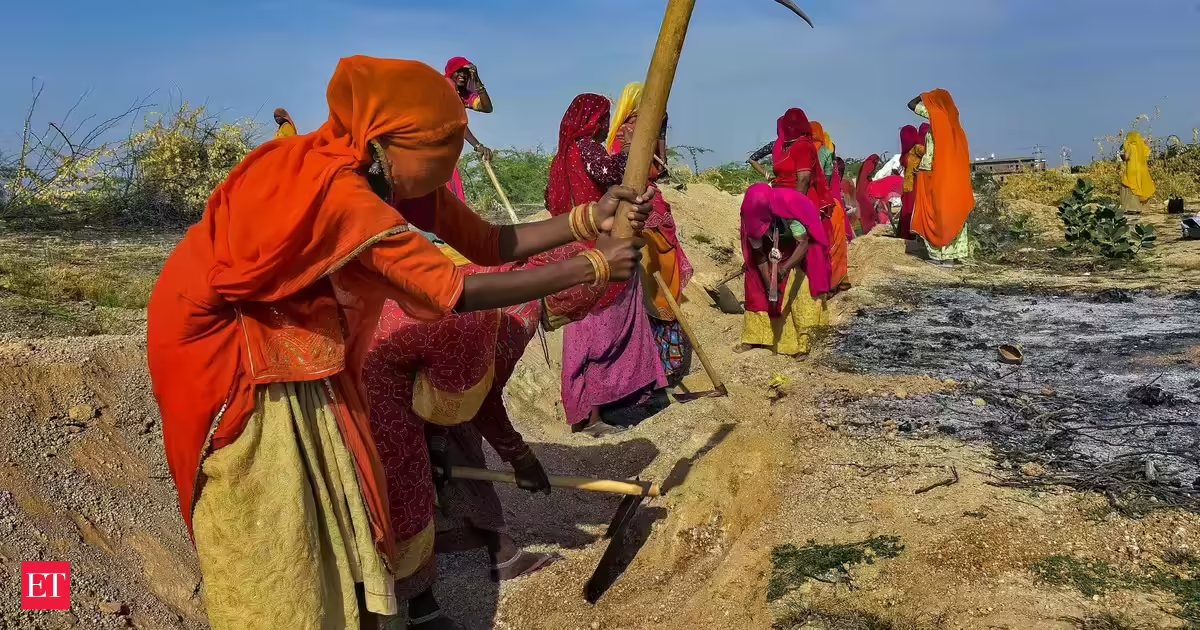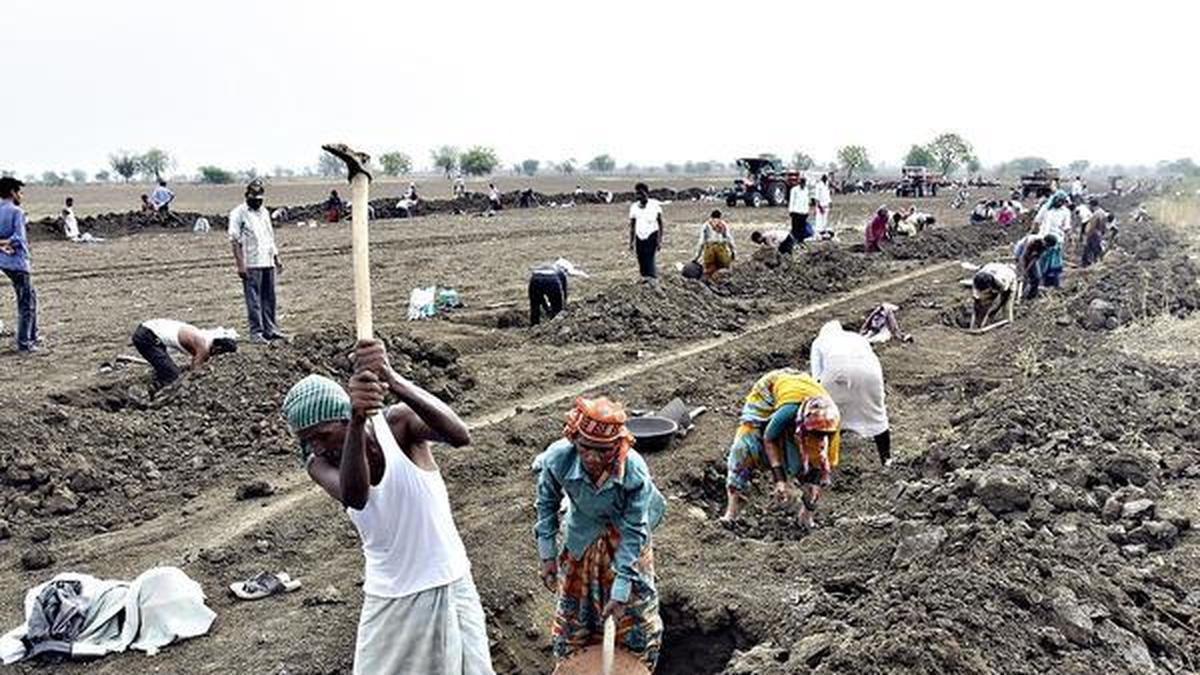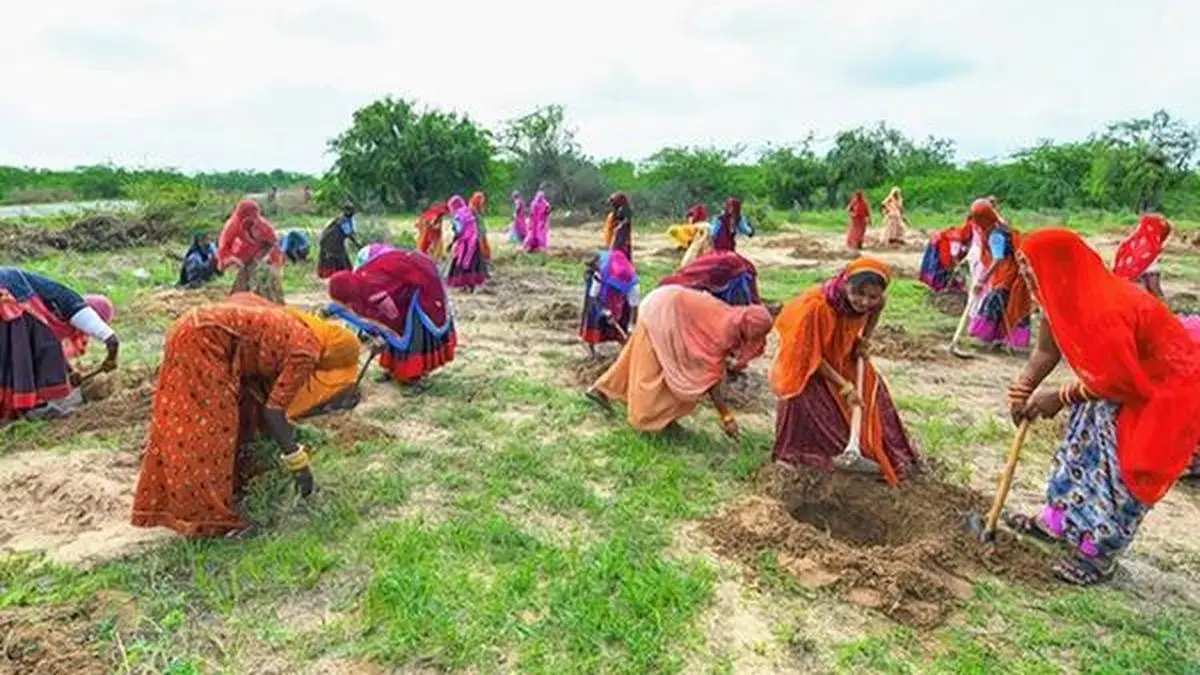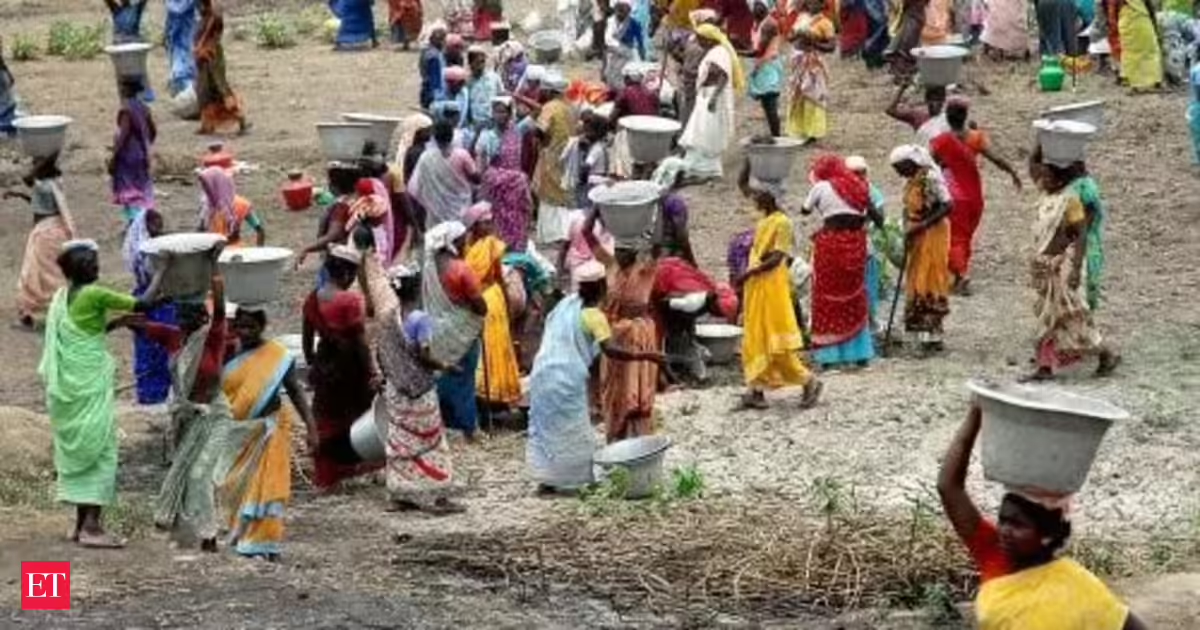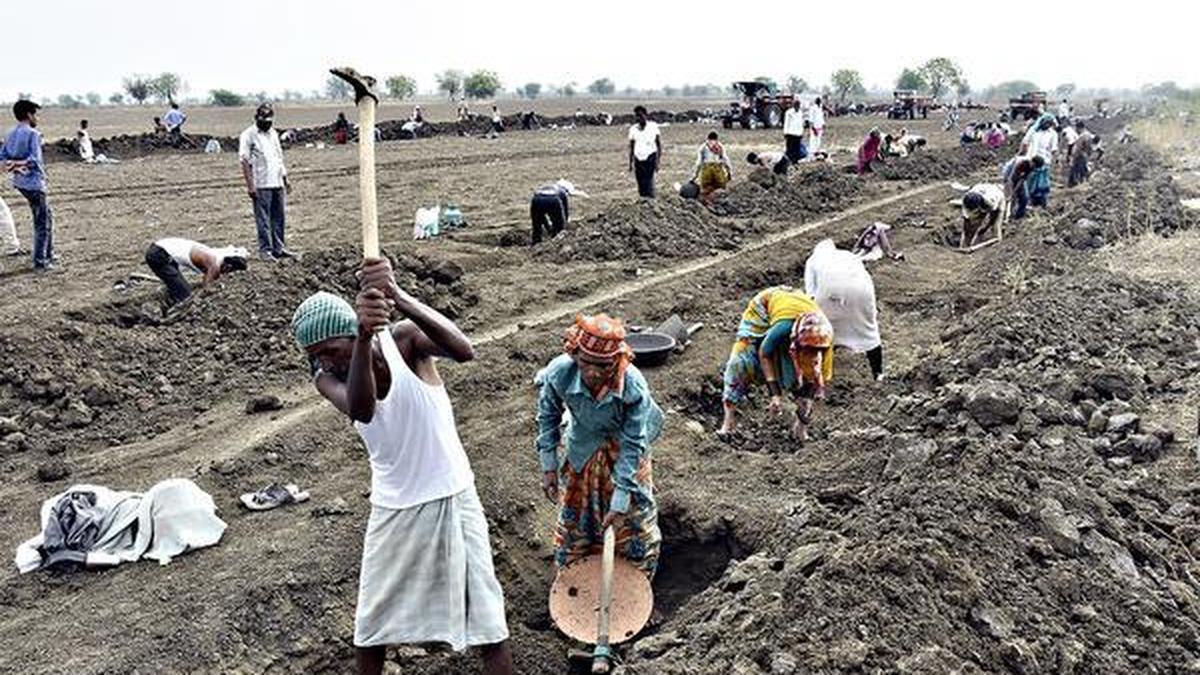
Labourers working under MNREGA near Farhatabad in Kalaburagi district in Karnataka
| Photo Credit: ARUN KULKARNI
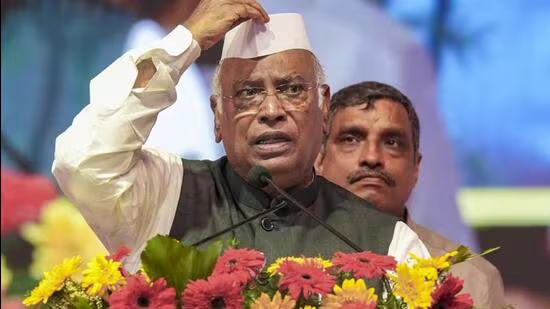
The Viksit Bharat Guarantee for Rozgar and Ajeevika Mission (Gramin) (VB-G RAM G), which completely overhauls the Mahatma Gandhi National Rural Employment Guarantee Act (MGNREGA), came into force on July 1, despite serious concerns raised by many States.One of the key concerns is the shifting of a significant part of the financial burden of this landmark employment guarantee scheme, which has been in force since 2005, from the Centre to the States.Though the Government of India had earlier said that the transition to the new scheme “does not impose an undue financial burden on States,” it has not spelt out the additional expenditure to be borne by each State. A release from the Ministry of Rural Development on Wednesday said the Centre has made an interim allocation of ₹95,692.31 crore for the States for 2026-27, without mentioning the contribution needed from the States or how much of the interim allocation would be used to settle past dues for the States. This is despite a fundamental shift: MGNREGA was a demand-driven model while under the VB-G RAM G, the Union government shall have the power to determine the “normative allocation (budget to be spent on the scheme)” for every State in a year based on certain “objective parameters” the Centre prescribes. Moreover, the new scheme shifts the responsibility fully to the States for any additional expenditure incurred beyond the “normative allocation”; for unemployment allowance (if employment could not be ensured for the guaranteed 125 days); and the compensation for delay in payments.The general perception is that the earlier sharing pattern was roughly in the ratio of 90:10 between the Centre and the State; now the shift to a 60:40 pattern would result in a three-fold increase in States’ expenditure.However, an analysis by The Hindu showed that the increase in States’ expenditure could be nearly 600%, when compared with 2024-25, the latest year for which actuals on expenditure are available. The analysis, based on conservative estimates, showed that States will have to spend at least ₹51,000 crore in 2026-27, in contrast to about ₹7,700 crore they spent in 2024-25. The projected figure does not include West Bengal. The table below shows the country-level estimates and the method used to arrive at the projections, based on the new wage rates for each State notified by the Centre.Minister for Rural Development Shivraj Singh Chouhan was quoted as saying that “no eligible rural worker should remain without work even for a day”. However, the government had come under criticism in recent years for failing to ensure even 100 days of work.The Hindu’s estimates conservatively assume an increase of 25% in the total person days generated in 2024-25 instead of considering a minimum of 125 days of employment for registered households. For the admin and materials related expenditure, the analysis has applied the inflation based on the Consumer Price Index (CPI) for the amount spent for each State in 2024-25. Uttar Pradesh, Tamil Nadu, and Bihar will be among the States, whose expenditure for the scheme could see an increase of 600% to 800%.The chart below shows how the expenditure of MGNREGA had come down since 2020-21 despite the Government’s stated commitment to spend more for the scheme. Moreover, the report available for the year 2025-26 showed that the Centre had to clear ₹20,422 crore pending as dues to all States. Published - July 02, 2026 10:00 am IST