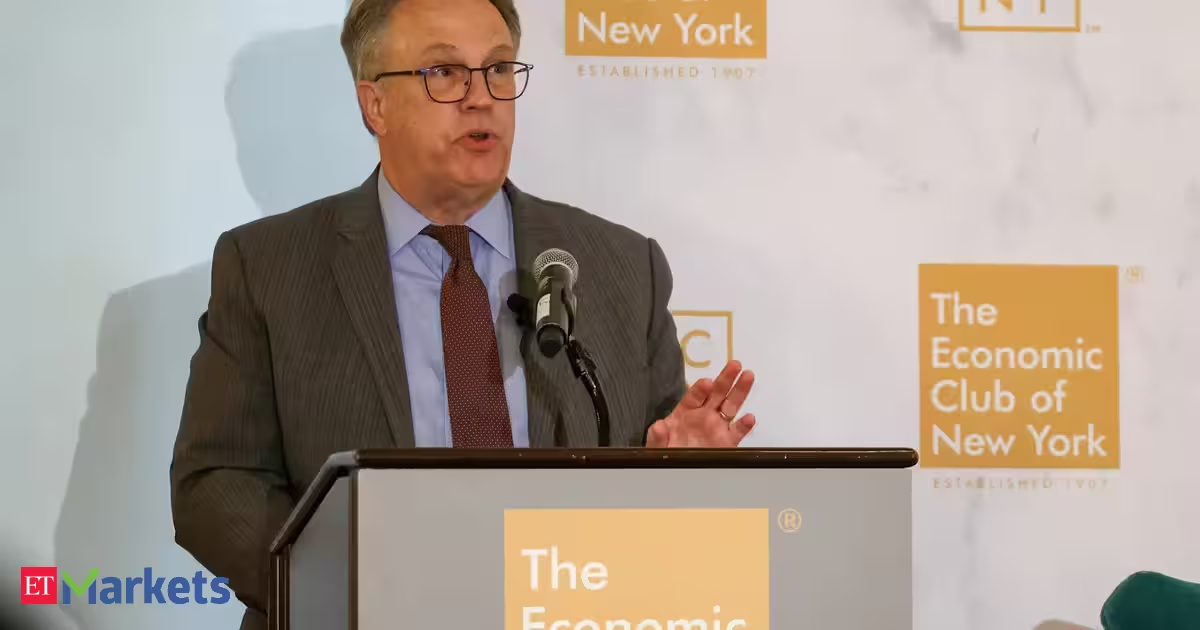
John C. Williams, president of the Federal Reserve Bank of New York, is making a straightforward bet: energy prices are going to come down, and they’re going to drag headline inflation with them. He holds a permanent voting seat on the Federal Open Market Committee, the body that actually sets interest rates.
His core argument is that the energy-driven inflation spike currently pressuring consumers and markets is temporary, not structural. In his words, the surge in energy costs amounts to a “one-time kind of effect.”
The numbers behind the call
Williams has pegged overall inflation, measured by the Personal Consumption Expenditures index (the Fed’s preferred gauge), at somewhere between 2.75% and 3.5% for 2026. Williams anticipates inflation trending back toward that 2% goal by 2027 as the energy supply picture normalizes.
The spike in energy costs that Williams is addressing stems largely from geopolitical tensions in the Middle East. Conflicts involving Iran and disruptions around the Strait of Hormuz, through which roughly a fifth of global oil supply passes, have squeezed energy markets and sent prices higher.