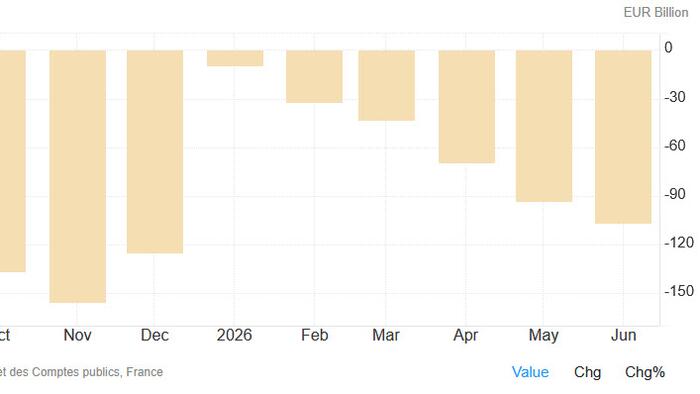
France, the Eurozone’s second-largest economy, is staring down a fiscal problem that looks increasingly like it could spiral out of control. Public debt has ballooned to €3.5 trillion, sitting at 115.6% of GDP, and the math is getting worse, not better. Borrowing costs are rising faster than the economy is growing, which is the textbook definition of a debt snowball.
The numbers painting a grim picture
The debt-to-GDP ratio is projected to climb to roughly 118.5% by the end of 2026 and hit approximately 120% by 2027. For context, the EU’s own fiscal rules technically call for member states to keep debt below 60% of GDP. France is doubling that threshold and accelerating in the wrong direction.
The budget deficit tells a similar story. It’s forecast at around 5.1% of GDP for 2026, with expectations that it could widen to 5.7% by 2027. French Finance Minister Roland Lescure has publicly set a target of getting the deficit below 5% for 2027. That target is looking more aspirational than achievable.
Political fragmentation makes everything harder