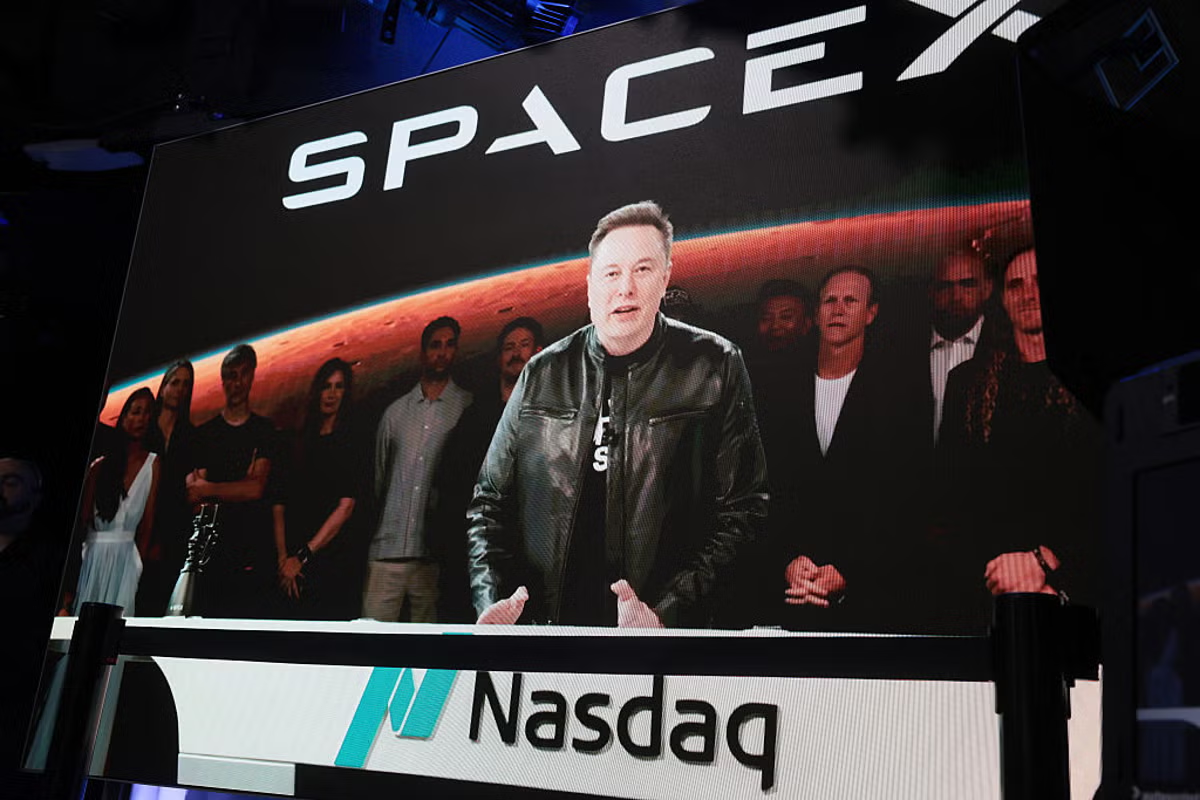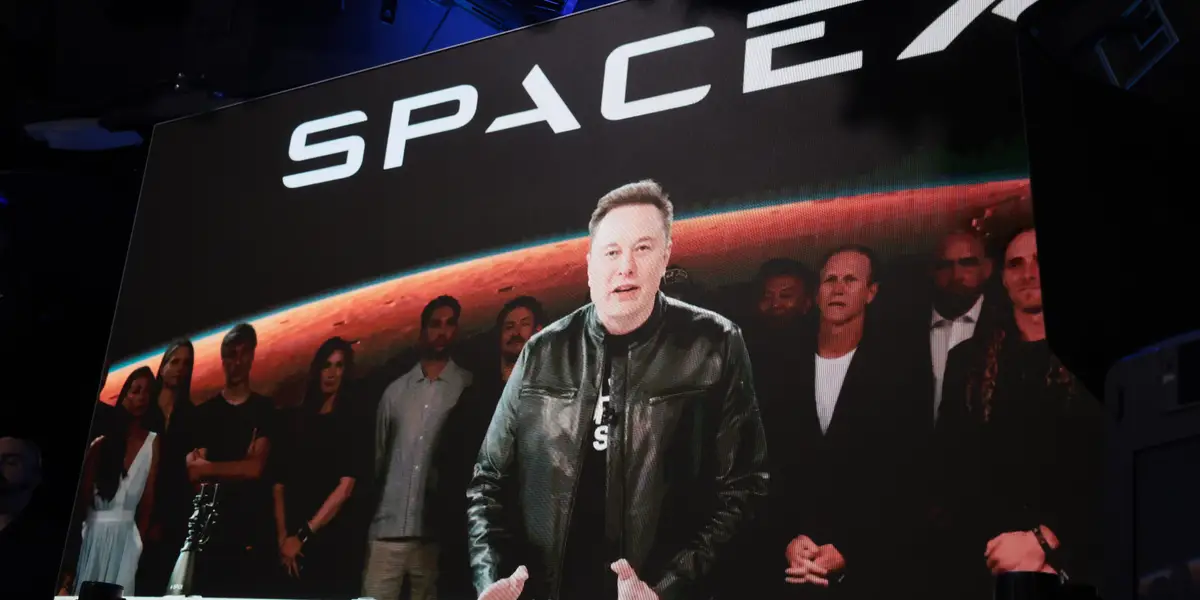
SpaceX's stock soared in the days after its blockbuster IPO.
Spencer Platt/Getty Images
SpaceX has blasted off, and now Wall Street thinks not even the sky is the limit.Elon Musk's rocket company made its debut on the Nasdaq 100 index on Tuesday, weeks after raising $85.7 billion in the largest IPO in history.The Nasdaq index, along with rival index FTSE Russell, changed its rules in the run-up to SpaceX's IPO, allowing companies going public in mega listings fast-tracked entry.Joining the Nasdaq opens SpaceX to a wave of passive buying, with investors who hold funds that track the index automatically gaining exposure to SpaceX.SpaceX's stock soared in the days after its public offering, with the Starship maker briefly eclipsing Amazon to become the world's fifth-most-valuable company before falling back over the past few weeks.Big Wall Street firms like Morgan Stanley, Goldman Sachs, and UBS have been restricted from making analyst calls on SpaceX stock by the so-called "quiet period" for banks that underwrote the IPO.That quiet period has now expired, and some banks have broken cover with bullish calls and sky-high price targets.
In a note published on Tuesday, analysts for RBC Capital Markets initiated coverage of the company with an "outperform" rating and a $225 price target. SpaceX closed at $160 on Monday."We can appreciate timing risk associated with the company's space aspirations, but we believe sentiment will benefit from a proven track record of disruption and innovation," RBC's analysts wrote.They predicted that by 2029, SpaceX would be posting earnings before interest, taxes, and amortization of $3 billion from space-related activities, $42 billion from Starlink, and $147 billion from its AI business. SpaceX recorded a net loss of $4.9 billion in 2025.In another note released on Tuesday, analysts at Morgan Stanley led by Adam Jonas — a Tesla bull known for his sometimes fantastical takes on Musk's businesses — initiated coverage of SpaceX with an "overweight" rating with a target price of $300.Morgan Stanley's analysts predicted that SpaceX's revenue would hit $319 billion by 2030 and $3.3 trillion by 2040. However, they forecast that the company would not be cash flow positive until 2035, with capex spending expected to hit $300 billion a year by 2031."With an 'X of 1' position in space infrastructure, we believe SpaceX can convert energy into intelligence at scale with optionality to monetize through a range of consumer and enterprise solutions for the next era of AI... the final frontier," the note read.