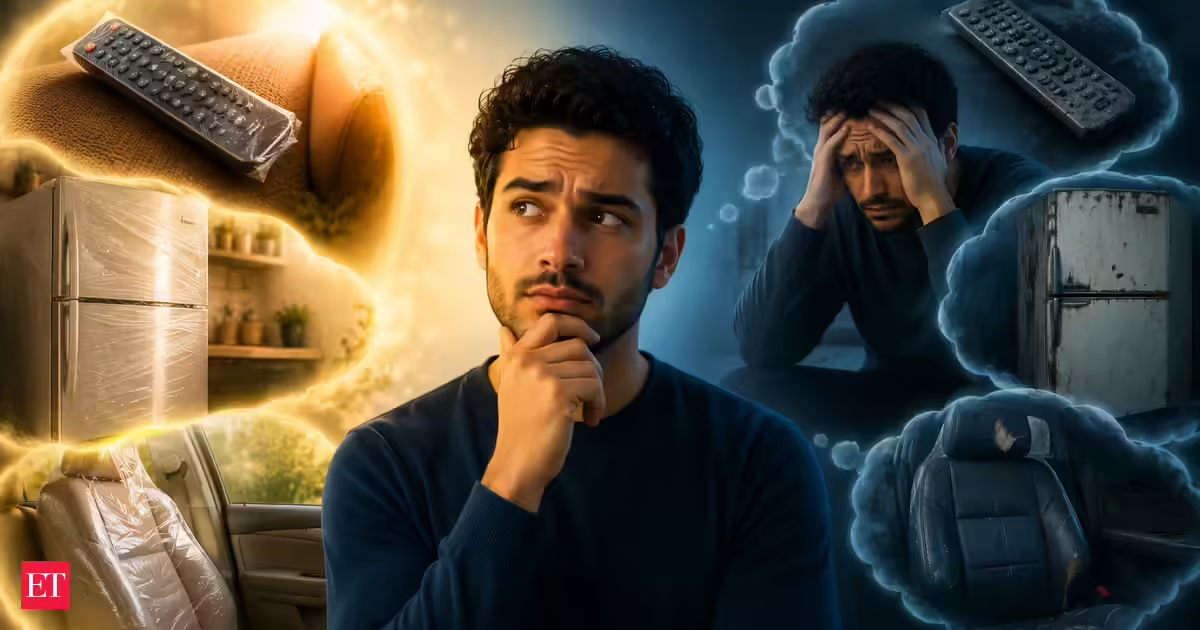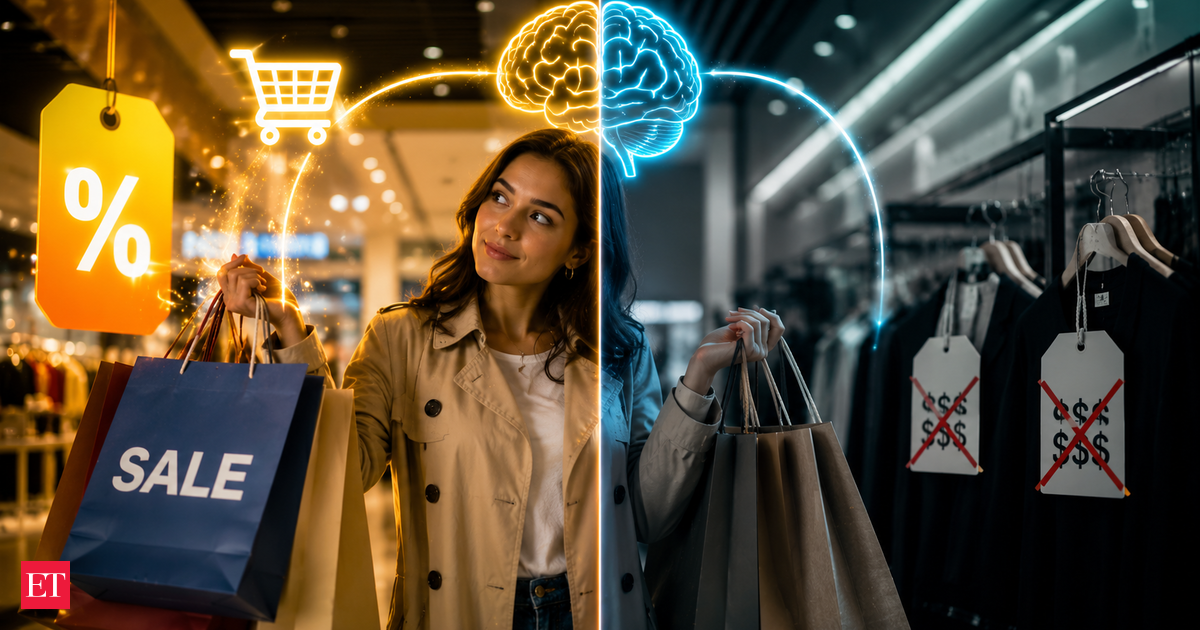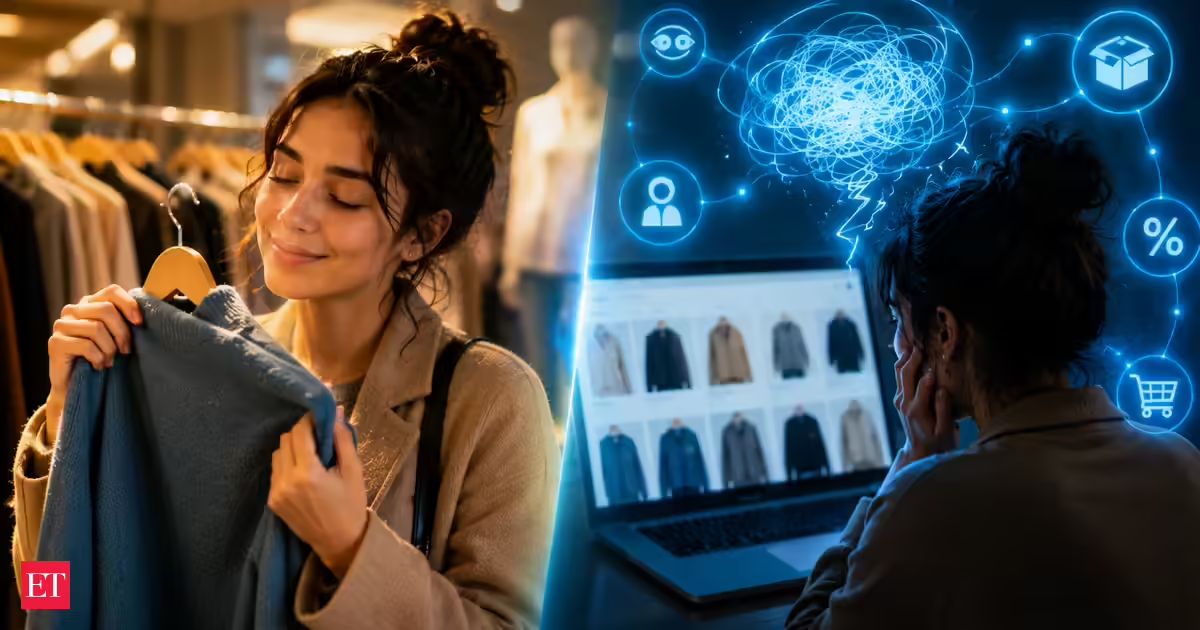
Ever grabbed a sweater at a store, held it for a moment, and then felt a little pang of guilt for putting it back? According to a 2009 study, ‘The Effect of Mere Touch on Perceived Ownership,’ published in the Journal of Consumer Research, that reaction is not random. Marketing professors Joann Peck of the University of Wisconsin–Madison and Suzanne Shu of UCLA found that simply touching an object makes people feel like it already belongs to them, even if they haven't paid a cent.Why touching something make it feel like "mine"In the study reported by ScienceDaily, Peck and Shu were partly responding to a 2003 warning from the Illinois attorney general's office about retailers who encourage holiday shoppers to hold products and imagine them as their own. The two professors were wondering if there was any real science to that warning.In four separate studies, people who physically touched an item reported a higher level of ownership over it compared to those who merely looked at the same item without touching it, according to the original Journal of Consumer Research paper. This appeared for buyers who wanted to purchase, and sometimes for people selling, too. Interestingly, people who simply imagined touching an object without actually touching it also reported greater feelings of ownership, which has important implications for online shopping.The paper adds that the touch effect was strongest when the experience was positive or neutral, which helps explain why free trials and hands-on displays can be so powerful in stores. It also extends the finding to sellers, suggesting that touch can increase perceived ownership even for legal owners who already possess the item.This is how ownership starts, before you even buy. Image Credits: Google Gemini The mind treats "touched" almost like "owned"This connects to a much older idea in behavioral economics called the endowment effect. In a 1990 paper, ‘Experimental Tests of the Endowment Effect and the Coase Theorem,’ in the Journal of Political Economy, Kahneman, Knetsch, and Thaler note that people tend to demand a lot more money to give up something they already own than they would pay to acquire that same item if they did not own it. In a famous experiment at Cornell University, participants were given a coffee mug and asked to state the selling price, and the average they demanded was about twice what another group of participants said they would pay to buy a similar mug.Peck and Shu’s work is based on this idea, but with one important difference. In their 2009 study, they found that you don’t have to have actual legal ownership of an item to feel this pull. Just a few seconds of touching something can be enough to bias the brain into thinking of it as "mine," which can inflate how much someone is willing to pay for it. That is not to say that touch always results in a sale or that all shoppers respond in the same way. The effect was measured as an average pattern across controlled experiments, not as a rule that applies to each person or product.What this means for online shoppingThis raises an obvious question for anyone shopping from a phone: what happens when touch is not physically possible at all? According to Peck and Shu's original findings, ownership imagery, or language or visuals that make people imagine touching a product, also increased perceived ownership even without actual touch. It also points out a caveat that is easy to miss: the value boost depends on how the touch feels, so negative tactile experiences can cut the other way.Unboxing videos often quietly sell you things. Image Credits: Google Gemini This very gap has been studied in more recent research. In a 2022 study, ‘Observing Product Touch: The Vicarious Haptic Effect in Digital Marketing and Virtual Reality,’ published in the Journal of Retailing, Luangrath and team found that even the sight of a photo, video or virtual reality demonstration of someone else’s hand touching a product can alter a viewer’s own sense of ownership of that item. The researchers call it a “vicarious haptic effect,” and their research suggests it occurs partly because viewers mentally put themselves in that hand on screen. Perhaps this is why unboxing videos and product demonstration clips can seem so unexpectedly persuasive.A useful thing to notice about your own habitsNow, this isn’t to say that touch is some kind of manipulation trick, overriding good judgement. It just goes to show how organically the brain associates physical contact or even the thought of physical contact with a sense of belonging. Knowing this can make you a slightly more aware shopper. If you notice that you feel more inclined to buy something right after having held it in your hand, or right after having watched a video of someone else holding it, that reaction is a well-documented psychological pattern. It doesn’t prove that the item is actually a better deal or a better fit for your needs.The next time you are debating a purchase, whether in a store or after watching a product video online, it might be a good idea to put the item down, close the tab, or wait a day before making a decision. That little pause you give yourself is a simple way to separate the feeling of ownership from the actual decision to spend your money.
Psychology of ownership: Psychology says picking up and handling a product can make it feel more like yours before you buy it; Peck and Shu’s experiments found mere touch increased perceived ownership and valuation
Discover how the simple act of touching a product can enhance feelings of ownership and impact valuation before buying. Insights from the 2009 study by Peck and Shu reveal the psychological implications for in-store and online shopping.
889 words~4 min read