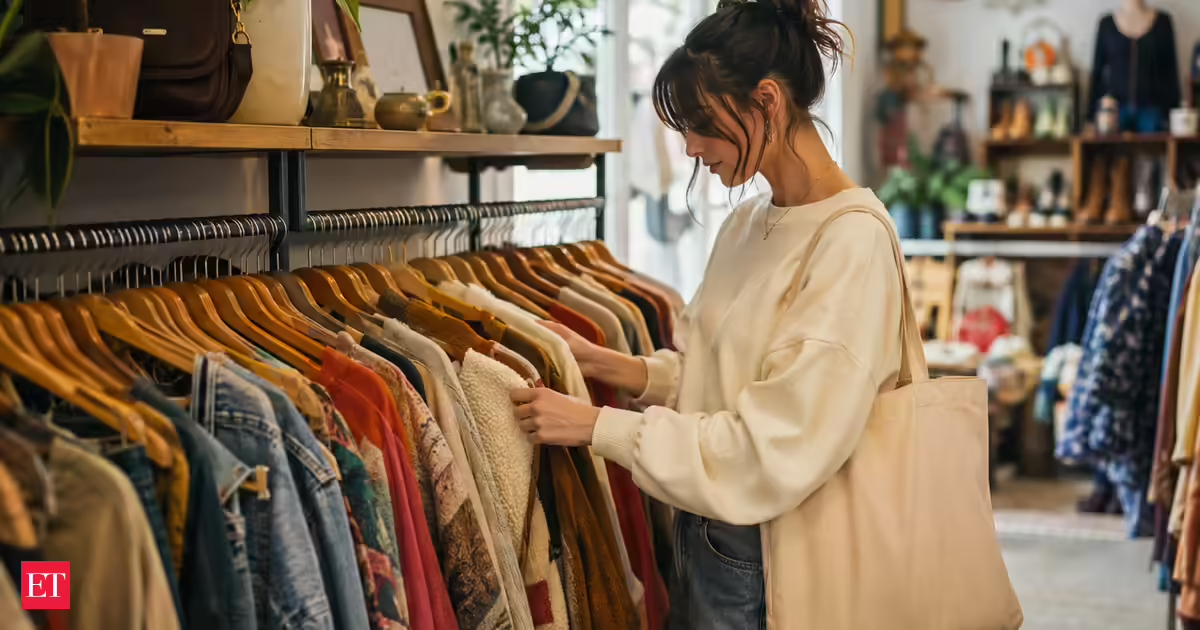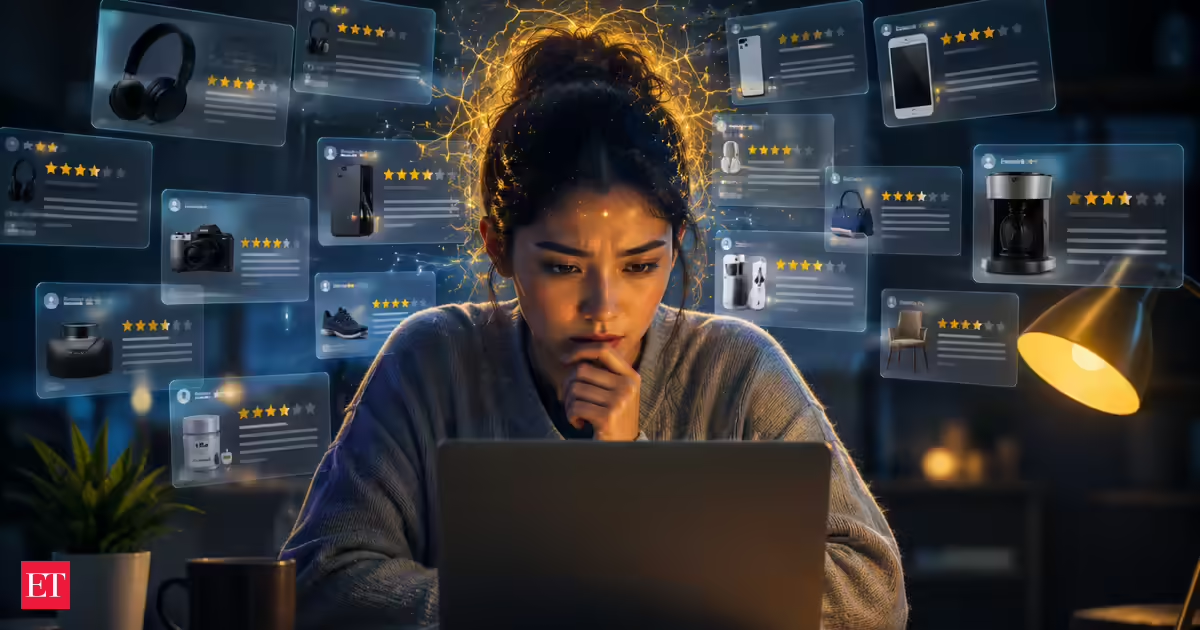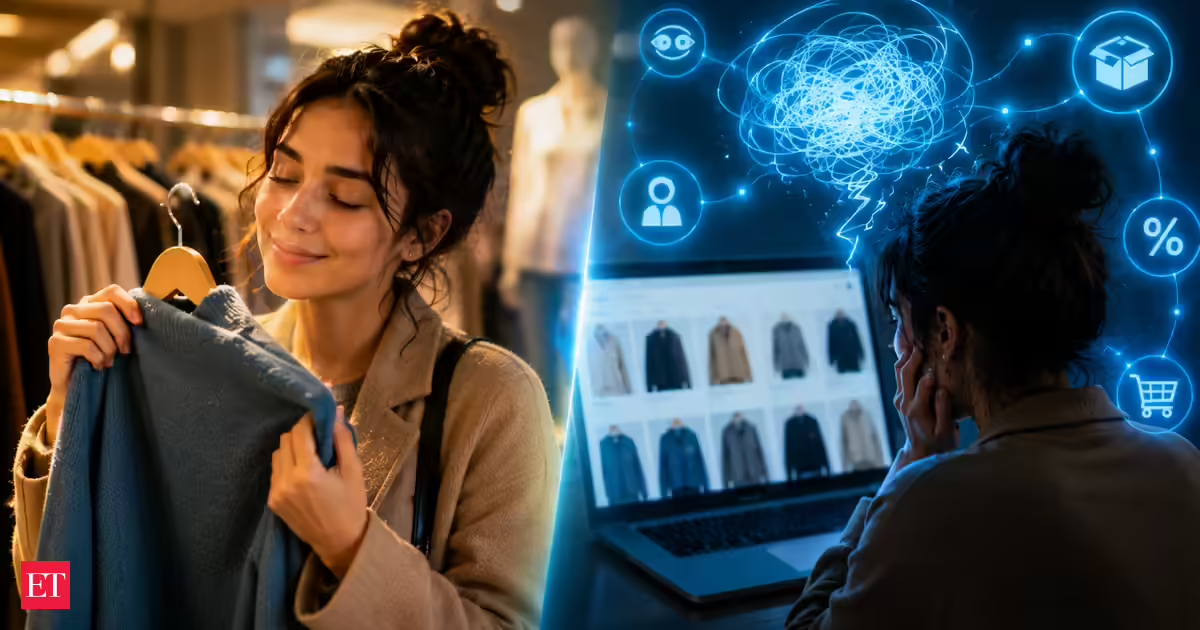
In an age of one-click purchases, same-day delivery, and AI-powered recommendations, millions of people still prefer walking into a store before buying clothes. They want to touch the fabric. Try different sizes. Look at colors under real lighting. And sometimes, they would rather spend an hour at a store than five minutes scrolling online. To others, this may seem inconvenient. After all, online shopping is faster. Psychology suggests something different. For many adults, buying clothes in physical stores is not about resisting technology. It is about satisfying the brain's need for certainty, sensory information, and emotional confidence before making a decision. In many ways, shopping is not simply about buying clothes. It is about reducing uncertainty.Why The Brain Trusts What It Can Physically ExperienceOne explanation comes from Embodied Cognition Theory. The theory suggests humans do not process information through the brain alone. The body actively participates in decision-making. When shopping for clothes, people rely on multiple senses. They evaluate:Fabric textureWeightFitStretchComfortColor under natural lightOnline shopping removes many of these sensory cues. The brain may feel like it is making an incomplete decision. Physical stores provide reassurance.Why Some People Need To Reduce Purchase AnxietyPsychologists also discuss Intolerance Of Uncertainty Theory. Humans naturally prefer predictable outcomes. Buying clothes online introduces multiple unknowns.People may wonder:You Might Also Like:"Will this fit me?""What if the color looks different?""What if I have to return it?""What if I waste my money?"The brain dislikes uncertainty. Shopping in person eliminates many of these concerns immediately.Why Touch Creates Stronger Emotional ConfidencePsychologists also study the Endowment Effect, a concept from behavioral economics. Humans value things more once they physically interact with them. Holding an item creates a sense of ownership before purchasing. This explains why people often become more attached to products they have touched. Modern examples are easy to spot. Someone may ignore a jacket online but instantly love it after trying it on inside a store. The emotional connection becomes stronger.Why Choice Overload Makes Online Shopping ExhaustingPsychologists also point to Decision Fatigue. Online stores offer endless options. Hundreds of colors. Thousands of brands. Infinite recommendations. What initially feels convenient can become mentally exhausting. People begin scrolling for hours without making a purchase. Physical stores naturally narrow choices. The brain appreciates these limitations. Less choice often means less stress.Why Physical Shopping Gives People A Sense Of ControlPsychologists also connect this habit to Compensatory Control Theory. Humans seek environments where they feel in charge. Physical stores provide immediate answers.People can:Compare items instantly.Check quality themselves.Make decisions without waiting.Avoid complicated returns.This sense of control creates emotional comfort.Why Shopping Is Also A Social ExperiencePsychologists discuss Environmental Psychology, which examines how surroundings influence emotions. For many people, shopping is an experience rather than a transaction.Some enjoy:Walking through stores.Shopping with family members.Trying on different outfits.Exploring new collections.The activity itself becomes rewarding. Online shopping cannot fully recreate that experience.Why Younger Generations Are Returning To Physical StoresInterestingly, Millennials and Gen Z are also rediscovering in-person shopping. After years of digital dependence, many people are seeking more tangible experiences. This trend is visible in:Vintage storesThrift shoppingPop-up fashion eventsIndependent boutiquesPeople increasingly value experiences that feel authentic and memorable.Why Clothing Is Deeply Connected To IdentityPsychologists also point to Self-Congruity Theory. People choose products that align with how they see themselves. Clothing is especially personal. Trying clothes on in person allows people to ask: "Does this feel like me?" That emotional question is harder to answer through a screen. The fitting room becomes a space for identity exploration.Why do humans crave certainty?Psychology suggests people who only like buying clothes in stores are rarely old-fashioned. More often, they are responding to how the human brain naturally makes decisions. Humans crave certainty. Humans crave sensory experiences. Humans crave control. The most important insight is that people are not always shopping for clothes. They are often shopping for confidence. Perhaps that is why physical stores continue to exist despite technological advances.Because sometimes, a photograph is not enough. The brain wants to touch, see, and experience something before deciding whether it truly belongs in someone's life.FAQsWhy do some people refuse to buy clothes online?Psychology suggests many people prefer certainty, sensory information, and immediate decision-making.Is preferring physical stores a sign of being old-fashioned?No. It often reflects how the brain naturally processes trust and confidence.
Psychology says people who only like to buy clothes in stores and not online are not outdated: Why the brain still trusts touch more than algorithms
Psychology suggests that people who prefer buying clothes in physical stores are rarely being old-fashioned. More often, they are responding to the way the human brain naturally makes decisions.
706 words~3 min read